
 You are here
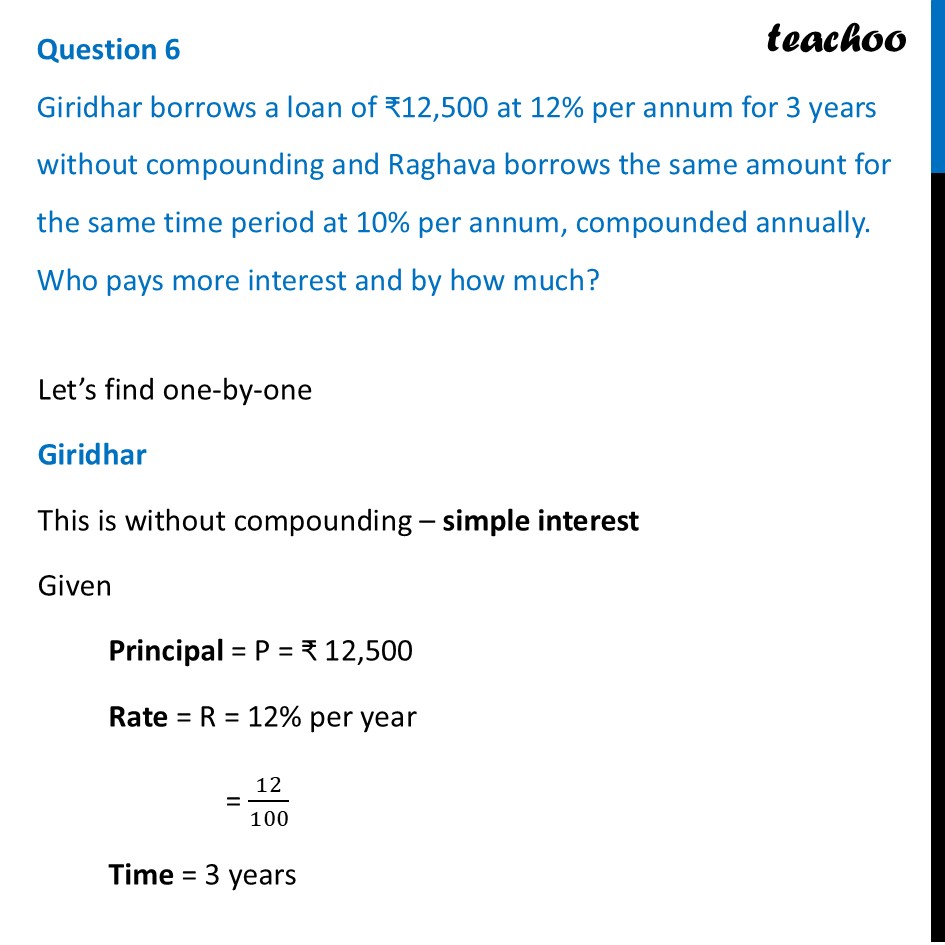
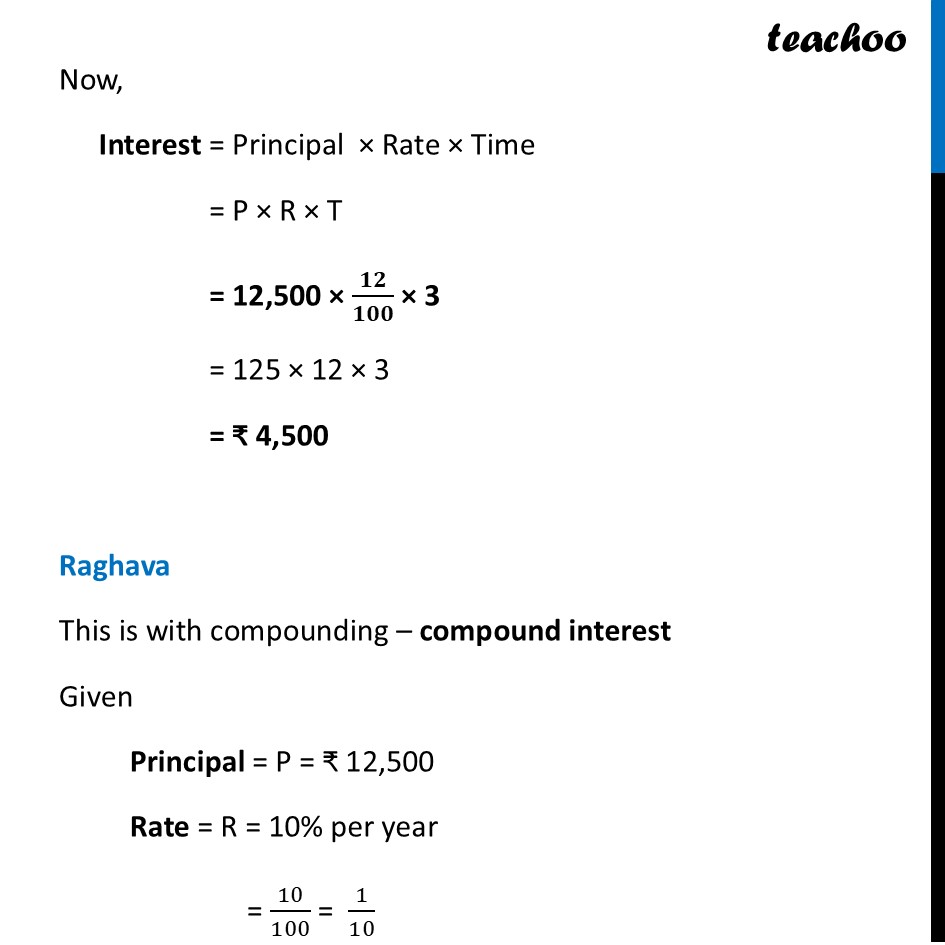
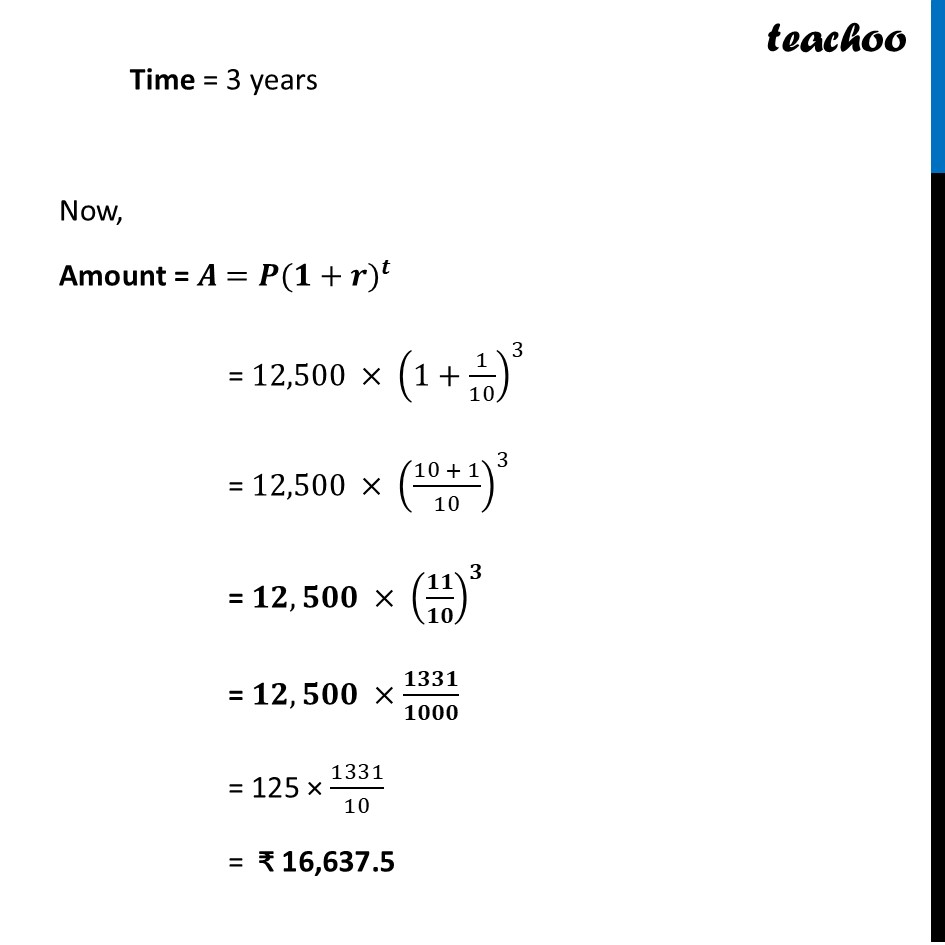
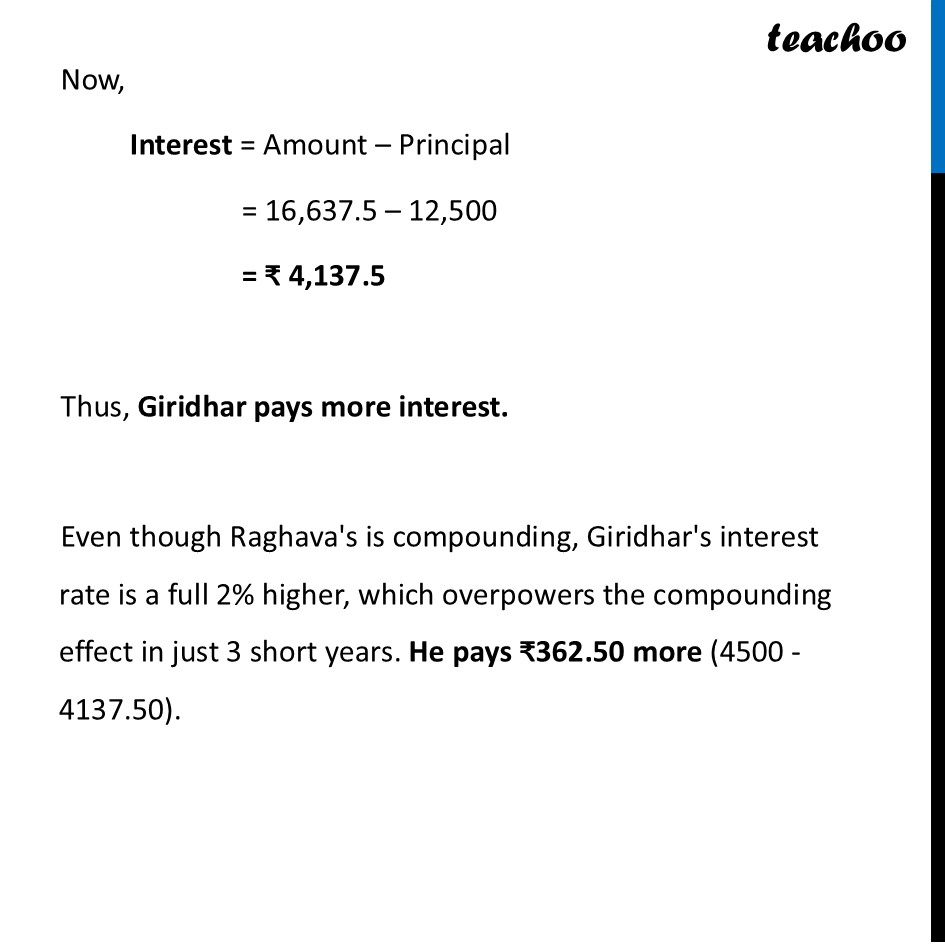
Figure it out - Page 22, 23, 24
Last updated at February 17, 2026 by Teachoo
Transcript
Question 6 Giridhar borrows a loan of ₹12,500 at 12% per annum for 3 years without compounding and Raghava borrows the same amount for the same time period at 10% per annum, compounded annually. Who pays more interest and by how much?Let’s find one-by-one Giridhar This is without compounding – simple interest Given Principal = P = ₹ 12,500 Rate = R = 12% per year = 12/100 Time = 3 years Now, Interest = Principal × Rate × Time = P × R × T = 12,500 × 𝟏𝟐/𝟏𝟎𝟎 × 3 = 125 × 12 × 3 = ₹ 4,500 Raghava This is with compounding – compound interest Given Principal = P = ₹ 12,500 Rate = R = 10% per year = 10/100 = 1/10 Time = 3 years Time = 3 years Now, Amount = 𝑨 =𝑷(𝟏+𝒓)^𝒕 = 12,500 × (1+1/10)^3 = 12,500 × ((10 + 1)/10)^3 = 𝟏𝟐,𝟓𝟎𝟎 × (𝟏𝟏/𝟏𝟎)^𝟑 = 𝟏𝟐,𝟓𝟎𝟎 ×𝟏𝟑𝟑𝟏/𝟏𝟎𝟎𝟎 = 125 × 1331/10 = ₹ 16,637.5 Now, Interest = Amount – Principal = 16,637.5 – 12,500 = ₹ 4,137.5 Thus, Giridhar pays more interest. Even though Raghava's is compounding, Giridhar's interest rate is a full 2% higher, which overpowers the compounding effect in just 3 short years. He pays ₹362.50 more (4500 - 4137.50).
