
 You are here
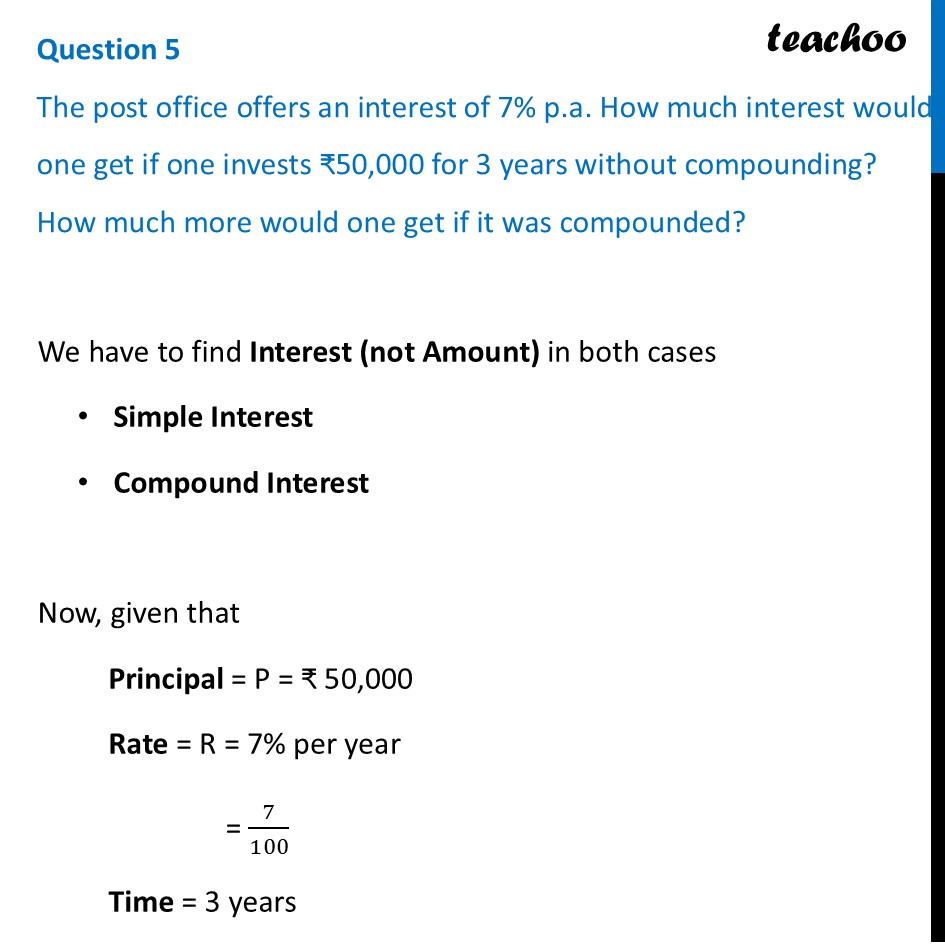
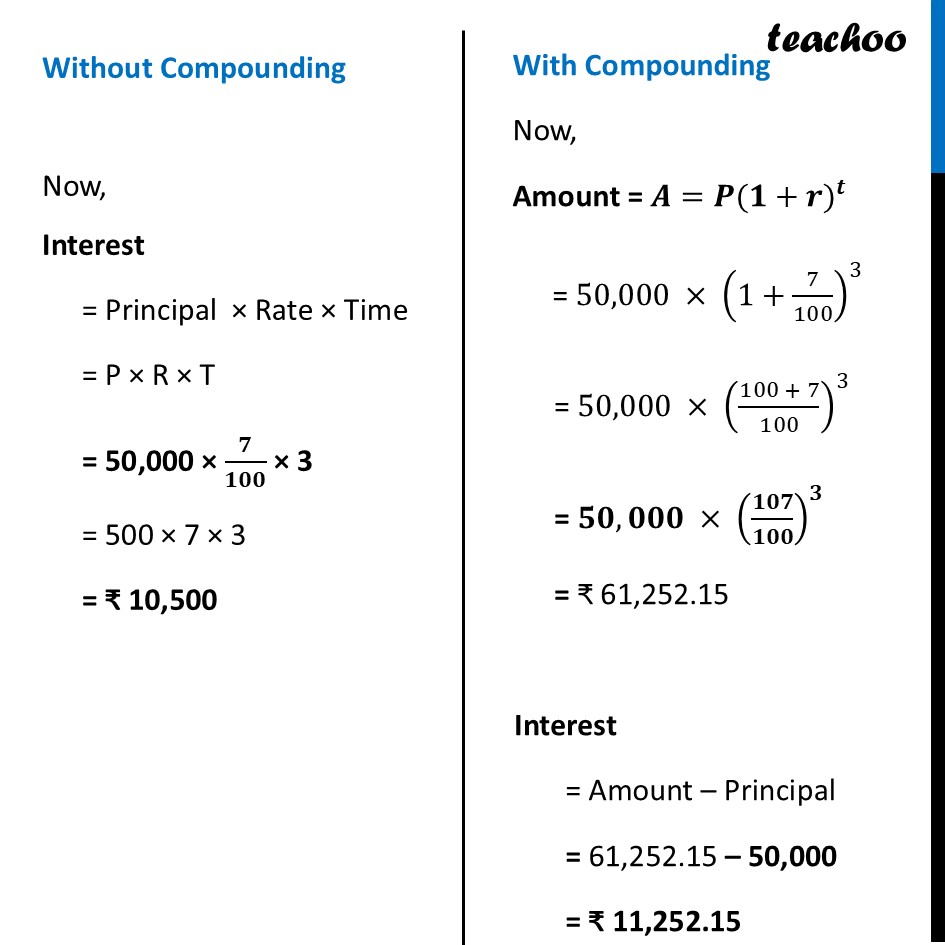
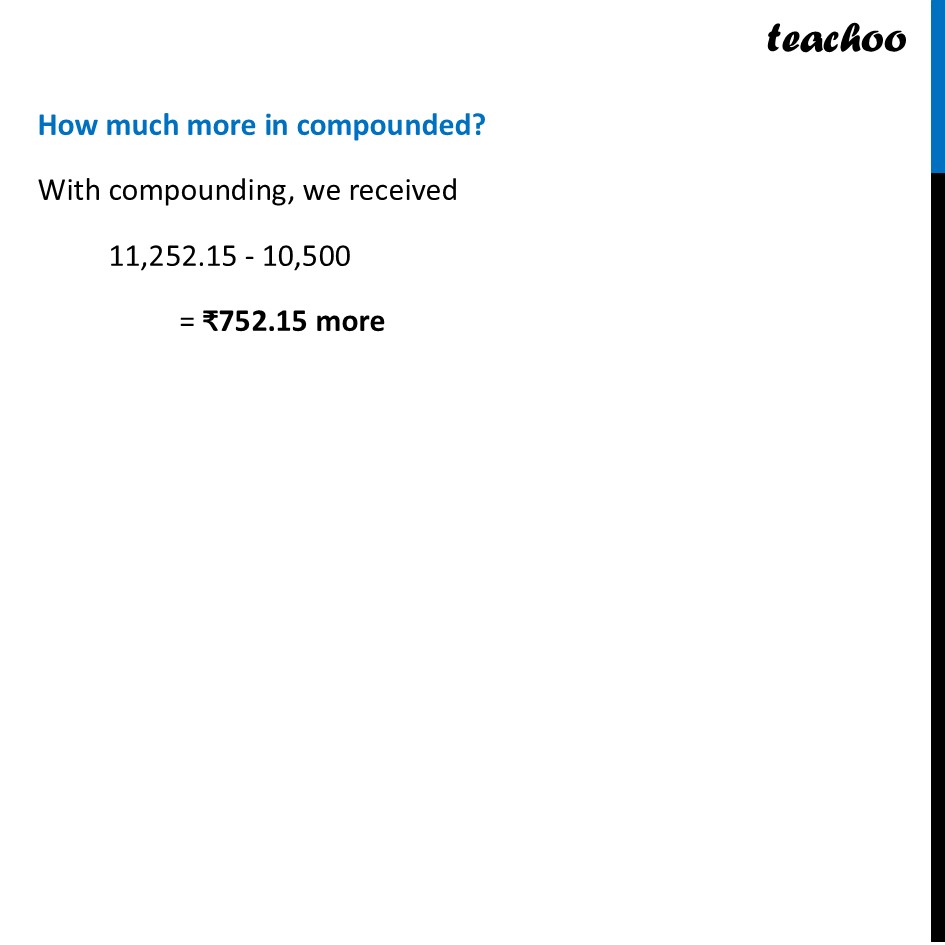
Figure it out - Page 22, 23, 24
Last updated at February 17, 2026 by Teachoo
Transcript
Question 5 The post office offers an interest of 7% p.a. How much interest would one get if one invests ₹50,000 for 3 years without compounding? How much more would one get if it was compounded?We have to find Interest (not Amount) in both cases Simple Interest Compound Interest Now, given that Principal = P = ₹ 50,000 Rate = R = 7% per year = 7/100 Time = 3 years Without Compounding Now, Interest = Principal × Rate × Time = P × R × T = 50,000 × 𝟕/𝟏𝟎𝟎 × 3 = 500 × 7 × 3 = ₹ 10,500 With Compounding Now, Amount = 𝑨=𝑷(𝟏+𝒓)^𝒕 = 50,000 × (1+7/100)^3 = 50,000 × ((100 + 7)/100)^3 = 𝟓𝟎,𝟎𝟎𝟎 × (𝟏𝟎𝟕/𝟏𝟎𝟎)^𝟑 = ₹ 61,252.15 Interest = Amount – Principal = 61,252.15 – 50,000 = ₹ 11,252.15 How much more in compounded? With compounding, we received 11,252.15 - 10,500 = ₹752.15 more
