
 You are here
Growth and Compounding
Last updated at February 17, 2026 by Teachoo
Transcript
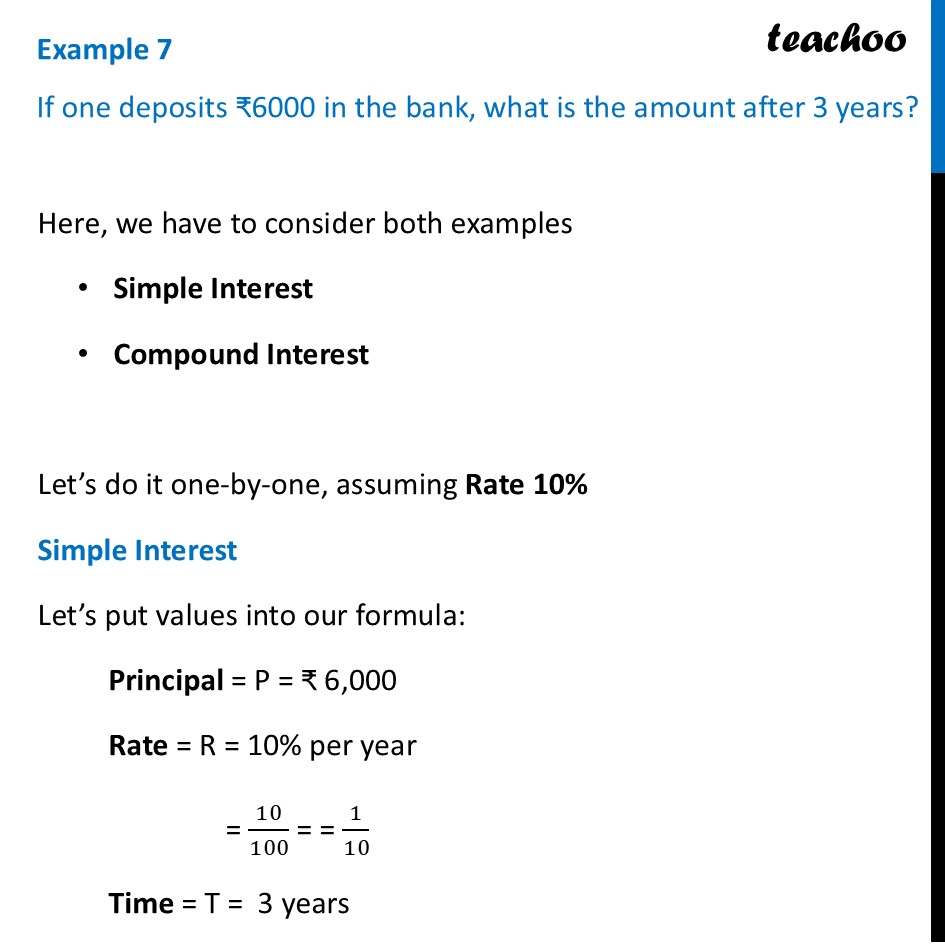
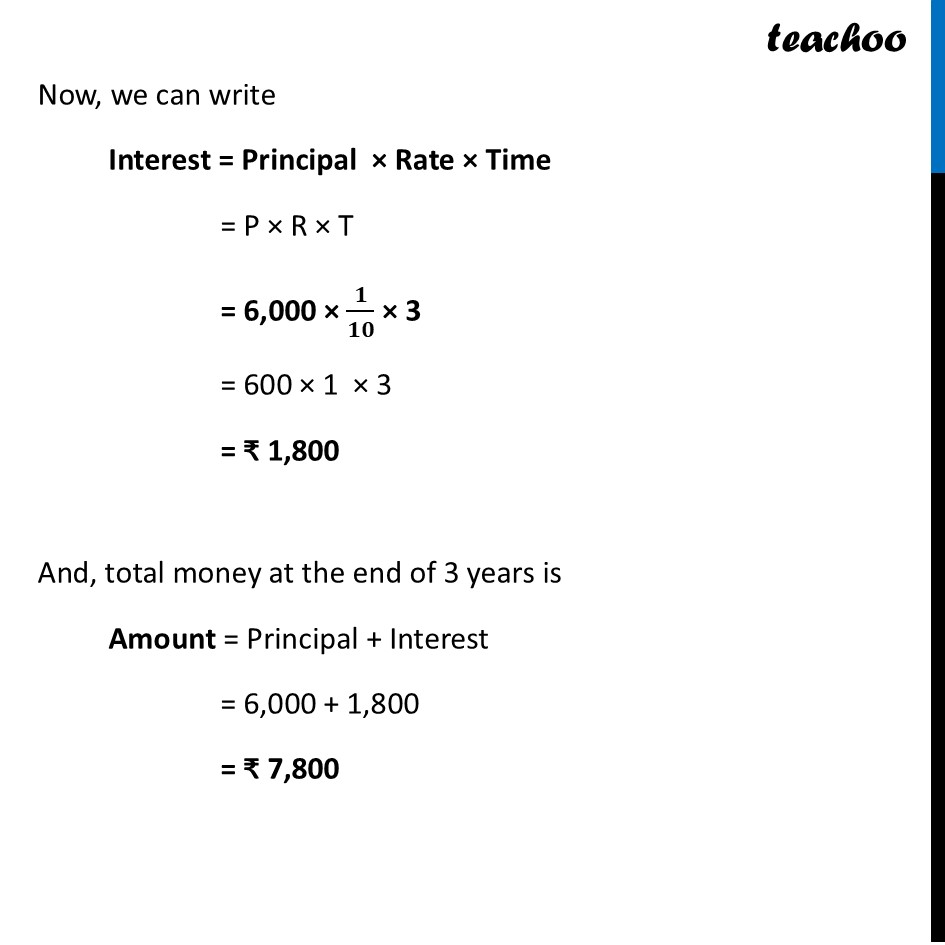
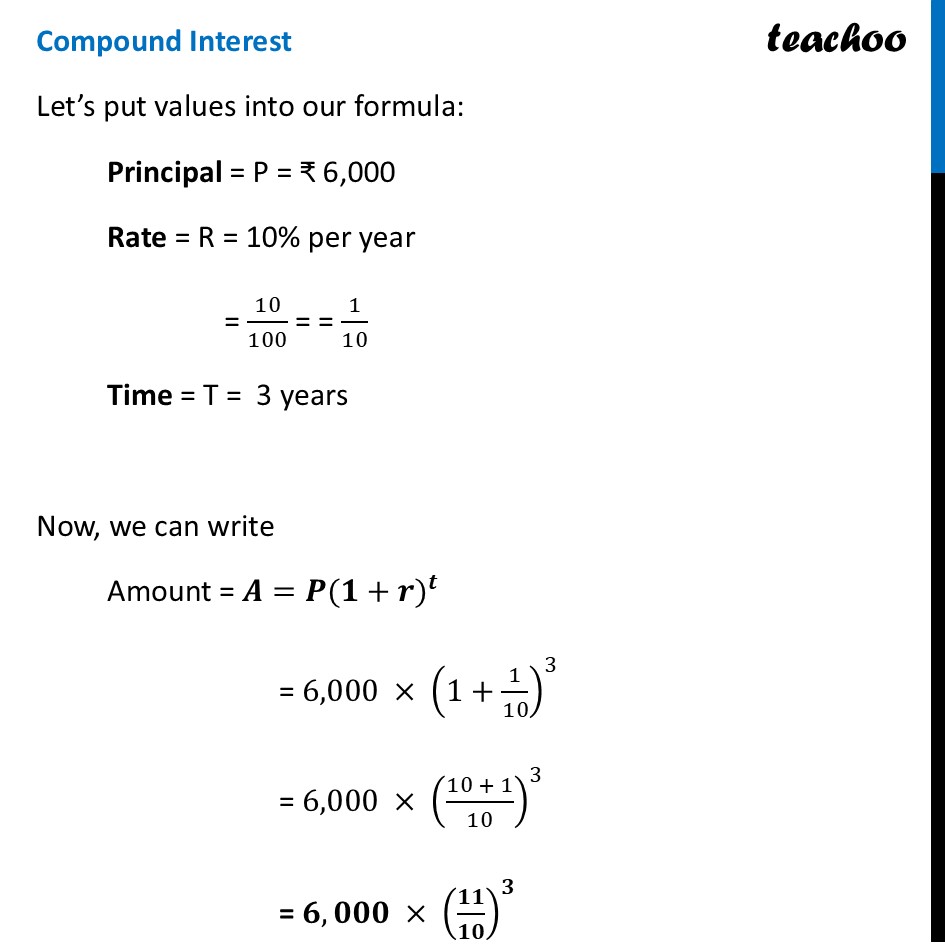
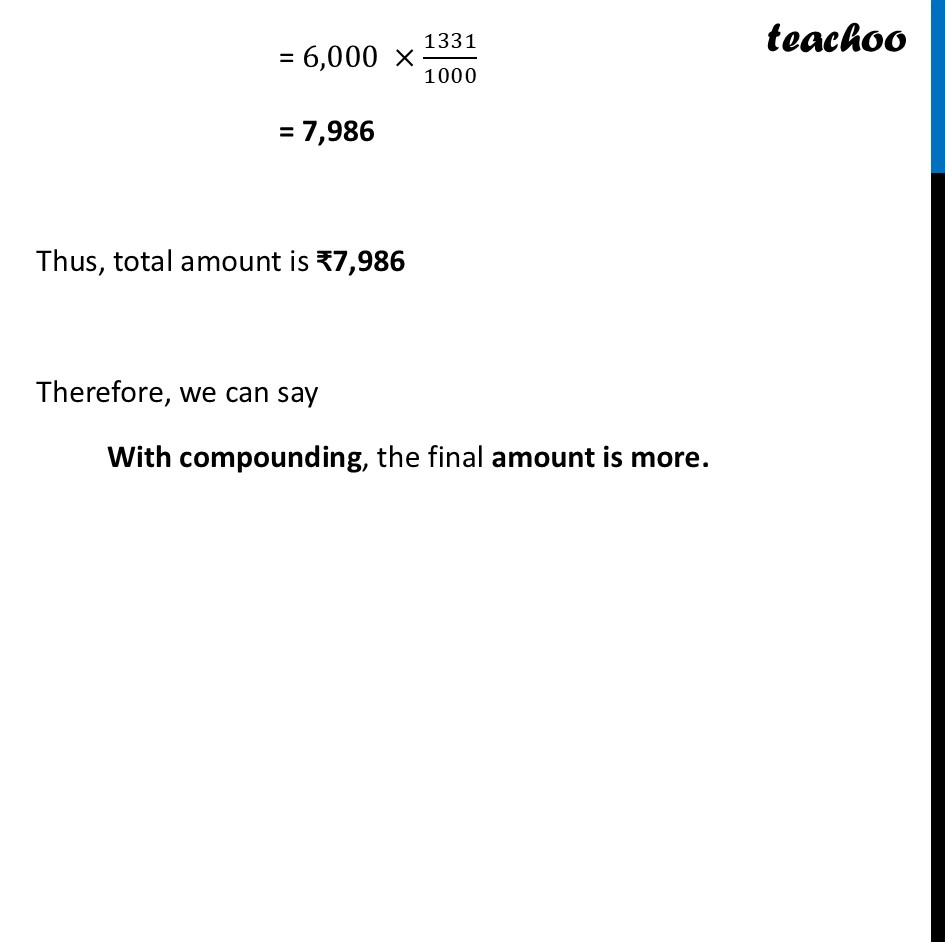
Example 7 If one deposits ₹6000 in the bank, what is the amount after 3 years?Here, we have to consider both examples Simple Interest Compound Interest Let’s do it one-by-one, assuming Rate 10% Simple Interest Let’s put values into our formula: Principal = P = ₹ 6,000 Rate = R = 10% per year = 10/100 = = 1/10 Time = T = 3 years Now, we can write Interest = Principal × Rate × Time = P × R × T = 6,000 × 𝟏/𝟏𝟎 × 3 = 600 × 1 × 3 = ₹ 1,800 And, total money at the end of 3 years is Amount = Principal + Interest = 6,000 + 1,800 = ₹ 7,800 Now, we can write Interest = Principal × Rate × Time = P × R × T = 6,000 × 𝟏/𝟏𝟎 × 3 = 600 × 1 × 3 = ₹ 1,800 And, total money at the end of 3 years is Amount = Principal + Interest = 6,000 + 1,800 = ₹ 7,800 Compound Interest Let’s put values into our formula: Principal = P = ₹ 6,000 Rate = R = 10% per year = 10/100 = = 1/10 Time = T = 3 years Now, we can write Amount = 𝑨=𝑷(𝟏+𝒓)^𝒕 = 6,000 × (1+1/10)^3 = 6,000 × ((10 + 1)/10)^3 = 𝟔,𝟎𝟎𝟎 × (𝟏𝟏/𝟏𝟎)^𝟑 = 6,000 ×1331/1000 = 7,986 Thus, total amount is ₹7,986 Therefore, we can say With compounding, the final amount is more.
