
 You are here
Growth and Compounding
Last updated at February 17, 2026 by Teachoo
Transcript
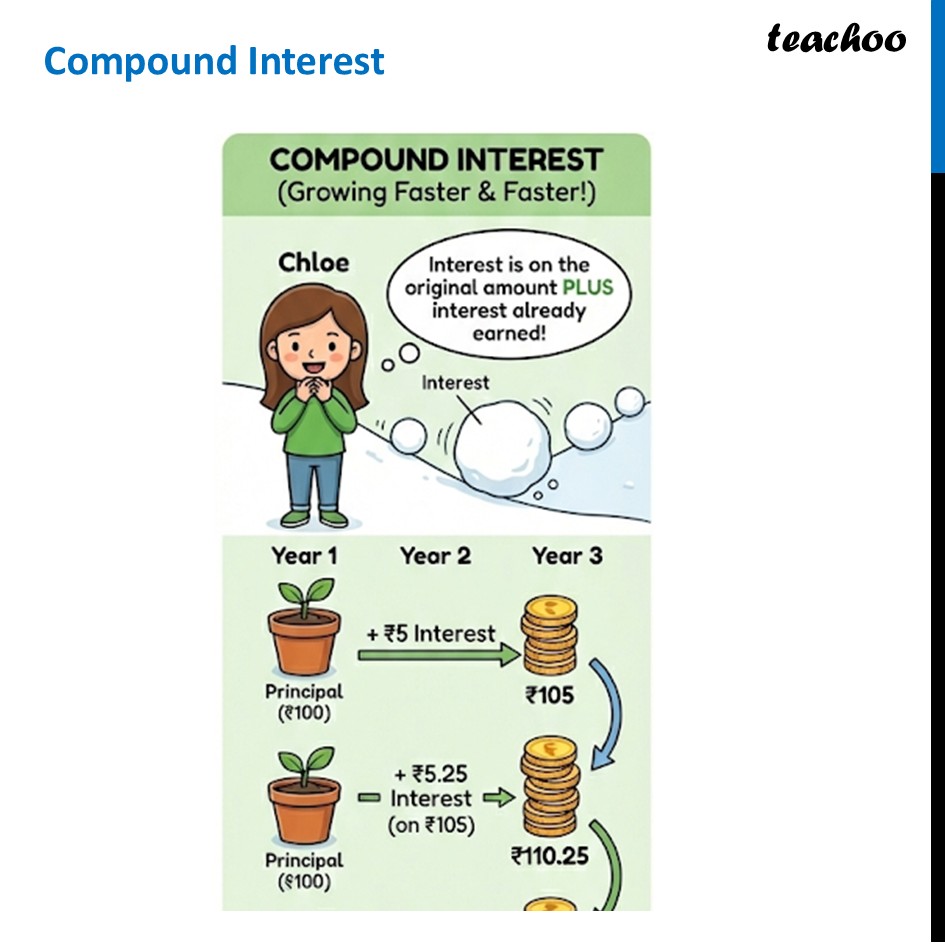
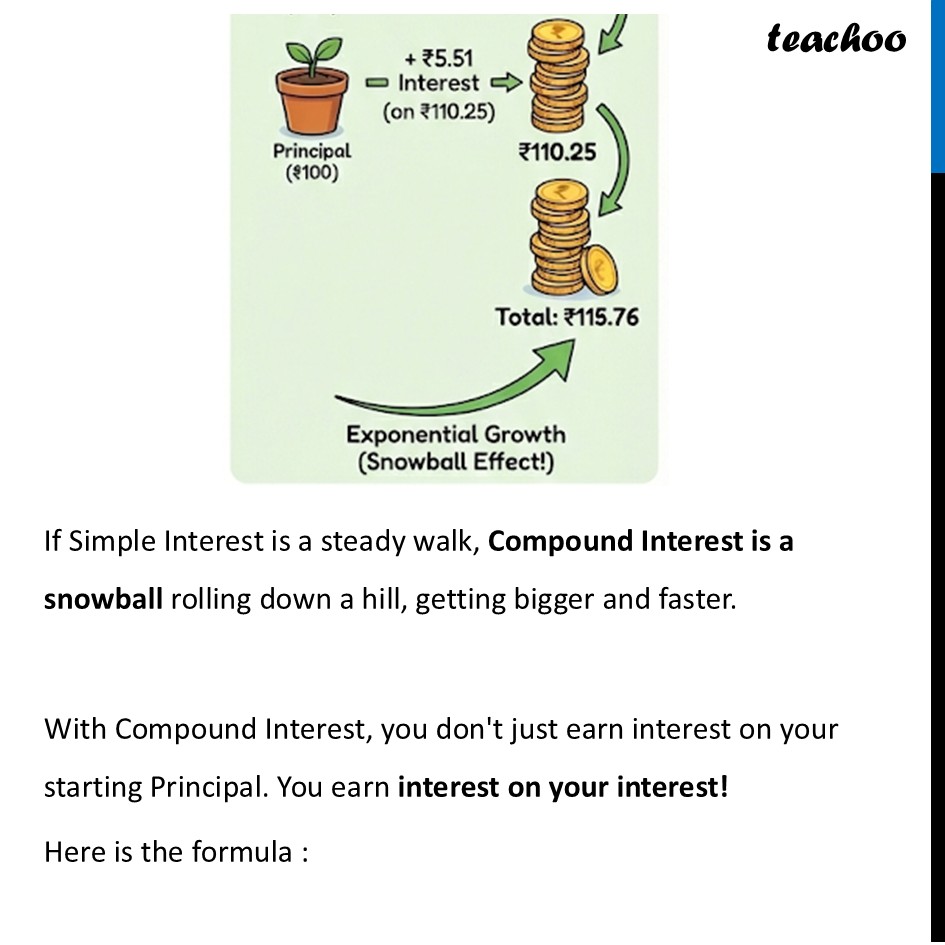
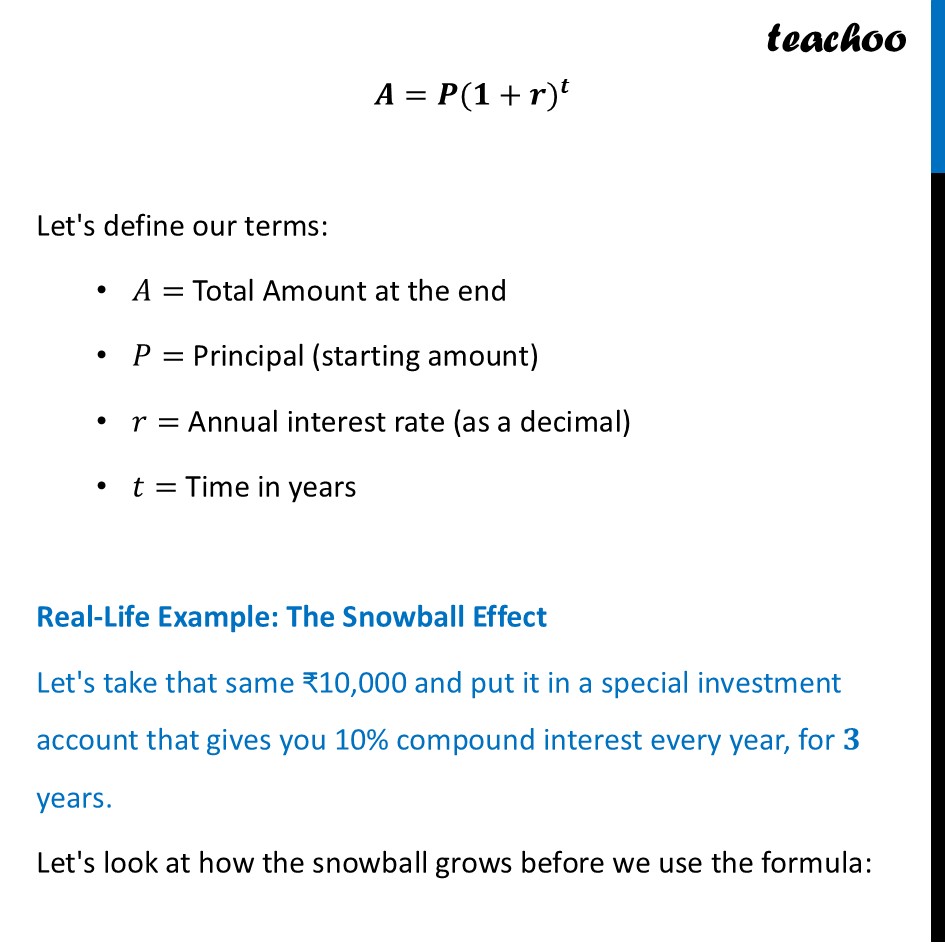
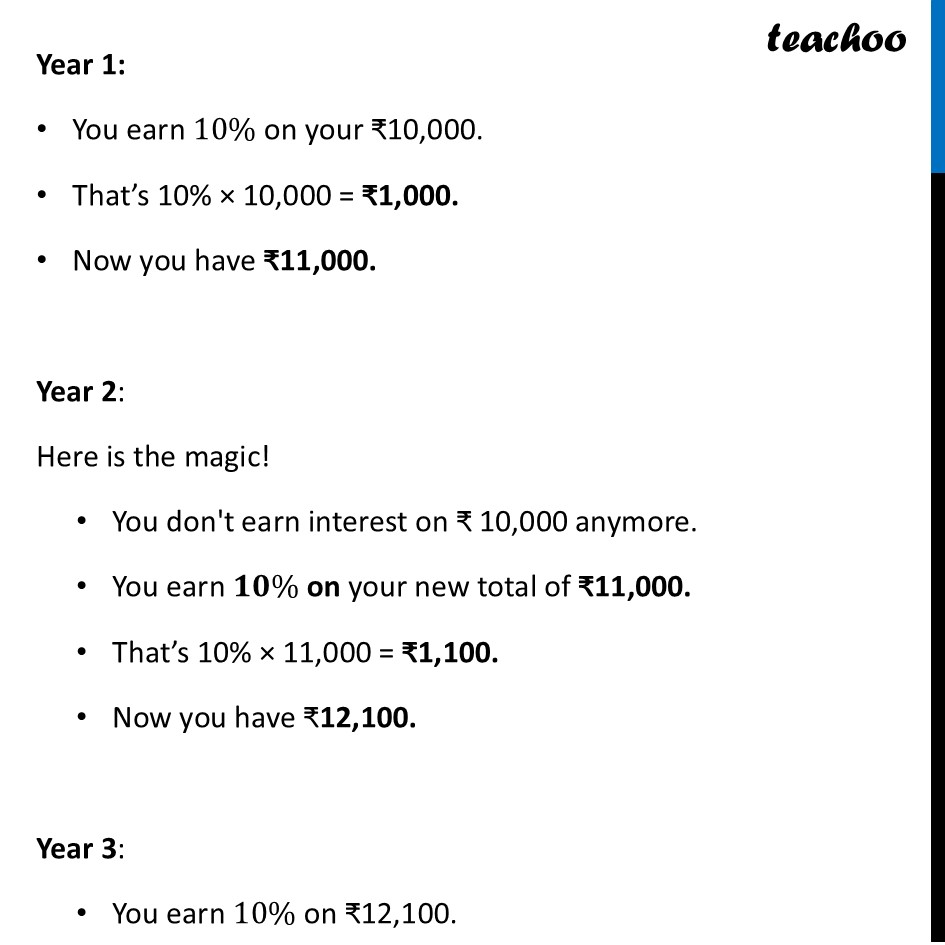
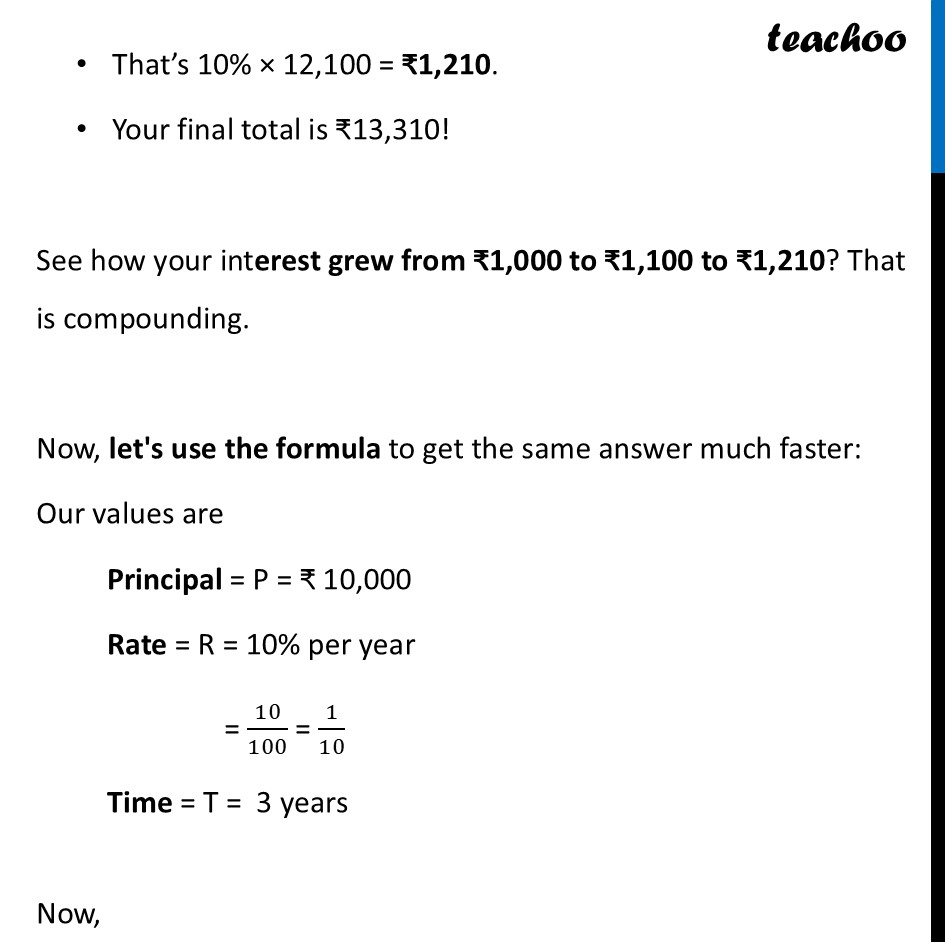
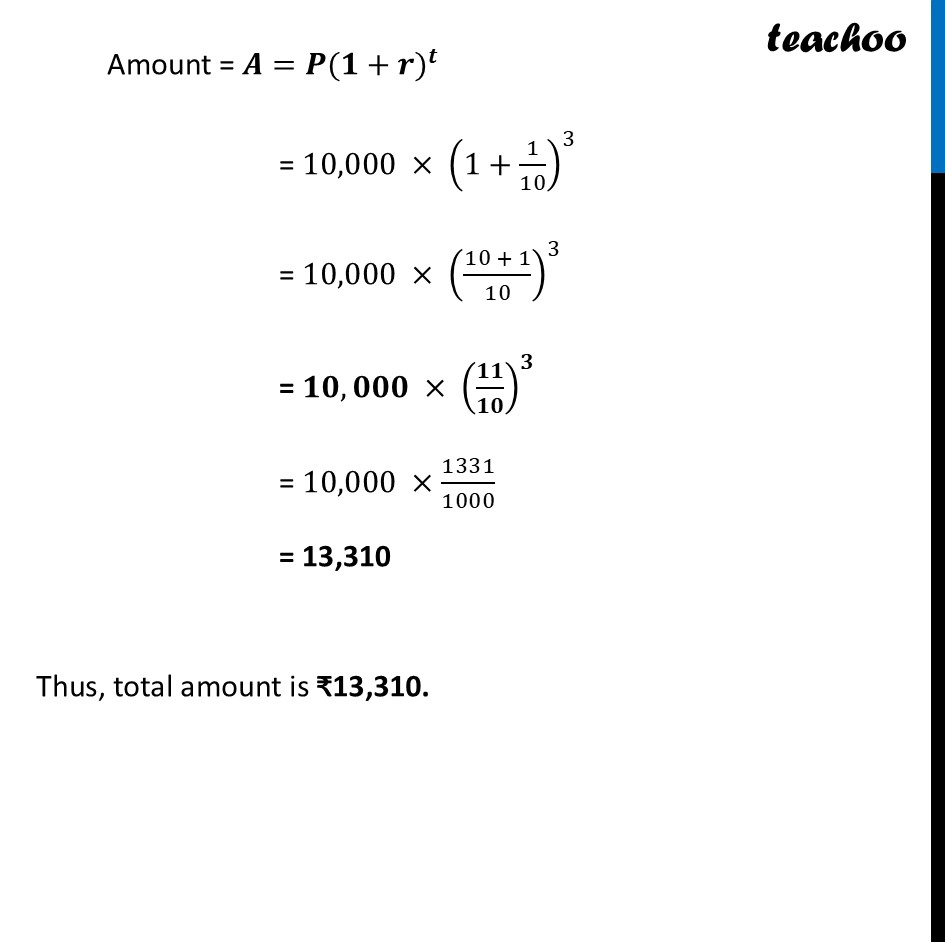
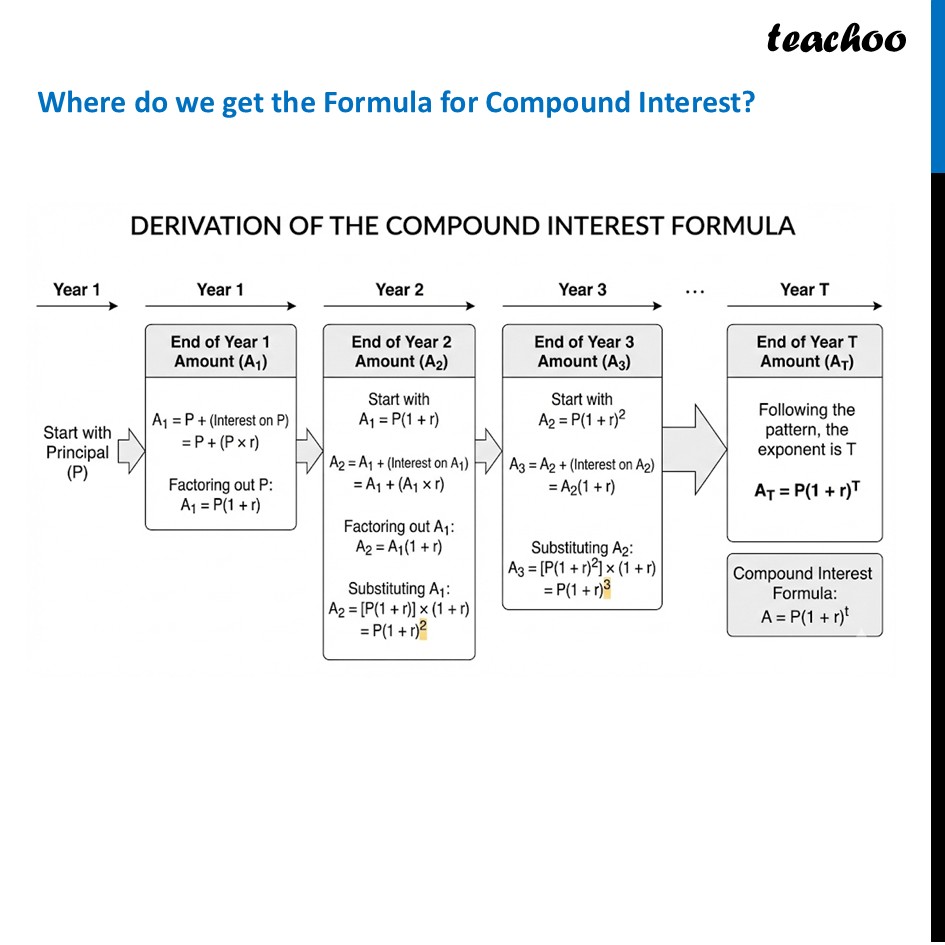
Compound InterestIf Simple Interest is a steady walk, Compound Interest is a snowball rolling down a hill, getting bigger and faster. With Compound Interest, you don't just earn interest on your starting Principal. You earn interest on your interest! Here is the formula : 𝑨=𝑷(𝟏+𝒓)^𝒕 Let's define our terms: 𝐴= Total Amount at the end 𝑃= Principal (starting amount) 𝑟= Annual interest rate (as a decimal) 𝑡= Time in years Real-Life Example: The Snowball Effect Let's take that same ₹10,000 and put it in a special investment account that gives you 10% compound interest every year, for 𝟑 years. Let's look at how the snowball grows before we use the formula: Year 1: You earn 10% on your ₹10,000. That’s 10% × 10,000 = ₹1,000. Now you have ₹11,000. Year 2: Here is the magic! You don't earn interest on ₹ 10,000 anymore. You earn 𝟏𝟎% on your new total of ₹11,000. That’s 10% × 11,000 = ₹1,100. Now you have ₹12,100. Year 3: You earn 10% on ₹12,100. That’s 10% × 12,100 = ₹1,210. Your final total is ₹13,310! See how your interest grew from ₹1,000 to ₹1,100 to ₹1,210? That is compounding. Now, let's use the formula to get the same answer much faster: Our values are Principal = P = ₹ 10,000 Rate = R = 5% per year = 5/100 Time = T = 3 years Now, Amount = 𝑨=𝑷(𝟏+𝒓)^𝒕 𝐴=10000(1.10)^3 ■(𝐴@@𝐴=10000×1.331@𝐴=13310) Your total amount is ₹13,310. Where do we get the Formula for Compound Interest? DERIVATION OF THE COMPOUND INTEREST FORMULA
