
 You are here
pages 149 to 151
In short:
India's democracy stands out for its scale, depth and inclusiveness.
Which is the world's largest democracy?
- India .
- More people vote in Indian elections than the total population of many countries .
- India had over 96.8 crore registered voters (2024) .
Don't Miss Out
What is the scale of India's democracy?
![Democracy in Practice: India's L - Democracy - [Teachoo] - Concepts](https://cdn.teachoo.com/d0807d32-0eb7-47aa-a798-a22eb26fd99b/voters-queuing-at-a-polling-station.jpg)
Voters queuing at a polling station
The scale of Indian elections
25 lakh people
per MP (2019)
22 scheduled languages
Over 1 million
polling stations
Over 2,800
registered parties
↓
More people vote here than the total population of many countries
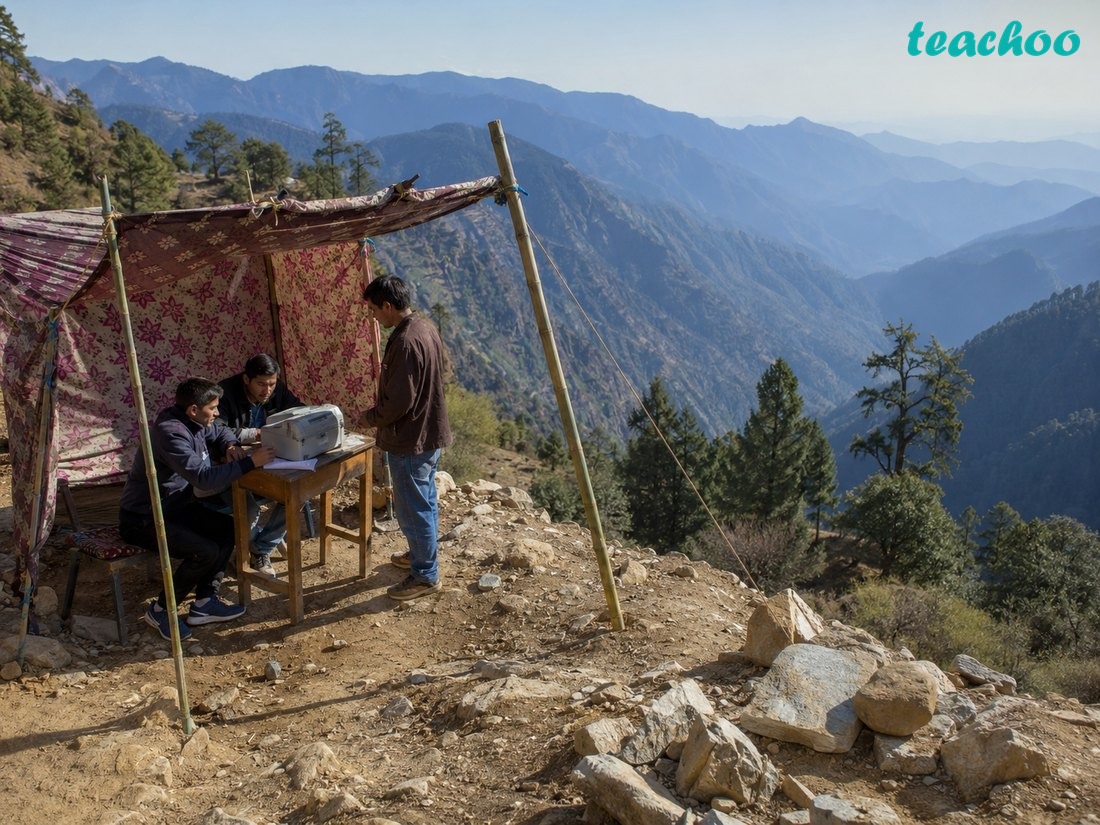
A polling station in a remote place
Feature
The fact
Huge representation
On average, a Member of Parliament represents about
25 lakh people (2019)
Many languages, one election
Elections are conducted in
22 scheduled languages
, along with several others.
Election symbols
let every citizen, including those who cannot read, vote independently
Over one million polling stations
More than
one million
polling stations, including in mountains, forests, deserts and islands. In some cases a polling station is set up
for a single voter
Thousands of political parties
India has over
2,800 registered political parties
, reflecting social and regional diversity and allowing many viewpoints to compete peacefully
What are the standout features of Indian democracy?
What makes Indian democracy stand out
scale, depth, inclusiveness
Scale
Nearly a hundred crore voters
Example:
unparalleled public participation
Depth
Regular nationwide elections
Example:
institutional strength and organisational capacity
Inclusiveness
Varied linguistic, religious and socio-economic backgrounds
Example:
all within a single framework
- India's democracy stands out for scale, depth and inclusiveness .
Feature
What it means
Scale
Nearly a hundred crore voters - an unparalleled exercise in public participation
Depth
Conducting regular, nationwide elections for such a large and diverse population shows the
institutional strength
and
organisational capacity
of Indian democracy
Inclusiveness
The electorate includes people of varied
linguistic, religious and socio-economic
backgrounds, all within a single democratic framework
Why is Indian democracy called "living"?
- Because of its diversity and citizens' active engagement in the electoral process.
- Elections become a collective national exercise , in which voices from different regions and communities are expressed through the ballot.
- This continuous and widespread public participation keeps democracy alive between elections too.
- India is the world's largest democracy not merely in numbers , but through the sustained involvement of its people in shaping governance and public life.
What is the three-tier system of governance in India?
- India's constitutional framework operates through three levels of government.
Tier
Level
Union
National
State
State
Local
Panchayats and Municipalities
- This facilitates administrative efficiency and democratic participation .
Term
Meaning
Administrative efficiency
Work gets done faster, because decisions are taken at the level closest to the problem
Democratic participation
More people get a say, because there are three levels at which they can be heard
Why is India called a participatory democracy?
India's three-tier system
Union
national
State
state
Local
Panchayats and Municipalities
↓
Administrative efficiency and democratic participation
- Participatory democracy means a democracy that emphasises greater involvement of citizens - not only through elections, but through active engagement in shaping policies and governance .
- Such participation takes place through local councils , public consultations and community-driven initiatives .
- India is called the largest participatory democracy .
- Its people do not just vote.
- They take part in decisions at the national, state and local levels.
- This includes Gram Sabhas and local bodies.
What is tribal heritage? Why is it important?
- Tribal heritage means the customs, traditions, languages and ways of life of tribal communities, passed down over generations.
- It is important because it is a part of India's diversity , and without protection these ways of life could be lost.
- The chapter uses the term but does not define it.
- The meaning above is added for understanding.
What special provisions protect tribal heritage?
- Beyond Panchayati Raj and Municipalities, the Constitution provides two more:
| Provision | What it does | Where it applies |
|---|---|---|
| Autonomous District Councils (ADCs) | Granted legislative and judicial authority to preserve tribal customs | Specific north-eastern regions |
| PESA Act, 1996 (Panchayats Extension to Scheduled Areas) | Empowers the Gram Sabha as the primary decision-making body | Tribal areas in other states |
- By balancing these levels of authority, the Constitution provides a unified national framework that draws its strength from the diverse traditions of every community .
1. How many registered voters did India have, and in which year?
Show answer
Over 96.8 crore, in 2024.
2. On average, how many people does a Member of Parliament represent, and as of which year?
Show answer
About 25 lakh people, as of 2019.
3. In how many scheduled languages are Indian elections conducted, and why are election symbols used?
Show answer
22 scheduled languages. Election symbols are used so that every citizen, including those who cannot read, can vote independently.
4. What are the three tiers of government in India?
Show answer
Union, State and Local.
5. What does the PESA Act, 1996 do, and where does it apply?
Show answer
It empowers the Gram Sabha as the primary decision-making body, and applies to tribal areas in states outside the north-eastern regions covered by Autonomous District Councils.
