You are here
![Experimental Probability - Definition, Example, Worksheet [With Video] - Experimental and Theoretical Probability](https://cdn.teachoo.com/7eb74493-1f5e-491e-b40d-644e00796625/slide25.jpg)
Experimental and Theoretical Probability
Last updated at August 14, 2026 by Teachoo
Transcript
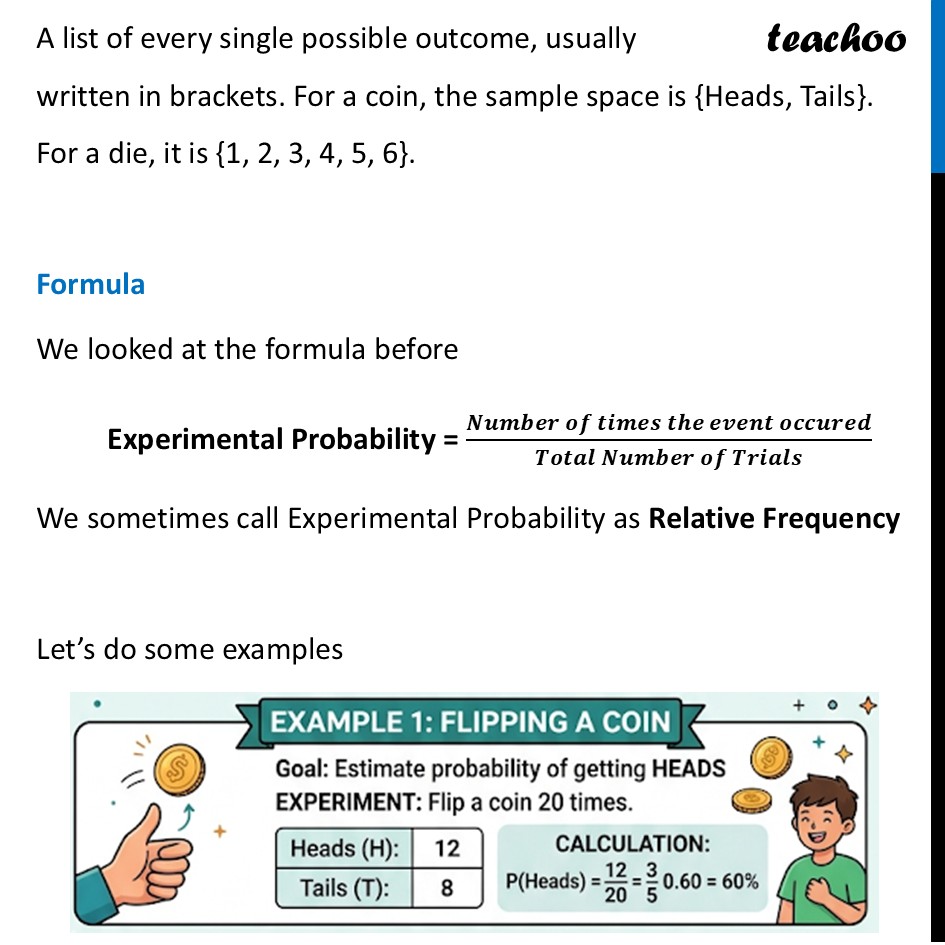
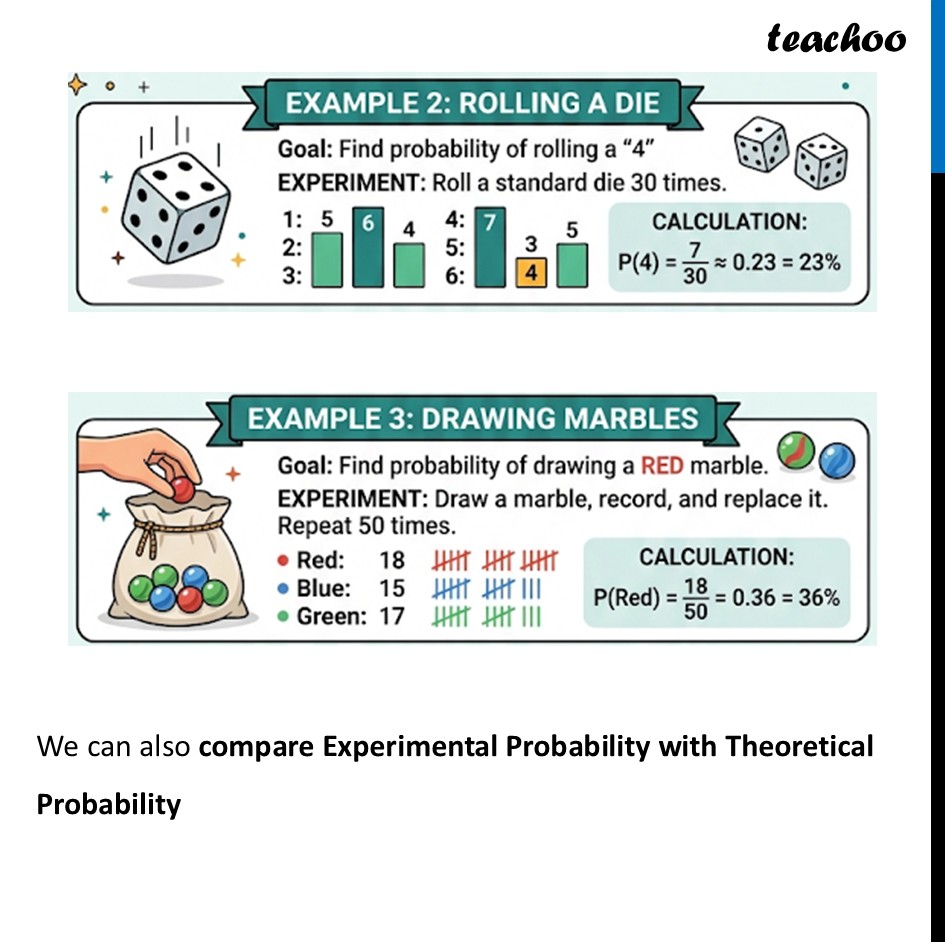
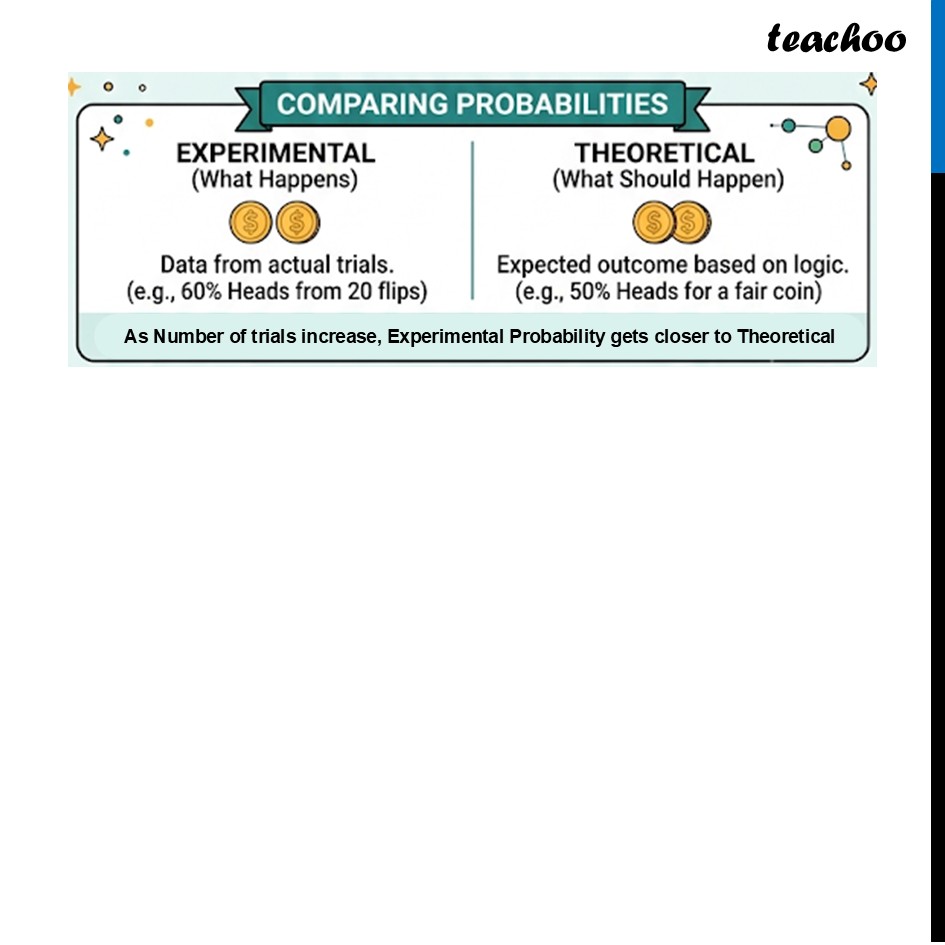
Experimental Probability To do experimental probability, you have to run an experiment multiple times And, we define it is There are some definitions which we should learn as well, like Outcome The result of your experiment (e.g., Getting "Heads"). Sample Space THE FORMULA DESIRED OUTCOMES EXPERIMENTAL PROBABILITY =Number of Times the Event Occurs\Total Number of TrialsA list of every single possible outcome, usually written in brackets. For a coin, the sample space is {Heads, Tails}. For a die, it is {1, 2, 3, 4, 5, 6}. Formula We looked at the formula before Experimental Probability = (𝑵𝒖𝒎𝒃𝒆𝒓 𝒐𝒇 𝒕𝒊𝒎𝒆𝒔 𝒕𝒉𝒆 𝒆𝒗𝒆𝒏𝒕 𝒐𝒄𝒄𝒖𝒓𝒆𝒅)/(𝑻𝒐𝒕𝒂𝒍 𝑵𝒖𝒎𝒃𝒆𝒓 𝒐𝒇 𝑻𝒓𝒊𝒂𝒍𝒔) We sometimes call Experimental Probability as Relative Frequency Let’s do some examples We can also compare Experimental Probability with Theoretical Probability