
 You are here
What is Convection?
It is the mode of heat transfer in which the heated matter itself moves .
- Convection occurs in fluids ( liquids and gases ).
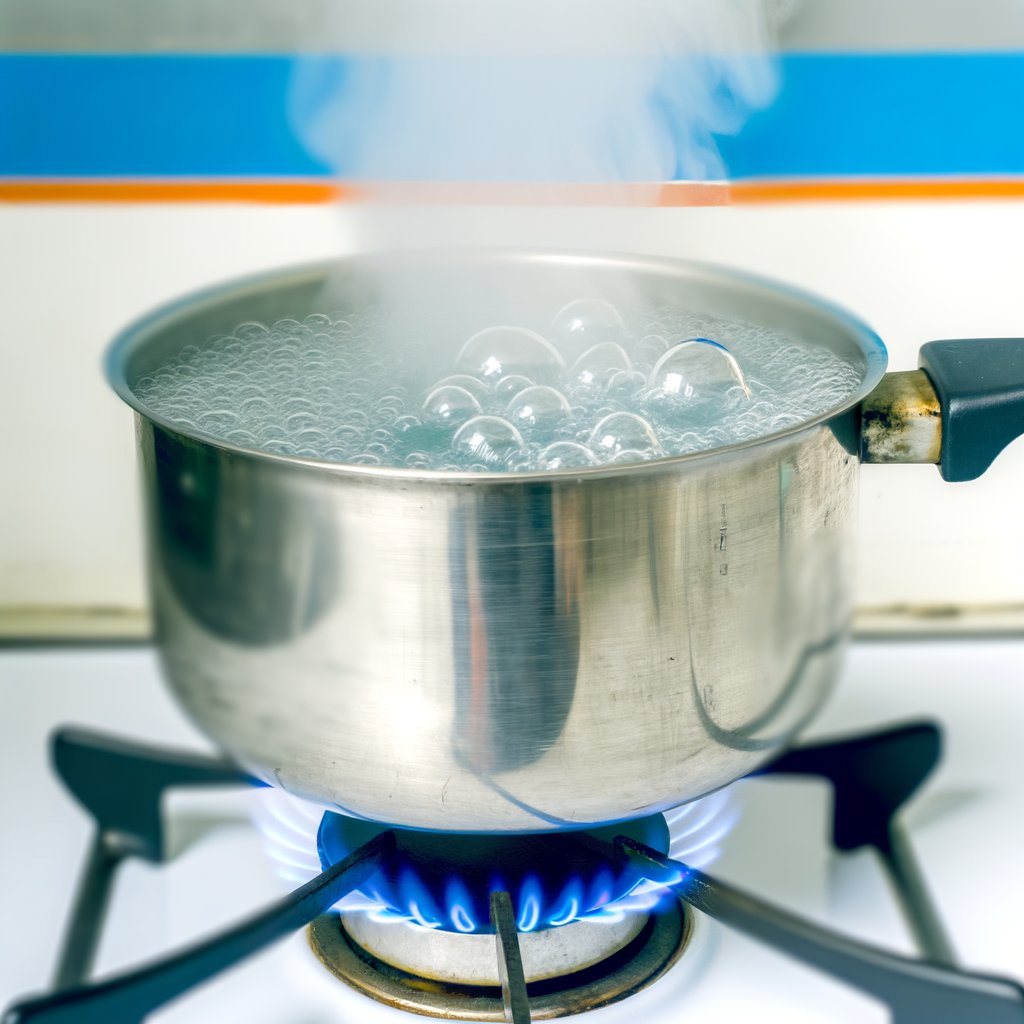
Water in a pot on a stove shows convection as hot
water rises and cooler water sinks.
- Heated fluid becomes lighter and rises up .
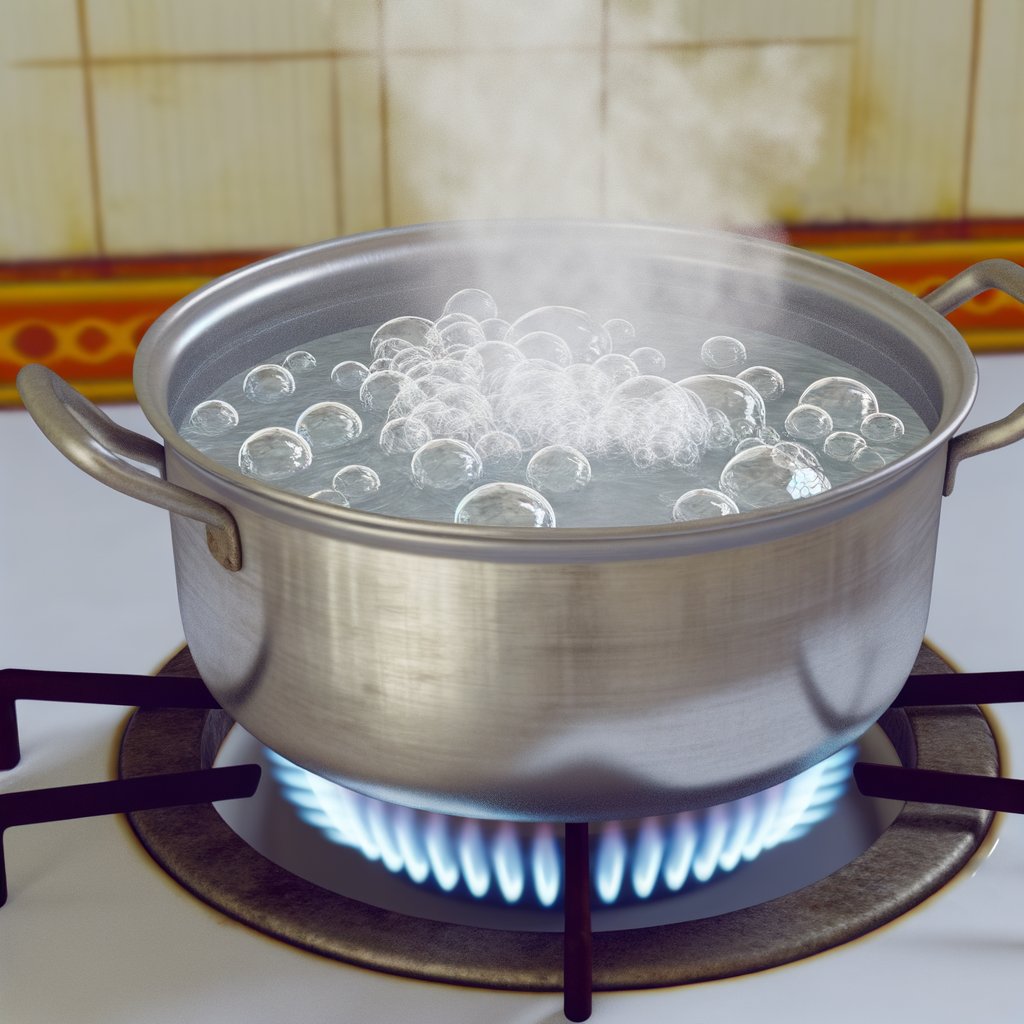
Water in a pot on a stove shows convection as it
heats, with steam and bubbles indicating movement.
- Cooler fluid is denser and sinks down .
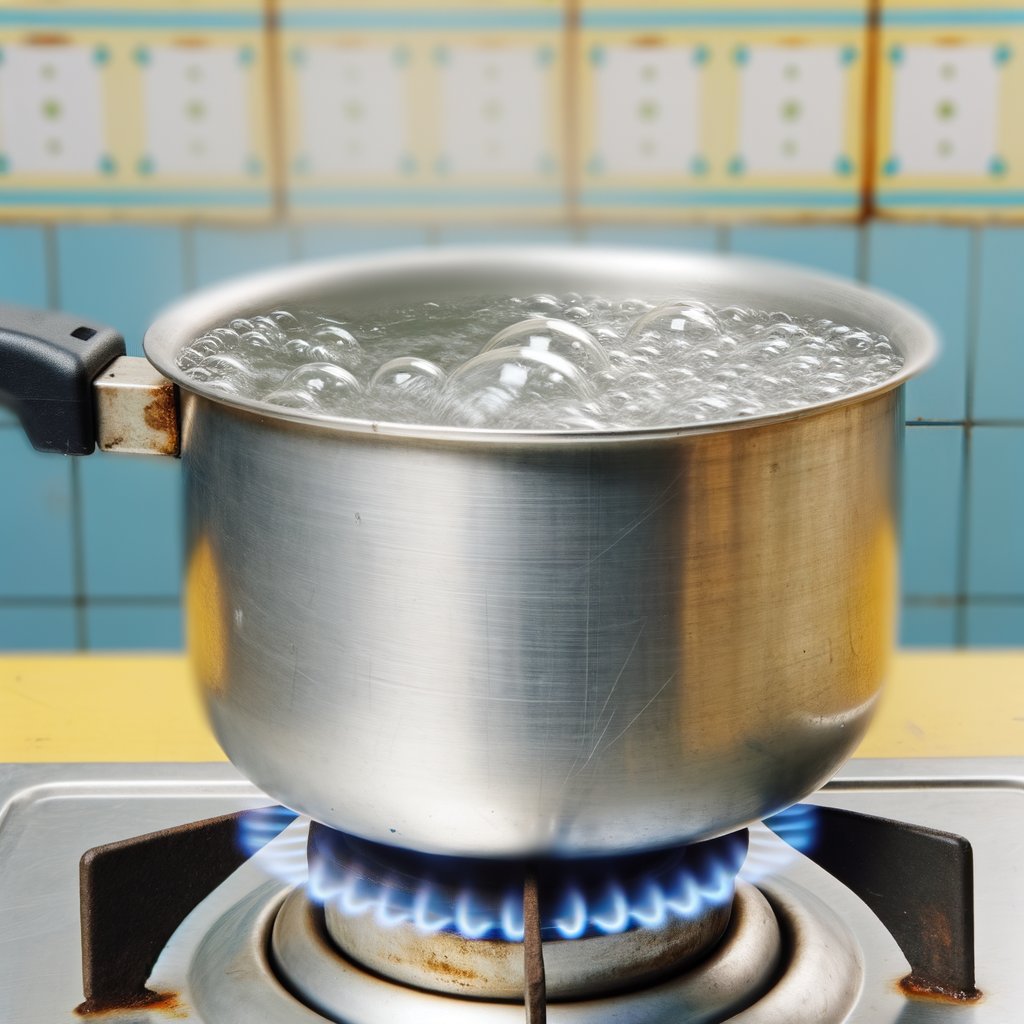
A pot of water on a stove shows steam and bubbles,
illustrating convection currents in the boiling
water.
- This sets up a circulating pattern called convection current .
Question (Page 3): Have you ever observed what happens when a pot of water is kept for heating on a stove or fire?
Answer:
We have studied that
convection
is
heat transfer
through
movement
of
heated matter
. This is why
water
circulates
in the
pot
during
heating
.
- Bottom water heats first and rises to top
- Cool water sinks down to replace hot water
Activity 7.2: Observing Convection Currents (Page 3)
What you need:
- Glass beaker with water
- Potassium permanganate crystals
- Tripod stand
- Candle
What to do:
- Step 1: Fill a glass beaker with water
- Step 2: Add a few potassium permanganate crystals at the bottom of the beaker
- Step 3: Place the beaker on a tripod stand and heat it with a candle from below (at the side where potassium permanganate crystals are)
- Step 4: Observe the movement of the coloured streaks
Observations
What you see:
- Coloured water rises on the heated side
- Cool water descends on the other side
- Purple streaks move in circular pattern
- Convection currents become clearly visible
Why this happens:
We have studied that
heated fluid
rises up
while
cooler fluid
sinks down
. This is why
coloured water
shows
the
circulation pattern
.
- Hot coloured water moves upward due to lower density
- Cool clear water moves downward due to higher density
🌟 Fascinating Fact: The reason smoke and warm air always rise upward is convection. Hot gases produced during combustion are less dense than the surrounding cool air. So they rise upward, carrying the smoke with them.
