
 You are here
What is Conduction?
It is the process of heat transfer from the hotter end to the cooler end of an object .
Key Facts and Examples
- Conduction occurs mainly in solids .
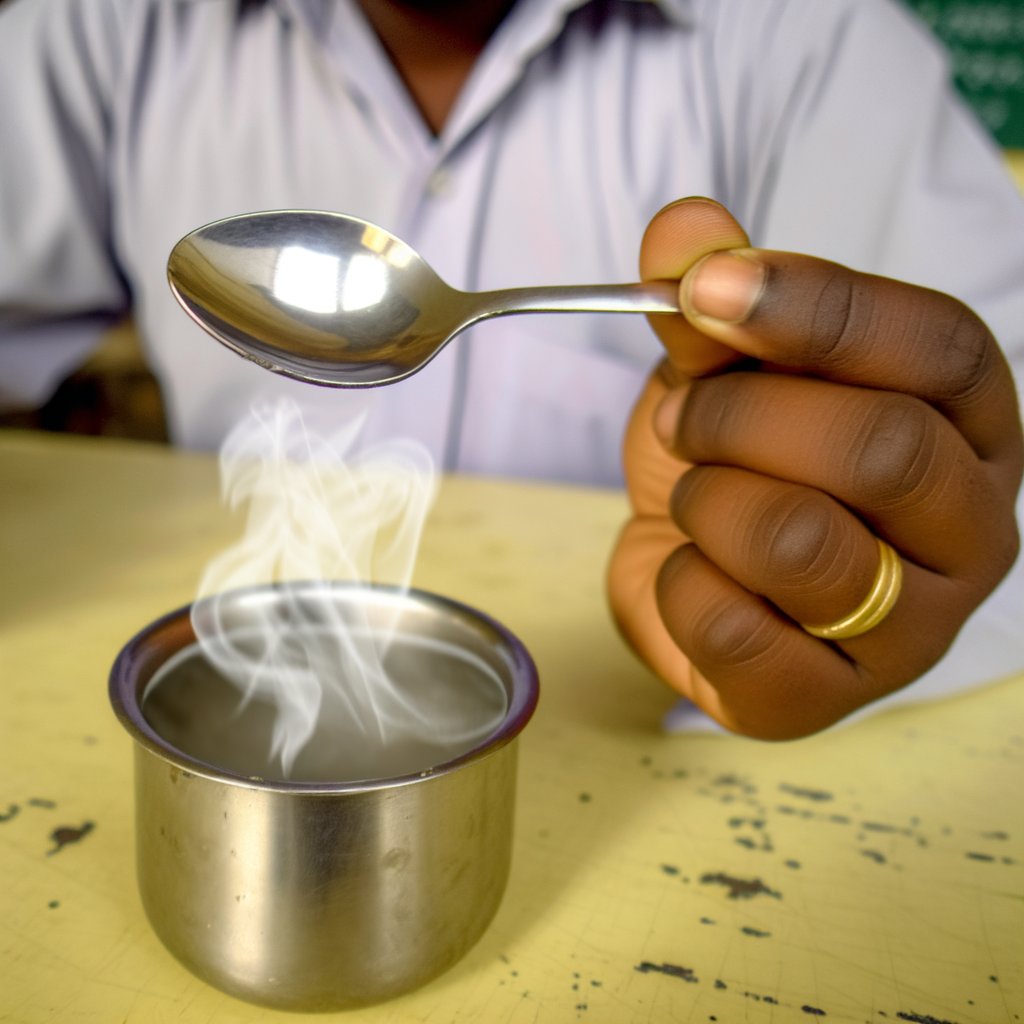
A metal spoon conducts heat from the hot water,
demonstrating how heat transfers through solids.
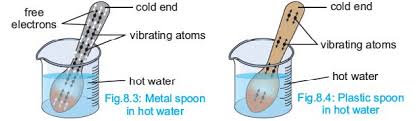
Example: Metal spoon handle gets hot when other end touches fire
- Metals are generally good conductors of heat .
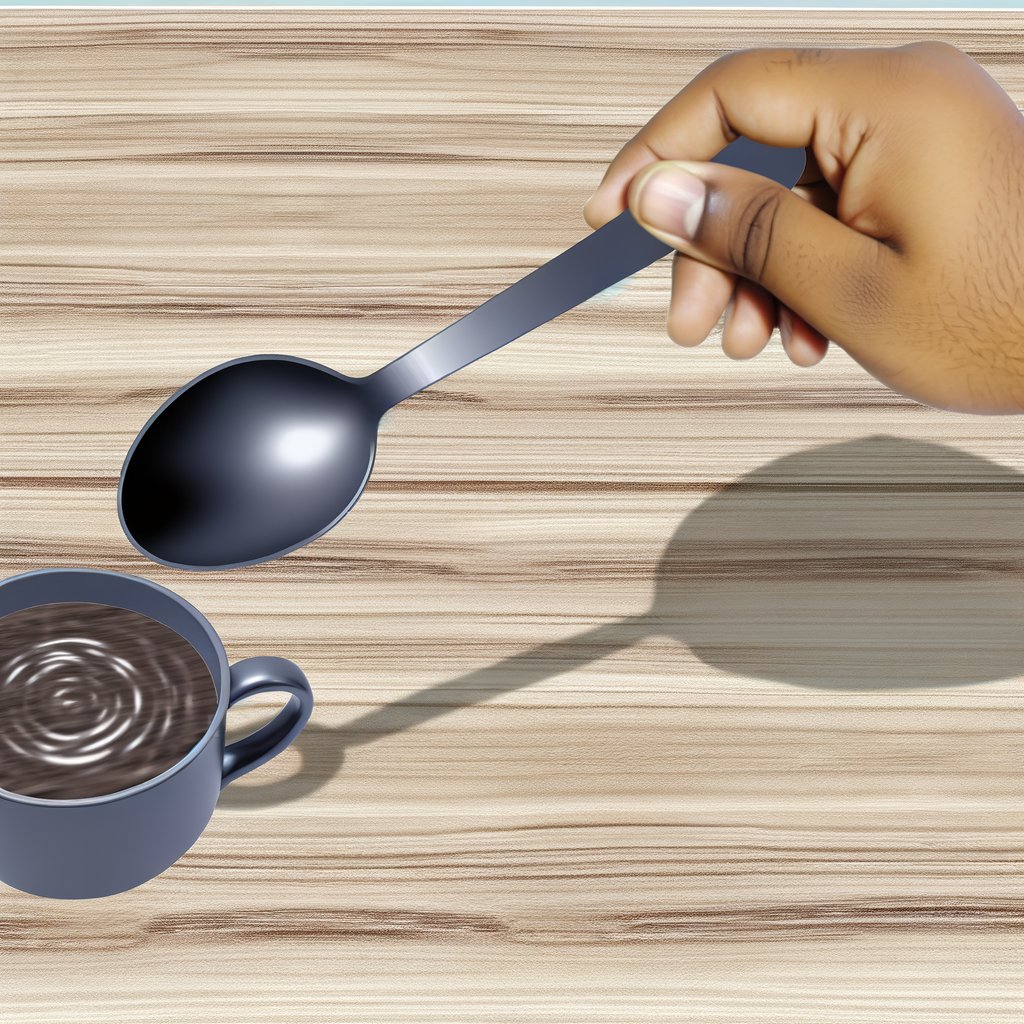
A metal spoon conducts heat from the hot water to
the hand holding it, demonstrating conduction.
Example: Iron rods, copper wires, aluminium pans conduct heat quickly
- Materials that readily allow heat transfer are called conductors .
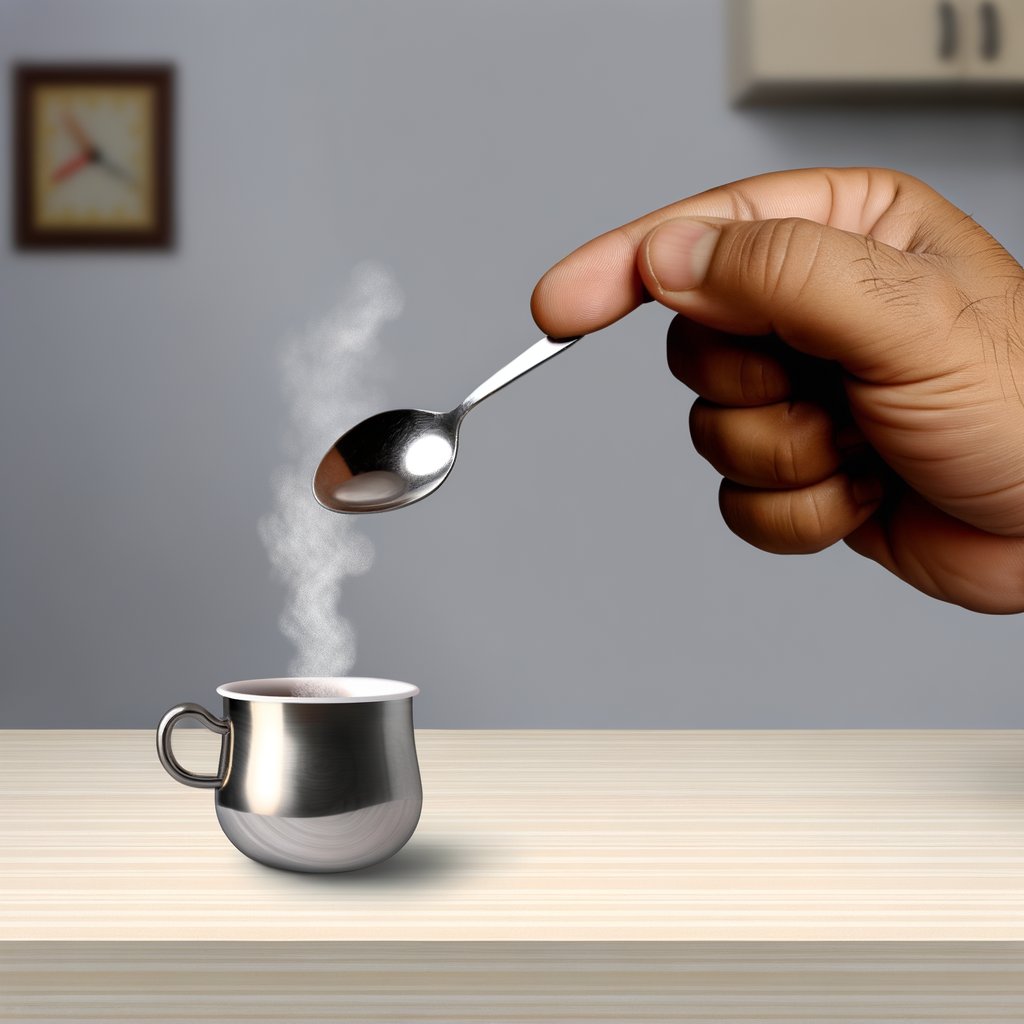
A person holds a metal spoon with one end in hot
water, demonstrating heat conduction through the
spoon.
Example: Silver, copper, gold are excellent heat conductors
- Materials that do not allow heat transfer easily are insulators .
Example: Wood, plastic, rubber, cloth, air are poor conductors
Question (Page 2): Hold one end of a metal spoon and put the other end in a cup of hot water. After a few minutes, the end you are holding will also become warm. This is because heat was transferred through the metal.
Answer:
We have studied that
conduction
is the
process
of
heat transfer
through
solids
. This is why the
metal spoon
conducts heat
from the
hot end
to the
cool end
.
- Heat moves through metal molecules by vibration
- Metal atoms pass energy to neighbouring atoms
Activity 7.1: Comparing Heat Conductors (Page 2)
What you need:
- Rods of equal thickness made of iron, copper, glass, wood
- Small pieces of wax
- Candle flame
What to do:
- Step 1: Fix small pieces of wax at equal distances along each rod
- Step 2: Heat one end of each rod simultaneously using the same source of heat (candle flame)
- Step 3: Observe which rod's wax pieces melt fastest
Observations
What you see:
- Metal rods (copper, iron) melt wax fastest
- Glass rod melts wax slowly
- Wood rod melts wax slowest
- Copper rod melts wax faster than iron rod
Why this happens:
We have studied that
metals
are
good conductors
of
heat
. This is why
metal rods
transfer heat
faster
than
glass
or
wood
.
- Metal atoms vibrate easily and pass energy quickly
- Non-metals have poor heat conduction properties
🌟 Fascinating Fact: Metals are much better conductors of heat compared to non-metals. Among all metals, silver is the best conductor of heat, followed by copper and then gold. A diamond (non-metal) is an exception; it can conduct heat even better than silver.
