
 You are here
Triangles between Parallel Lines with a Common Base
Triangles between Parallel Lines with a Common Base
Last updated at March 13, 2026 by Teachoo
Transcript
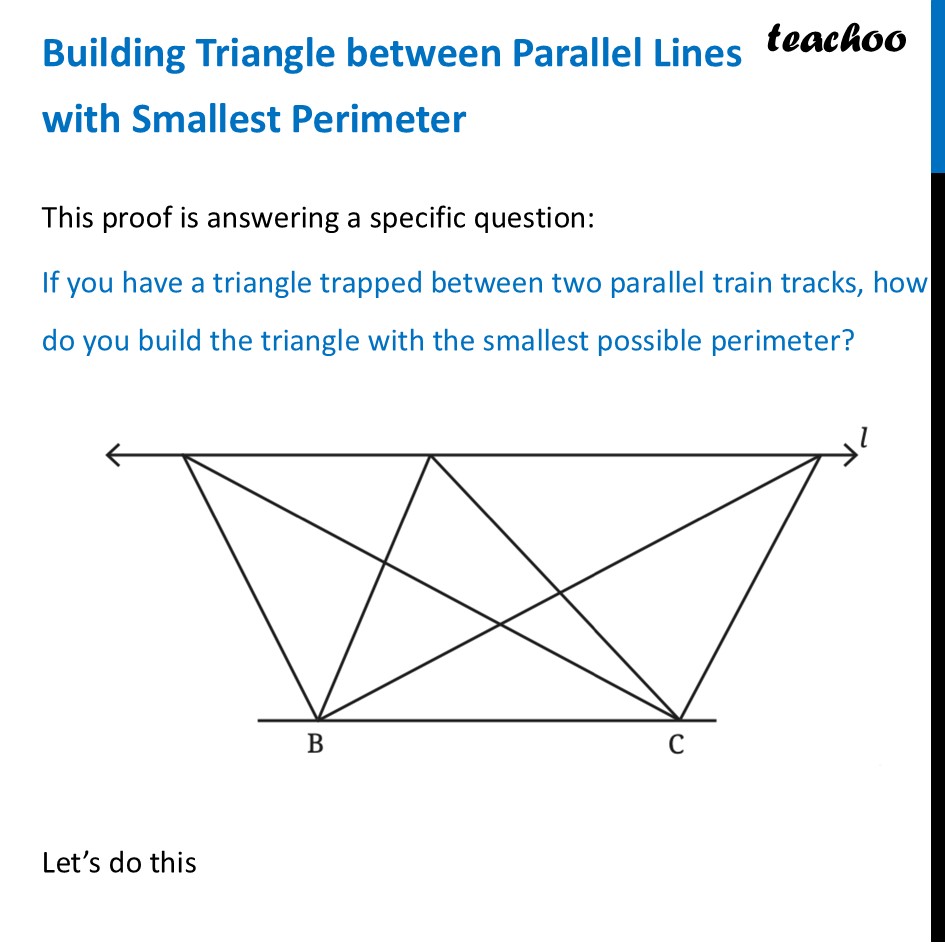
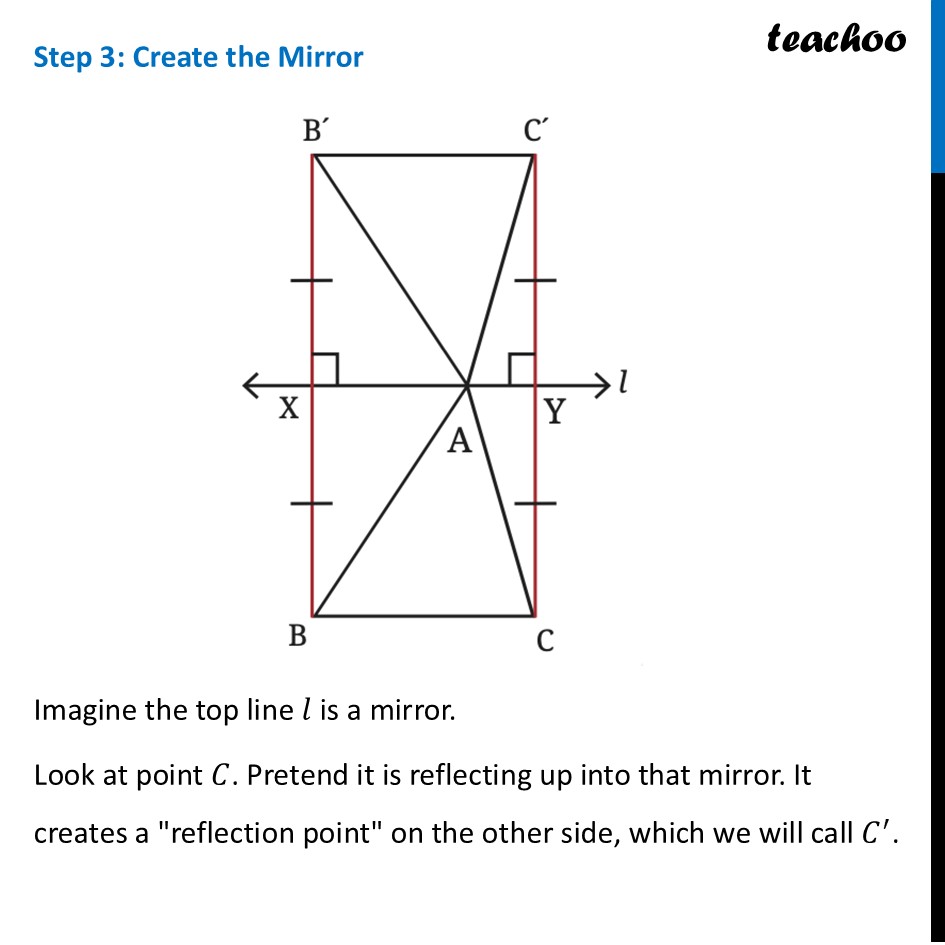
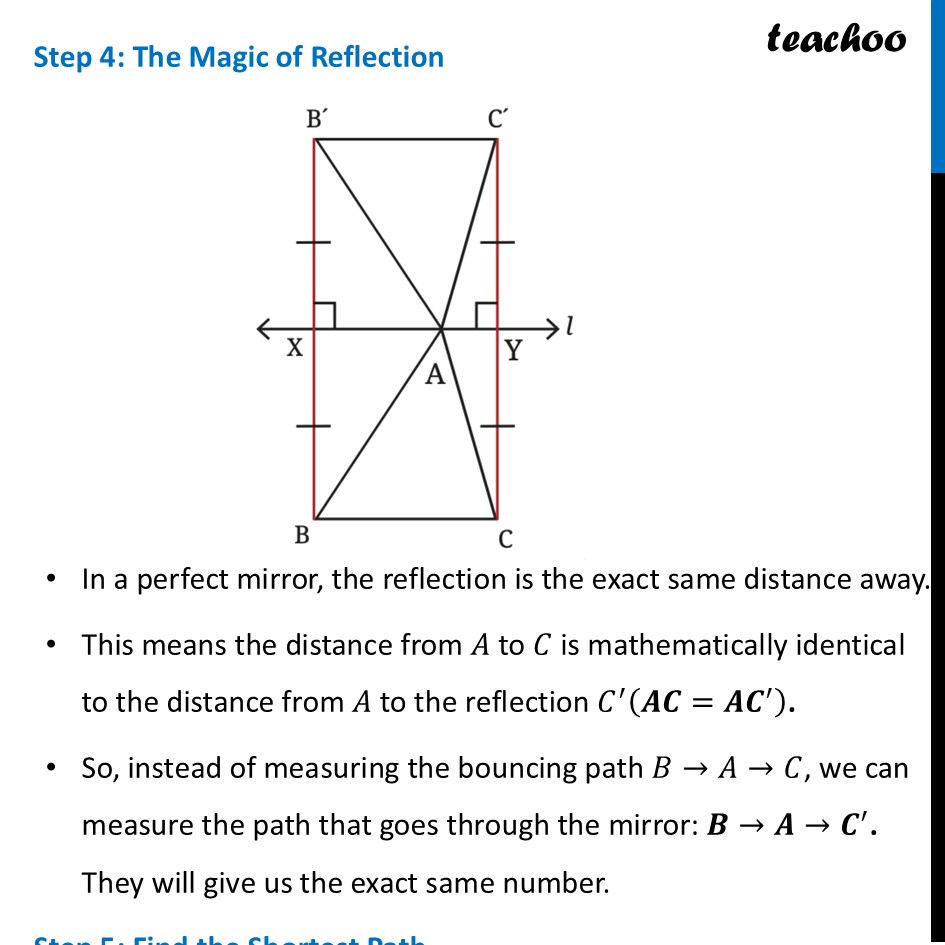
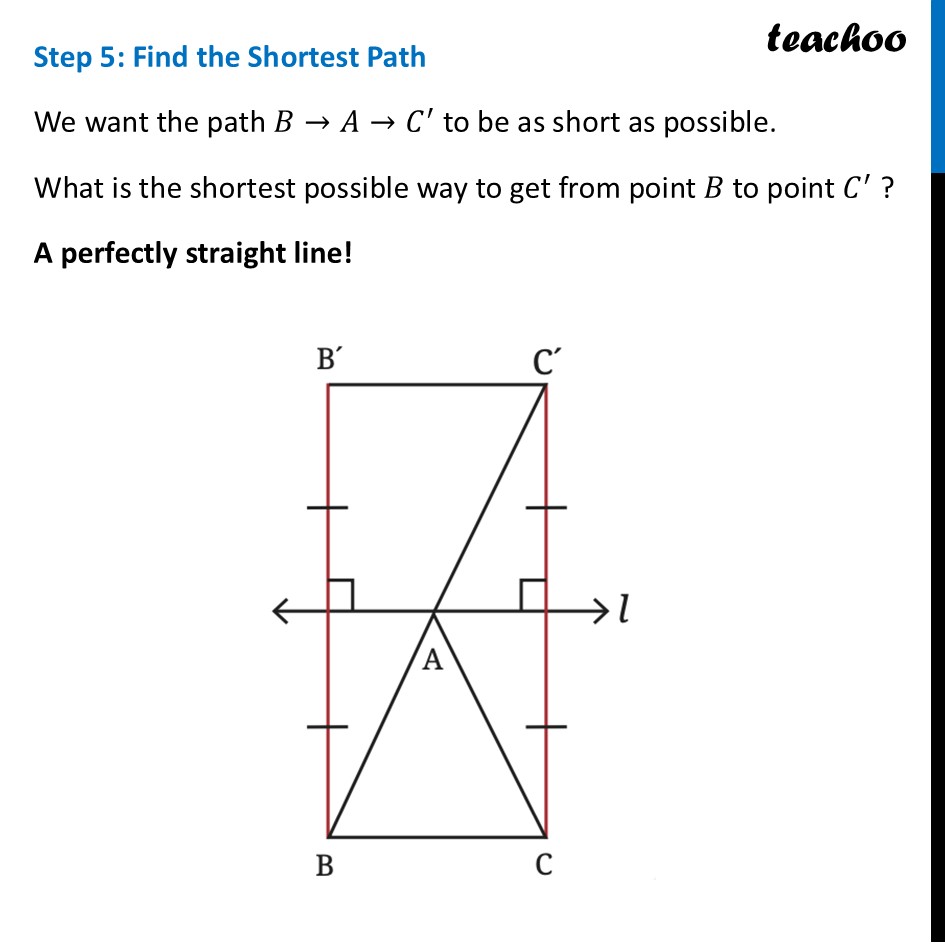
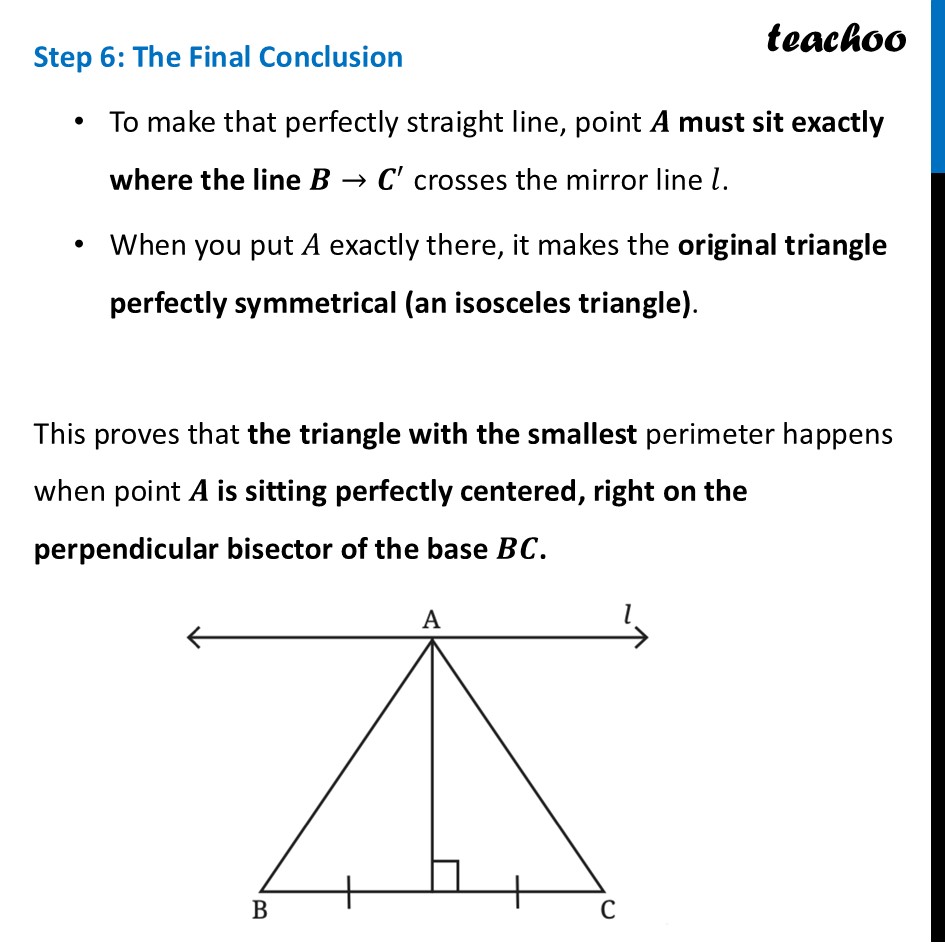
Building Triangle between Parallel Lines with Smallest PerimeterThis proof is answering a specific question: If you have a triangle trapped between two parallel train tracks, how do you build the triangle with the smallest possible perimeter? Let’s do this Step 1: Understand the Setup We have a bottom line with points 𝐵 and 𝐶. This is our base. We have a top parallel line 𝑙. Our top point, 𝐴, can slide anywhere along this line. Step 2: Simplify the Problem Perimeter is all three sides added together: 𝑨𝑩+𝑩𝑪+𝑪𝑨. No matter where you slide point 𝐴, the bottom base 𝑩𝑪 never changes its length. Because 𝐵𝐶 is stuck the way it is, we can ignore it! To find the smallest overall perimeter, we only need to find the spot for 𝑨 that makes the journey from 𝐵→𝐴→𝐶 as short as possible. Step 3: Create the Mirror Imagine the top line 𝑙 is a mirror. Look at point 𝐶. Pretend it is reflecting up into that mirror. It creates a "reflection point" on the other side, which we will call 𝐶^′. Step 4: The Magic of Reflection In a perfect mirror, the reflection is the exact same distance away. This means the distance from 𝐴 to 𝐶 is mathematically identical to the distance from 𝐴 to the reflection 𝐶^′ (𝐴𝐶=𝐴𝐶^′ ). So, instead of measuring the bouncing path 𝐵→𝐴→𝐶, we can measure the path that goes through the mirror: 𝐵→𝐴→𝐶^′. They will give us the exact same number. Step 5: Find the Shortest Path We want the path 𝐵→𝐴→𝐶^′ to be as short as possible. What is the shortest possible way to get from point 𝐵 to point 𝐶^′ ? A perfectly straight line! Step 6: The Final Conclusion To make that perfectly straight line, point 𝐴 must sit exactly where the line 𝐵→𝐶^′ crosses the mirror line 𝑙. When you put 𝐴 exactly there, it makes the original triangle perfectly symmetrical (an isosceles triangle). This proves that the triangle with the smallest perimeter happens when point 𝐴 is sitting perfectly centered, right on the perpendicular bisector of the base 𝐵𝐶.
