
 You are here
![Proof of Baudhāyana’s method - Step-by-Step [Class 8 Ganita Prakash] - Combining Two squares](https://cdn.teachoo.com/7f5f8aca-5880-4b71-94a3-fa33cae3dd21/slide67.jpg)
Combining Two squares
Last updated at February 20, 2026 by Teachoo
Transcript
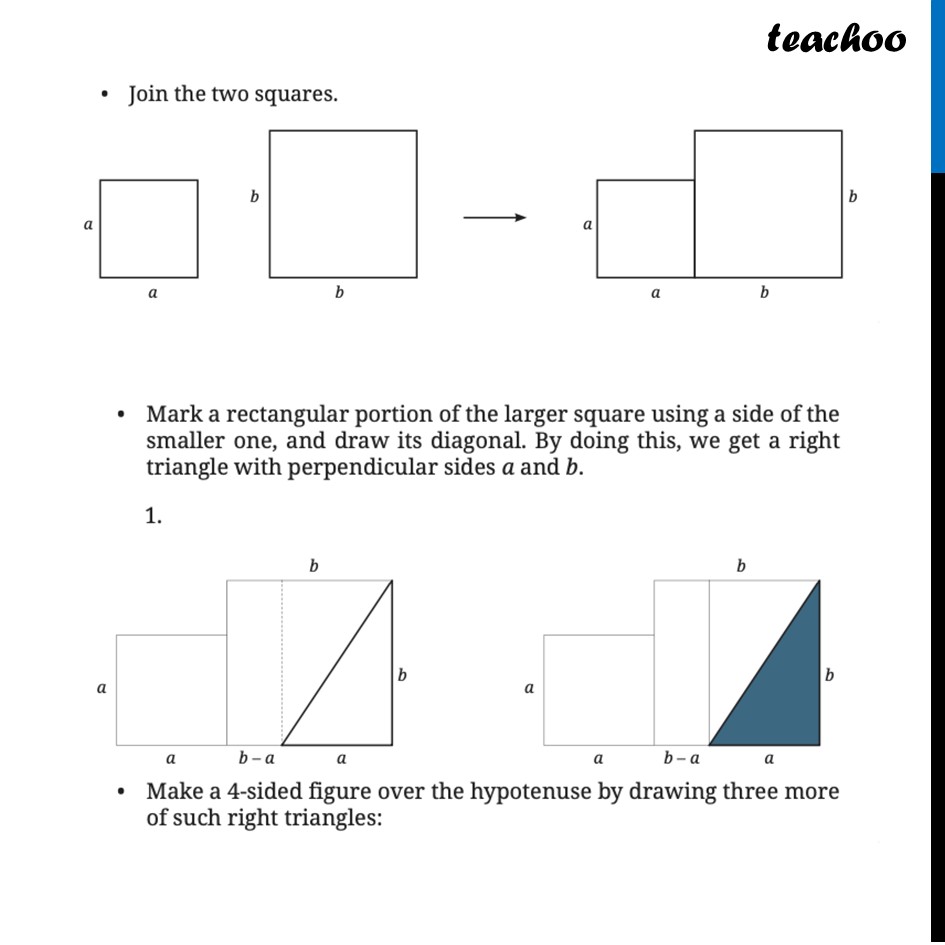
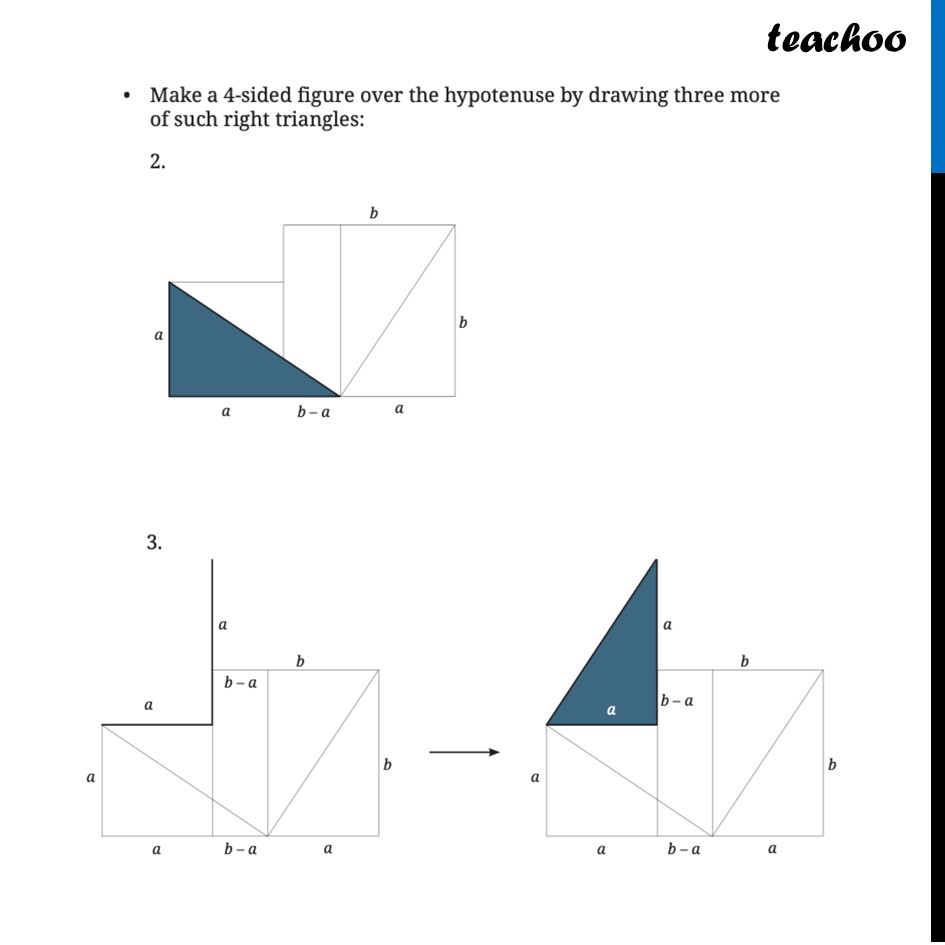
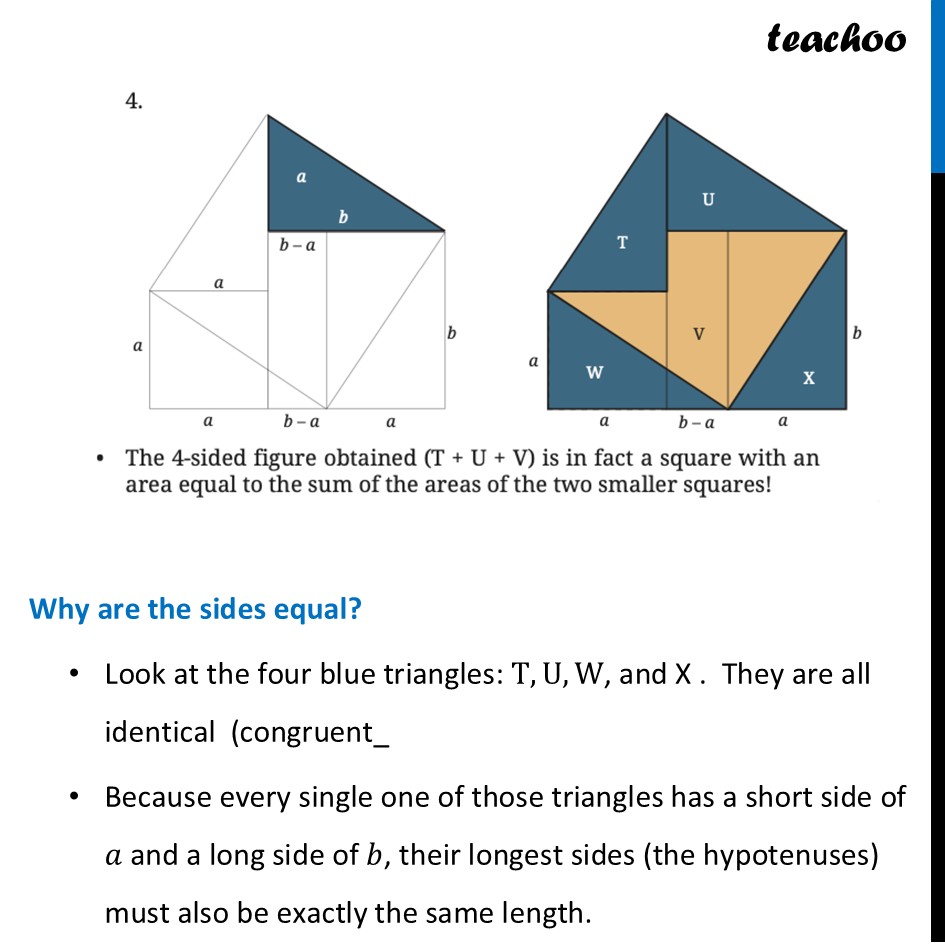
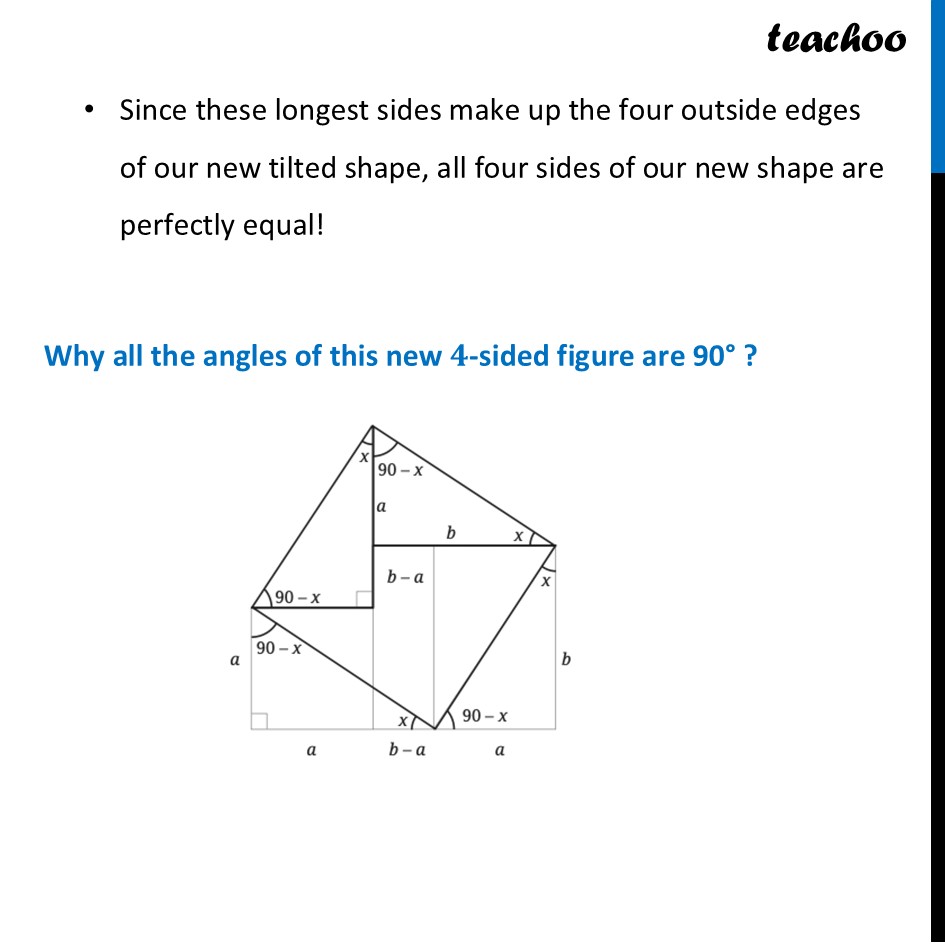
Proof of Baudhāyana’s methodSTEP 1: The Setup □ STEP 2: The Tilt Action: Stick 'a' & 'b' squares together. Magic Trick: Draw a diagonal → creates a RIGHT TRIANGLE! Action: Make 3 more copies of the triangle. Result: Arrange them into a TILTED 4-sided shape (pieces T+U+V). □ STEP 3: Proving it's a True Square Four Equal Sides: Yes! All 4 outside walls are the HYPOTENUSE of identical triangles. Four Corners: Yes! Angles on a flat line add to . □ STEP 4: The Grand Finale Action: Slide piece T to , and to . Boom! Rebuilt original squares. Let’s also see the steps from our book Why are the sides equal? Look at the four blue triangles: T,U,W, and X . They are all identical (congruent_ Because every single one of those triangles has a short side of 𝑎 and a long side of 𝑏, their longest sides (the hypotenuses) must also be exactly the same length. Since these longest sides make up the four outside edges of our new tilted shape, all four sides of our new shape are perfectly equal! Since these longest sides make up the four outside edges of our new tilted shape, all four sides of our new shape are perfectly equal! Why all the angles of this new 𝟒-sided figure are 90° ? Now, We know that a completely straight flat line is always 〖𝟏𝟖𝟎〗^∘. In any right triangle, the 90^∘ angle takes up half the angles, so the two smaller pointy angles must add up to the remaining 90^∘. The book labels these two small angles as 𝐱 and 𝟗𝟎−𝐱. Now, look at the bottom corner of our tilted square. It sits on the straight line right between an angle 𝐱 (from the right triangle) and an angle 𝟗𝟎−𝐱 (from the left triangle). If we subtract the two triangle angles from our 180^∘ straight line, we get: 〖𝟏𝟖𝟎〗^∘−(𝒙)−(𝟗𝟎−𝒙)=180^∘−90^∘=〖𝟗𝟎〗^∘ Boom! The corner of the tilted shape is exactly 90^∘. Because all four corners work this exact same way, we have four equal sides and four right angles. It is officially a square!
