
 You are here
What is Work?
- We learnt in the last section —
- Work is done when a force displaces an object in the direction of the force.
- Work = Force × Displacement
- W = F × s
- Its SI unit is joule (J).
What is Energy?
- Energy is the capacity to do work.
- An object having the capacity to do work is said to possess energy.
- When positive work is done on an object, it gains energy.
- The SI unit of energy is the same as the SI unit of work — the joule (J) .
What is the Work-Energy Theorem?
- Work done on an object appears as a change in its energy.
- Work-Energy Theorem: Work done on an object = change in its energy
-
This theorem also holds
- for a system of objects,
- even when the forces applied on an object are not constant.
- This theorem helps us solve problems which we could not have done easily otherwise.
Example 1 — Throwing a cricket ball (Gaining energy)
-
GIF Watch: how does energy transfer from one object to another

- A fielder throws a cricket ball towards the wicket.
- The fielder does positive work on the ball.
- By the theorem — this work appears as a gain in the ball's energy.
- The moving ball hits the wicket and uses this energy to apply a force and make the wicket fall.
- So the ball transferred its energy to the wicket.
Example 2 — Stopping a jet aircraft (Losing energy)
GIF
Watch: how does energy transfer from one object to another

- A high-speed jet lands on the deck of an aircraft carrier.
- A hook on the jet's tail catches a wire stretched across the deck.
- The wire pulls backward — opposite to the jet's displacement.
- So the wire does negative work on the jet.
- By the theorem — this negative work equals the decrease in the jet's energy.
- The jet's energy keeps decreasing until it stops.
- (We will calculate this fully in the Kinetic Energy section.)
Example 3
GIF
Watch: how does energy transfer from one object to another

- We do 50 J of work on a box.
- By the work-energy theorem, the energy of the box changes by 50 J.
📘 Example 7.3 (NCERT)
In a game of carrom, a player played a shot to pocket the black coin.
Identify who does work, and the changes in energy that occur at each collision.
Identify who does work, and the changes in energy that occur at each collision.
- The moving striker collides with the white coin, which in turn collides with the black coin.
GIF
Watch: how does energy transfer from one object to another

| Who does work | On whom | Type of work | Energy change |
|---|---|---|---|
| Striker | White coin | Positive (force in direction of displacement) | White coin's energy increases |
| White coin | Striker | Negative (Newton's third law — opposite force) | Striker's energy decreases |
| White coin | Black coin | Positive | Black coin's energy increases |
| Black coin | White coin | Negative | White coin's energy decreases |
How does energy transfer from one object to another?
- When an object has energy, it can apply a force on another object and make it move.
-
By making it move, it transfers energy to that object.
Example: The moving ball hits the wickets.
It transfers its energy to the wickets, making them move. - Thus, work done on an object and its energy are closely related to each other.
📝 Important points — 7.2 The Work-Energy Theorem
| Point | Detail |
|---|---|
| Energy | Capacity to do work |
| How objects gain energy | Positive work done on them |
| Work-energy theorem | Work done on an object = change in its energy |
| Also valid for | Systems of objects, non-constant forces |
| SI unit of energy | joule (J) — same as work |
🚀 Ready to Go Beyond
-
Doing mechanical work is one way of transferring energy from one object to another. But that is not the only way!
- Energy can be transferred as heat — when two objects at different temperatures come in contact, energy flows from the hotter one to the colder one.
- Energy can move without direct contact — the Sun's energy reaches the Earth through radiation.
- Energy is transferred in electric circuits, via sound waves, and even in nuclear reactions that power the Sun.
👩🔬 Meet a Scientist
IMAGE
Portrait: James Prescott Joule — the joule is named after him
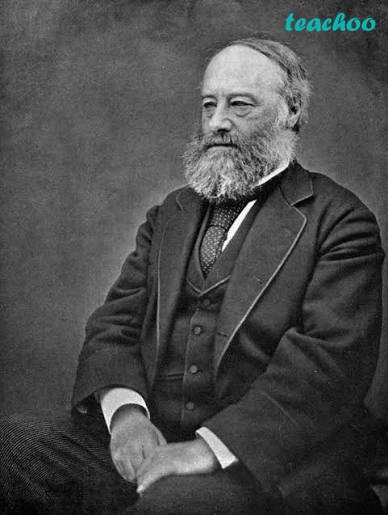
- The SI unit of work and energy, joule, is named after the scientist James Prescott Joule .
- He studied how mechanical energy and thermal energy are related, and can be converted from one to the other.
- This helped develop a unified way to understand energy.
💡 Worth remembering
- Energy = capacity to do work. Work = the way energy is transferred.
- Positive work on an object → its energy increases. Negative work → its energy decreases.
- Work and energy have the same unit — joule.
✅ Quick self-check
-
A moving hammer drives a nail into wood. Does the hammer have energy?
View Answer
- The hammer does work on the nail — it makes the nail move into the wood.
- Anything that can do work has energy.
- Yes, the moving hammer has energy.
-
50 J of work is done on a box. What is the change in its energy?
View Answer
- By the work-energy theorem, work done = change in energy.
- Change in energy = 50 J
-
Negative work is done on a rolling ball. What happens to its energy?
View Answer
- Work done = change in energy.
- Negative work means negative change.
- The ball's energy decreases.
Key terms and units
| Term | Meaning | Unit |
|---|---|---|
| Energy | Capacity to do work | joule (J) |
| Work-energy theorem | Work done on an object = change in its energy | — |
