
 You are here
💬 Think about it
A tree stays in one place for years, while a dog runs about all day.
Their bodies live very different lives — so their tissues cannot be the same.
How is a plant different from an animal?
![3.1 Why are Plant and Animal Tis - Tissues in Action - [Teachoo] - Concepts](https://cdn.teachoo.com/f11f87fa-7c5d-46d8-a750-25fda374cbc4/why-plant-and-animal-tissues-differ-tree-vs-dog.webp)
Plant
Animal
Fixed in one place
Generally, moves from place to place
Needs support to stay firm and upright
Needs flexibility for locomotion
Makes its own food (photosynthesis)
Takes food from outside and digests it
Tree — fixed
in place, needs
support
Rigid cell wall
gives strength
Fixed Vs Moving
Dog — moves
about
Flexible cell, no
rigid wall —
helps movement
- Most plants are fixed in one place and do not move from place to place like animals. They need support to stay firm and upright.
- In general, animals can move (although some, such as sponges , are immobile).
- Plants make their own food by using solar energy, through photosynthesis .
- Animals obtain food from different food sources and digest it.
What special functions does a plant perform (which an animal does not)?
- A plant must stay firm and upright while fixed in one place — so it needs support .
- A plant must make its own food by using solar energy (photosynthesis).
- A plant must transport water and food to different parts of its body.
- A plant must grow — and its growth pattern is different from that of an animal.
What special functions does an animal perform (which a plant does not)?
- An animal generally moves from place to place — this is called locomotion .
- An animal must digest food obtained from different food sources.
- An animal must transport food and water to different parts of its body.
Why do plants and animals need different tissues?
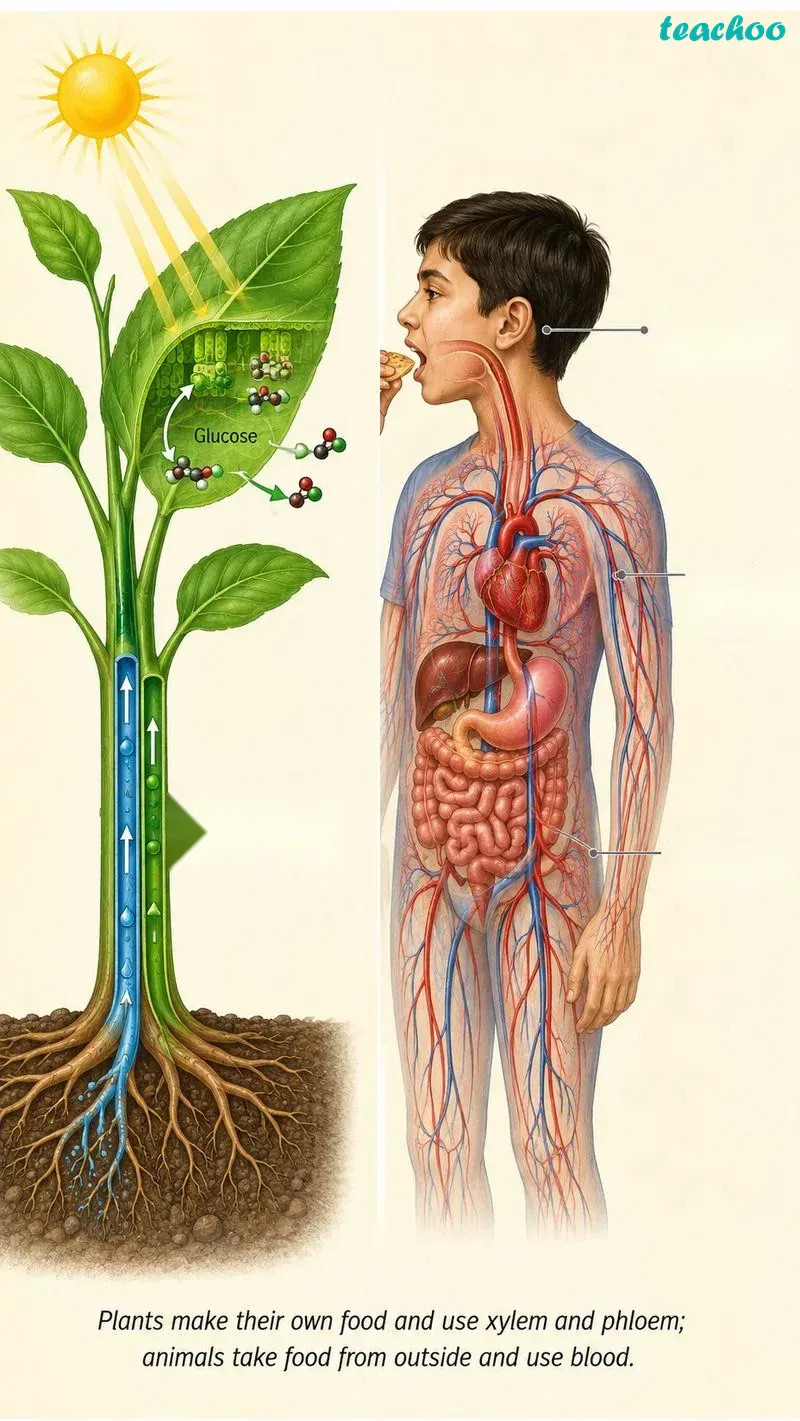
Why are Plant and Animal Tissues Different?
Two Ways of Living
Fixed vs moving bodies
1. Plant
Fixed in one place · needs support
Cell wall gives rigidity
Makes its own food
Example:
Support tissue in a stem
Photosynthesis in a leaf
Xylem carrying water
2. Animal
Moves about · needs flexibility
No cell wall, changes shape
Digests food it eats
Example:
Muscle tissue for movement
Nervous tissue for messages
Blood carrying nutrients
↓
Because they live in different ways,
plants and animals need
different tissues
— and their growth tissues differ too.
Plant makes its
own food
(photosynthesis)
Animal takes
food from
outside
Xylem carries
water; phloem
carries food
Blood carries
food and gases
- They need different tissues because plants and animals live in different ways.
What are the major differences between plant and animal cells?
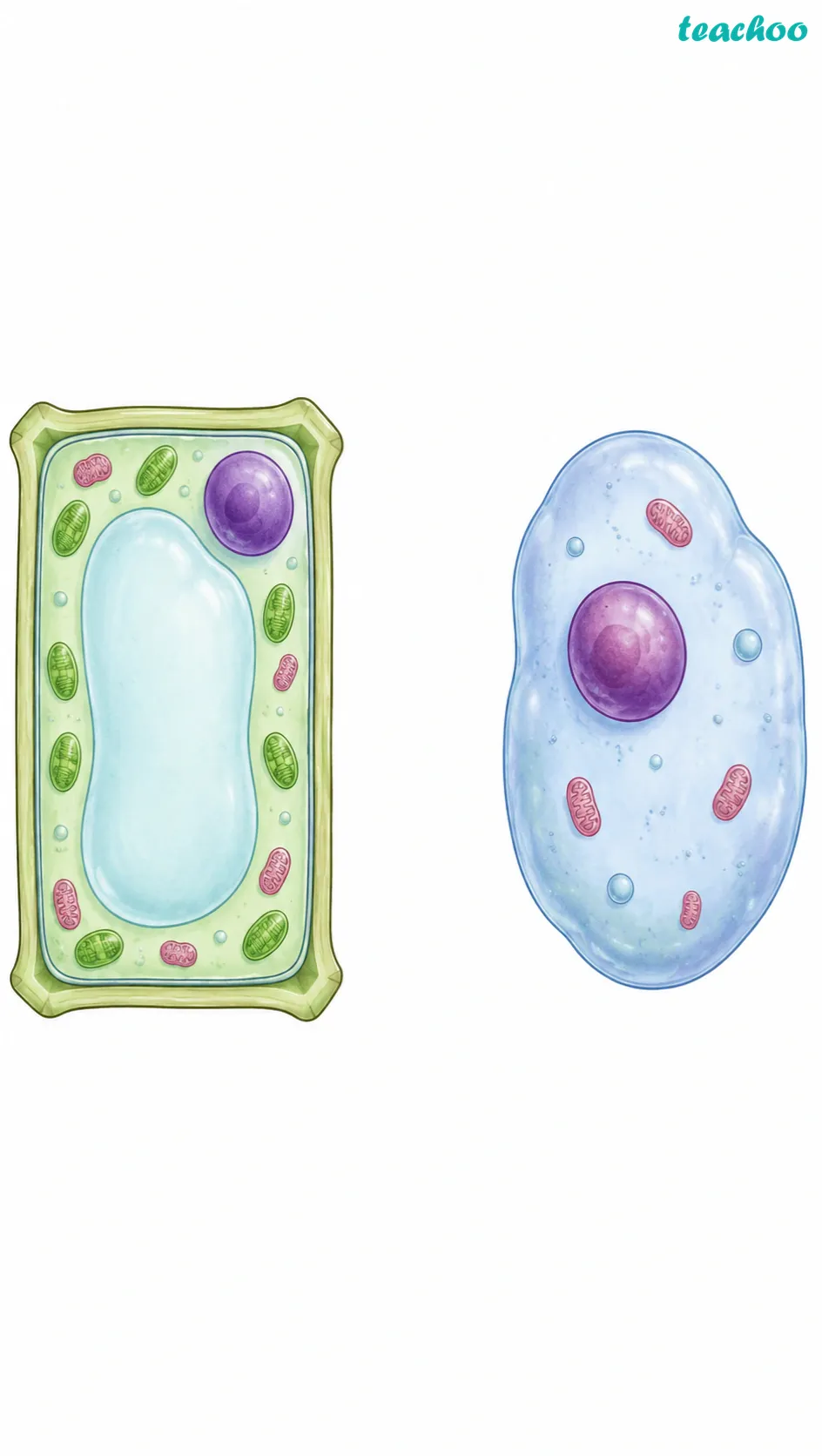
Plant Cell
Animal Cell
Cell wall
No Cell Wall
Plant cell
Animal cell
Cell wall present
No rigid cell wall
Gives rigidity and strength
Cell changes shape easily
Plant stays firm and upright
Helps locomotion
- The plant cell has a cell wall , which provides rigidity and strength , so the plant stays firm and upright.
- The animal cell has no rigid cell wall , so it can change shape easily . This cellular flexibility eventually helps make their bodies suitable for locomotion .
Example:
We compared plant and animal cells in Chapter 2,
Cell: The Building Block of Life
.
🔬 Meet a Scientist
- B. G. L. Swamy was a renowned Indian botanist known for his contributions to the area of plant morphology and anatomy .
- His book, Hasuru Honnu , is a popular book in the Kannada language. It is a blend of science, satire and culture.
- The book describes the botanical excursion in the forests of the Western Ghats and is a treasure of plant descriptions, utilisation, conservation practices, botanical folklores and myths.
- The book won the Kendra Sahitya Akademi Award in 1978 .
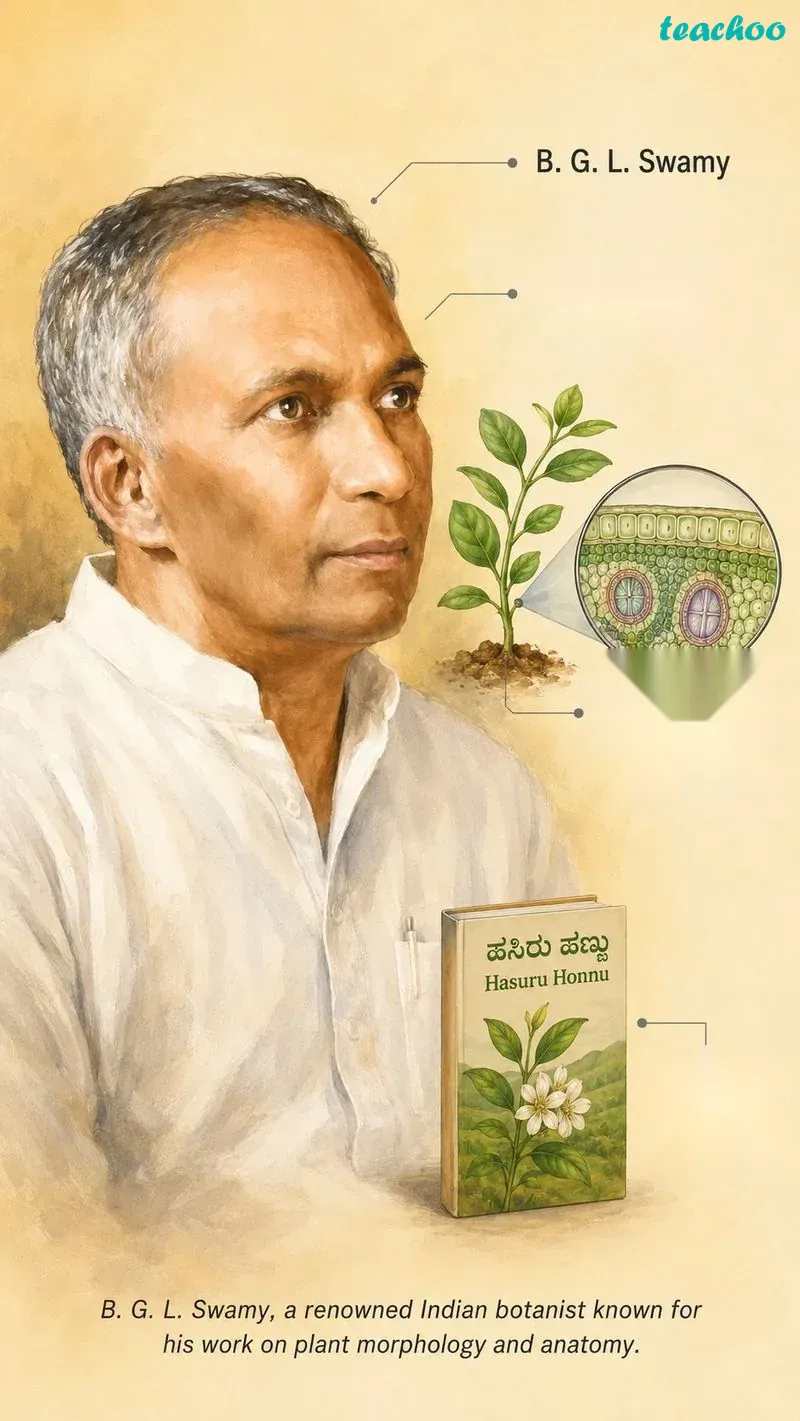
Renowned Indian
botanist
Worked on
plant morphology
and anatomy
Kannada book
‘Hasuru Honnu’ —
Sahitya Akademi
Award, 1978
❓ Test Yourself
-
Why do most plants need support?
View Answer
They are fixed in one place and must stay firm and upright. -
What gives a plant cell its rigidity and strength?
View Answer
The cell wall. -
Why can animal cells change shape easily, and how does that help?
View Answer
They have no rigid cell wall; this flexibility makes their bodies suitable for locomotion. -
How do plants and animals differ in their mode of nutrition?
View Answer
Plants use solar energy to synthesise their own food by photosynthesis; animals digest food obtained from different food sources. -
Which plant tissues transport water and food?
View Answer
Xylem transports water and minerals; phloem transports food.
Important Points
- Plants are fixed and need support; animals move, so they need flexibility.
- The plant cell has a rigid cell wall; the animal cell does not.
- Plants make their own food by photosynthesis; animals digest food taken from outside.
- Because their needs differ, plants and animals have different tissues for movement, nutrition, control, support, transportation and protection.
Important Definitions
- Cell wall — the rigid outer layer of a plant cell, which provides rigidity and strength.
- Photosynthesis — the process by which plants use solar energy to synthesise their food components.
- Locomotion — movement of an animal from one place to another.
- Xylem — the conducting tissue that transports water and minerals from the roots to other parts of the plant.
- Phloem — the conducting tissue that transports food from the leaves to other parts of the plant.
