
 You are here
💬 Think about it
The bones of your skull do not move at all.
That is exactly what protects your brain.
What kind of joint holds bones so they cannot move?
Let us find out.
What is a fixed joint?
![3.5.4 Fixed joints - Tissues in Action - [Teachoo] - Concepts](https://cdn.teachoo.com/b2a6a161-7034-4a30-af58-8a8cb3b4f49d/3.5.4-fixed-joints-image-49.webp)
Fixed Joint
Fixed
the bones
cannot move
Joint
a junction between two bones
↓
The joint between the flat bones of the skull; it keeps the brain safe even when the body moves.
| Feature | Description |
|---|---|
| Bones involved | The flat bones of the skull, joined together |
| Movement allowed | None — the bones cannot move |
| Why it matters | Keeps the brain safe even when the body moves |
- The skull is made of flat bones joined together.
- These bones are connected by fixed joints.
- Fixed joints do not allow the bones to move.
- This keeps the brain safe even when the body moves.
Important Points
- Fixed joints do not allow movement.
- The skull bones are held by fixed joints.
- This protects the brain, eyes and ears.
📚 Ready to Go Beyond
- Stem cells in the bone marrow can divide and make new cells.
- In a bone marrow transplant, stem cells from a healthy person are given to a patient.
- This helps patients with blood cancers like leukaemia.
- It also helps with disorders such as thalassemia.
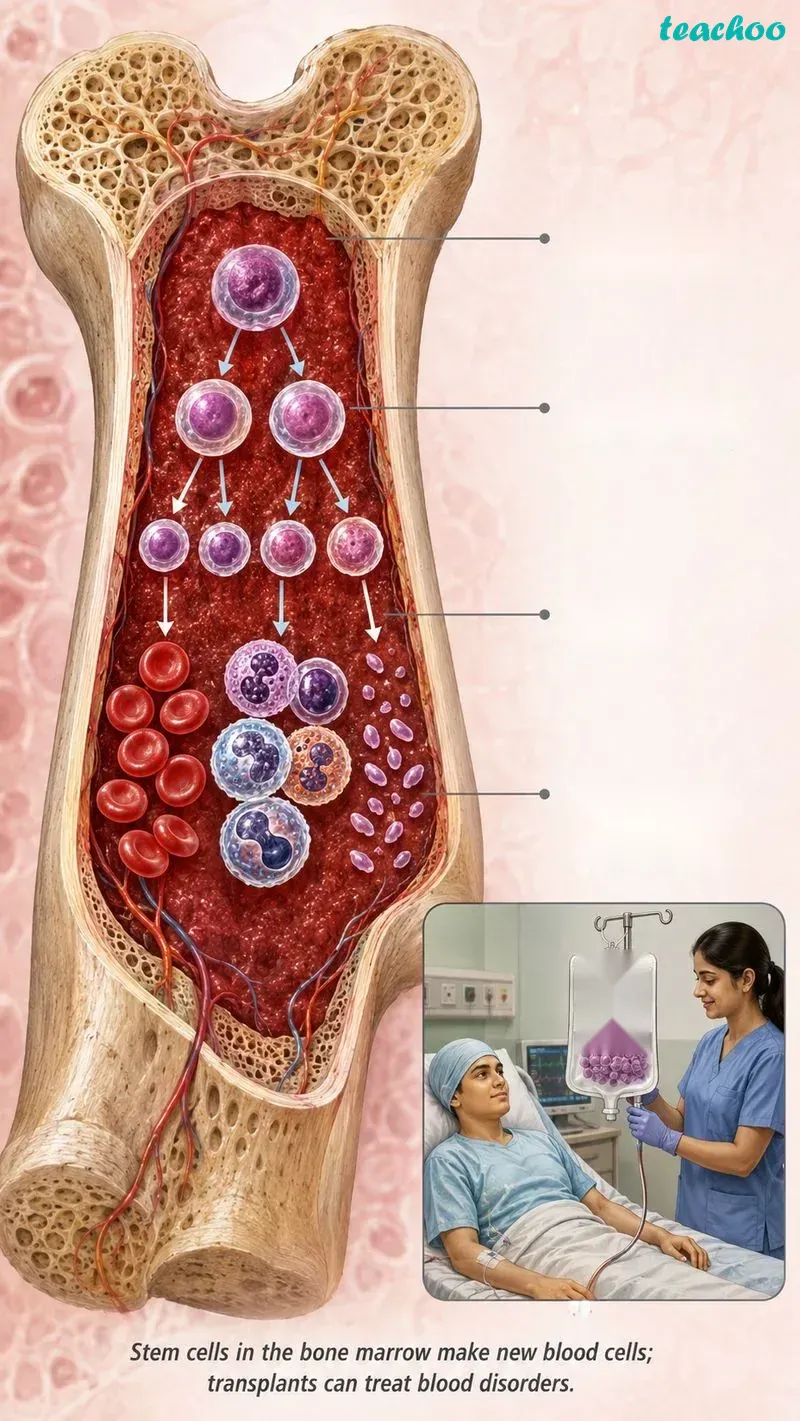
Bone marrow
(inside the bone)
Stem cells divide
to make new cells
Make new
blood cells
Transplant helps
treat leukaemia,
thalassemia
— A
Healthy
stem cells
us
🧬 Pause and Ponder
-
Look at the various poses of classical and folk dances of India. Can you identify which joints are involved? Also, what type of movement does each joint allow?
The shoulders and hips use ball and socket joints for circular movements, the elbows and knees use hinge joints for bending, and the neck uses a pivot joint for turning — so a dancer's graceful poses come from many joints working together.
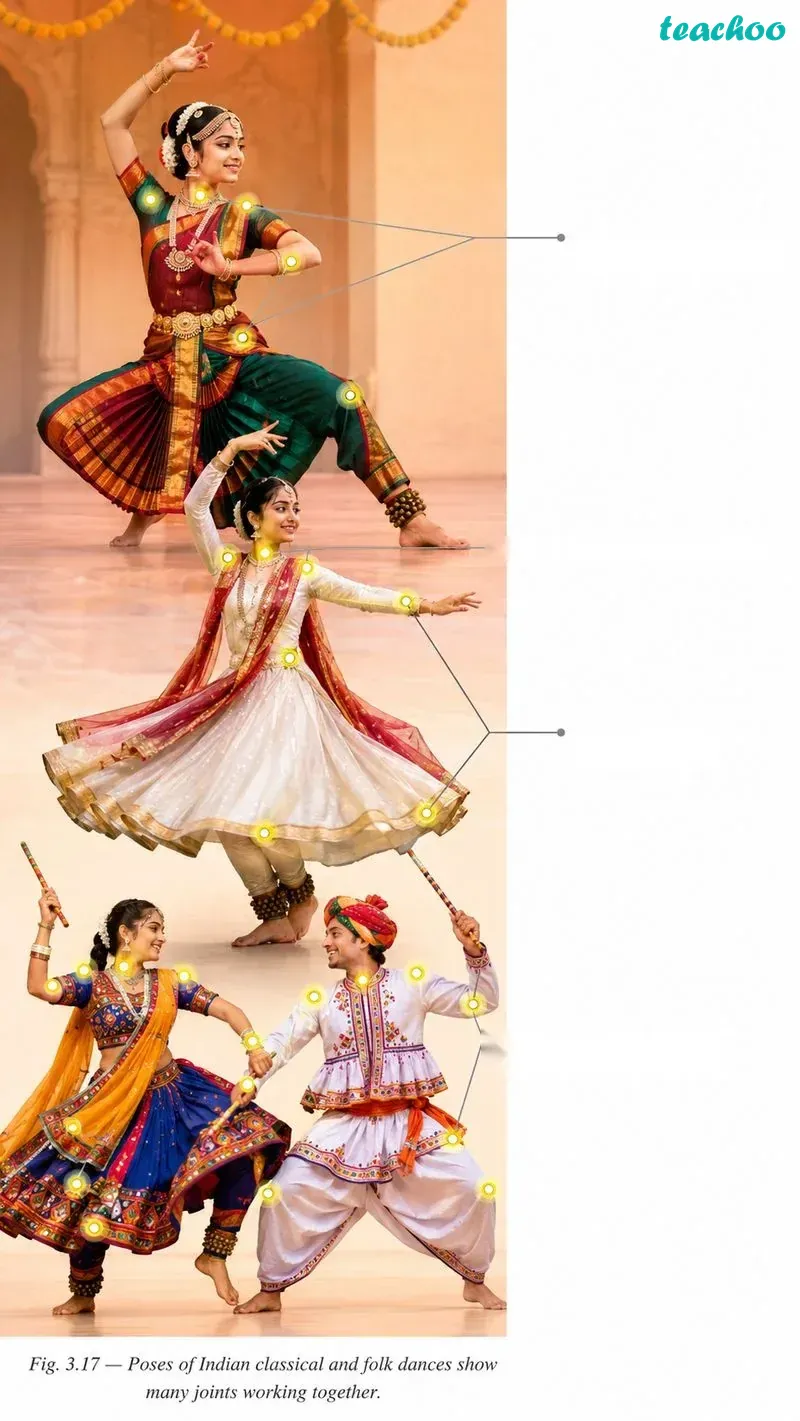
Shoulders, hips —
ball and socket (circular)
Neck — pivot (turning)
Elbows, knees —
hinge (bending)
Many joints work
together
❓ Test Yourself
-
Do fixed joints allow movement?
View Answer
No — they hold bones firmly so they cannot move. -
Where are fixed joints found?
View Answer
Between the flat bones of the skull. -
Why are fixed joints useful in the skull?
View Answer
They keep the brain safe even when the body moves.
Important Definitions
- Fixed joint — a joint that does not allow movement, as between the skull bones.
