
 You are here
The journey from shadow-based sundials to atomic clocks — thousands of years of human ingenuity.
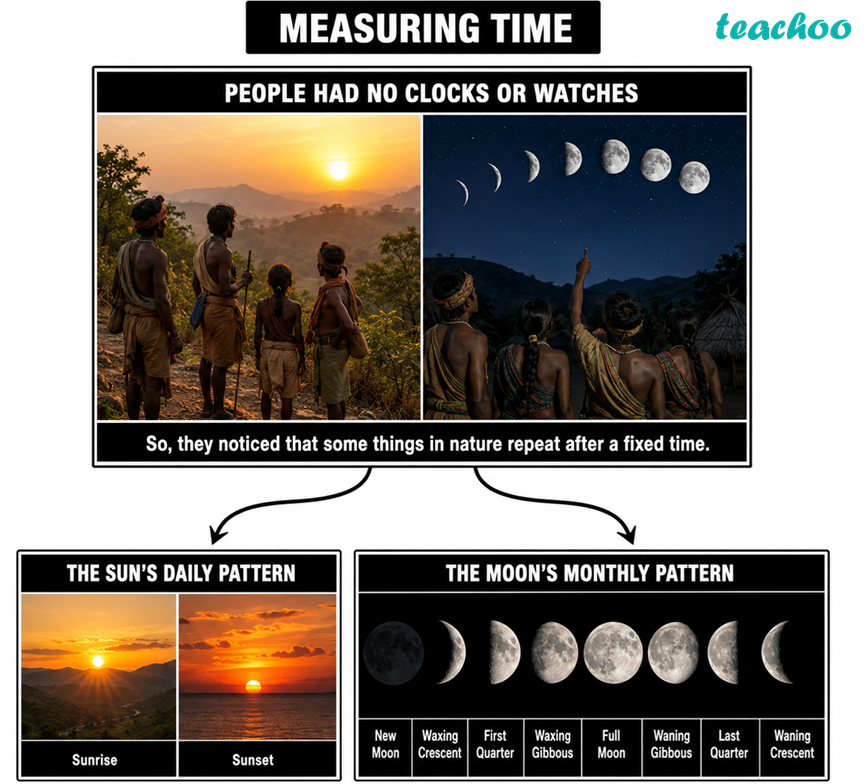
Long ago, people had no clocks or watches.
But they noticed that some things in nature repeat after a fixed time.
Example -
The Sun rises and sets every day.
The Moon changes shape and returns every month.
Seasons come and go every year.
People used these patterns to measure time.
But they noticed that some things in nature repeat after a fixed time.
Example -
The Sun rises and sets every day.
The Moon changes shape and returns every month.
Seasons come and go every year.
People used these patterns to measure time.
☀️
Fascinating Fact — What is Time?
Time since the Big Bang — a question science and philosophy both explore.
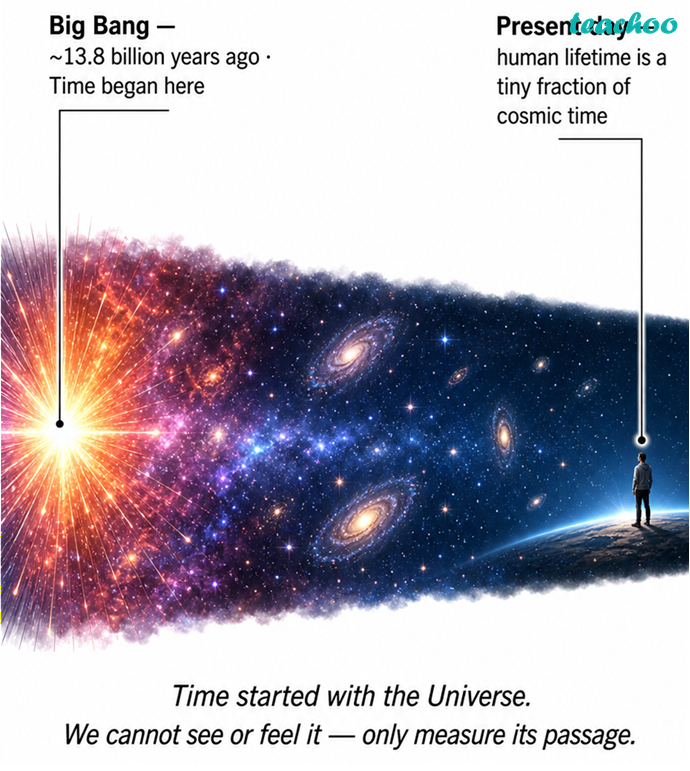
Time is all around us but we cannot see or touch it.
We can only measure how much of it has passed.
Time can be as large as the age of the Universe (billions of years).
Or as tiny as the vibration of an atom (billionths of a second).
We can only measure how much of it has passed.
Time can be as large as the age of the Universe (billions of years).
Or as tiny as the vibration of an atom (billionths of a second).
Ancient Timekeeping Devices
Four ancient devices — each used something that changed at a steady, predictable rate.
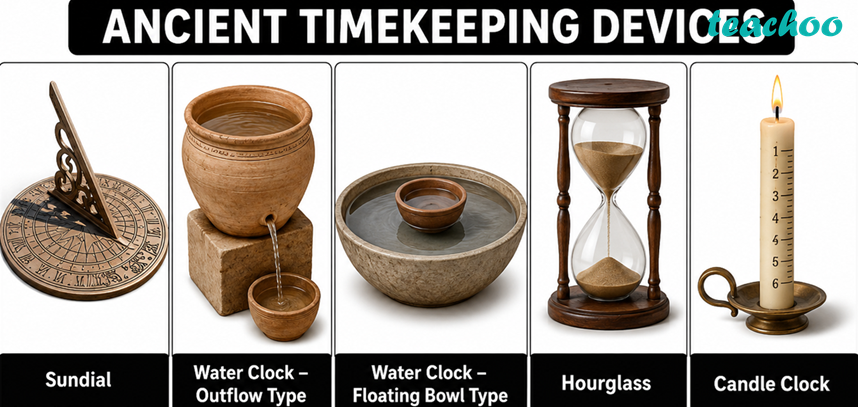
People invented many clever devices to track time.
Each one used something that changed at a steady rate.
Each one used something that changed at a steady rate.
Quick fact: All ancient devices rely on a
steady, repeating process
to mark equal intervals of time.
Sundial
It uses the shadow of a stick to show the time.
As the Sun moves, the shadow moves.
Different shadow positions = different times of day.
It only works in sunlight.
As the Sun moves, the shadow moves.
Different shadow positions = different times of day.
It only works in sunlight.
Water Clock — Outflow Type
Water drips out of a small hole at the bottom of a pot.
The level of water shows how much time has passed.
Lower water level = more time has passed.
The level of water shows how much time has passed.
Lower water level = more time has passed.
Water Clock — Floating Bowl Type
A bowl with a small hole is placed on water.
Water slowly enters through the hole.
The bowl sinks when it is full.
Each sinking marks a fixed time interval.
Water slowly enters through the hole.
The bowl sinks when it is full.
Each sinking marks a fixed time interval.
Hourglass
Sand flows from the top chamber to the bottom.
When all the sand has fallen, a fixed time has passed.
It can be flipped to measure time again.
When all the sand has fallen, a fixed time has passed.
It can be flipped to measure time again.
Candle Clock
A candle burns at a steady rate.
Marks on the candle show how much time has passed.
Marks on the candle show how much time has passed.
🌟 Example 1
How did people tell time before clocks were invented?
They used a sundial.
It uses the Sun’s shadow to show the time.
Different shadow positions represent different hours.
They used a sundial.
It uses the Sun’s shadow to show the time.
Different shadow positions represent different hours.
🌟 Example 2
Why could ancient people not use a sundial at night?
A sundial needs sunlight to cast a shadow.
Without shadow, it cannot show the time.
So water clocks and candle clocks were used at night.
A sundial needs sunlight to cast a shadow.
Without shadow, it cannot show the time.
So water clocks and candle clocks were used at night.
Activity 8.1 — water drips steadily from upper to lower chamber; time read from minute markings on the lower half.
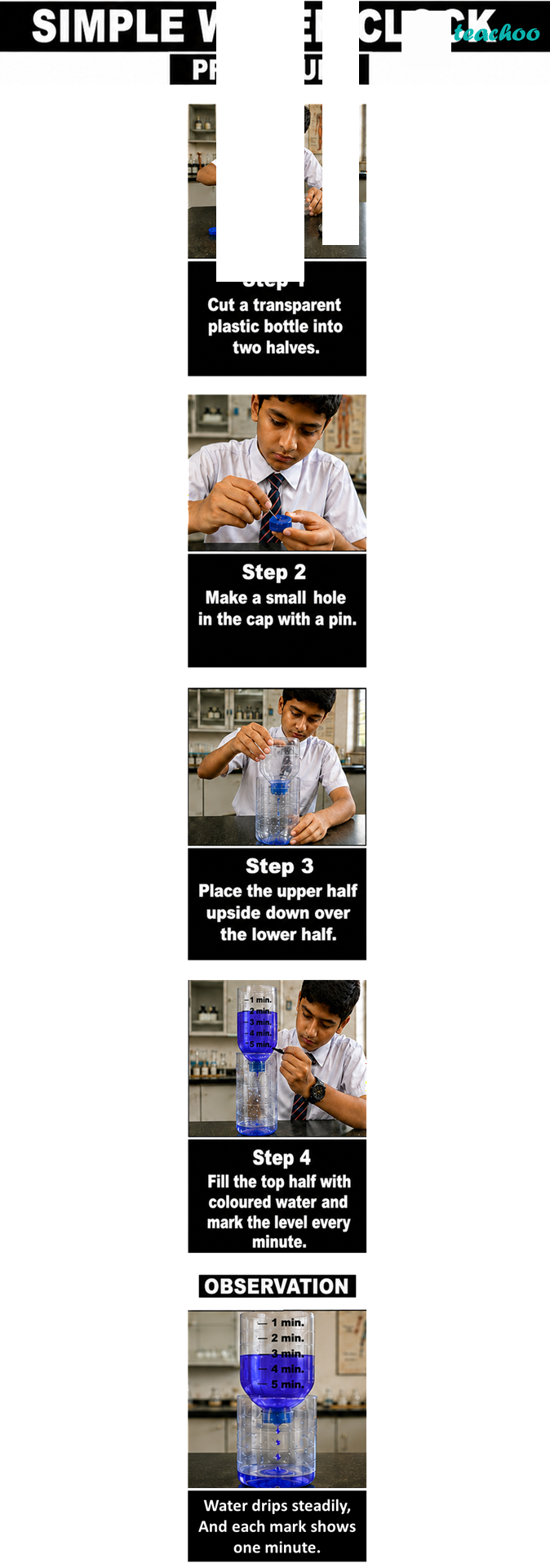
Materials needed
A used transparent plastic bottle (half-litre or larger) with cap, a drawing pin, a watch, optional ink
Procedure
Cut the bottle into two halves roughly in the middle.
Make a small hole in the cap with a drawing pin.
Place the upper half inverted over the lower half.
Fill upper half with water.
Add a few drops of ink to make the level visible.
Mark the water level every minute using a watch until all water has dripped through.
Make a small hole in the cap with a drawing pin.
Place the upper half inverted over the lower half.
Fill upper half with water.
Add a few drops of ink to make the level visible.
Mark the water level every minute using a watch until all water has dripped through.
Observation
Water drips at a roughly steady rate.
Each mark corresponds to one minute of time passed.
Each mark corresponds to one minute of time passed.
Explanation
This is a simple outflow water clock.
Steady flow allows time to be read from the markings.
Steady flow allows time to be read from the markings.
◆ Summary
A water clock uses a steady drip to mark equal time intervals. Each mark on the bottle = one minute.
🏭
Fascinating Fact — Samrat Yantra, Jaipur
Samrat Yantra, Jaipur — the world’s largest stone sundial (27 m).
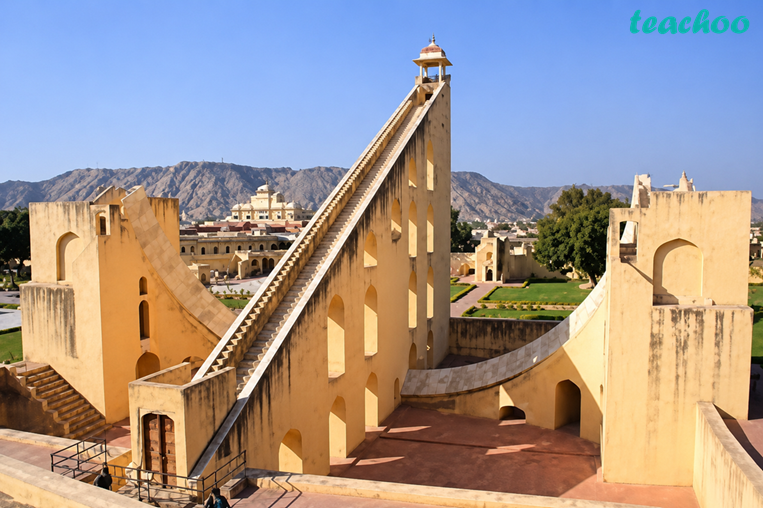
The world’s largest stone sundial is the
Samrat Yantra
at Jantar Mantar, Jaipur.
Jantar Mantar is a UNESCO World Heritage Site .
Built about 300 years ago — its height is 27 metres .
Its shadow moves at about 1 millimetre per second .
It can measure time intervals as short as 2 seconds .
Jantar Mantar is a UNESCO World Heritage Site .
Built about 300 years ago — its height is 27 metres .
Its shadow moves at about 1 millimetre per second .
It can measure time intervals as short as 2 seconds .
🌎
Fascinating Fact — Ancient Indian Timekeeping
Ghatika-yantra — ancient Indian sinking-bowl water clock.
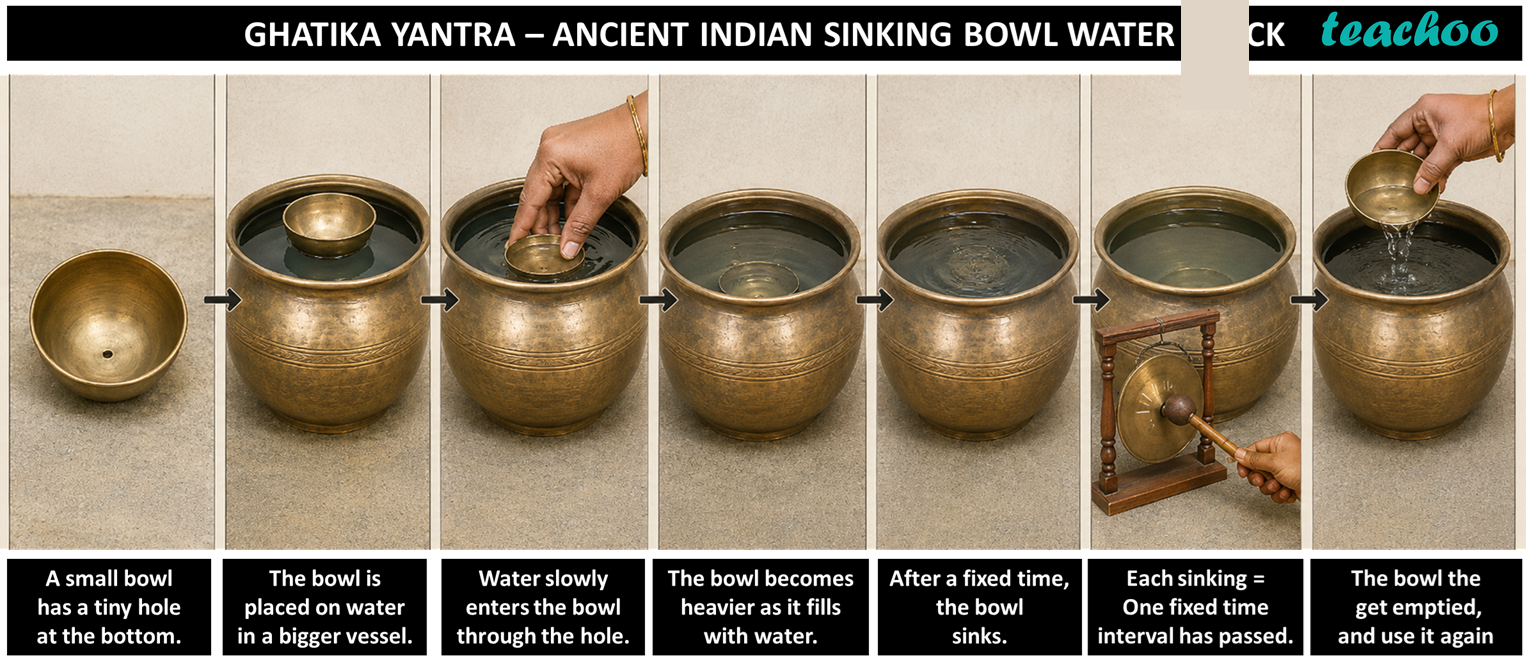
The Arthasastra and Shadow Time
The
Arthasastra
by Kautilya has the earliest reference to shadow-based time measurement.
Varahamihira gave an accurate shadow-based formula around 530 CE.
Varahamihira gave an accurate shadow-based formula around 530 CE.
The Ghatika-yantra
It is a sinking bowl water clock.
It was first mentioned by Aryabhata.
It was later described in several astronomical texts.
It was first mentioned by Aryabhata.
It was later described in several astronomical texts.
Where It Was Used
It was used at Buddhist monasteries, royal palaces, and town squares.
Each time the bowl sank, drums, conch shells, or a gong were struck.
Each time the bowl sank, drums, conch shells, or a gong were struck.
Its Legacy
Pendulum clocks replaced it in the late 19th century.
It continued to be used at religious places for rituals.
It continued to be used at religious places for rituals.
✓ Quick Check — Section 8.1
-
Name four ancient devices used to measure time.
Show Answer
Sundial, water clock, hourglass, candle clock.
Each uses a steady repeating process to mark equal time intervals. -
How does a sundial measure time?
Show Answer
It uses the shadow of an object cast by sunlight.
The shadow moves as the Sun moves across the sky.
Each position of the shadow corresponds to a specific time of day.
