You are here
![Arithmetic Laws of Rational Numbers - Properties [with Examples] - Rational Numbers](https://cdn.teachoo.com/761082fe-da11-40bb-9045-b2d970042ddf/slide9.jpg)
Rational Numbers
Last updated at May 9, 2026 by Teachoo
Transcript
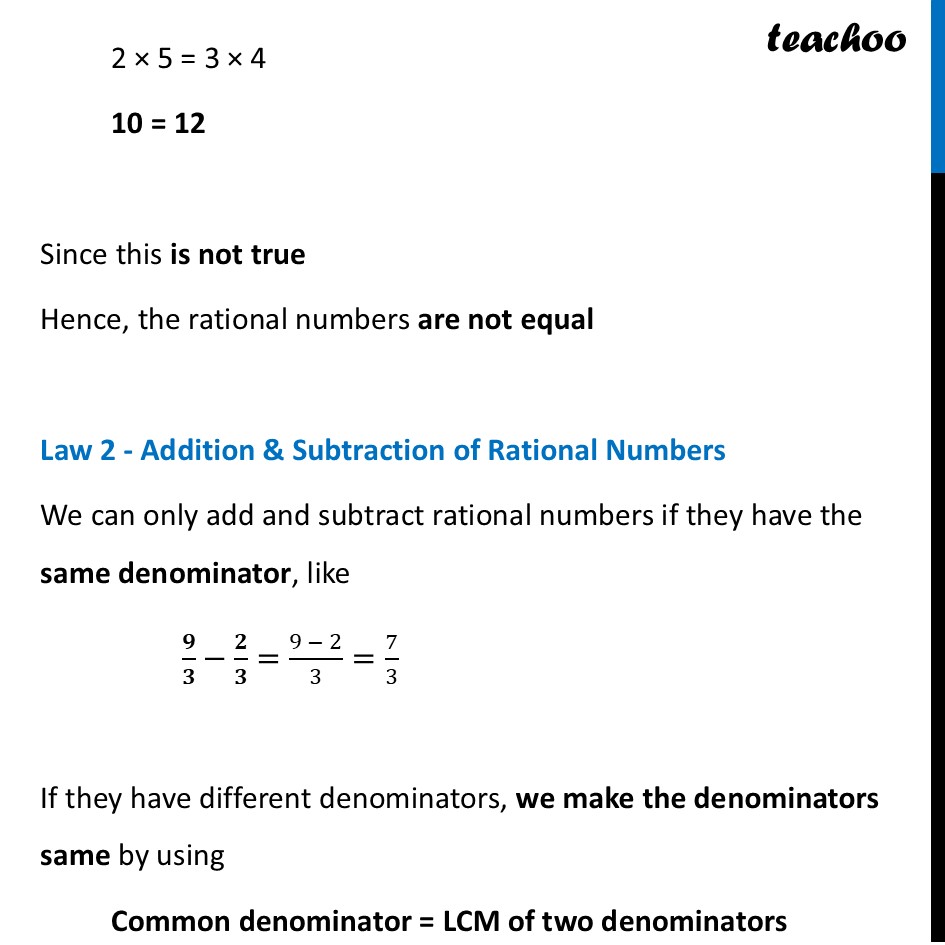
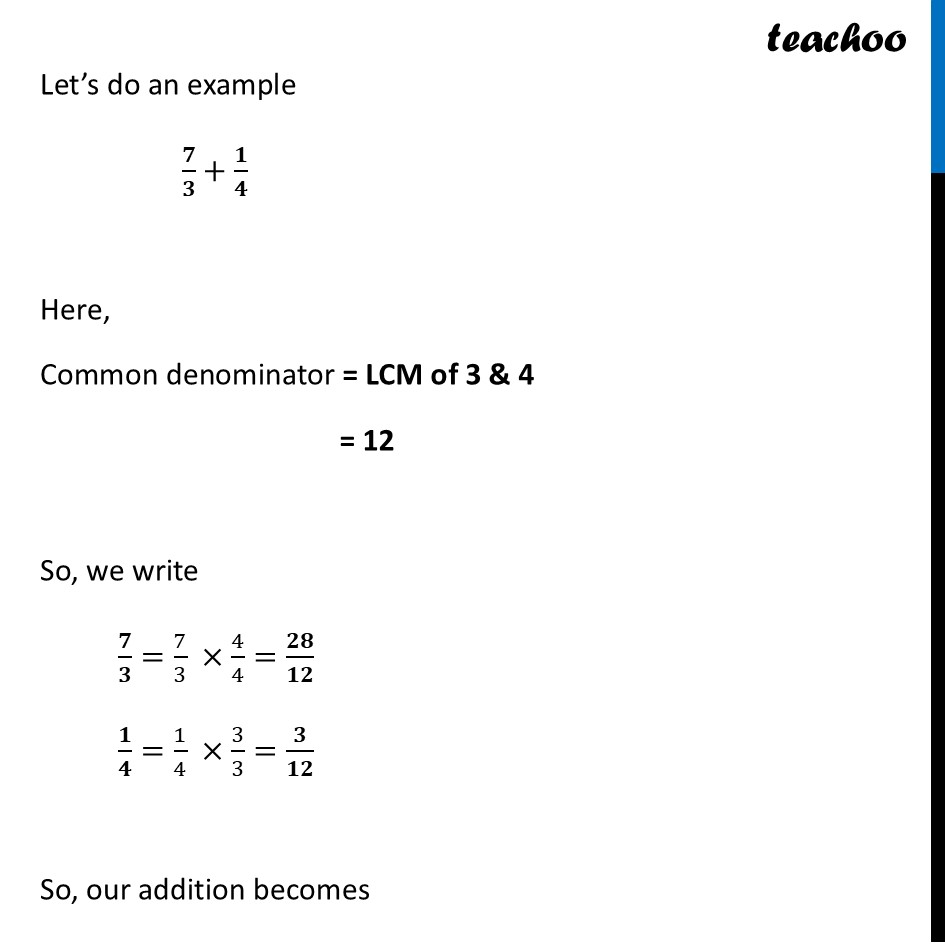
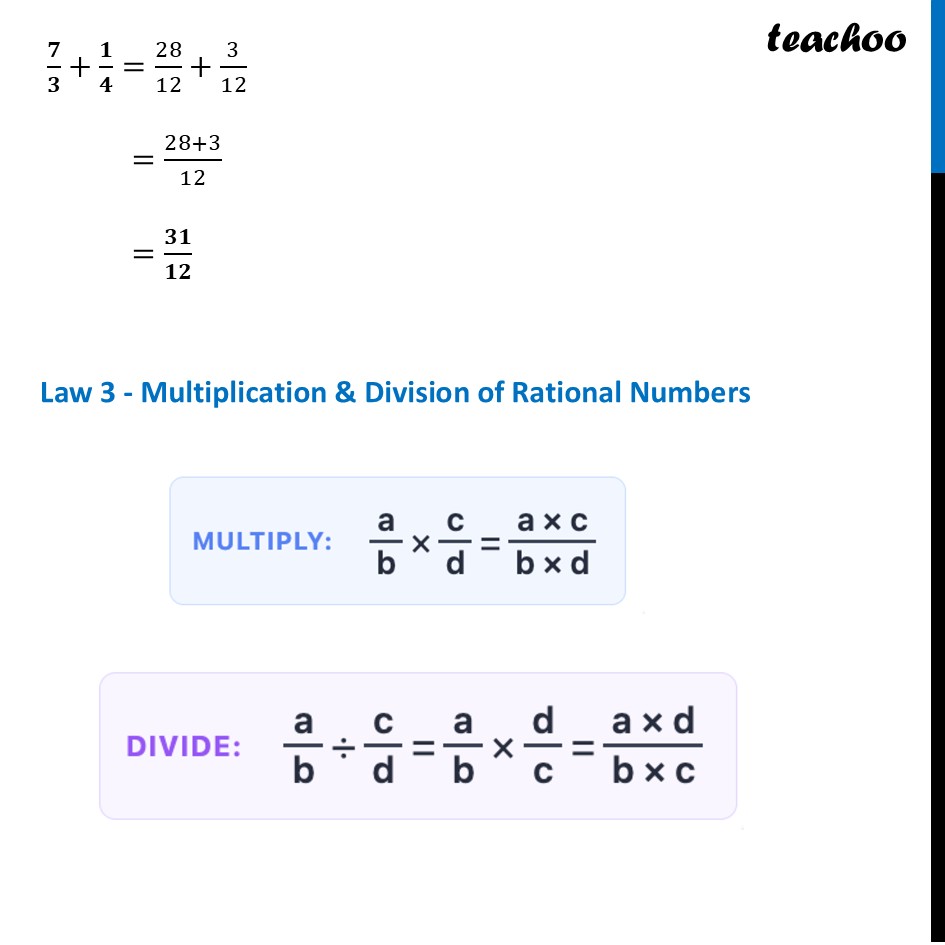
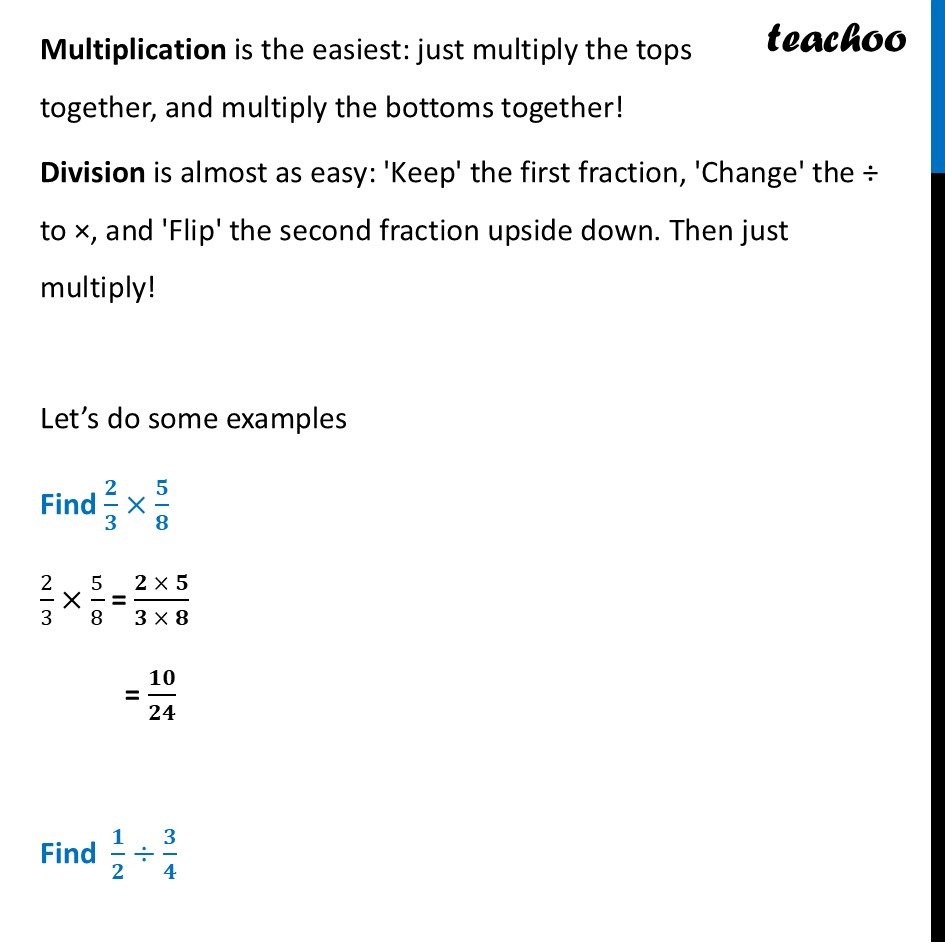
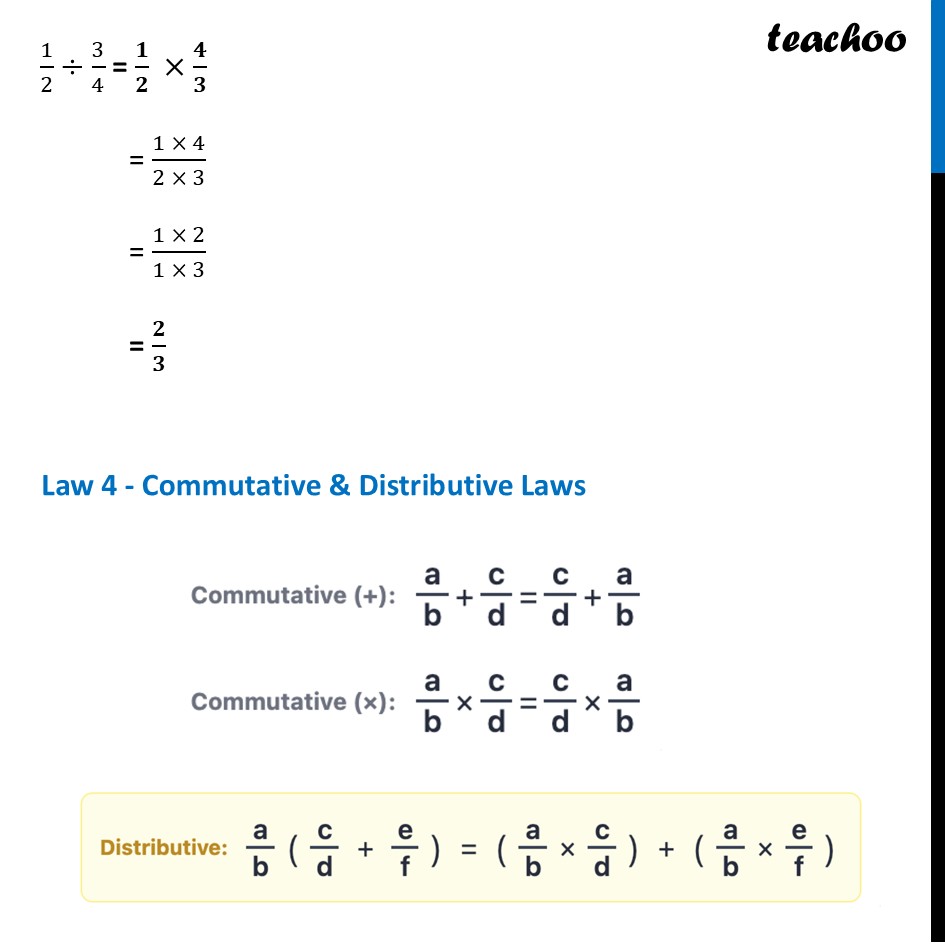
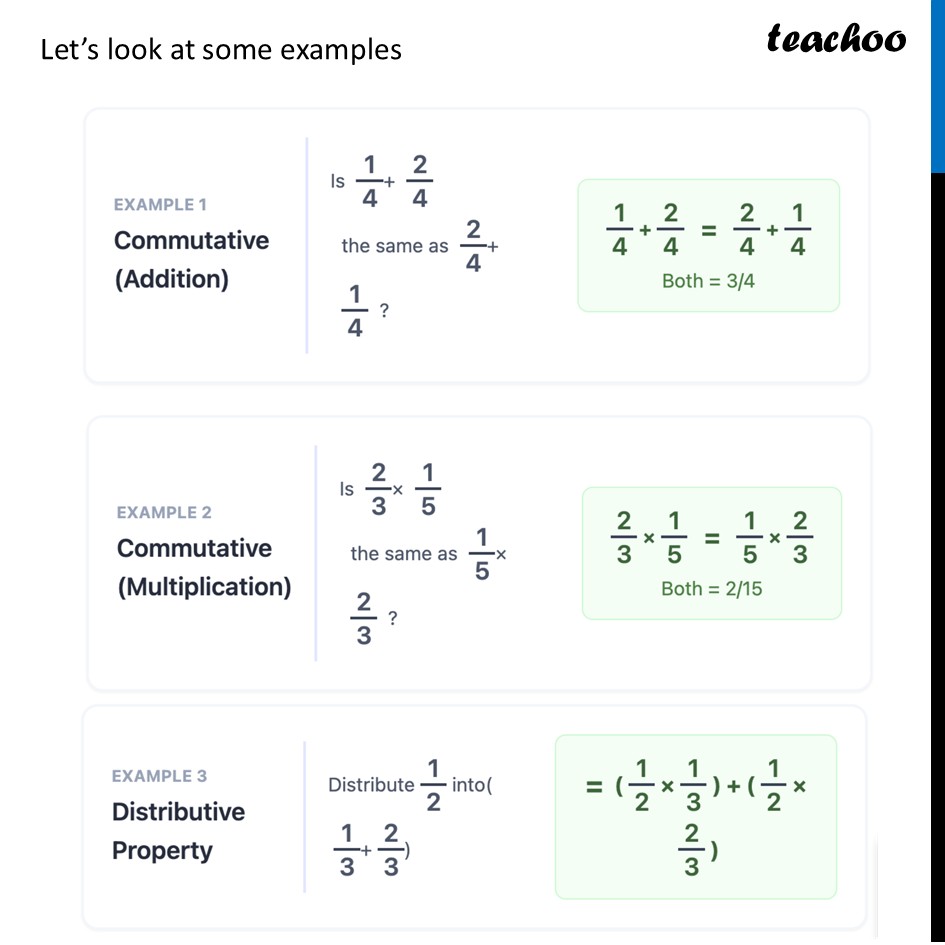
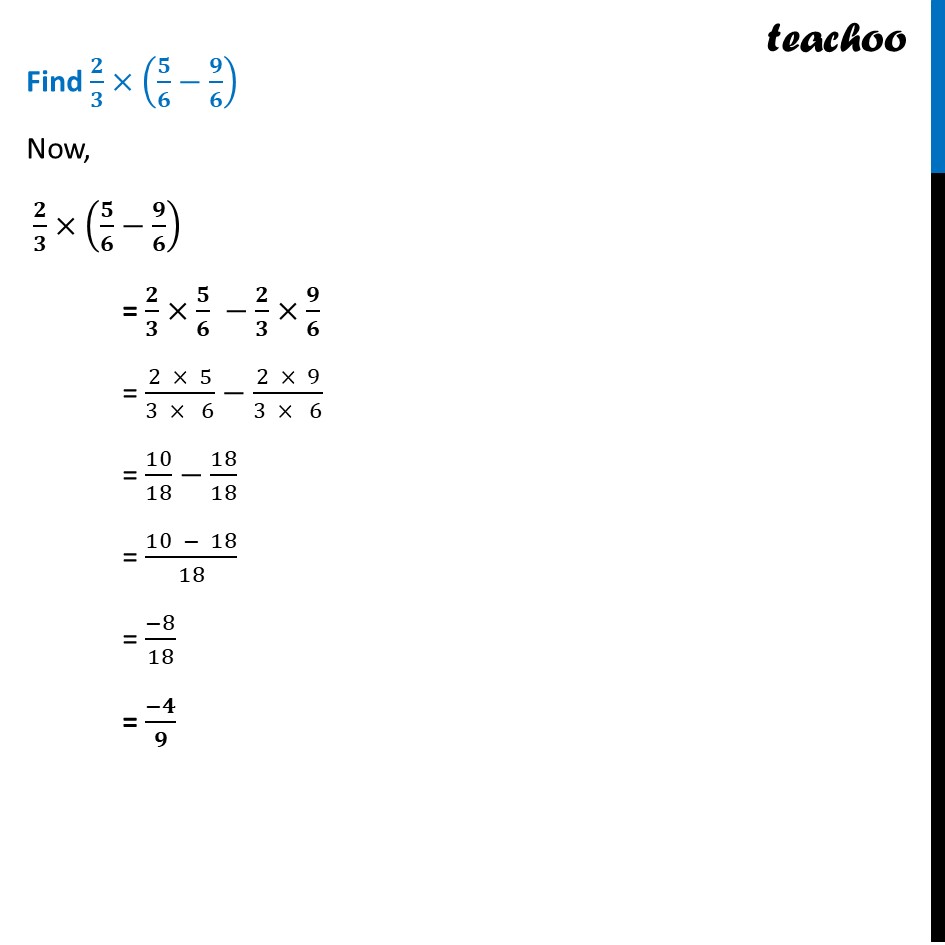
Arithmetic Laws of Rational Numbers Let’s learn about some Laws of Rational Numbers Law 1 - The Law of Equality Two rational numbers 𝑎/𝑏 & 𝑐/𝑑 are equal if 𝑎/𝑏=𝑐/𝑑 □( ) " IF " □( ) 𝒂 × 𝒅=𝒃 × 𝒄 Let’s do some examples Is 𝟑/𝟓 = 𝟗/𝟏𝟓? Now, 𝟑/𝟓 = 𝟗/𝟏𝟓 Cross-multiplying 𝟑/𝟓 = 𝟗/𝟏𝟓 3 × 15 = 9 × 5 45 = 45 Since this true Hence, the rational numbers are equal Is 𝟐/𝟑 = 𝟒/𝟓? Now, 𝟐/𝟑 = 𝟒/𝟓 Cross-multiplying 𝟐/𝟑 = 𝟒/𝟓 2 × 5 = 3 × 4 10 = 12 Since this is not true Hence, the rational numbers are not equal 2 × 5 = 3 × 4 10 = 12 Since this is not true Hence, the rational numbers are not equal Law 2 - Addition & Subtraction of Rational Numbers We can only add and subtract rational numbers if they have the same denominator, like 𝟗/𝟑−𝟐/𝟑=(9 − 2)/3=7/3 If they have different denominators, we make the denominators same by using Common denominator = LCM of two denominators Let’s do an example 𝟕/𝟑+𝟏/𝟒 Here, Common denominator = LCM of 3 & 4 = 12 So, we write 𝟕/𝟑=7/3 ×4/4=𝟐𝟖/𝟏𝟐 𝟏/𝟒=1/4 ×3/3=𝟑/𝟏𝟐 So, our addition becomes 𝟕/𝟑+𝟏/𝟒 =(9 − 2)/3=7/3 use LCM of the denominators 𝟕/𝟑+𝟏/𝟒=28/12+3/12 =(28+3)/12 =𝟑𝟏/𝟏𝟐 Law 3 - Multiplication & Division of Rational Numbers Multiplication is the easiest: just multiply the tops together, and multiply the bottoms together! Division is almost as easy: 'Keep' the first fraction, 'Change' the ÷ to ×, and 'Flip' the second fraction upside down. Then just multiply! Let’s do some examples Find 𝟐/𝟑×𝟓/𝟖 2/3×5/8 = (𝟐 × 𝟓)/(𝟑 × 𝟖) = 𝟏𝟎/𝟐𝟒 Find 𝟏/𝟐÷𝟑/𝟒 1/2÷3/4 = 𝟏/𝟐 ×𝟒/𝟑 = (1 × 4)/(2 × 3) = (1 × 2)/(1 × 3) = 𝟐/𝟑 Law 4 - Commutative & Distributive Laws Let’s look at some examples Find 𝟐/𝟑×(𝟓/𝟔−𝟗/𝟔) Now, 𝟐/𝟑×(𝟓/𝟔−𝟗/𝟔) = 𝟐/𝟑×𝟓/𝟔 −𝟐/𝟑×𝟗/𝟔 = (2 × 5)/(3 × 6)−(2 × 9)/(3 × 6) = 10/18−18/18 = (10 − 18)/18 = (−8)/18 = (−𝟒)/𝟗