![[Śulba-Sūtras] Give a method to convert a rectangle into an isosceles - Area of Parallelogram](https://cdn.teachoo.com/f11cd922-1bc2-4cba-804c-520a41417fc2/slide79.jpg)
Area of Parallelogram

 You are here
Area of Parallelogram
Last updated at March 16, 2026 by Teachoo
Transcript
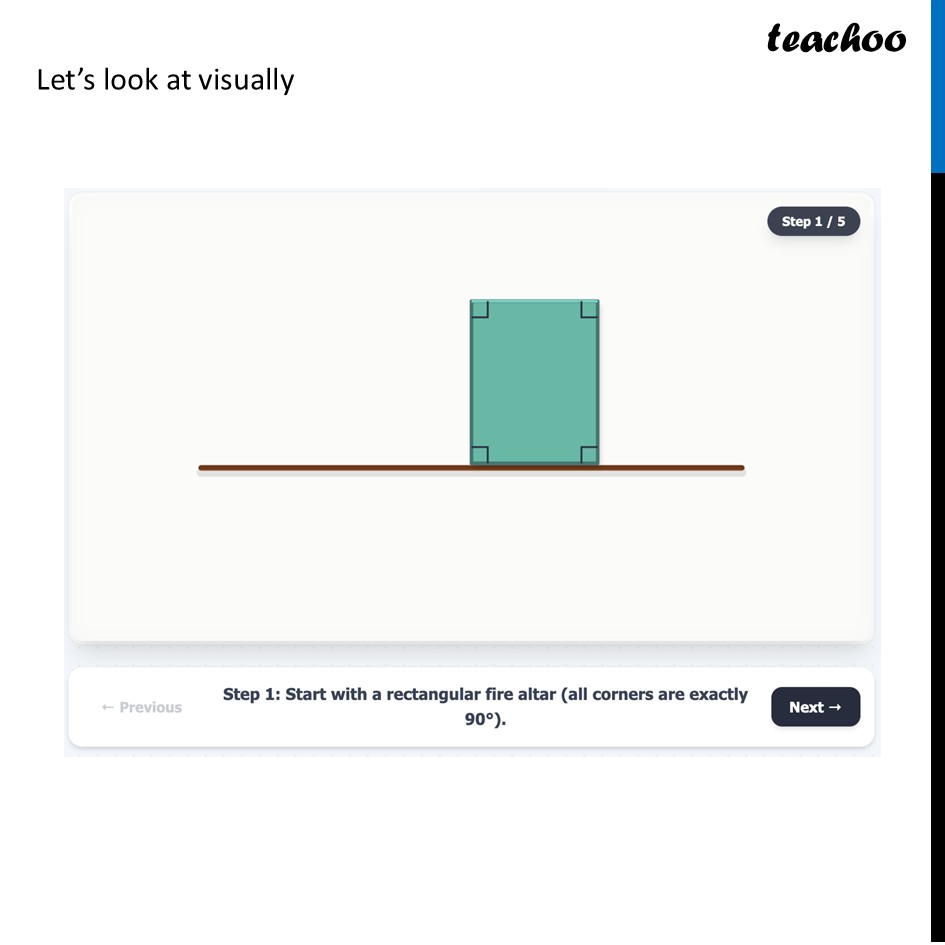
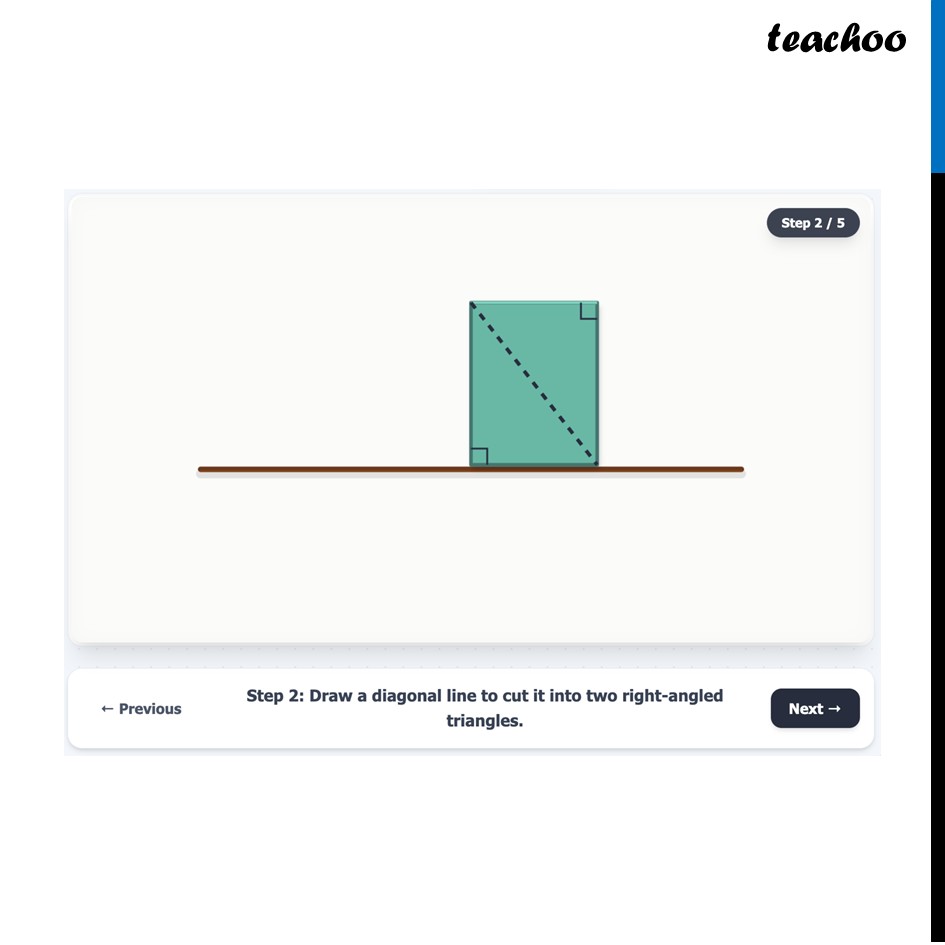
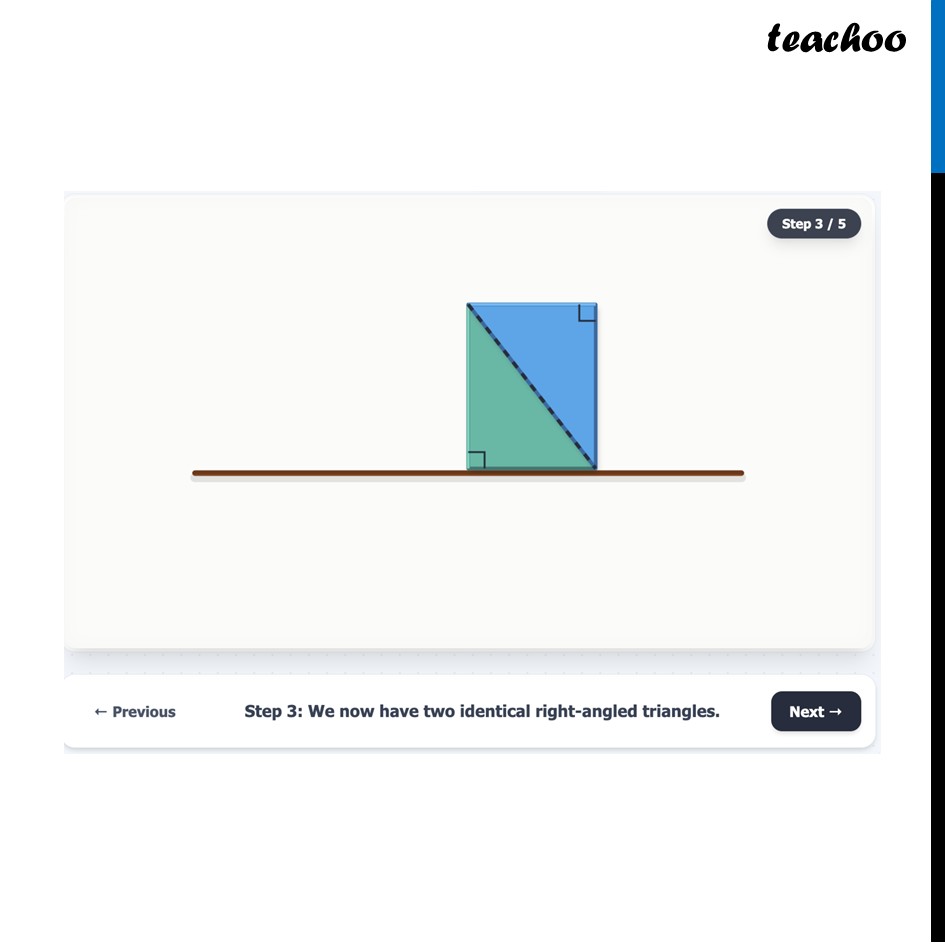
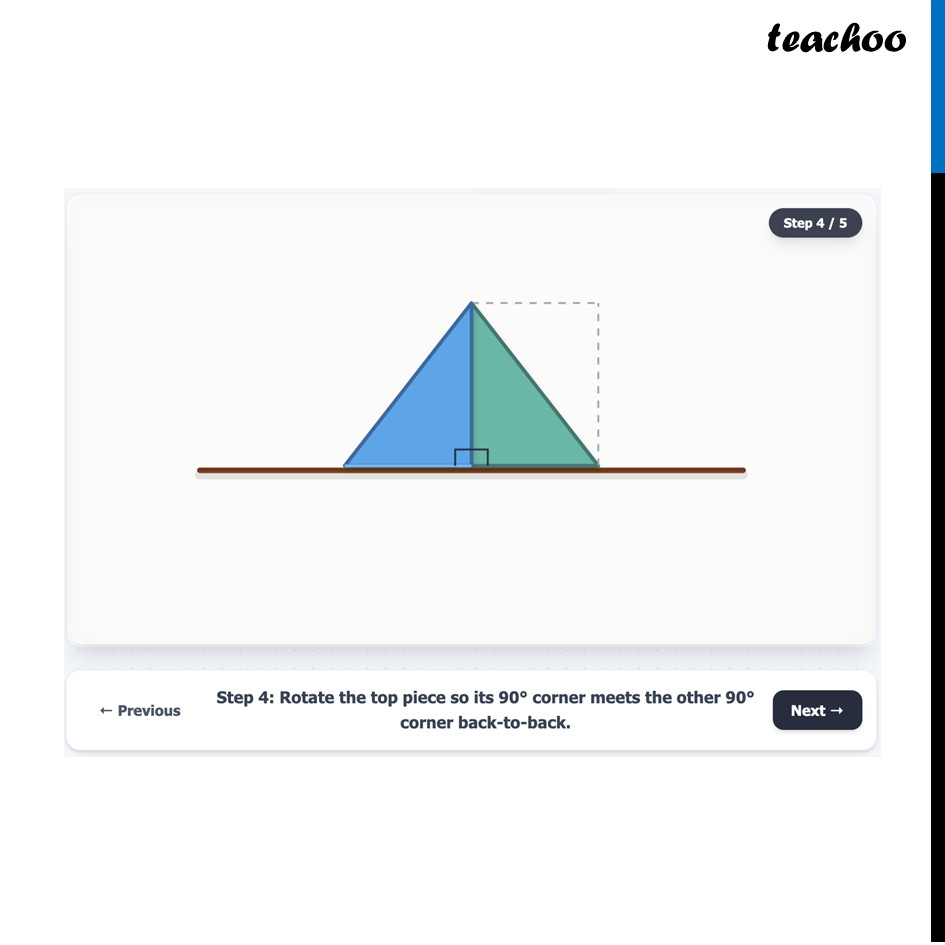
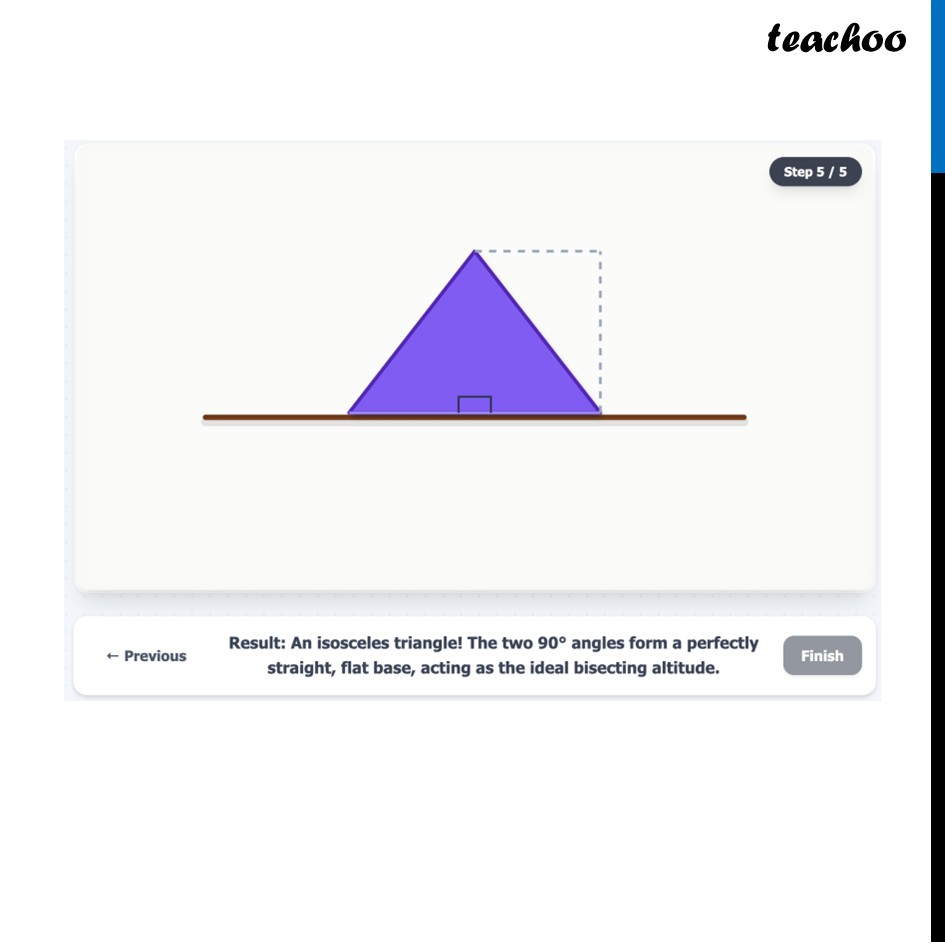
Question 8 - Figure it out (Page 162-164) [Śulba-Sūtras] Give a method to convert a rectangle into an isosceles triangle by dissection.This is exactly the reverse of Question 7! We follow these steps Step 1: Take your rectangle and draw a diagonal line connecting one corner to the completely opposite corner. Cut along this line. Step 2: You now have two identical right-angled triangles. Step 3: Take one of the triangles, flip it, and join them together along one of their shorter straight sides (not the long slanted hypotenuse). The two hypotenuses will now form the two equal slanted sides of a brand new isosceles triangle. Let’s look at visually Step 1: Start with a rectangular fire altar (all corners are exactly). Step 2: Draw a diagonal line to cut it into two right-angled triangles.
