![[Śulba-Sūtras] An isosceles triangle can be converted into a rectangle - Area of Parallelogram](https://cdn.teachoo.com/c353864e-13cf-4942-807d-c118dd5d12ea/slide72.jpg)
Area of Parallelogram

 You are here
Area of Parallelogram
Last updated at March 16, 2026 by Teachoo
Transcript
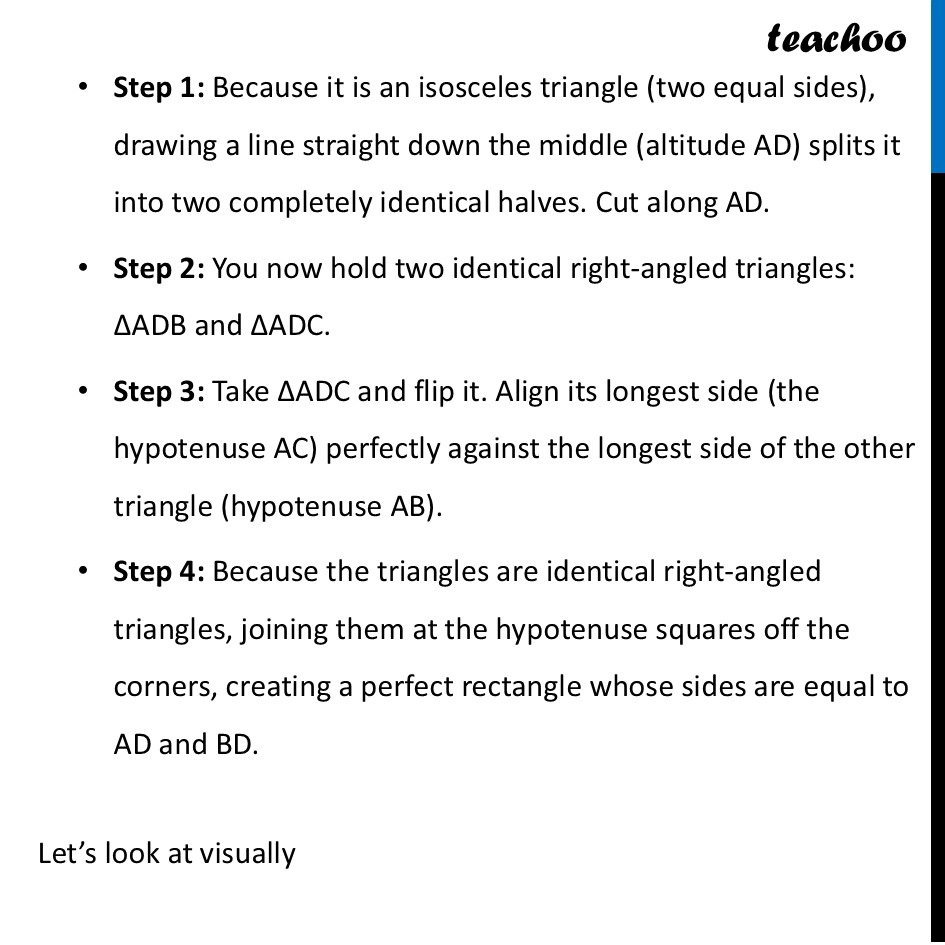
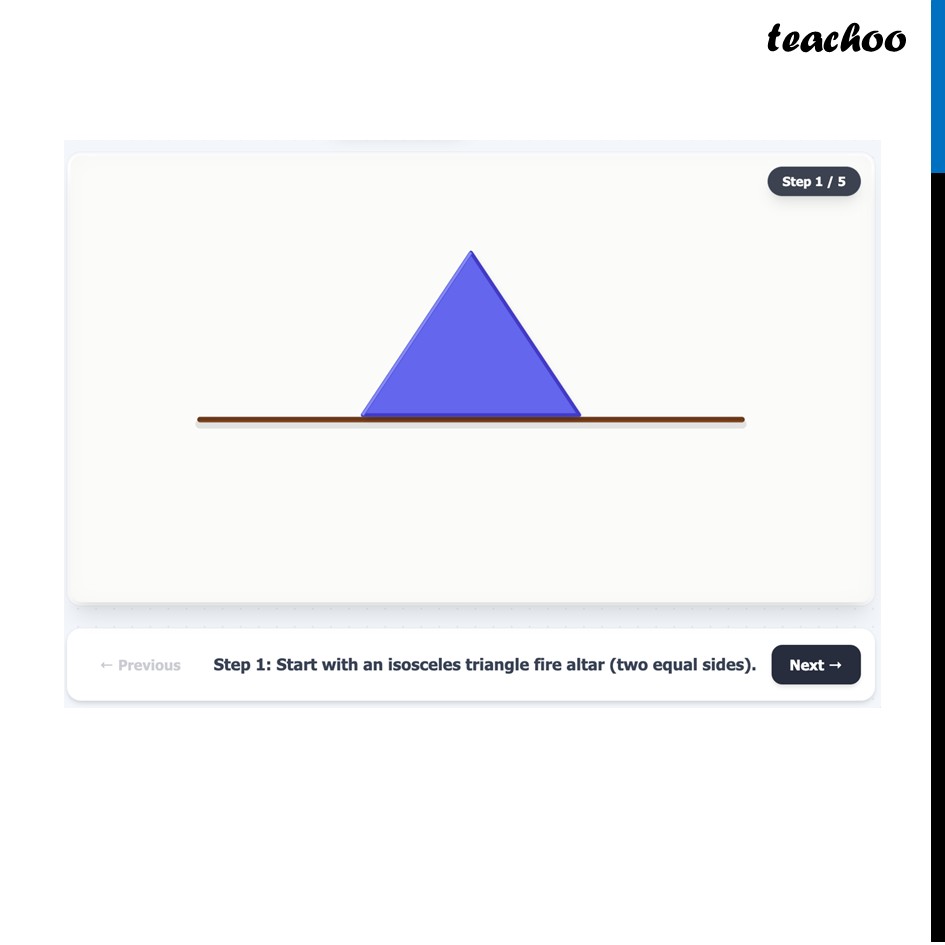
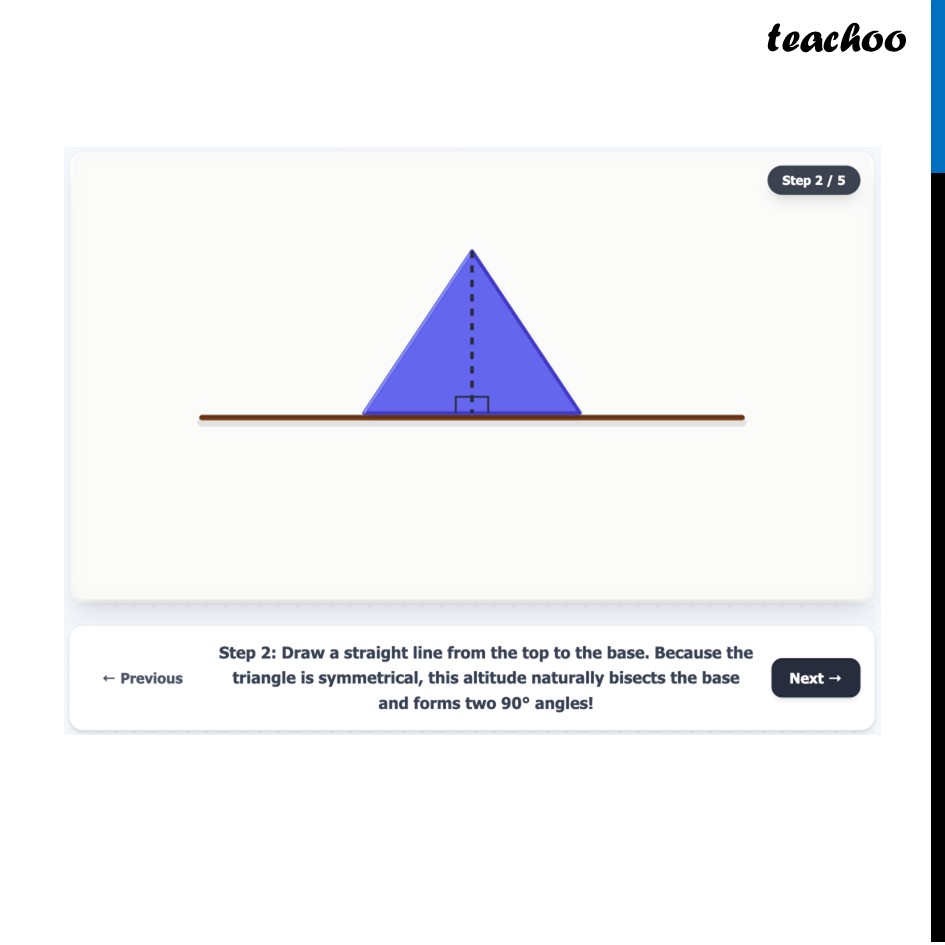
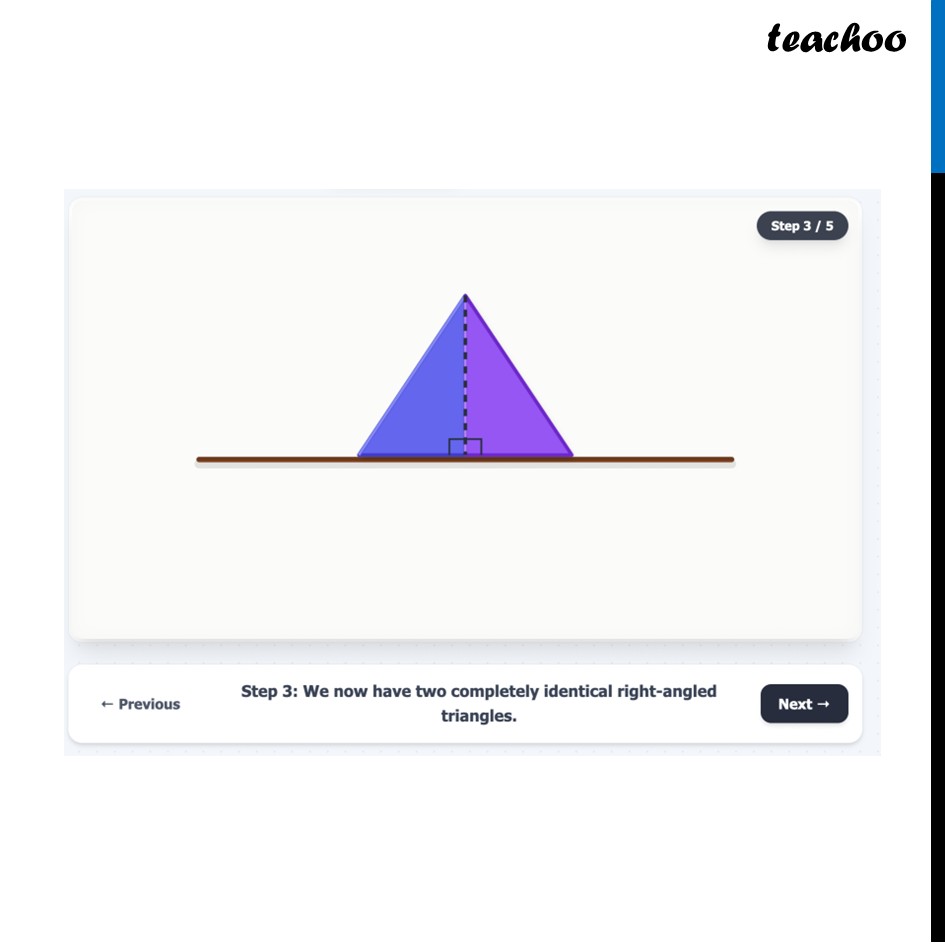
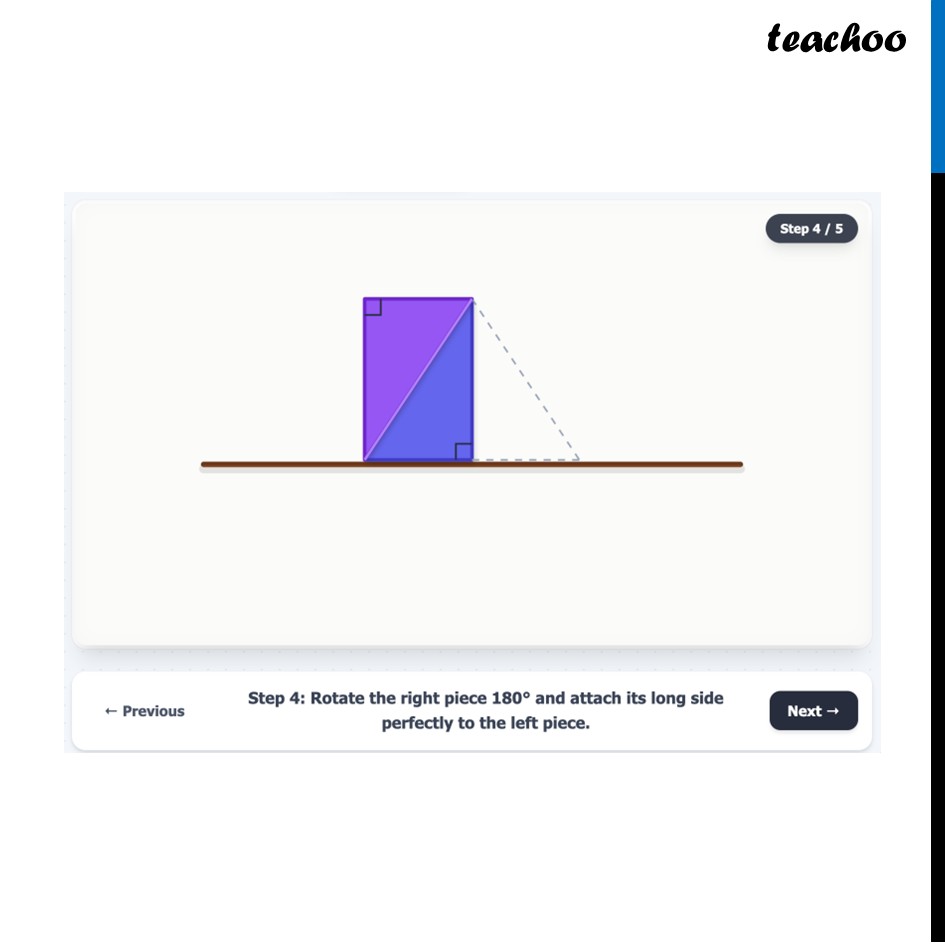
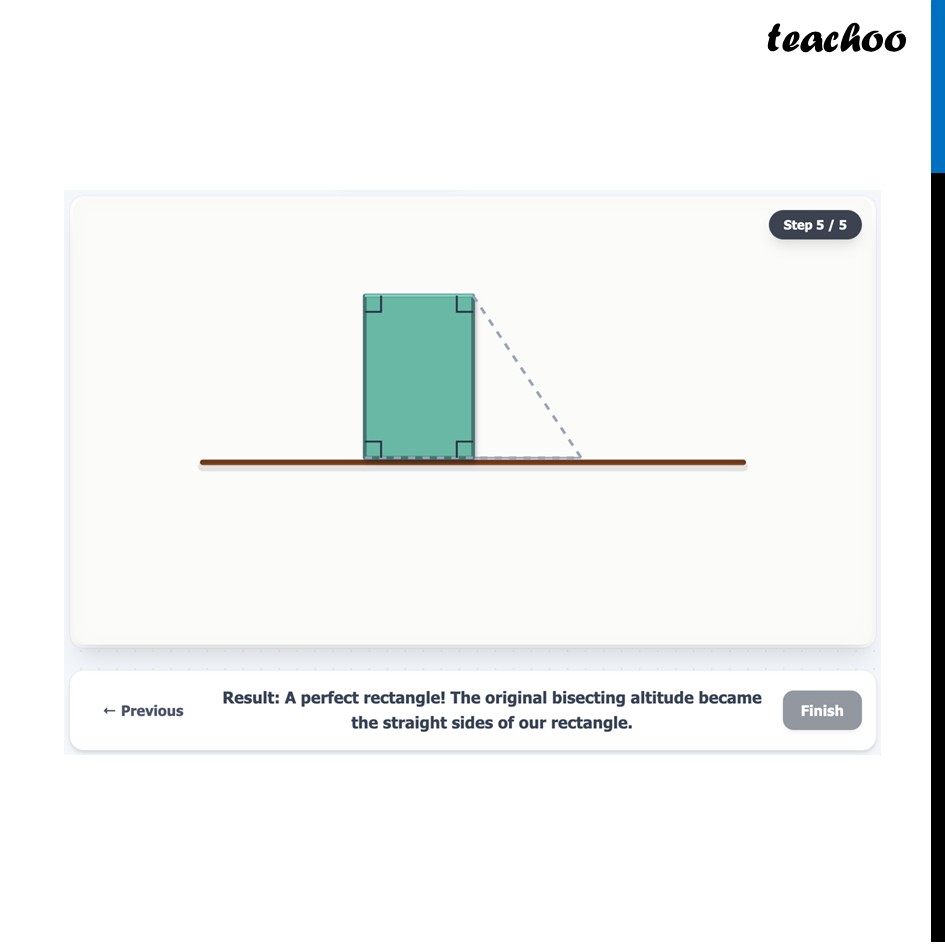
Question 7 - Figure it out (Page 162-164) [Śulba-Sūtras] An isosceles triangle can be converted into a rectangle by dissection in a simpler way. Can you find out how to do it? [Hint: Show that triangles ΔADB and ΔADC can be made into halves of a rectangle. Figure out how they should be assembled to get a rectangle. Use cut-outs if necessary.] We follow these steps Step 1: Because it is an isosceles triangle (two equal sides), drawing a line straight down the middle (altitude AD) splits it into two completely identical halves. Cut along AD. Step 2: You now hold two identical right-angled triangles: ΔADB and ΔADC. Step 3: Take ΔADC and flip it. Align its longest side (the hypotenuse AC) perfectly against the longest side of the other triangle (hypotenuse AB). Step 4: Because the triangles are identical right-angled triangles, joining them at the hypotenuse squares off the corners, creating a perfect rectangle whose sides are equal to AD and BD. Let’s look at visually Step 2: Draw a straight line from the top to the base. Because the triangle is symmetrical, this altitude naturally bisects the base and forms two angles!Step 3: We now have two completely identical right-angled triangles.Step 4: Rotate the right piece and attach its long side perfectly to the left piece.Result: A perfect rectangle! The original bisecting altitude became the straight sides of our rectangle.
