 You are here

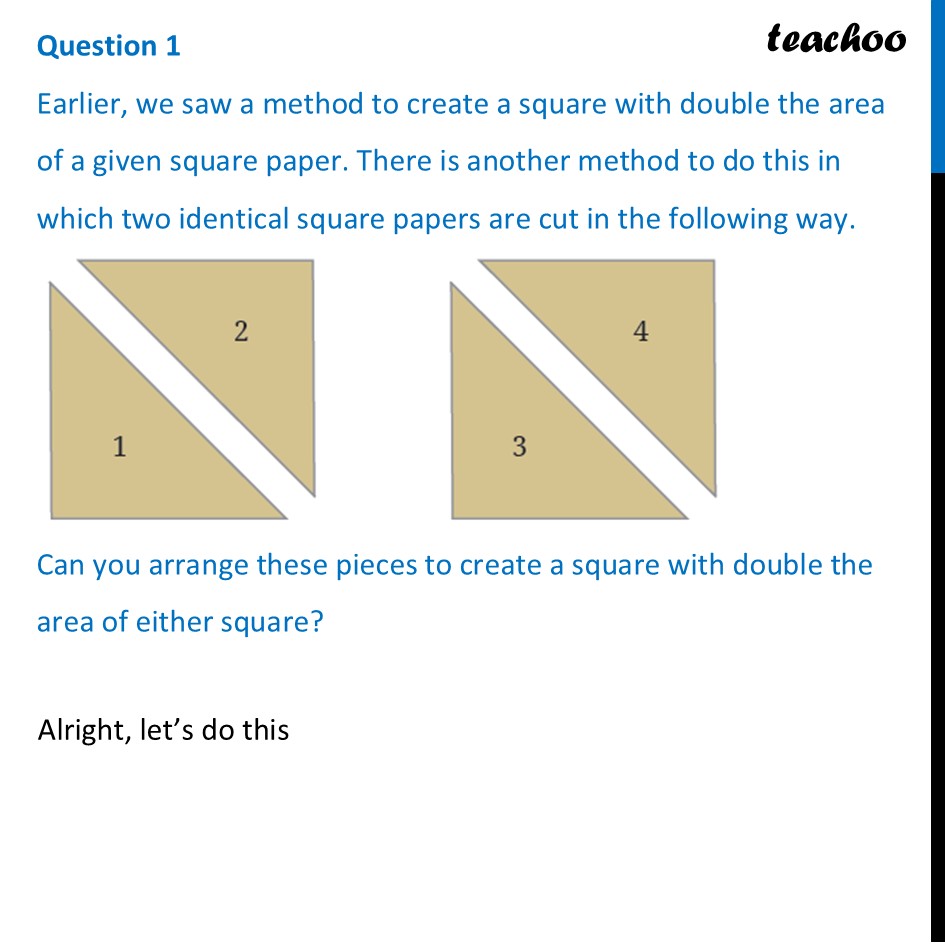
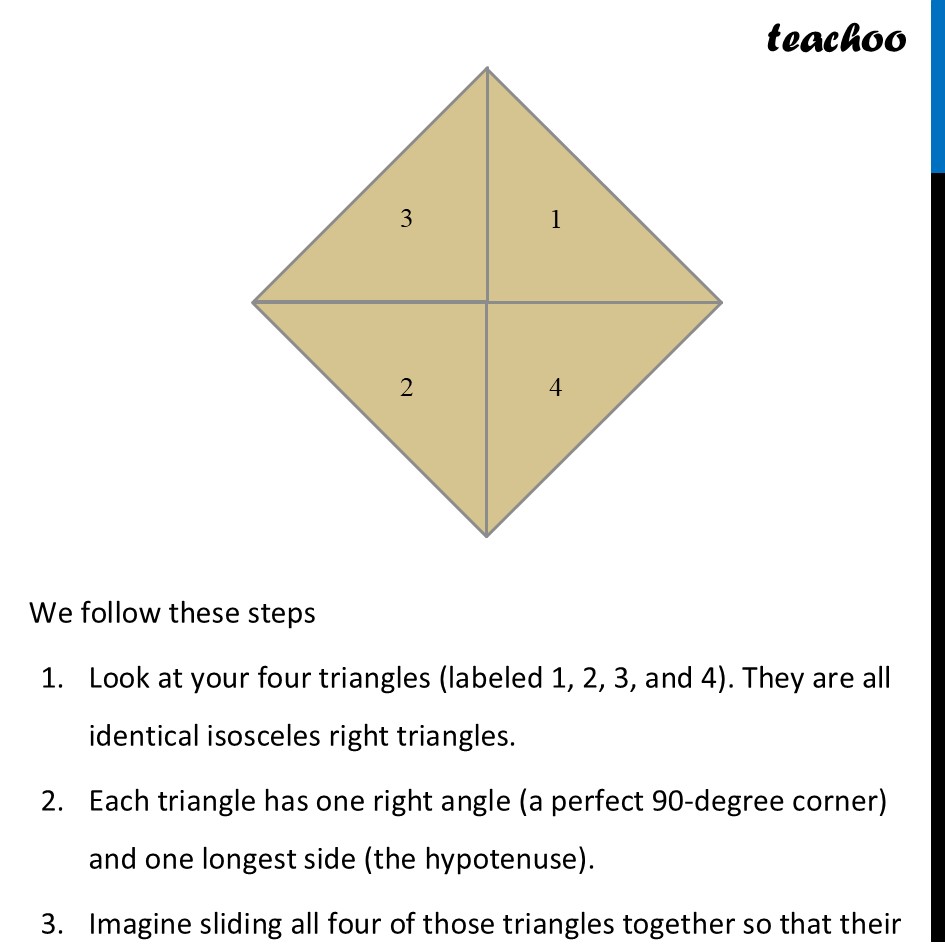
Figure it out - Page 39, 40
Figure it out - Page 39, 40
Last updated at February 20, 2026 by Teachoo
Transcript
Question 1 Earlier, we saw a method to create a square with double the area of a given square paper. There is another method to do this in which two identical square papers are cut in the following way. Can you arrange these pieces to create a square with double the area of either square?Alright, let’s do this We follow these steps Look at your four triangles (labeled 1, 2, 3, and 4). They are all identical isosceles right triangles. Each triangle has one right angle (a perfect 90-degree corner) and one longest side (the hypotenuse). Imagine sliding all four of those triangles together so that their right-angle corners all meet perfectly in the center, pointing inward. When you do this, the longest sides (the hypotenuses) are now facing outward. Because all four hypotenuses are the same length, they form the straight outside edges of a brand new, tilted square! Because you used all the paper from two whole squares to build this one new square, the new square has exactly double the area.
