
 You are here
![The Checkerboard Method - Golden Rule of Dominoes [Ganita Prakash] - Tiling](https://cdn.teachoo.com/2fa7f93c-0663-4de1-b270-63a09c6b3698/slide33.jpg)
Tiling
Last updated at August 14, 2026 by Teachoo
Transcript
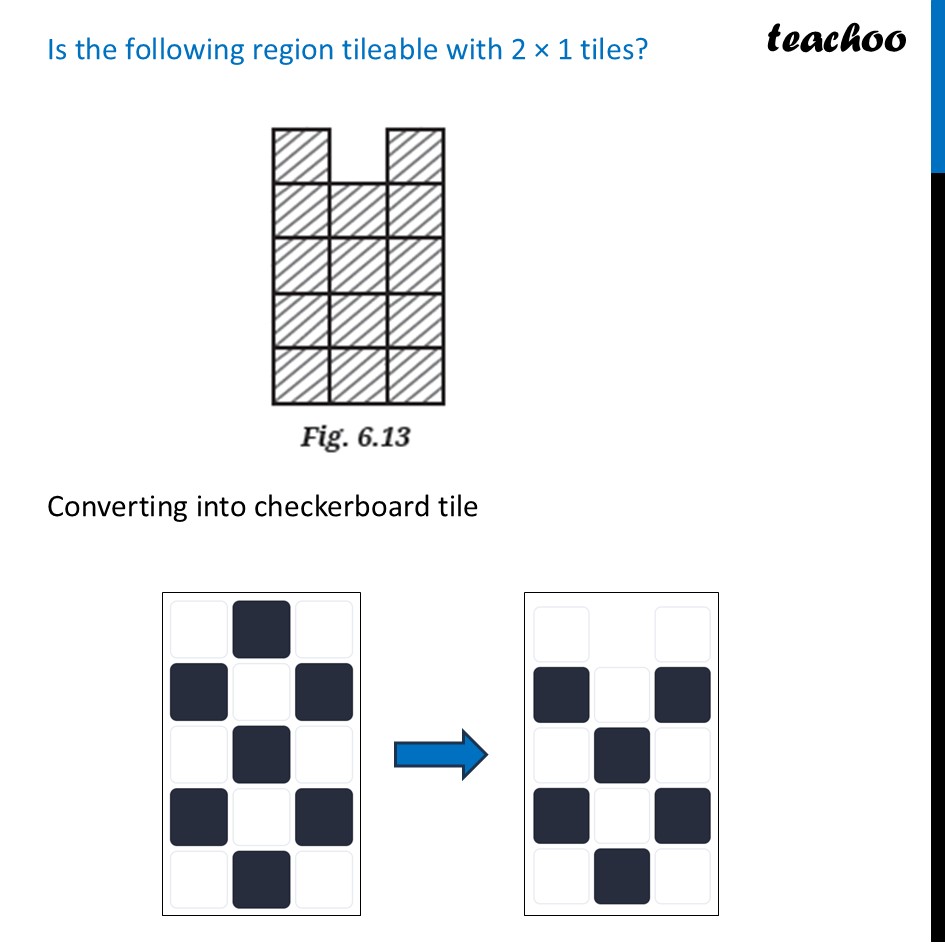
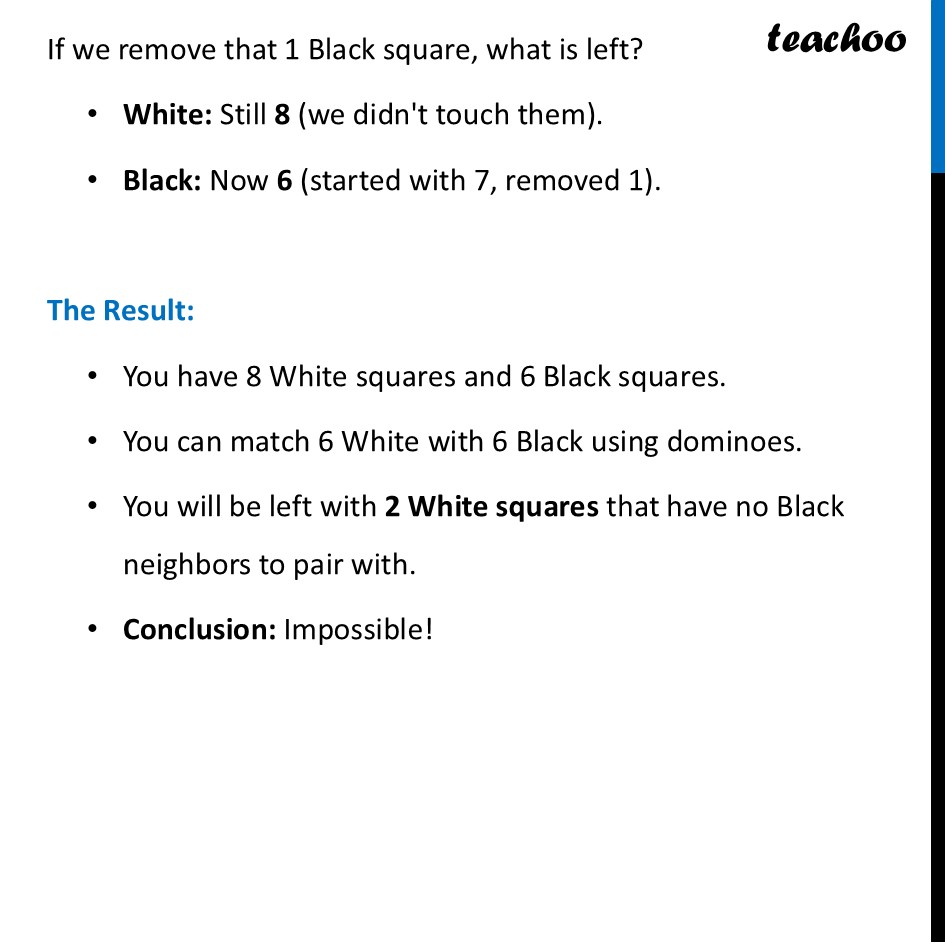
The Checkerboard MethodLet’s look at our 5 × 3 grid as a checkerboard Counting the Full Grid: White (W): 8 squares Black (B): 7 squares Total: 15 squares The Golden Rule of Dominoes: Every single domino you place MUST cover exactly 1 White square and 1 Black square. Therefore, to tile any shape, you must have an equal number of Black and White squares. Now, let’s look at our question again Is the following region tileable with 2 × 1 tiles? Converting into checkerboard tile If we remove that 1 Black square, what is left? White: Still 8 (we didn't touch them). Black: Now 6 (started with 7, removed 1). The Result: You have 8 White squares and 6 Black squares. You can match 6 White with 6 Black using dominoes. You will be left with 2 White squares that have no Black neighbors to pair with. Conclusion: Impossible!
