
 You are here
Mesopotamian Number System
Last updated at November 25, 2025 by Teachoo
Transcript
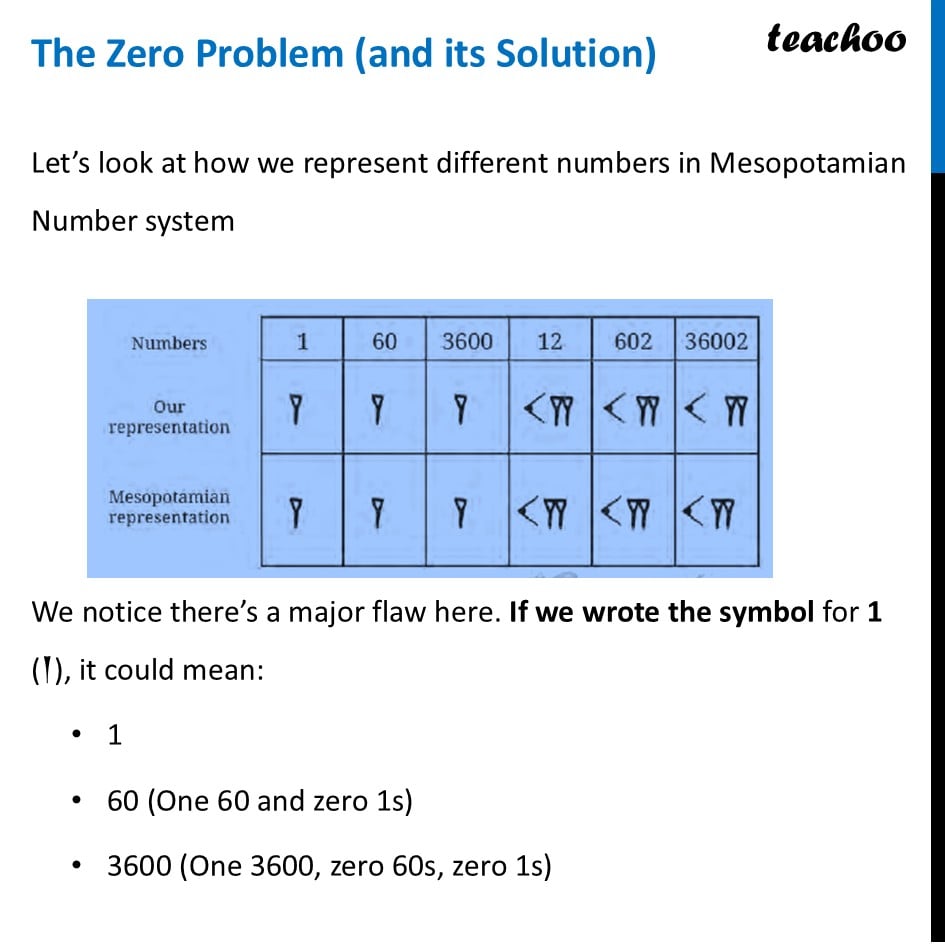
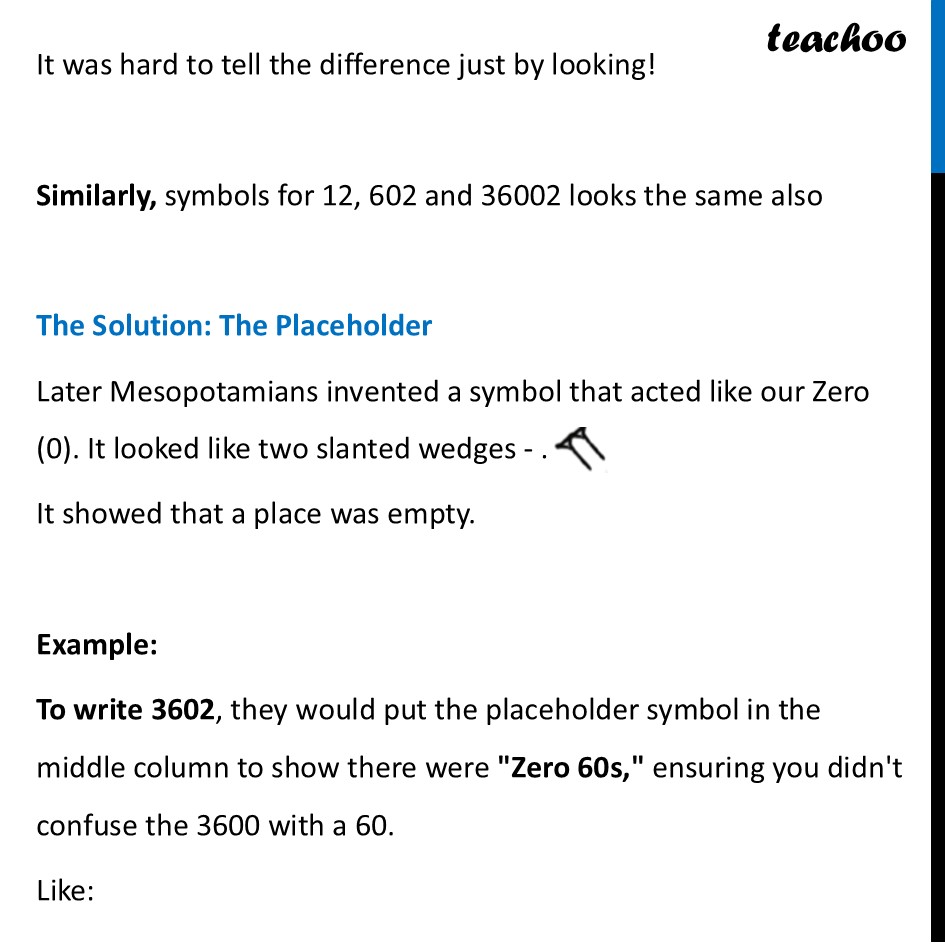
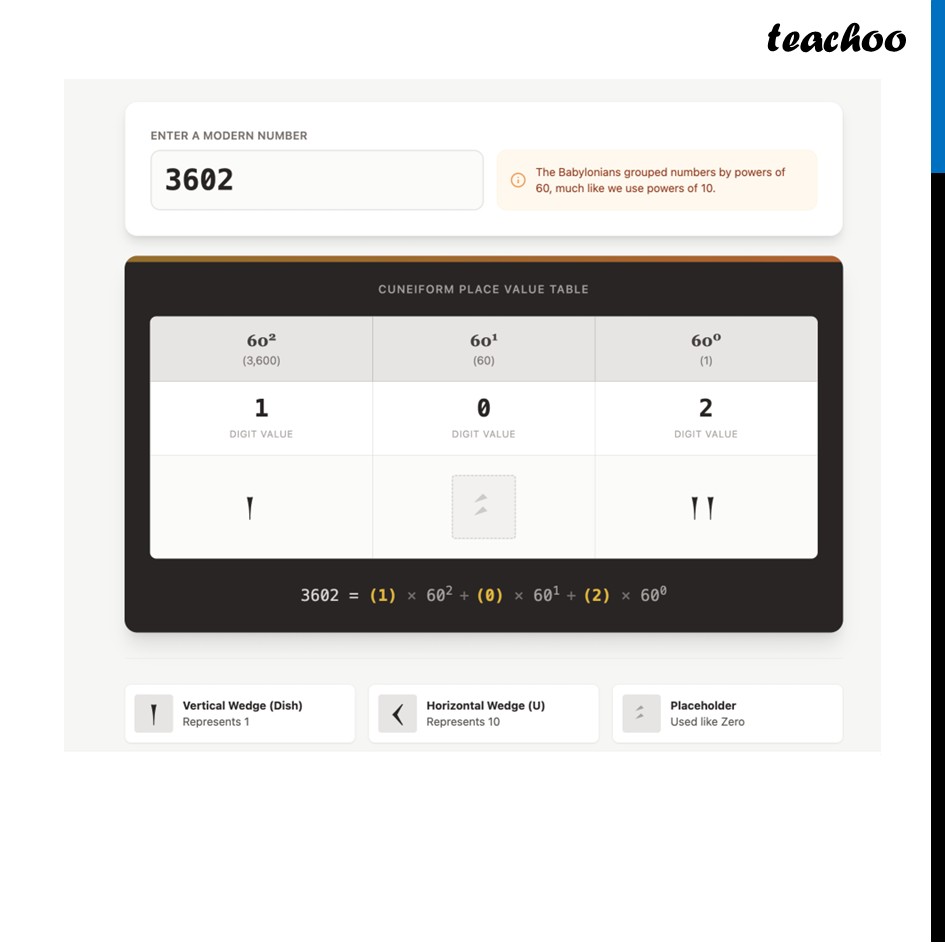
The Zero Problem (and its Solution)Let’s look at how we represent different numbers in Mesopotamian Number system We notice there’s a major flaw here. If we wrote the symbol for 1 (𒁹), it could mean: 1 60 (One 60 and zero 1s) 3600 (One 3600, zero 60s, zero 1s) It was hard to tell the difference just by looking! It was hard to tell the difference just by looking! Similarly, symbols for 12, 602 and 36002 looks the same also The Solution: The Placeholder Later Mesopotamians invented a symbol that acted like our Zero (0). It looked like two slanted wedges - . It showed that a place was empty. Example: To write 3602, they would put the placeholder symbol in the middle column to show there were "Zero 60s," ensuring you didn't confuse the 3600 with a 60. Like: ENTER A MODERN NUMBER 3602 ◯ The Babylonians grouped numbers by powers of 60, much like we use powers of 10. CUNEIFORM PLACE VALUE TABLE (60) (1) 1 DIGIT VALUE 0 DIGIT VALUE 2 DIGIT VALUE 1 □ < Vertical Wedge (Dish) Represents 1 Horizontal Wedge (U) Represents 10 Placeholder Used like Zero
