You are here
Do triangles always exist?
Last updated at November 7, 2025 by Teachoo
Transcript
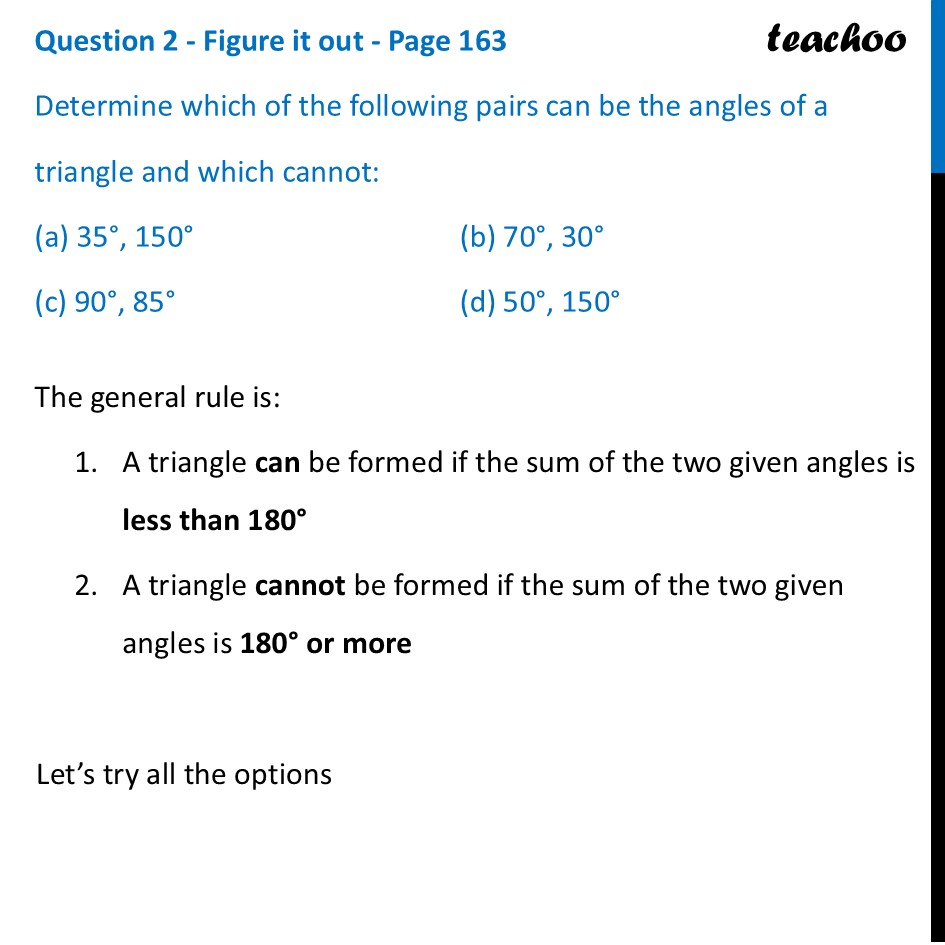
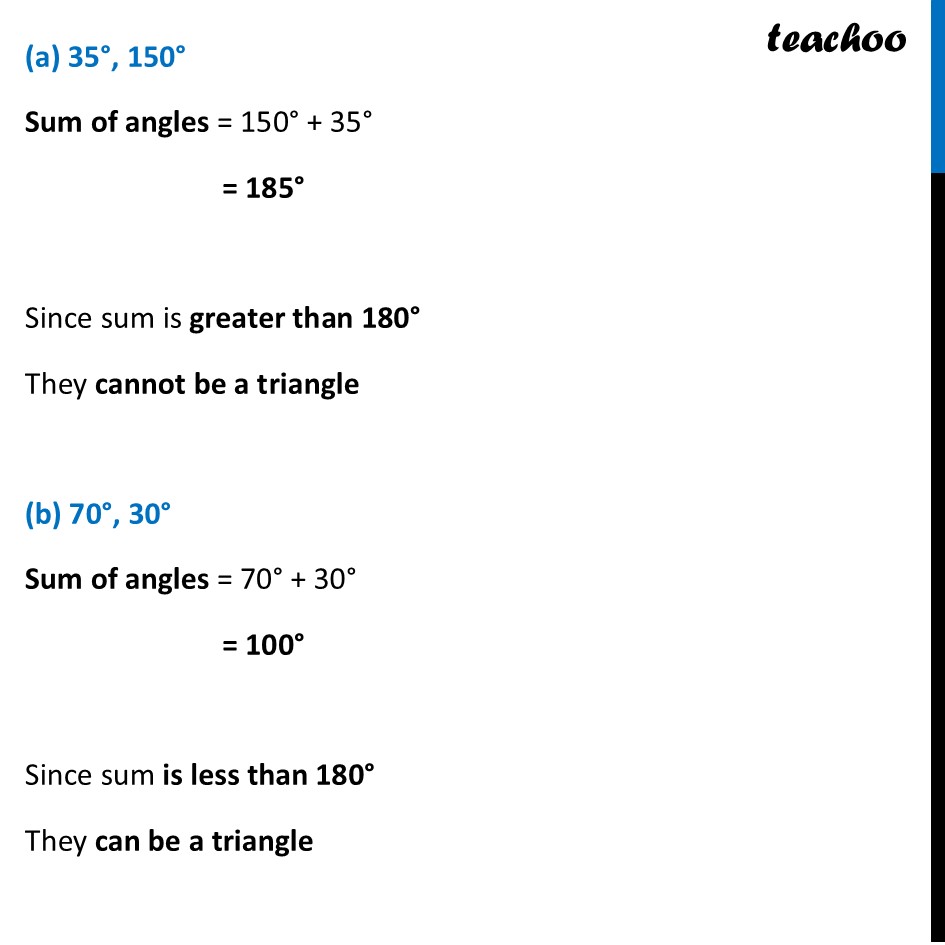
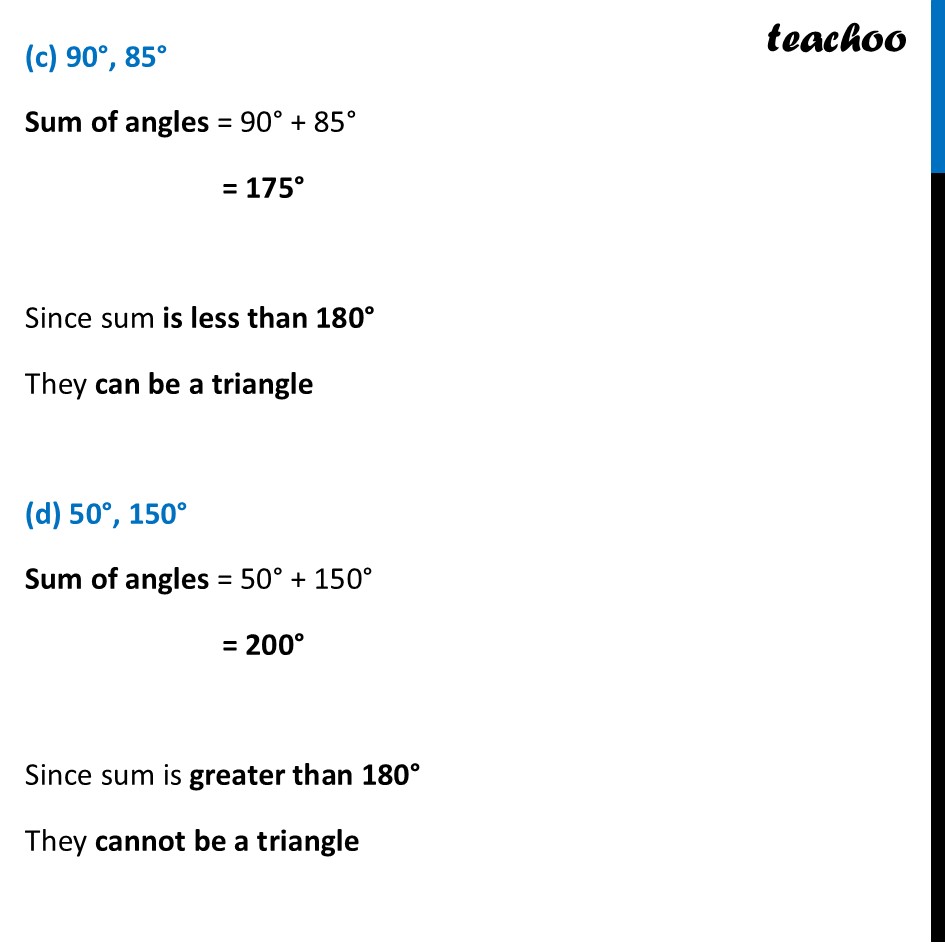
Question 2 - Figure it out - Page 163 Determine which of the following pairs can be the angles of a triangle and which cannot: (a) 35°, 150° (b) 70°, 30° (c) 90°, 85° (d) 50°, 150° The general rule is: A triangle can be formed if the sum of the two given angles is less than 180° A triangle cannot be formed if the sum of the two given angles is 180° or more Let’s try all the options (a) 35°, 150° Sum of angles = 150° + 35° = 185° Since sum is greater than 180° They cannot be a triangle (b) 70°, 30° Sum of angles = 70° + 30° = 100° Since sum is less than 180° They can be a triangle (c) 90°, 85° Sum of angles = 90° + 85° = 175° Since sum is less than 180° They can be a triangle (d) 50°, 150° Sum of angles = 50° + 150° = 200° Since sum is greater than 180° They cannot be a triangle