You are here
![[Ganita Prakash] The sum of two positive integers is always positive - Figure it out - Page 265, 266](https://cdn.teachoo.com/07c1e7f7-a01b-4796-8f8c-659b0a9f5318/slide66.jpg)
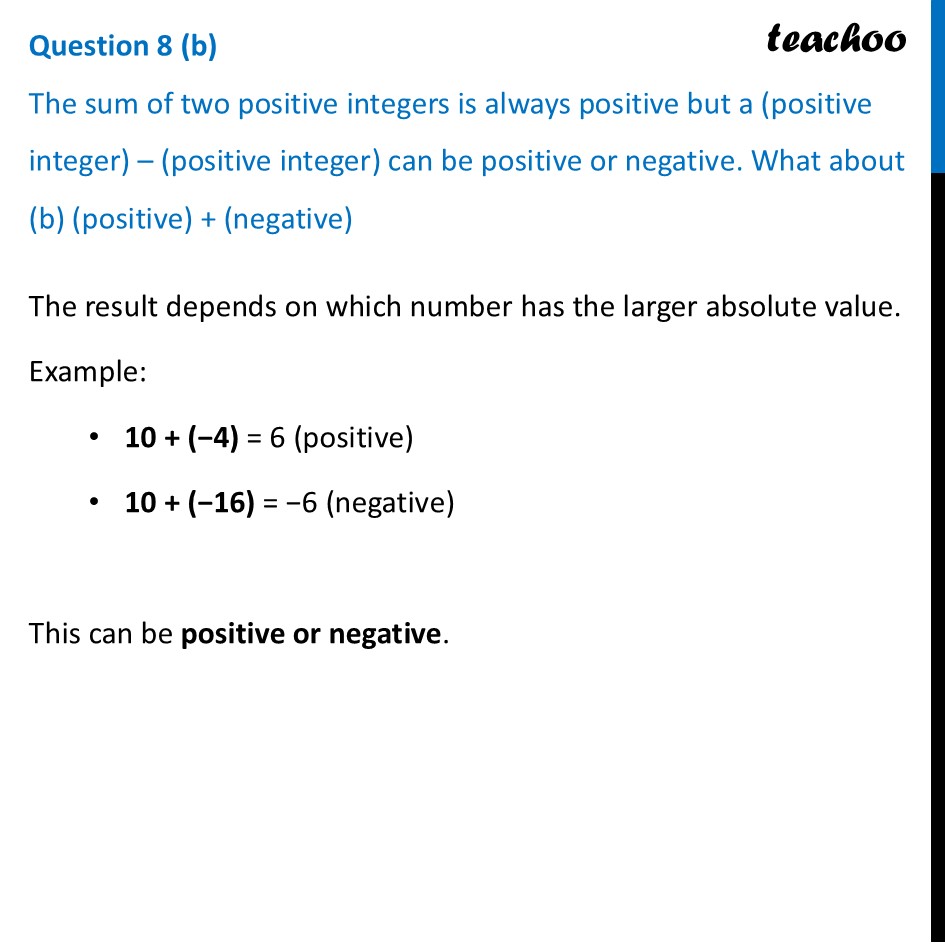
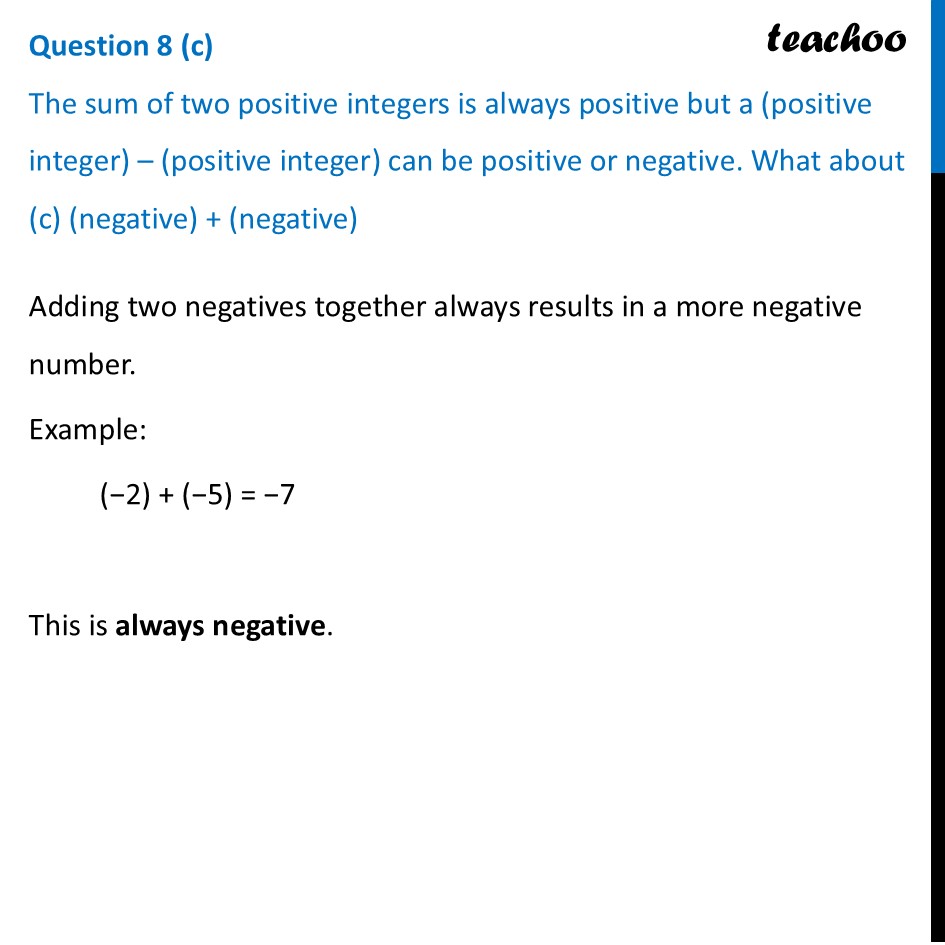
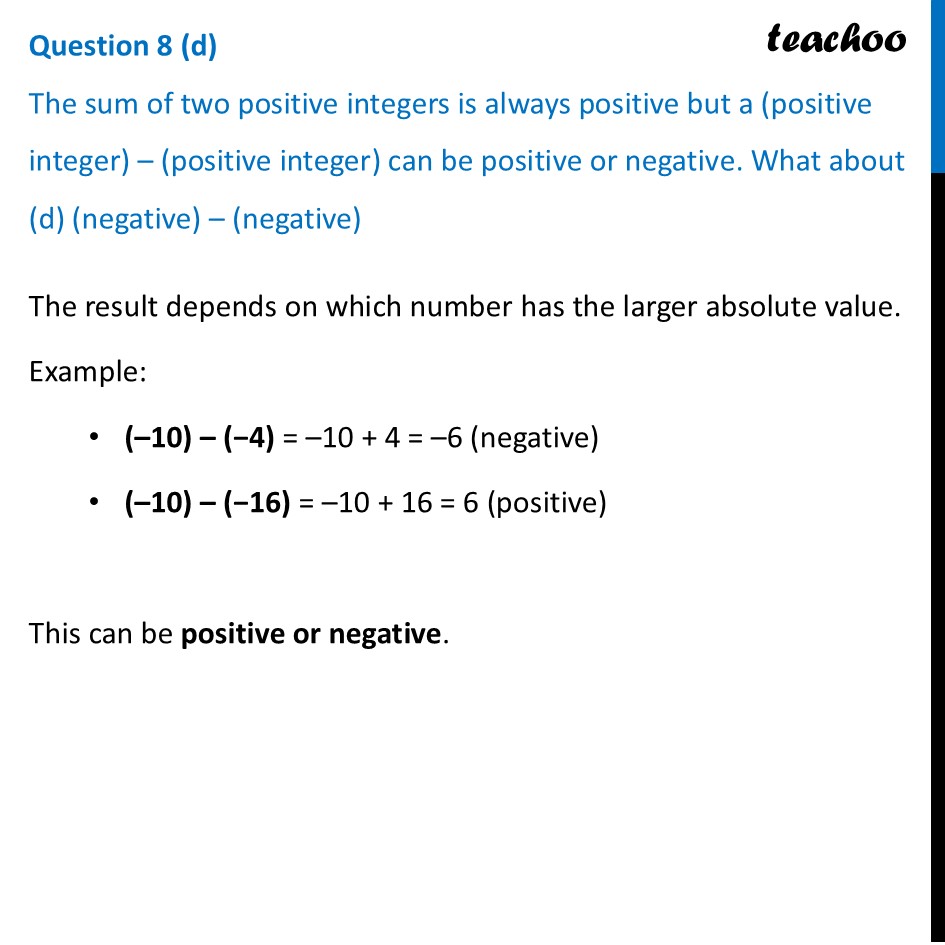
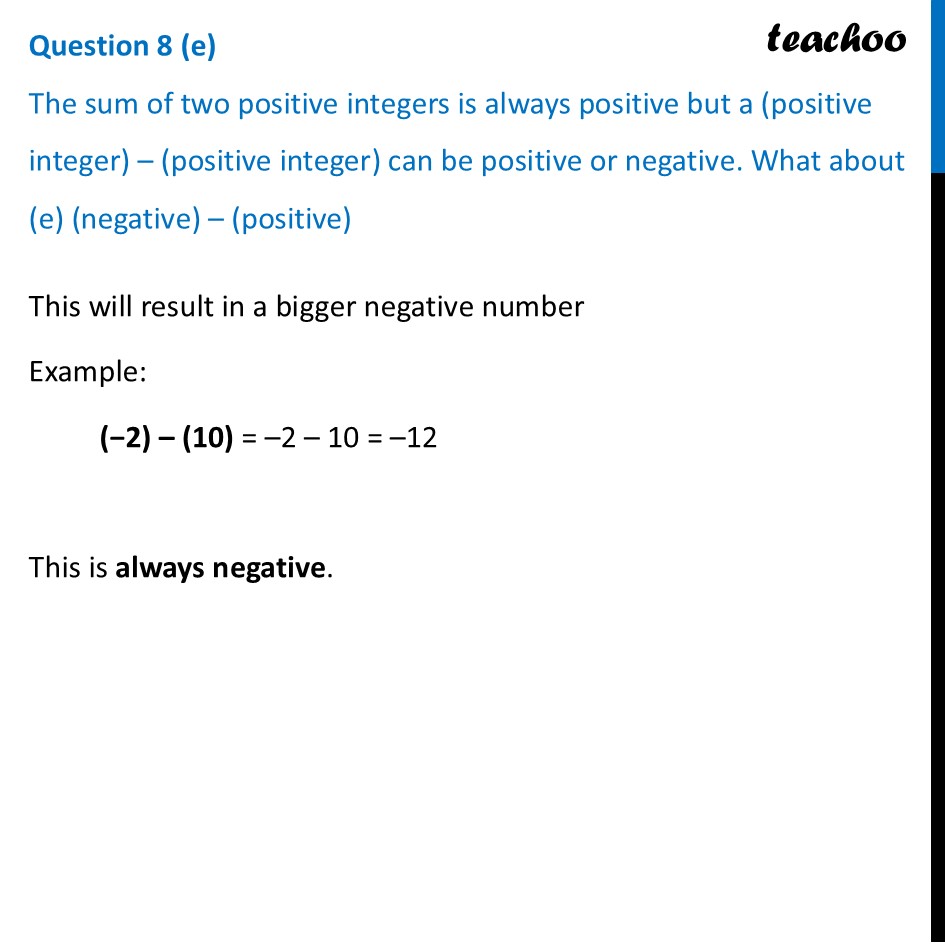
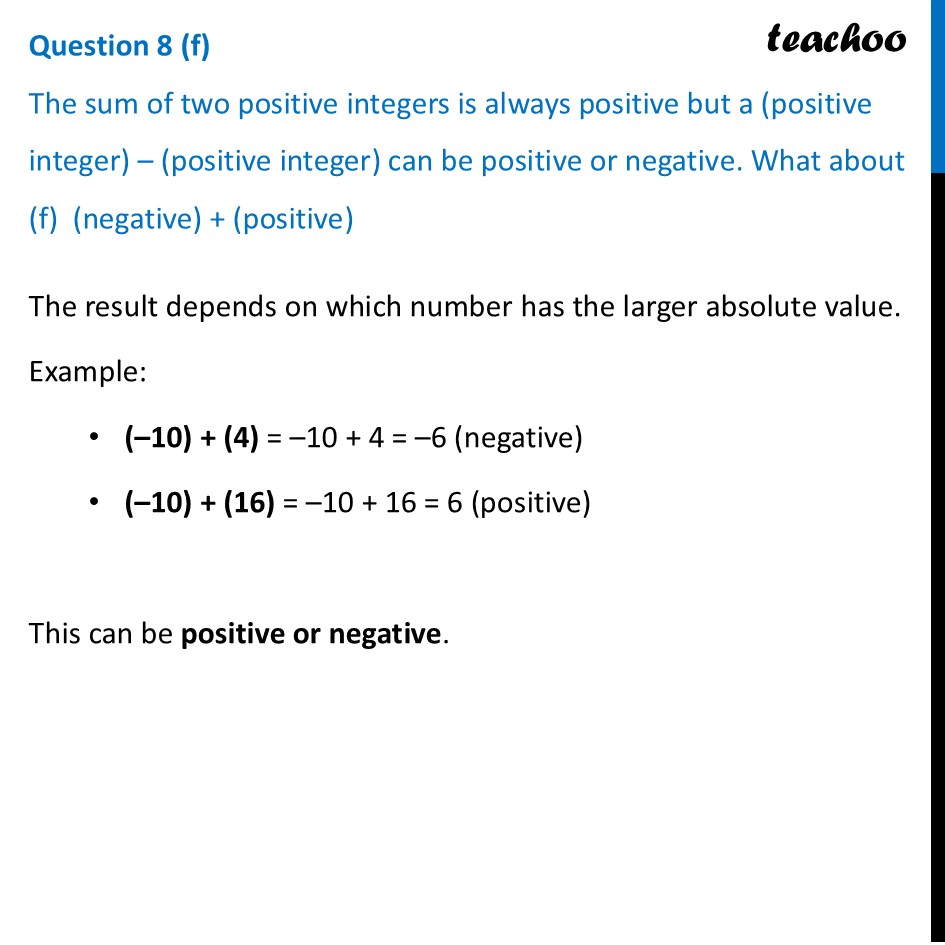
Figure it out - Page 265, 266
Last updated at August 14, 2026 by Teachoo
Transcript
Question 8 (a) The sum of two positive integers is always positive but a (positive integer) – (positive integer) can be positive or negative. What about (a) (positive) – (negative) Subtracting a negative is the same as adding a positive. Example: 5 − (−3) = 5 + 3 = 8 This is always positive. Question 8 (b) The sum of two positive integers is always positive but a (positive integer) – (positive integer) can be positive or negative. What about (b) (positive) + (negative) The result depends on which number has the larger absolute value. Example: 10 + (−4) = 6 (positive) 10 + (−16) = −6 (negative) This can be positive or negative. Question 8 (c) The sum of two positive integers is always positive but a (positive integer) – (positive integer) can be positive or negative. What about (c) (negative) + (negative)Adding two negatives together always results in a more negative number. Example: (−2) + (−5) = −7 This is always negative. Question 8 (d) The sum of two positive integers is always positive but a (positive integer) – (positive integer) can be positive or negative. What about (d) (negative) – (negative) The result depends on which number has the larger absolute value. Example: (–10) – (−4) = –10 + 4 = –6 (negative) (–10) – (−16) = –10 + 16 = 6 (positive) This can be positive or negative. Question 8 (e) The sum of two positive integers is always positive but a (positive integer) – (positive integer) can be positive or negative. What about (e) (negative) – (positive)This will result in a bigger negative number Example: (−2) – (10) = –2 – 10 = –12 This is always negative. Question 8 (f) The sum of two positive integers is always positive but a (positive integer) – (positive integer) can be positive or negative. What about (f) (negative) + (positive)The result depends on which number has the larger absolute value. Example: (–10) + (4) = –10 + 4 = –6 (negative) (–10) + (16) = –10 + 16 = 6 (positive) This can be positive or negative.