You are here
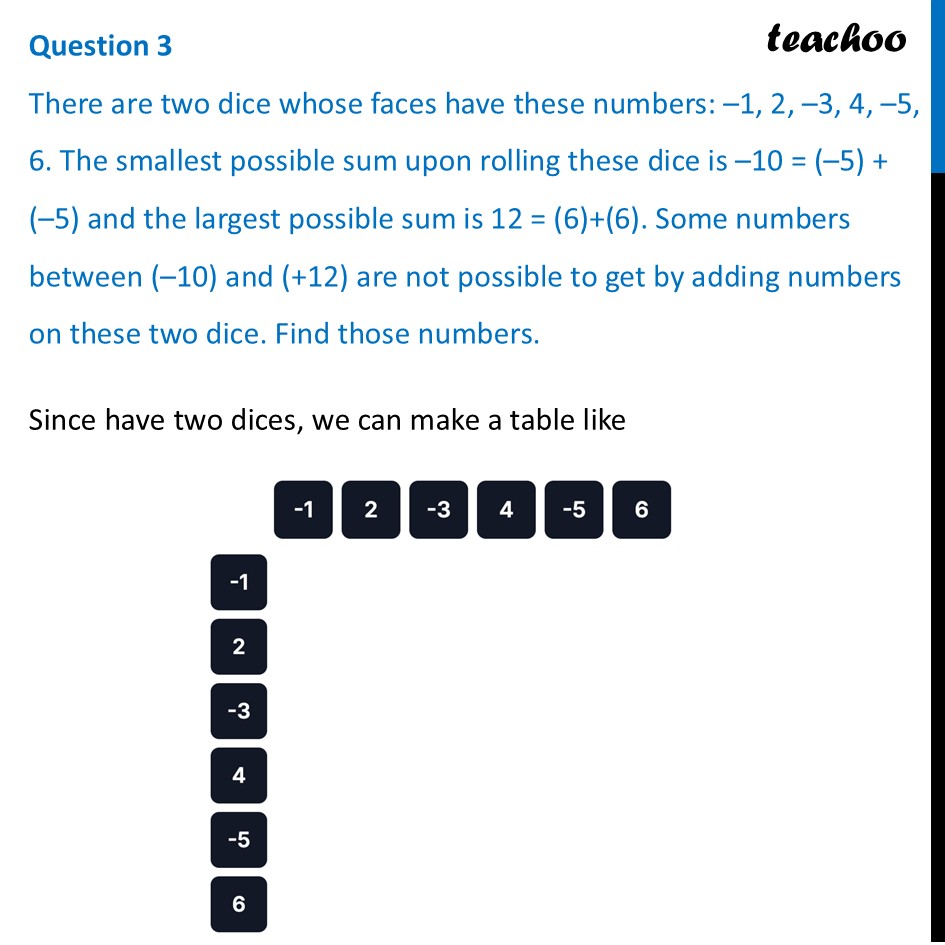
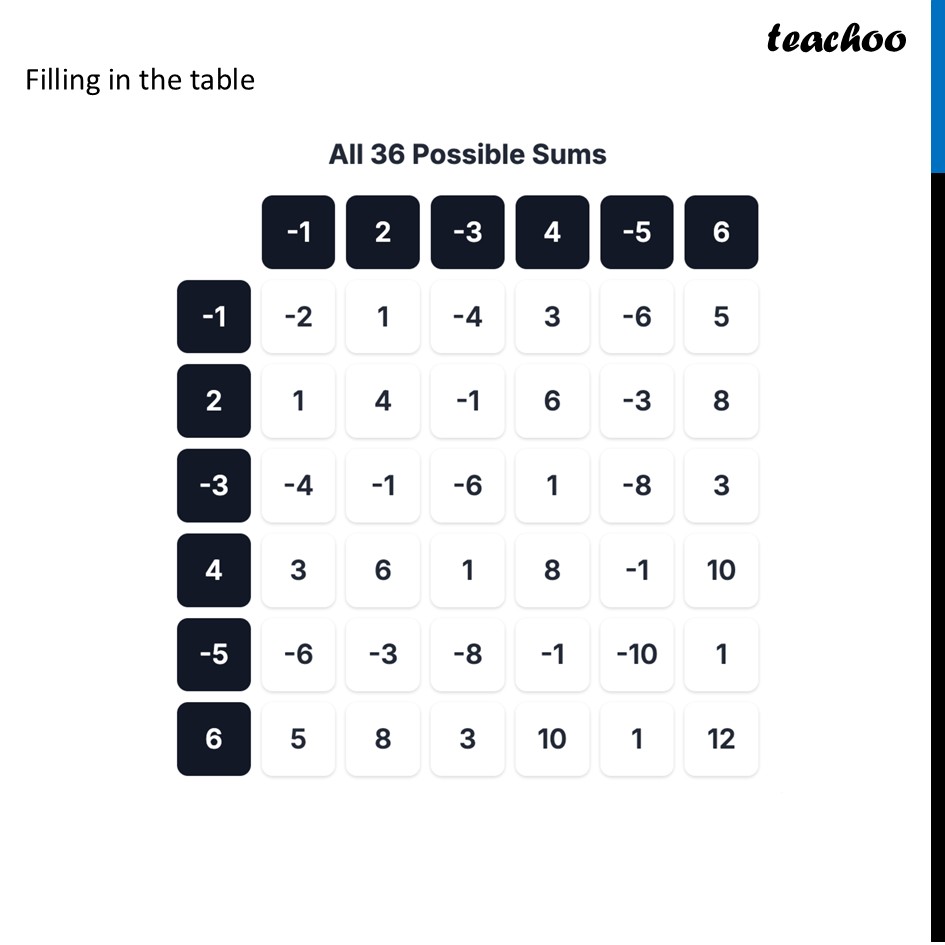
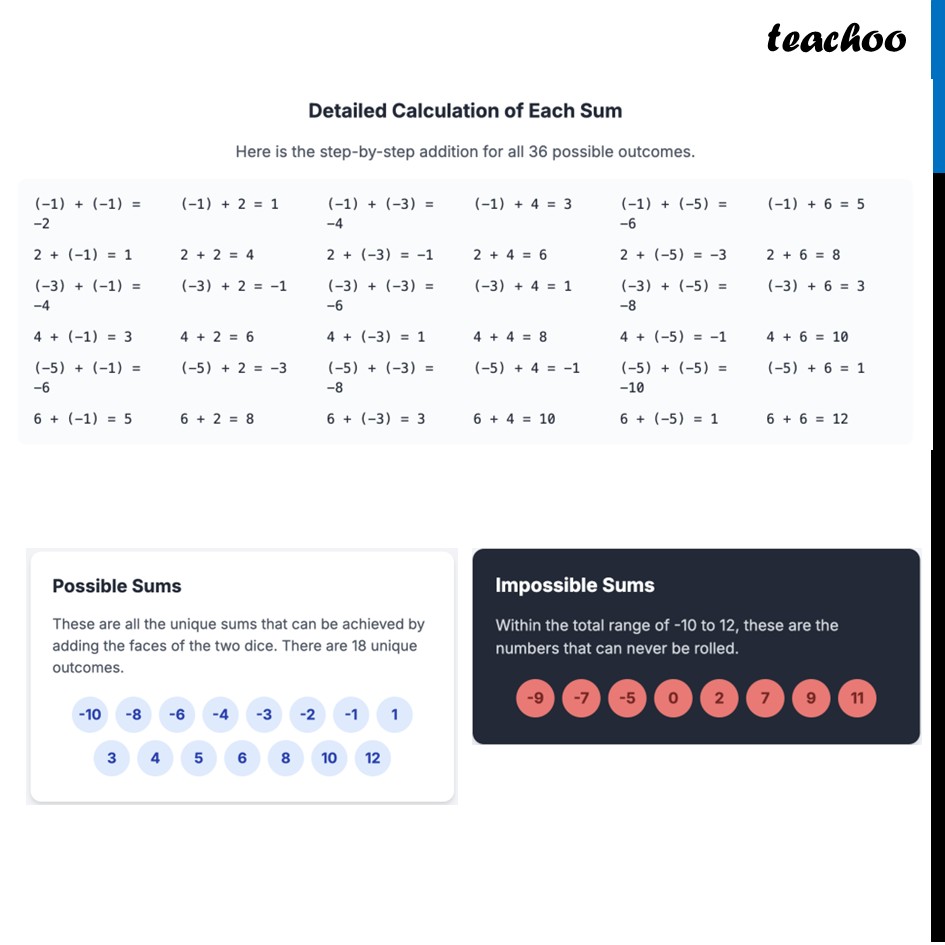
Figure it out - Page 265, 266
Last updated at October 10, 2025 by Teachoo
Transcript
Question 3 There are two dice whose faces have these numbers: –1, 2, –3, 4, –5, 6. The smallest possible sum upon rolling these dice is –10 = (–5) + (–5) and the largest possible sum is 12 = (6)+(6). Some numbers between (–10) and (+12) are not possible to get by adding numbers on these two dice. Find those numbers.Since have two dices, we can make a table like Filling in the table Detailed Calculation of Each Sum Here is the step-by-step addition for all 36 possible outcomes. -2 -4 -6 -4 -6 -8 -6 -8 -10 Possible Sums These are all the unique sums that can be achieved by adding the faces of the two dice. There are 18 unique outcomes. -10 -8 -6 -4 -3 -2 -1 1 3 4 5 6 8 10 12 Impossible Sums Within the total range of -10 to 12 , these are the numbers that can never be rolled.