You are here
![[Class 6 Maths] Evaluate the following differences using tokens - Token Model](https://cdn.teachoo.com/d8f0e234-31e8-4f39-9317-0b7523216e04/slide28.jpg)
Token Model
Last updated at August 14, 2026 by Teachoo
Transcript
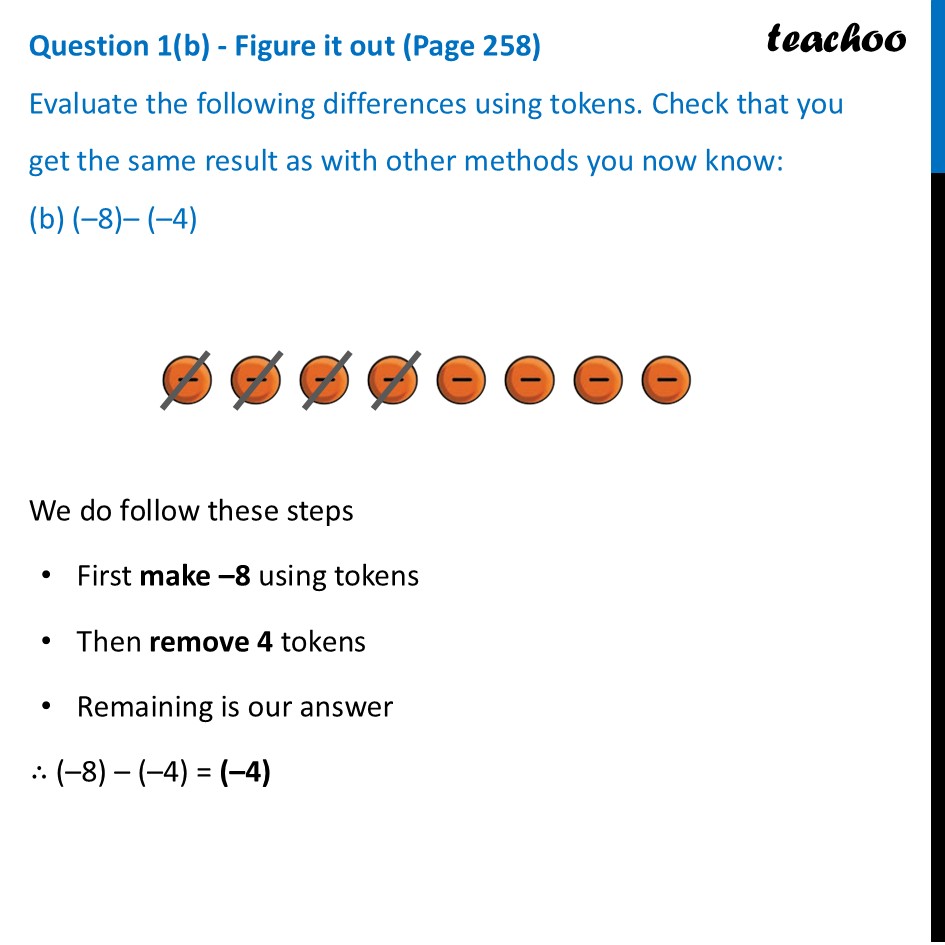
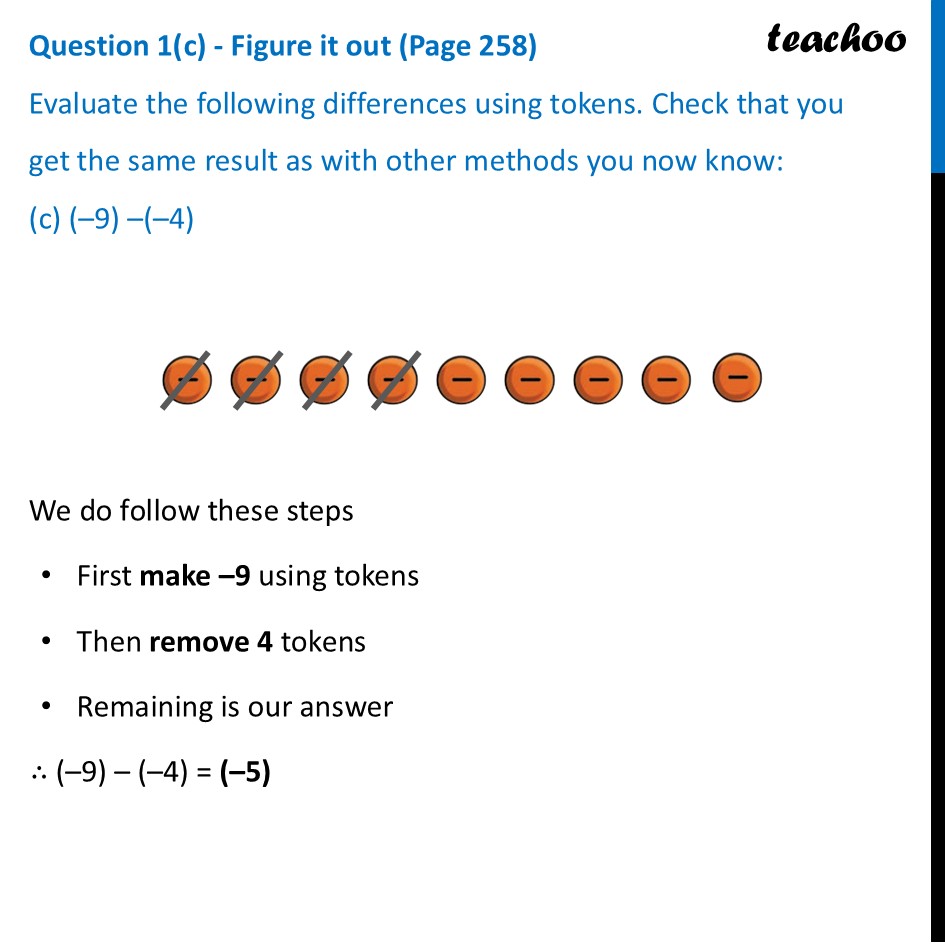
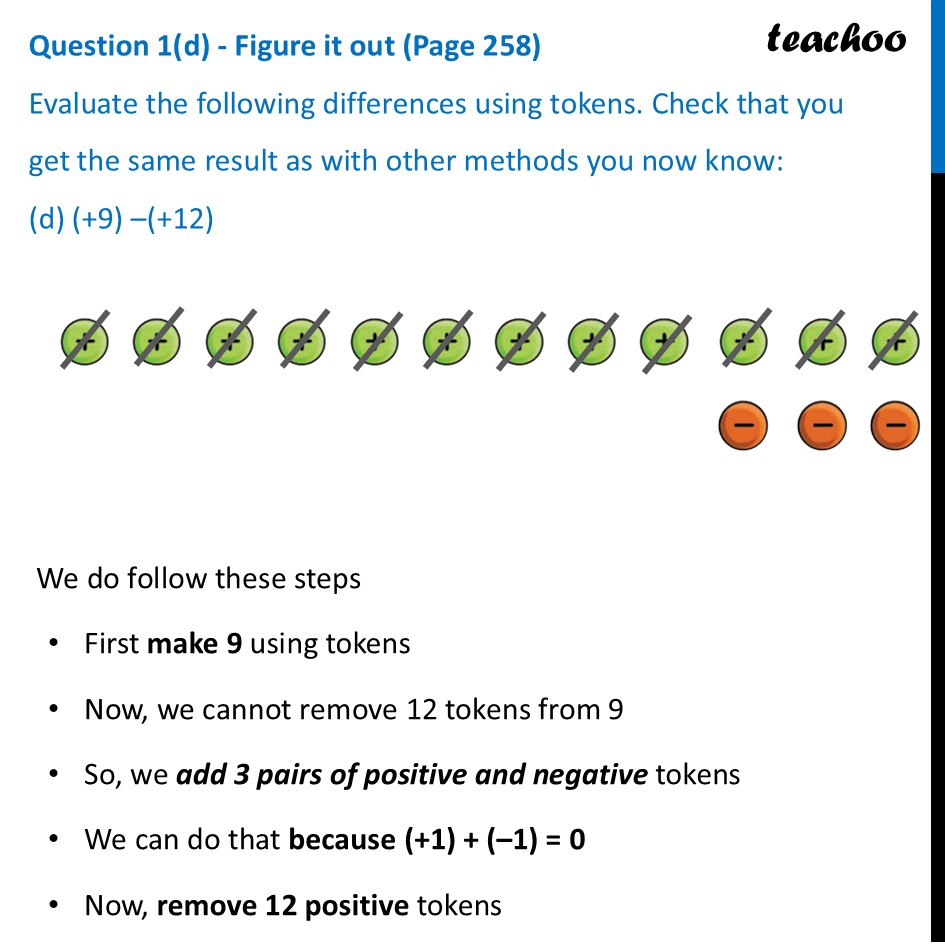
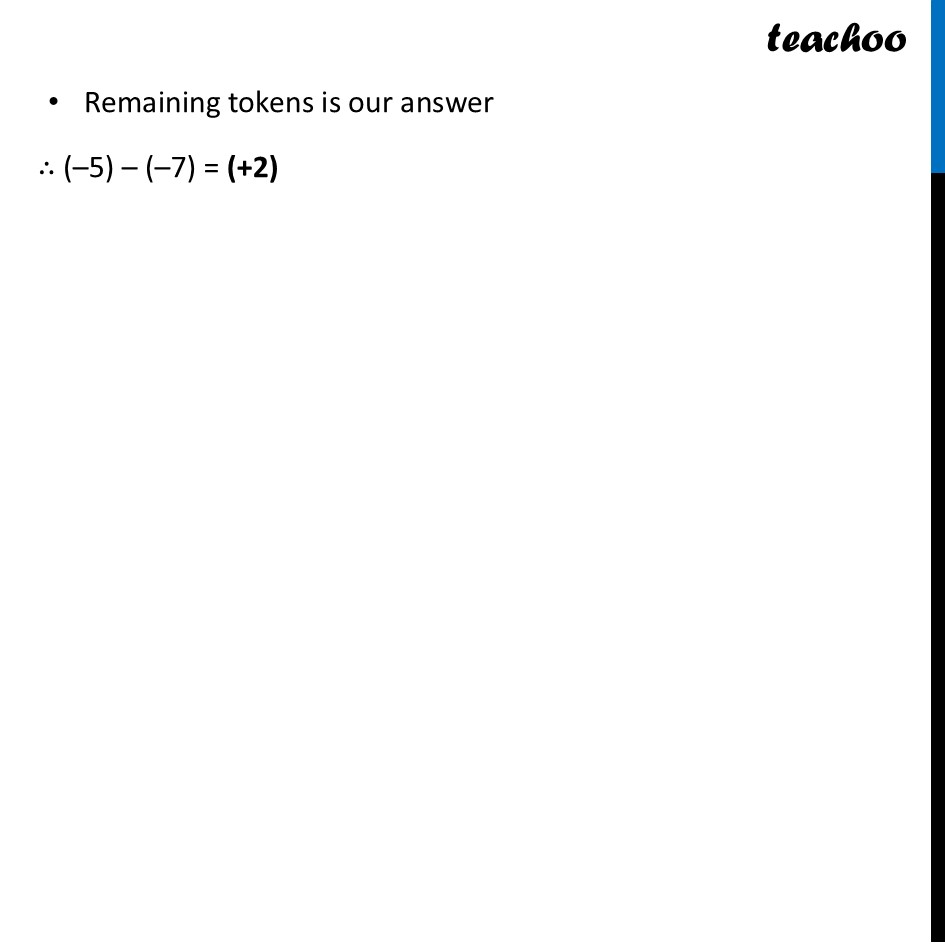
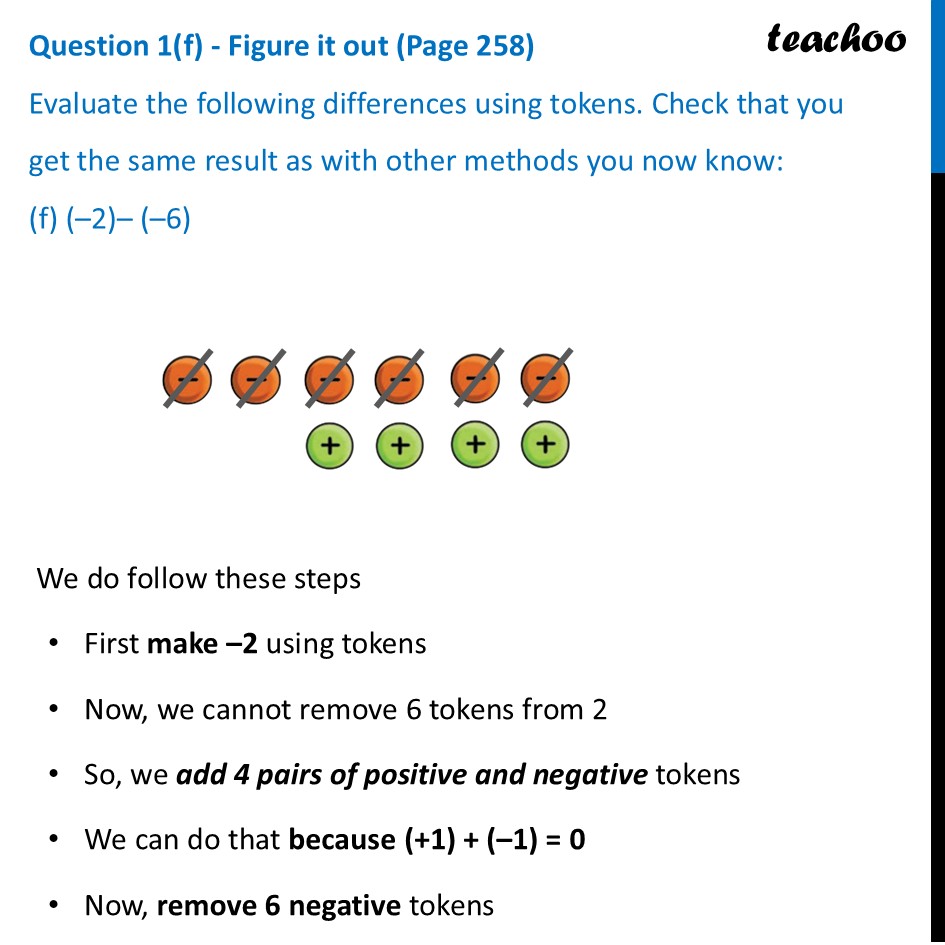
Question 1(a) - Figure it out (Page 258) Evaluate the following differences using tokens. Check that you get the same result as with other methods you now know: (a) (+10) – (+7) We do follow these steps First make +10 using tokens Then remove 7 tokens Remaining is our answer ∴ (+10) – (+7) = (+3) Question 1(b) - Figure it out (Page 258) Evaluate the following differences using tokens. Check that you get the same result as with other methods you now know: (b) (–8)– (–4) We do follow these steps First make –8 using tokens Then remove 4 tokens Remaining is our answer ∴ (–8) – (–4) = (–4) Question 1(c) - Figure it out (Page 258) Evaluate the following differences using tokens. Check that you get the same result as with other methods you now know: (c) (–9) –(–4) We do follow these steps First make –9 using tokens Then remove 4 tokens Remaining is our answer ∴ (–9) – (–4) = (–5) Question 1(d) - Figure it out (Page 258) Evaluate the following differences using tokens. Check that you get the same result as with other methods you now know: (d) (+9) –(+12) We do follow these steps First make 9 using tokens Now, we cannot remove 12 tokens from 9 So, we add 3 pairs of positive and negative tokens We can do that because (+1) + (–1) = 0 Now, remove 12 positive tokens Remaining tokens is our answer ∴ (+9) – (+12) = (–3) Question 1(e) - Figure it out (Page 258) Evaluate the following differences using tokens. Check that you get the same result as with other methods you now know: (e) (–5) – (–7) We do follow these steps First make –5 using tokens Now, we cannot remove 7 tokens from 5 So, we add 2 pairs of positive and negative tokens We can do that because (+1) + (–1) = 0 Now, remove 7 negative tokens Remaining tokens is our answer ∴ (–5) – (–7) = (+2) Question 1(f) - Figure it out (Page 258) Evaluate the following differences using tokens. Check that you get the same result as with other methods you now know: (f) (–2)– (–6)We do follow these steps First make –2 using tokens Now, we cannot remove 6 tokens from 2 So, we add 4 pairs of positive and negative tokens We can do that because (+1) + (–1) = 0 Now, remove 6 negative tokens