
 You are here
Average and Mixtures
Last updated at October 23, 2026 by Teachoo
Transcript
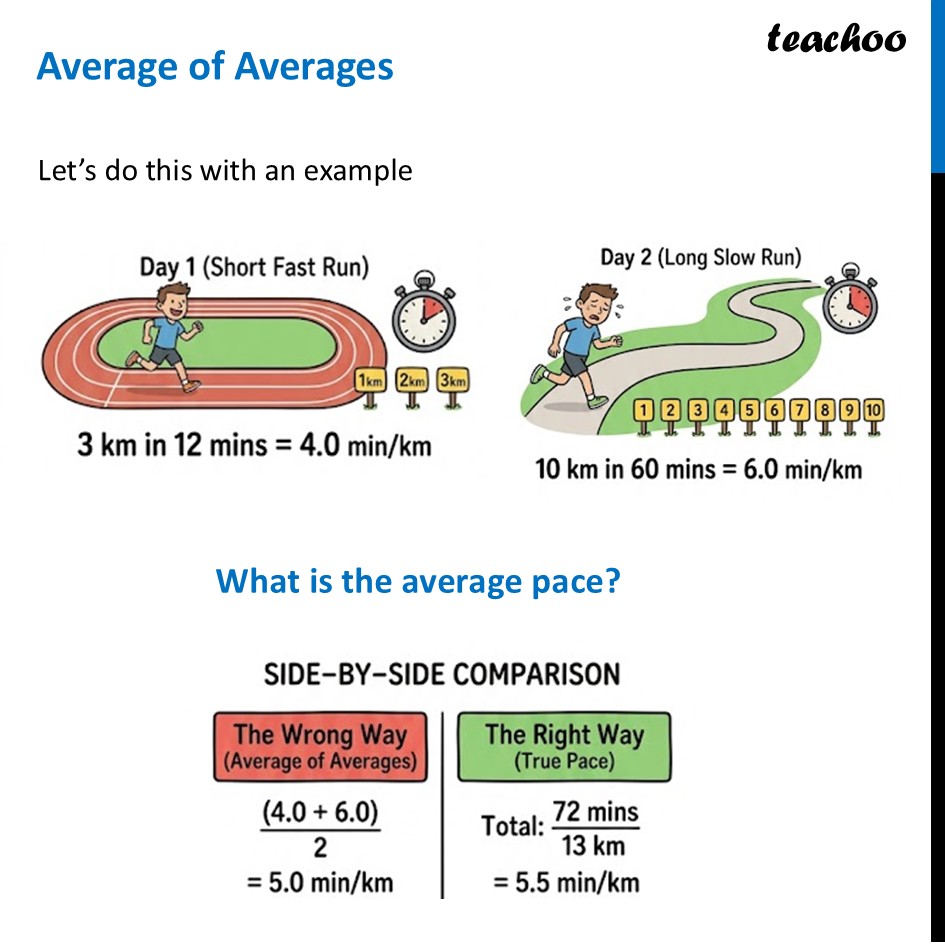
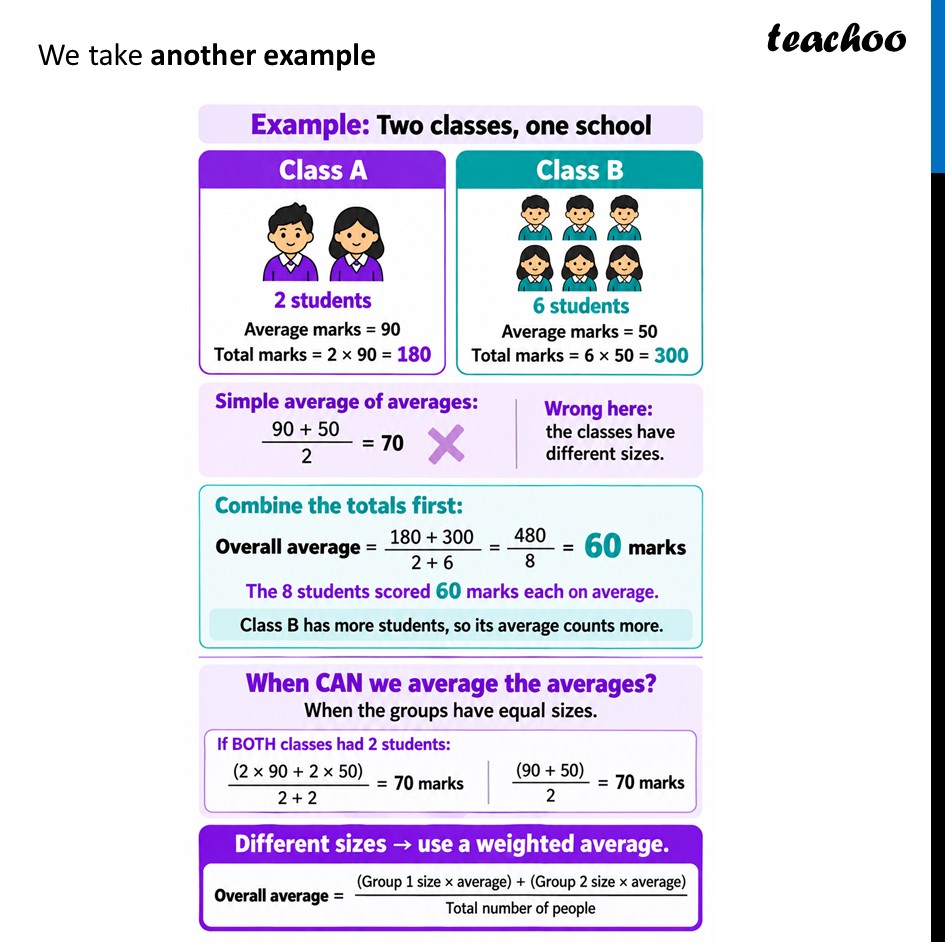
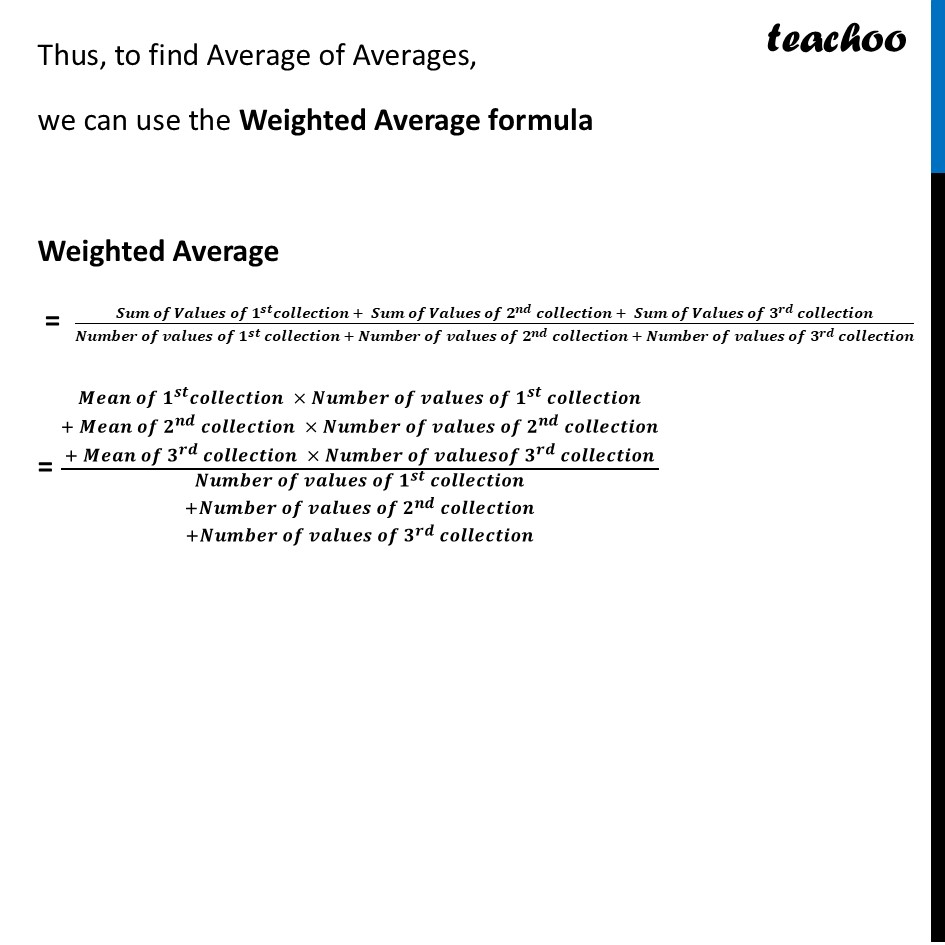
Average of Averages Let’s do this with an example What is the average pace? THE AVERAGE OF AVERAGES TRAP Why you can’t just average the averages when sizes are different! THE RUNNING EXAMPLE: PACE Day 1 (Short Fast Run) 10 km in 60 mins = 6.0 min/km SIDE-BY-SIDE COMPARISON (4.0 + 6.0) . 72 mins a Total: Bkm = 5.0 min/km = 5.5 min/km The Takeaway: Always count the total first! (Since you ran much further at the slower pace, your true average is closer to 6.0 than 4.0). We take another example AVERAGE OF AVERAGES Do group sizes matter? YES! Example: Two classes, one school 20 | 222 2 students 6 students Average marks = 90 Average marks = 50 Total marks = 2 x 90 = 180 Total marks = 6 x 50 = 300 Simple average of averages: Wrong here: 90+ oe the classes have = 70 x | different sizes. Combine the totals first: Overall average = ————~—- = ———_ = 60 marks The 8 students scored 60 marks each on average. Class B has more students, so its average counts more. When CAN we average the averages? When the groups have equal sizes. If BOTH classes had 2 students: (2 x 90 + 2 x 50) = FO mate | (90 +50) = 70 make 24+2 2 Different sizes > use a weighted average. (Group 1 size x average) + (Group 2 size x average) Overall average = 9 Total number of people Thus, to find Average of Averages, we can use the Weighted Average formula Weighted Average = ([𝑺𝒖𝒎 𝒐𝒇 𝑽𝒂𝒍𝒖𝒆𝒔 𝒐𝒇 𝟏^(𝒔𝒕)𝒄𝒐𝒍𝒍𝒆𝒄𝒕𝒊𝒐𝒏 + 𝑺𝒖𝒎 𝒐𝒇 𝑽𝒂𝒍𝒖𝒆𝒔 𝒐𝒇 𝟐^(𝒏𝒅) 𝒄𝒐𝒍𝒍𝒆𝒄𝒕𝒊𝒐𝒏 + 𝑺𝒖𝒎 𝒐𝒇 𝑽𝒂𝒍𝒖𝒆𝒔 𝒐𝒇 𝟑^(𝒓𝒅) 𝒄𝒐𝒍𝒍𝒆𝒄𝒕𝒊𝒐𝒏])/([𝑵𝒖𝒎𝒃𝒆𝒓 𝒐𝒇 𝒗𝒂𝒍𝒖𝒆𝒔 𝒐𝒇 𝟏^(𝒔𝒕) 𝒄𝒐𝒍𝒍𝒆𝒄𝒕𝒊𝒐𝒏 + 𝑵𝒖𝒎𝒃𝒆𝒓 𝒐𝒇 𝒗𝒂𝒍𝒖𝒆𝒔 𝒐𝒇 𝟐^(𝒏𝒅) 𝒄𝒐𝒍𝒍𝒆𝒄𝒕𝒊𝒐𝒏 + 𝑵𝒖𝒎𝒃𝒆𝒓 𝒐𝒇 𝒗𝒂𝒍𝒖𝒆𝒔 𝒐𝒇 𝟑^(𝒓𝒅) 𝒄𝒐𝒍𝒍𝒆𝒄𝒕𝒊𝒐𝒏]) = ([𝑴𝒆𝒂𝒏 𝒐𝒇 𝟏^(𝒔𝒕)𝒄𝒐𝒍𝒍𝒆𝒄𝒕𝒊𝒐𝒏 × 𝑵𝒖𝒎𝒃𝒆𝒓 𝒐𝒇 𝒗𝒂𝒍𝒖𝒆𝒔 𝒐𝒇 𝟏^(𝒔𝒕) 𝒄𝒐𝒍𝒍𝒆𝒄𝒕𝒊𝒐𝒏; + 𝑴𝒆𝒂𝒏 𝒐𝒇 𝟐^(𝒏𝒅) 𝒄𝒐𝒍𝒍𝒆𝒄𝒕𝒊𝒐𝒏 × 𝑵𝒖𝒎𝒃𝒆𝒓 𝒐𝒇 𝒗𝒂𝒍𝒖𝒆𝒔 𝒐𝒇 𝟐^(𝒏𝒅) 𝒄𝒐𝒍𝒍𝒆𝒄𝒕𝒊𝒐𝒏; + 𝑴𝒆𝒂𝒏 𝒐𝒇 𝟑^(𝒓𝒅) 𝒄𝒐𝒍𝒍𝒆𝒄𝒕𝒊𝒐𝒏 × 𝑵𝒖𝒎𝒃𝒆𝒓 𝒐𝒇 𝒗𝒂𝒍𝒖𝒆𝒔𝒐𝒇 𝟑^(𝒓𝒅) 𝒄𝒐𝒍𝒍𝒆𝒄𝒕𝒊𝒐𝒏])/([𝑵𝒖𝒎𝒃𝒆𝒓 𝒐𝒇 𝒗𝒂𝒍𝒖𝒆𝒔 𝒐𝒇 𝟏^(𝒔𝒕) 𝒄𝒐𝒍𝒍𝒆𝒄𝒕𝒊𝒐𝒏; +𝑵𝒖𝒎𝒃𝒆𝒓 𝒐𝒇 𝒗𝒂𝒍𝒖𝒆𝒔 𝒐𝒇 𝟐^(𝒏𝒅) 𝒄𝒐𝒍𝒍𝒆𝒄𝒕𝒊𝒐𝒏; +𝑵𝒖𝒎𝒃𝒆𝒓 𝒐𝒇 𝒗𝒂𝒍𝒖𝒆𝒔 𝒐𝒇 𝟑^(𝒓𝒅) 𝒄𝒐𝒍𝒍𝒆𝒄𝒕𝒊𝒐𝒏])
