
 You are here
pages 129 to 131
What is trade, what moved through it, and what infrastructure did it require?
![Trade: Trade Routes and Ports - State and Society up t - [Teachoo] - Concepts](https://cdn.teachoo.com/3a7d9a09-949d-41ab-ab37-f076f8a65e3c/a-caravan-on-a-land-trade-route.jpg)
A caravan on a land trade route
Trade : the buying, selling and exchange of goods between people, regions, or states.
How does trade happen?
- There needs to be movement of goods from one place to another.
- For this, we need trade routes and ports .
What's needed
One-line meaning
Trade routes
Paths, on land or sea, that goods and traders travelled along
Ports
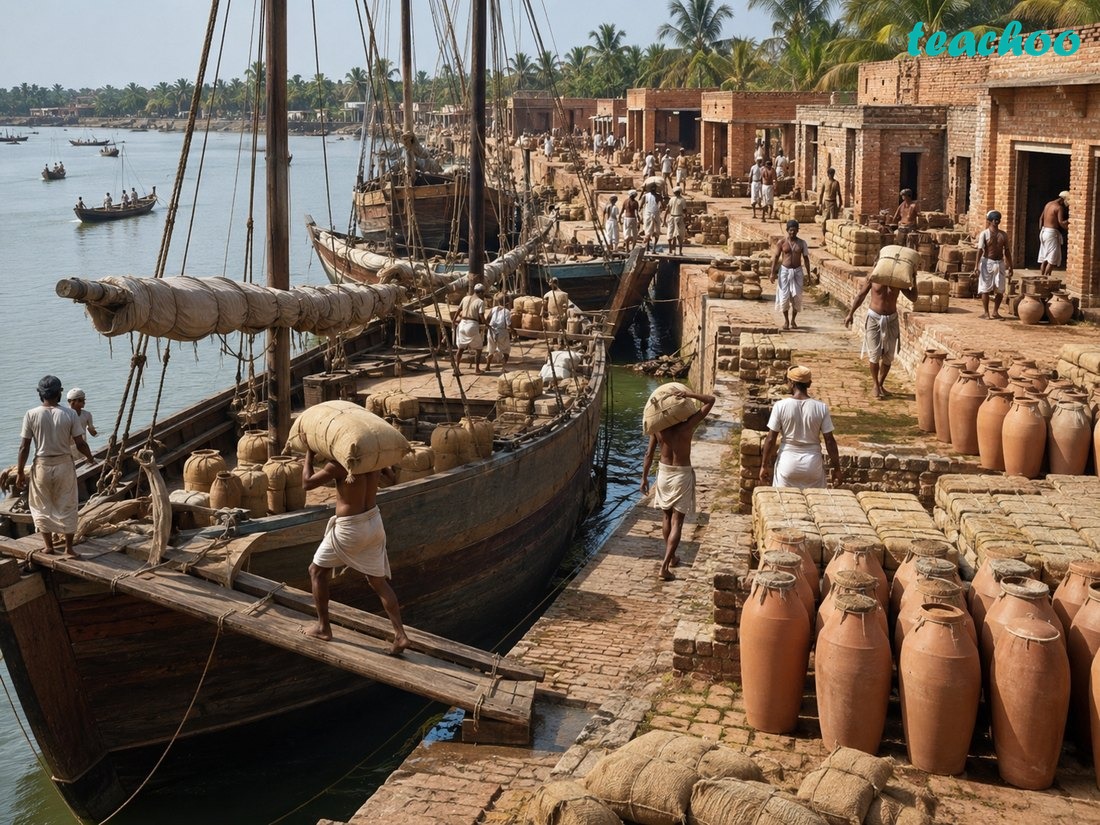
Coastal points where goods were loaded, unloaded, and traded
Which items were traded during this period, to whom, and by whom?
Goods of the early India trade
| Items | Traded with | Traded by |
|---|---|---|
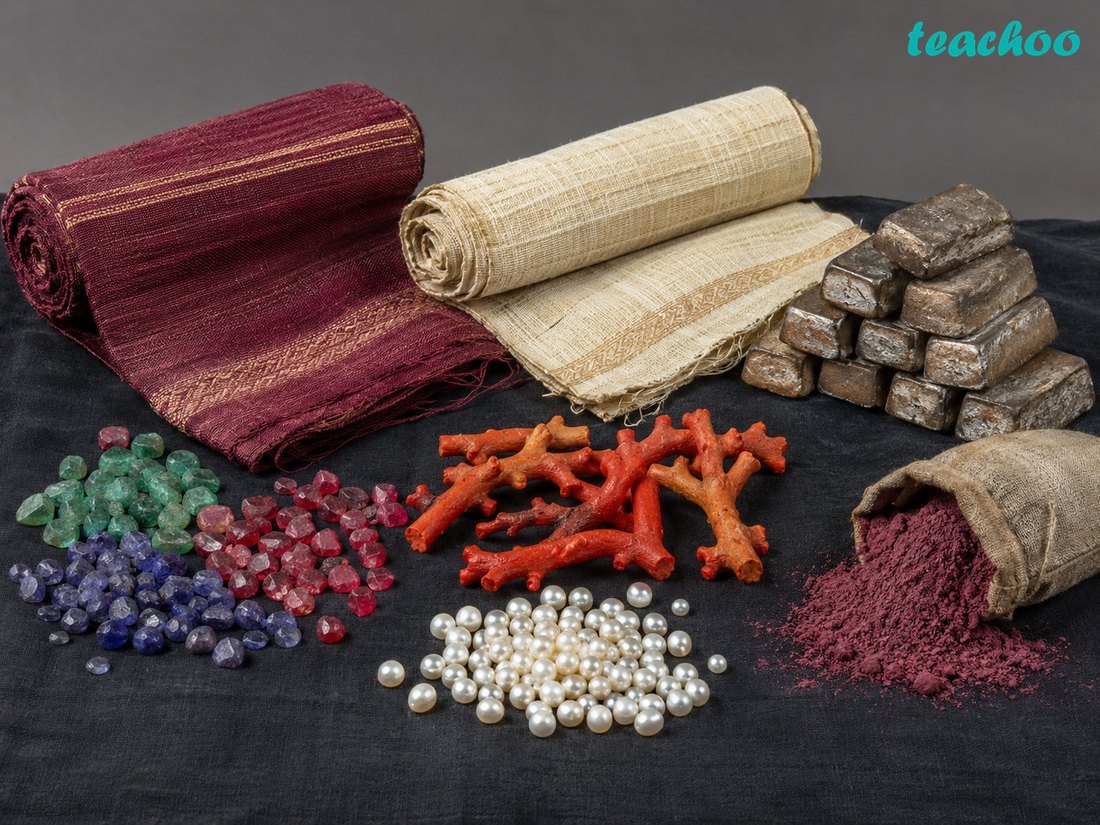
| Textiles, gems, coral, pearls, metals, and minerals | Northern, central, and southern India | Magadha |
How did the state regulate and support trade?
- The emergence of well-structured states provided infrastructure and conditions that helped trade and commerce flourish.
- The Arthashastra identifies trade as a major economic activity and notes that Magadha traded textiles, gems, coral, pearls, metals and minerals with different parts of India.
| State role named in the chapter | Purpose / effect |
|---|---|
| Regulated salt production | Salt was an important commodity. |
| Ensured safety of trade routes | Helped traders and goods move more securely. |
| Prevented adulteration of goods | Protected the quality of goods. |
| Protected consumers from unfair practices | Reduced unfair dealing. |
- Trade networks had existed since Harappan times. By around the 6th century BCE , the major land routes Dakshinapatha and Uttarapatha had emerged; later dynasties maintained and expanded them.
Which major land routes and ports connected the subcontinent and the wider Indian Ocean world?
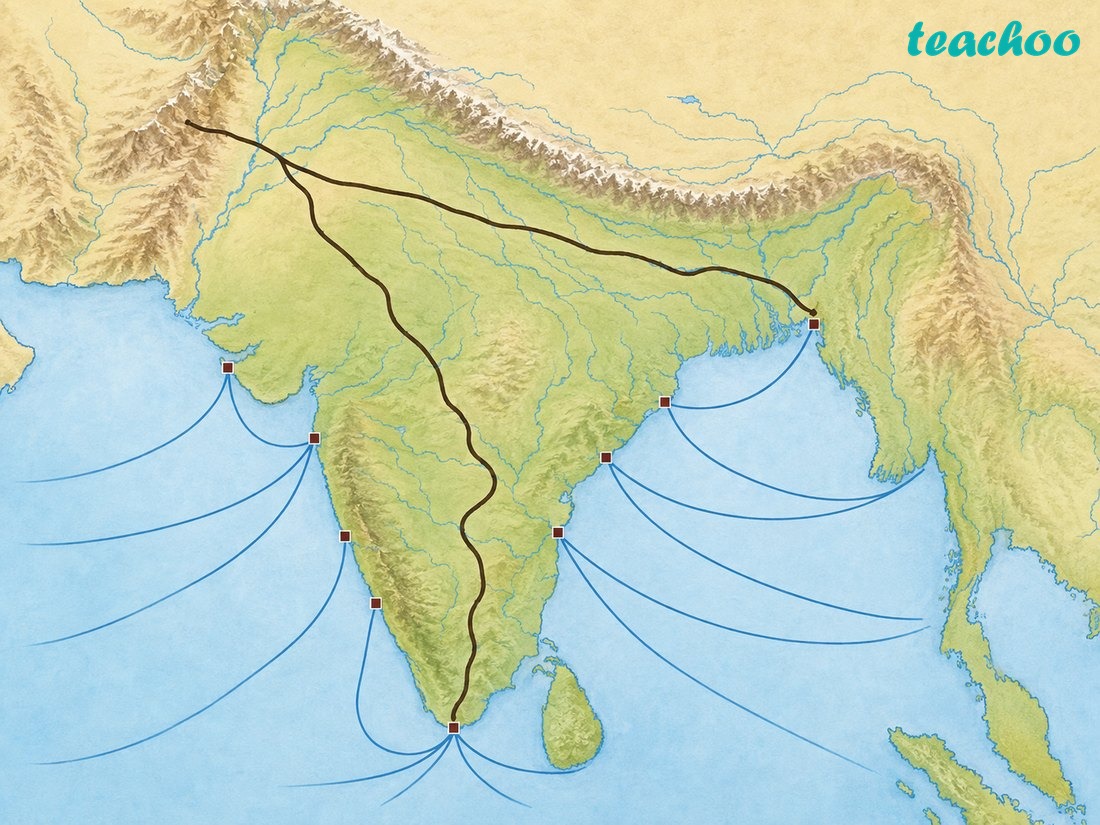
Major trade routes and ports
- Trade networks within the Indian subcontinent, and beyond it, had been developing since the times of the Harappans .
- By around the 6th century BCE , two major land routes emerged.
- These were later maintained and expanded by successive dynasties.
Route
Description
Dakshinapatha
A major land trade route, emerged by around the 6th century BCE
Uttarapatha
A major land trade route, emerged by around the 6th century BCE
- Over time, these routes served as important trans-regional networks , linking different parts of the subcontinent.
- They facilitated the movement of goods, people, and ideas.
- They connected inland regions with coastal ports, integrating overland and maritime trade systems.
What were the important ports during this period?
An early Indian port
Muziris , Kaveripattinam , Arikamedu , and Masulipatnam .
- These are marked on Fig 5.12 to help locate them geographically.
- Indian ports played a significant role in facilitating trade and commerce, attracting both Indian and foreign traders.
- Trade links between the Harappans and the Mesopotamians already existed, involving ports along the western coast of India, the Persian Gulf, and other regions.
What is maritime trade, and how far did it reach?
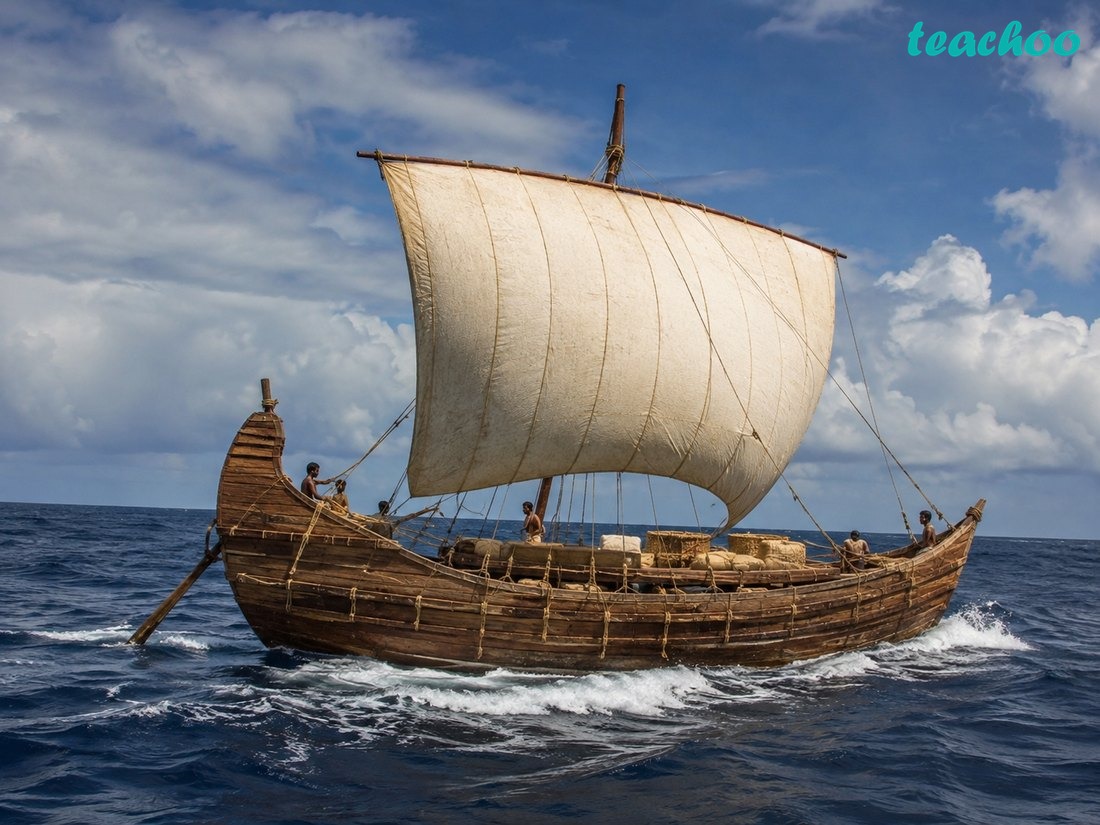
Maritime trade across the Indian Ocean
- Maritime trade means trade carried out by sea.
- It used both coastal routes and long-distance overseas routes across the Indian Ocean .
- (The chapter notes that more on India's trade interactions with different regions will be covered in a chapter titled 'India and the World - 1' in Part 2 of the textbook.)
- The connection between the Dakshinapatha/Uttarapatha land routes and the coastal ports shows that early Indian trade was not purely overland or purely maritime, but an integrated system of both.
- Trade with Rome is a clear sign that Indian trade networks by this period had grown beyond the Indian subcontinent itself.
- By the early centuries of the Common Era, India's trade with Rome had expanded significantly through both sea routes and overland connections via Central Asia .
What routes does the Silappadikaram mention?
- In previous grades, we studied the Silappadikaram , which mentions two important routes in the Tamil region that also extended into northern India.
Route
Connected
First route
Kanchipuram to the famous port of
Poompuhar (Kaveripattinam)
Second route
Kanchipuram to
Kanyakumari
Section Summary - Trade: Trade Routes and Ports
Goods
Textiles, gems, coral, pearls, metals and minerals
Routes
Uttarapatha and Dakshinapatha by land; ports by sea
State role
Safe routes, no adulteration, regulated salt
↓
Strong states made trade possible, and trade made states richer
