You are here
Sum of the First n Natural Numbers
Last updated at August 14, 2026 by Teachoo
Transcript
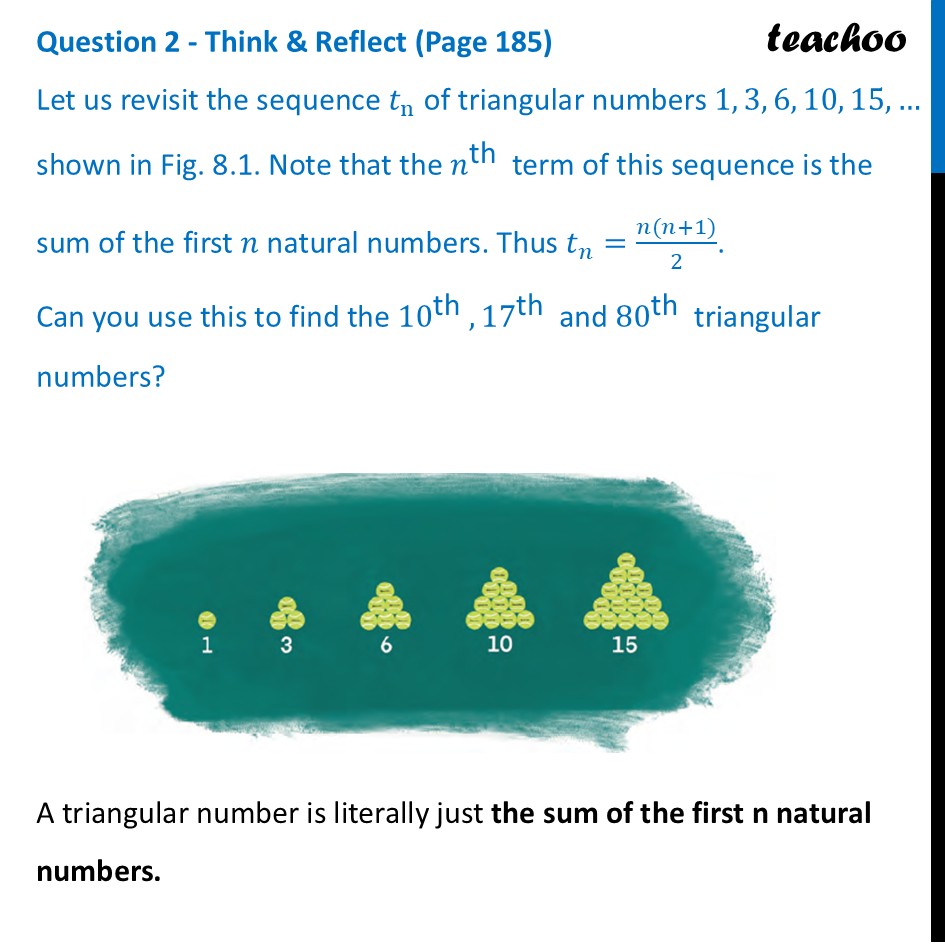
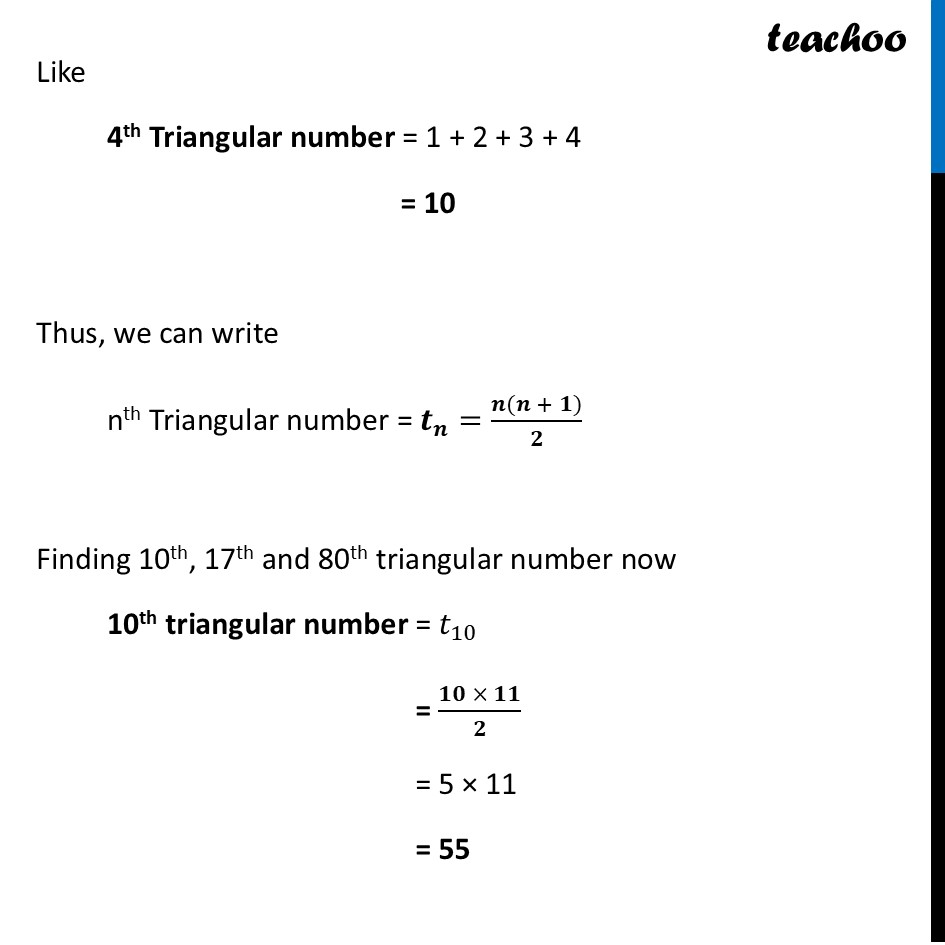
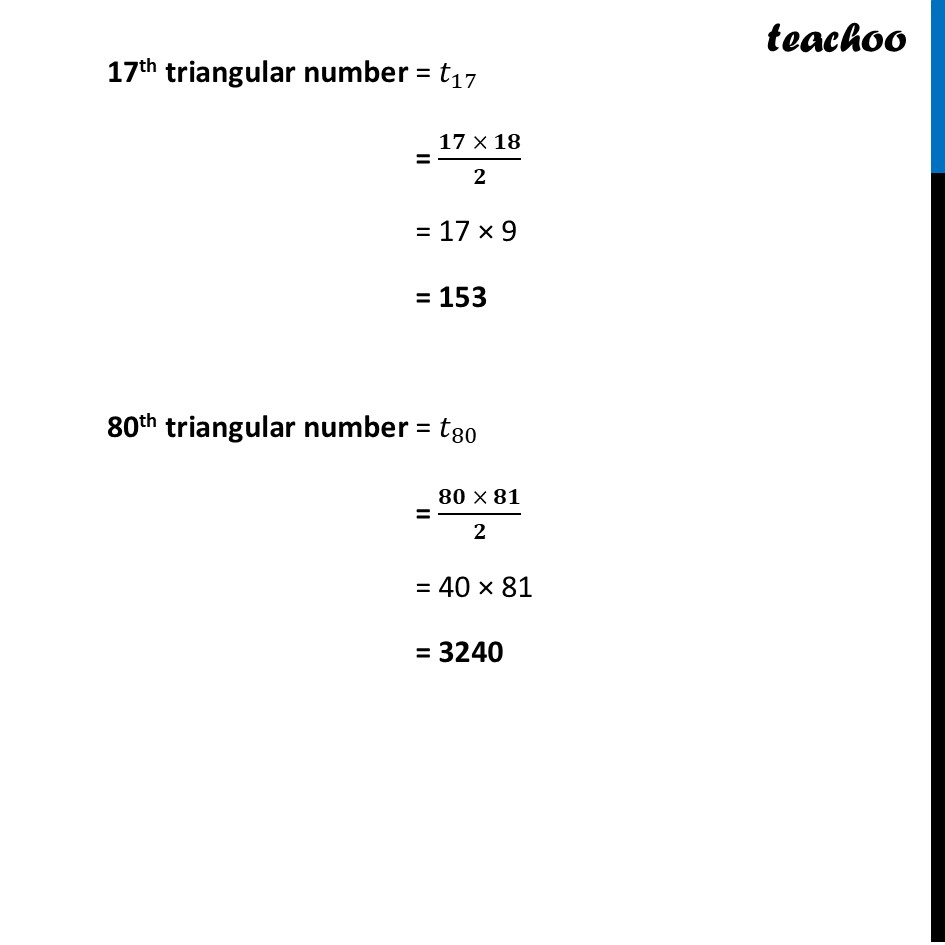
Question 2 - Think & Reflect (Page 185) Let us revisit the sequence 𝑡_n of triangular numbers 1, 3, 6, 10, 15,… shown in Fig. 8.1. Note that the 𝑛^"th " term of this sequence is the sum of the first 𝑛 natural numbers. Thus 𝑡_𝑛=(𝑛(𝑛+1))/2. Can you use this to find the 10^"th " ,17^"th " and 80^"th " triangular numbers? A triangular number is literally just the sum of the first n natural numbers. Like 4th Triangular number = 1 + 2 + 3 + 4 = 10 Thus, we can write nth Triangular number = 𝒕_𝒏=(𝒏(𝒏 + 𝟏))/𝟐 Finding 10th, 17th and 80th triangular number now 10th triangular number = 𝑡_10 = (𝟏𝟎 × 𝟏𝟏)/𝟐 = 5 × 11 = 55 17th triangular number = 𝑡_17 = (𝟏𝟕 × 𝟏𝟖)/𝟐 = 17 × 9 = 153 80th triangular number = 𝑡_80 = (𝟖𝟎 × 𝟖𝟏)/𝟐 = 40 × 81 = 3240