
 You are here
![[Class 7] Do you remember the Collatz Conjecture from last year? Try - Figure it out - Page 42, 43, 44](https://cdn.teachoo.com/b70f7cc5-02d3-4392-88dc-e4f46965be56/slide152.jpg)
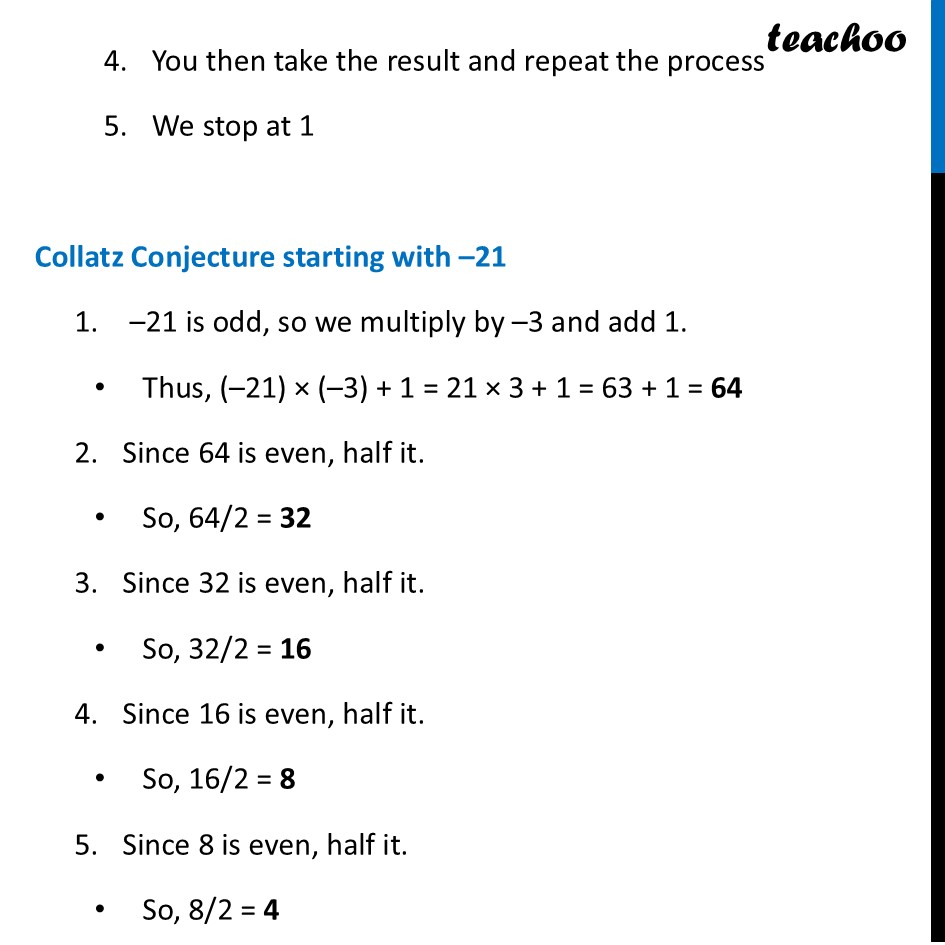
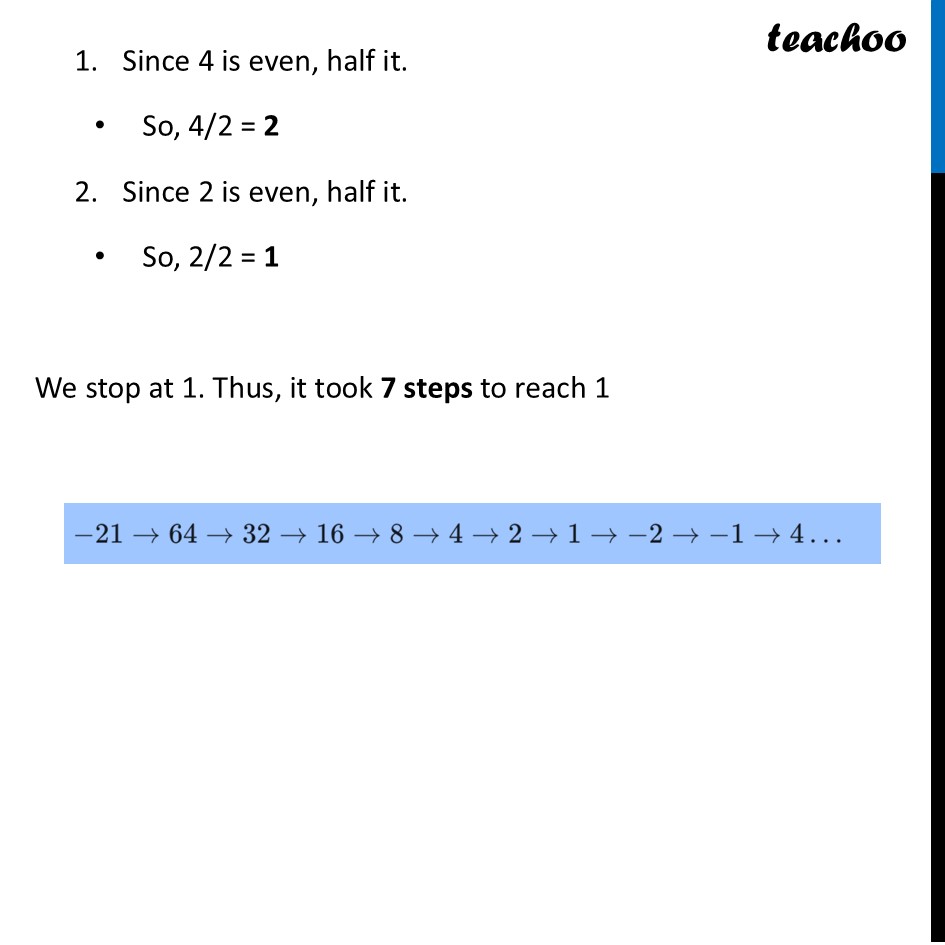
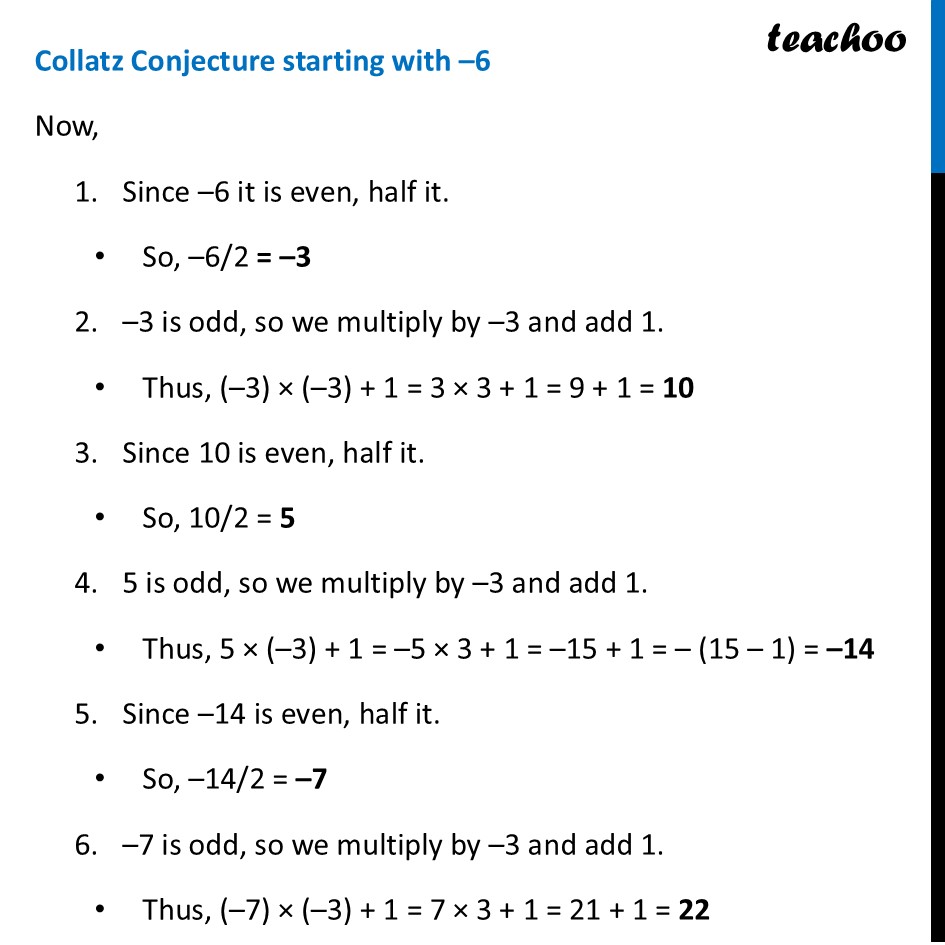
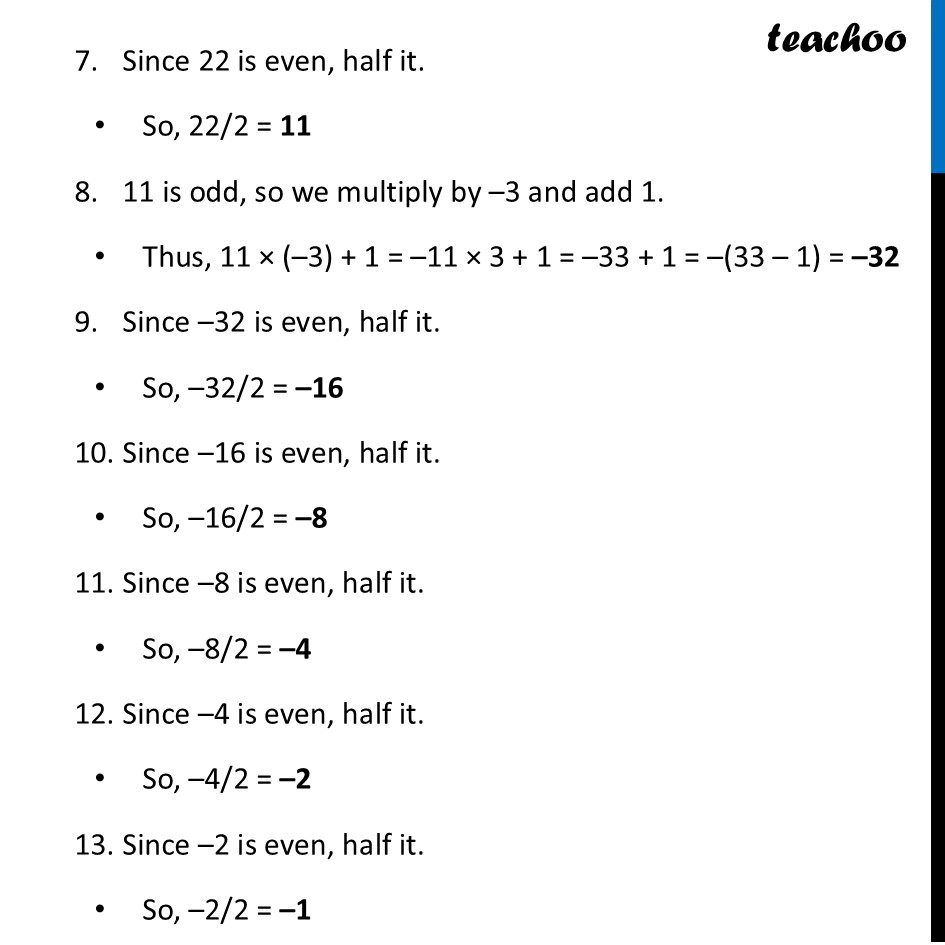
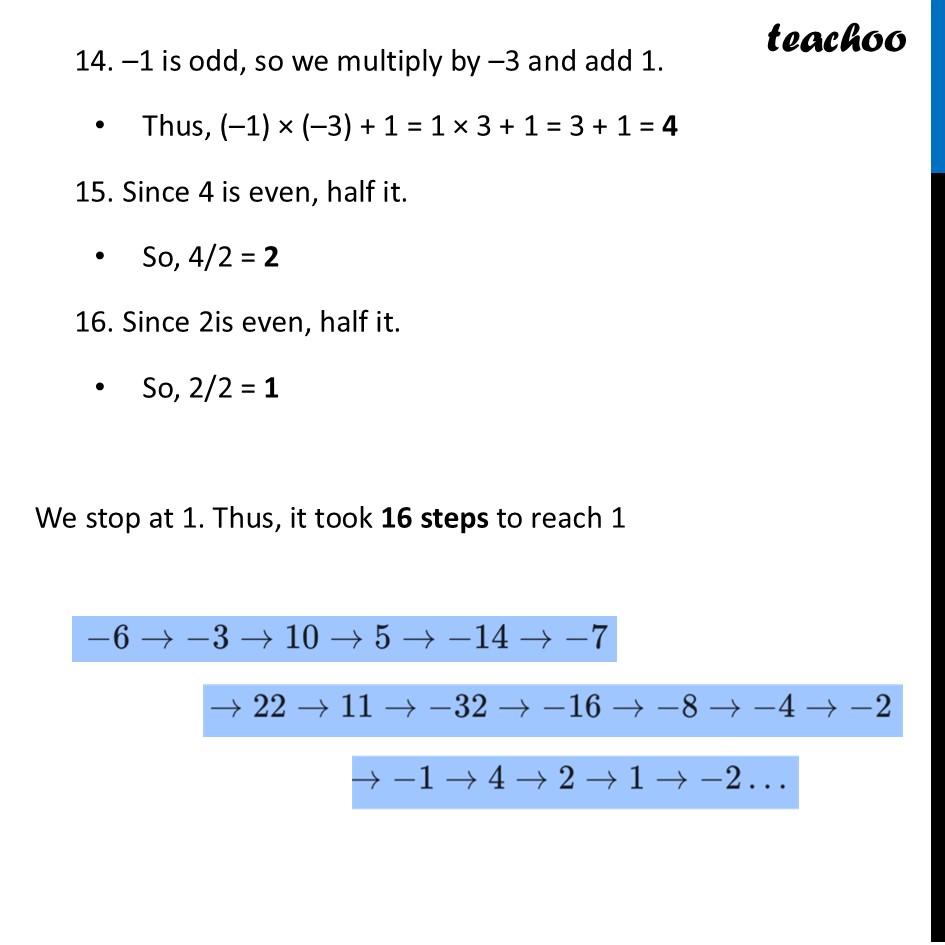
Figure it out - Page 42, 43, 44
Figure it out - Page 42, 43, 44
Last updated at January 21, 2026 by Teachoo
Transcript
Question 5 Do you remember the Collatz Conjecture from last year? Try a modified version with integers. The rule is — start with any number; if the number is even, take half of it; if the number is odd, multiply it by – 3 and add 1; repeat. An example sequence is shown below. Try this with different starting numbers: (– 21), (– 6), and so on. Describe the patterns you observe.The process, as laid out in the text, is as follows: Start with any number If the number is even, you divide it by 2 If the number is odd, you multiply it by –3 and add 1 You then take the result and repeat the process We stop at 1 Collatz Conjecture starting with –21 –21 is odd, so we multiply by –3 and add 1. Thus, (–21) × (–3) + 1 = 21 × 3 + 1 = 63 + 1 = 64 Since 64 is even, half it. So, 64/2 = 32 Since 32 is even, half it. So, 32/2 = 16 Since 16 is even, half it. So, 16/2 = 8 Since 8 is even, half it. So, 8/2 = 4 Since 4 is even, half it. So, 4/2 = 2 Since 2 is even, half it. So, 2/2 = 1 We stop at 1. Thus, it took 7 steps to reach 1 Collatz Conjecture starting with –6 Now, Since –6 it is even, half it. So, –6/2 = –3 –3 is odd, so we multiply by –3 and add 1. Thus, (–3) × (–3) + 1 = 3 × 3 + 1 = 9 + 1 = 10 Since 10 is even, half it. So, 10/2 = 5 5 is odd, so we multiply by –3 and add 1. Thus, 5 × (–3) + 1 = –5 × 3 + 1 = –15 + 1 = – (15 – 1) = –14 Since –14 is even, half it. So, –14/2 = –7 –7 is odd, so we multiply by –3 and add 1. Thus, (–7) × (–3) + 1 = 7 × 3 + 1 = 21 + 1 = 22 Since 22 is even, half it. So, 22/2 = 11 11 is odd, so we multiply by –3 and add 1. Thus, 11 × (–3) + 1 = –11 × 3 + 1 = –33 + 1 = –(33 – 1) = –32 Since –32 is even, half it. So, –32/2 = –16 Since –16 is even, half it. So, –16/2 = –8 Since –8 is even, half it. So, –8/2 = –4 Since –4 is even, half it. So, –4/2 = –2 Since –2 is even, half it. So, –2/2 = –1 –1 is odd, so we multiply by –3 and add 1. Thus, (–1) × (–3) + 1 = 1 × 3 + 1 = 3 + 1 = 4 Since 4 is even, half it. So, 4/2 = 2 Since 2is even, half it. So, 2/2 = 1 We stop at 1. Thus, it took 16 steps to reach 1 Collatz Conjecture starting with –6 Now, Since –6 it is even, half it. So, –6/2 = –3 –3 is odd, so we multiply by –3 and add 1. Thus, (–3) × (–3) + 1 = 3 × 3 + 1 = 9 + 1 = 10 Since 10 is even, half it. So, 10/2 = 5 5 is odd, so we multiply by –3 and add 1. Thus, 5 × (–3) + 1 = –5 × 3 + 1 = –15 + 1 = – (15 – 1) = –14 Since –14 is even, half it. So, –14/2 = –7 –7 is odd, so we multiply by –3 and add 1. Thus, (–7) × (–3) + 1 = 7 × 3 + 1 = 21 + 1 = 22 Since 22 is even, half it. So, 22/2 = 11 11 is odd, so we multiply by –3 and add 1. Thus, 11 × (–3) + 1 = –11 × 3 + 1 = –33 + 1 = –(33 – 1) = –32 Since –32 is even, half it. So, –32/2 = –16 Since –16 is even, half it. So, –16/2 = –8 Since –8 is even, half it. So, –8/2 = –4 Since –4 is even, half it. So, –4/2 = –2 Since –2 is even, half it. So, –2/2 = –1 –1 is odd, so we multiply by –3 and add 1. Thus, (–1) × (–3) + 1 = 1 × 3 + 1 = 3 + 1 = 4 Since 4 is even, half it. So, 4/2 = 2 Since 2is even, half it. So, 2/2 = 1 We stop at 1. Thus, it took 16 steps to reach 1 Collatz Conjecture starting with –6 Now, Since –6 it is even, half it. So, –6/2 = –3 –3 is odd, so we multiply by –3 and add 1. Thus, (–3) × (–3) + 1 = 3 × 3 + 1 = 9 + 1 = 10 Since 10 is even, half it. So, 10/2 = 5 5 is odd, so we multiply by –3 and add 1. Thus, 5 × (–3) + 1 = –5 × 3 + 1 = –15 + 1 = – (15 – 1) = –14 Since –14 is even, half it. So, –14/2 = –7 –7 is odd, so we multiply by –3 and add 1. Thus, (–7) × (–3) + 1 = 7 × 3 + 1 = 21 + 1 = 22 Since 22 is even, half it. So, 22/2 = 11 11 is odd, so we multiply by –3 and add 1. Thus, 11 × (–3) + 1 = –11 × 3 + 1 = –33 + 1 = –(33 – 1) = –32 Since –32 is even, half it. So, –32/2 = –16 Since –16 is even, half it. So, –16/2 = –8 Since –8 is even, half it. So, –8/2 = –4 Since –4 is even, half it. So, –4/2 = –2 Since –2 is even, half it. So, –2/2 = –1 –1 is odd, so we multiply by –3 and add 1. Thus, (–1) × (–3) + 1 = 1 × 3 + 1 = 3 + 1 = 4 Since 4 is even, half it. So, 4/2 = 2 Since 2is even, half it. So, 2/2 = 1 We stop at 1. Thus, it took 16 steps to reach 1 Since 22 is even, half it. So, 22/2 = 11 11 is odd, so we multiply by –3 and add 1. Thus, 11 × (–3) + 1 = –11 × 3 + 1 = –33 + 1 = –(33 – 1) = –32 Since –32 is even, half it. So, –32/2 = –16 Since –16 is even, half it. So, –16/2 = –8 Since –8 is even, half it. So, –8/2 = –4 Since –4 is even, half it. So, –4/2 = –2 Since –2 is even, half it. So, –2/2 = –1 –1 is odd, so we multiply by –3 and add 1. Thus, (–1) × (–3) + 1 = 1 × 3 + 1 = 3 + 1 = 4 Since 4 is even, half it. So, 4/2 = 2 Since 2is even, half it. So, 2/2 = 1 We stop at 1. Thus, it took 16 steps to reach 1
