 You are here

![Multiplication of Integers (using Tokens) - with Examples [Class 7] - Multiplication of Integers](https://cdn.teachoo.com/76835fc1-6a7e-4ee5-9c20-a4f6027194af/slide43.jpg)
Multiplication of Integers
Last updated at January 21, 2026 by Teachoo
Transcript
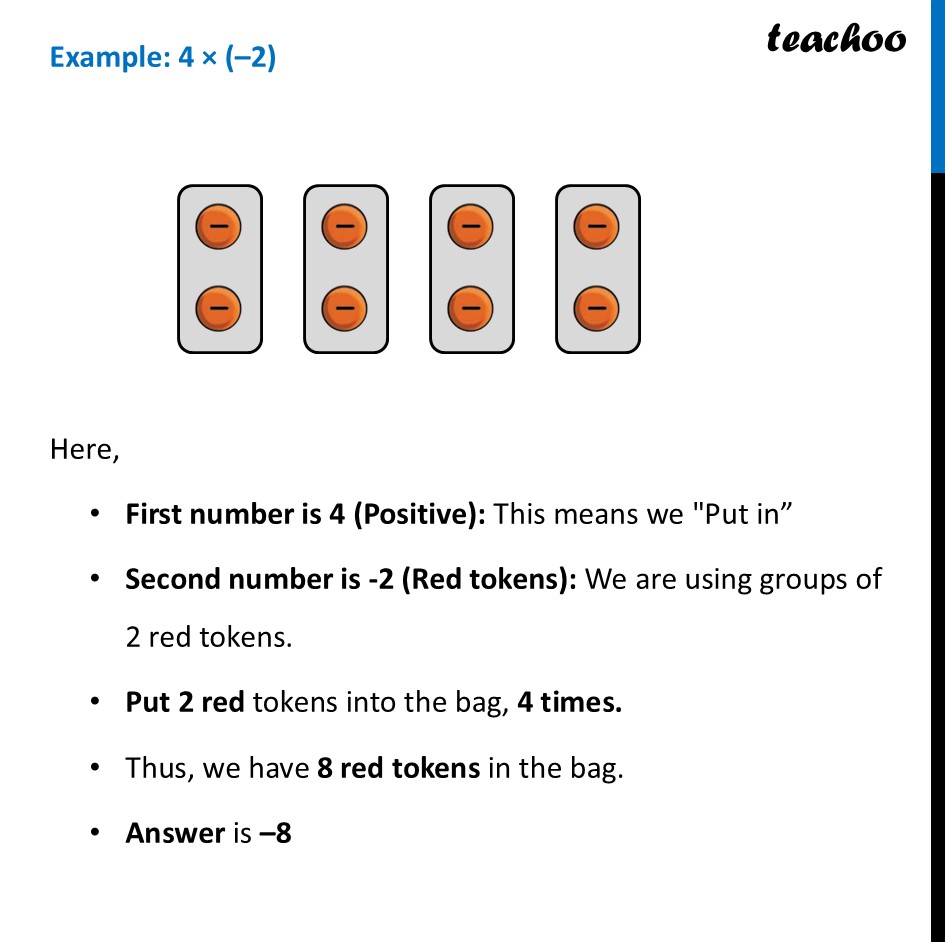
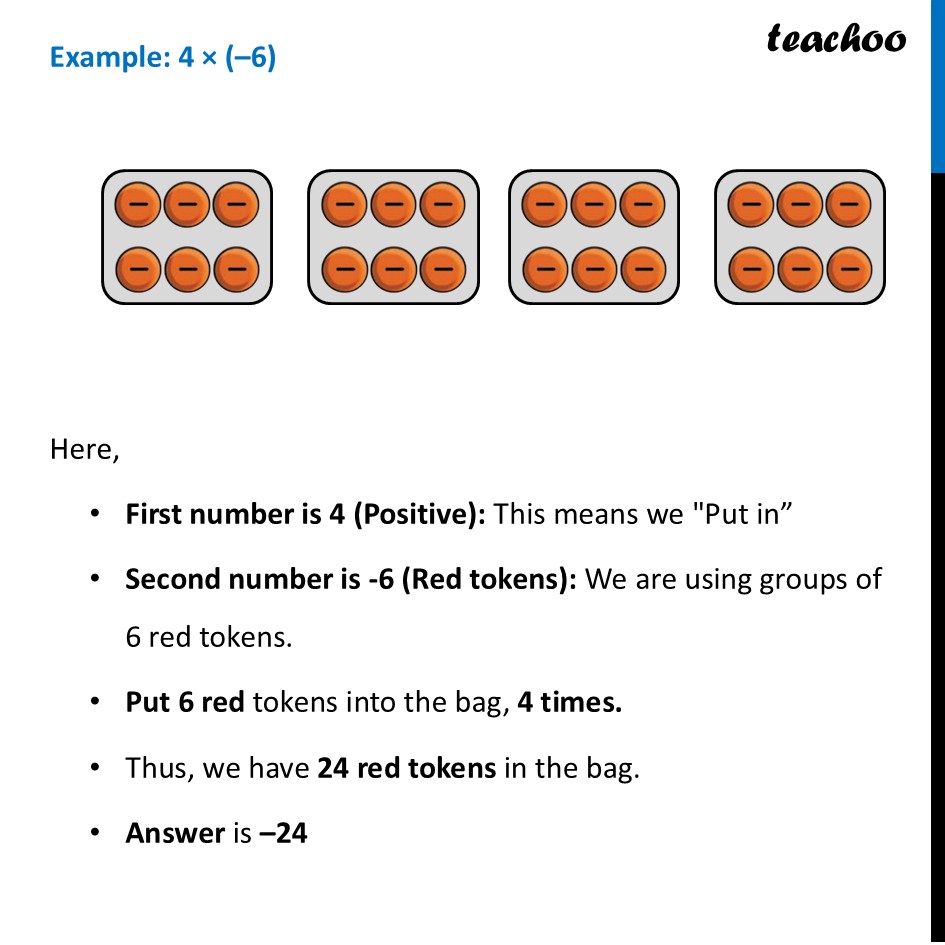
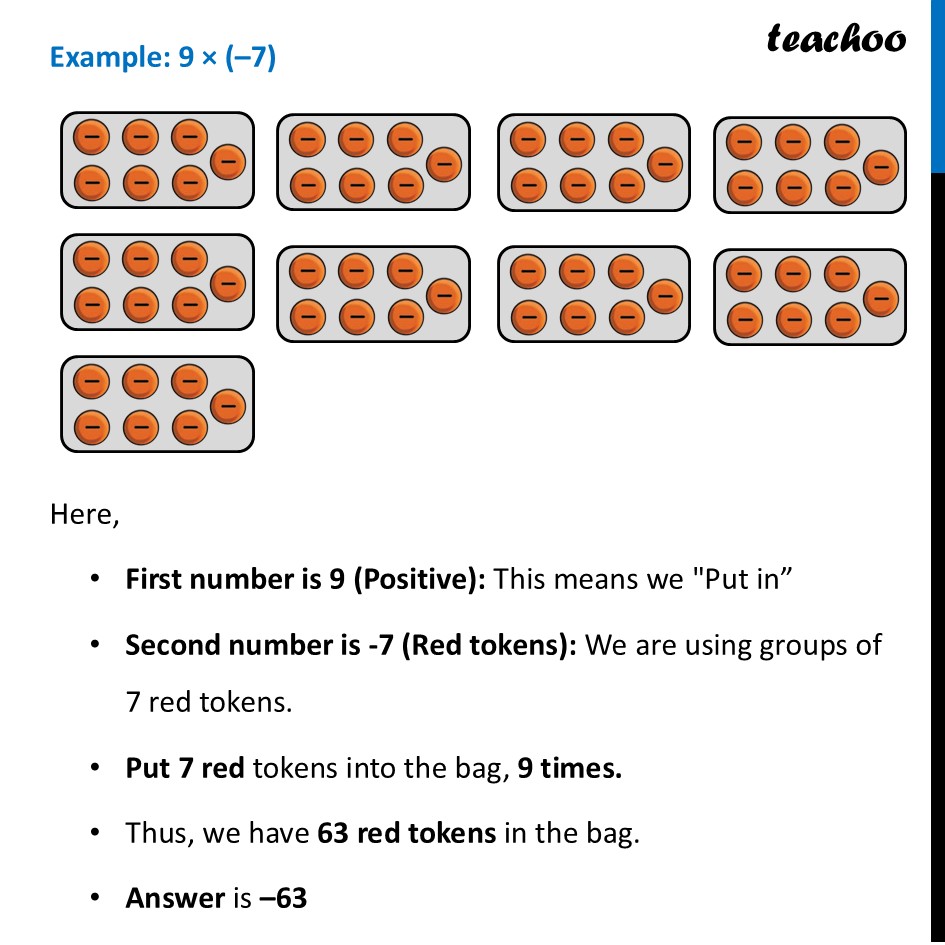
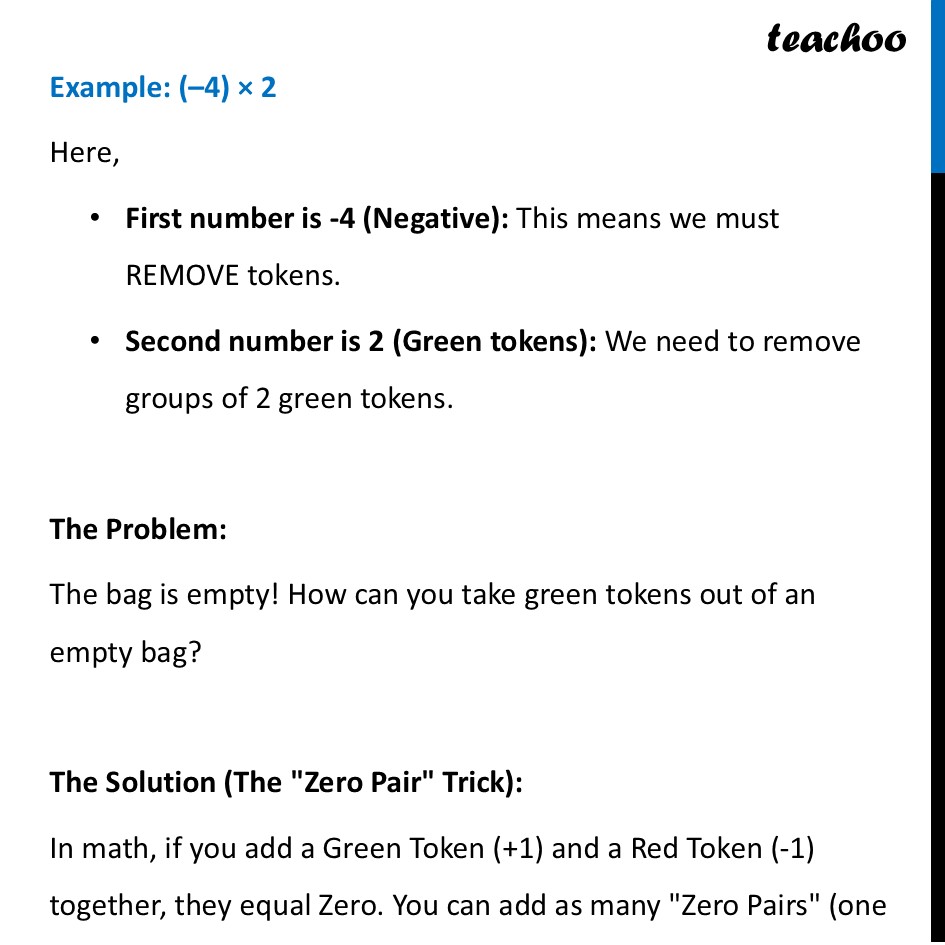
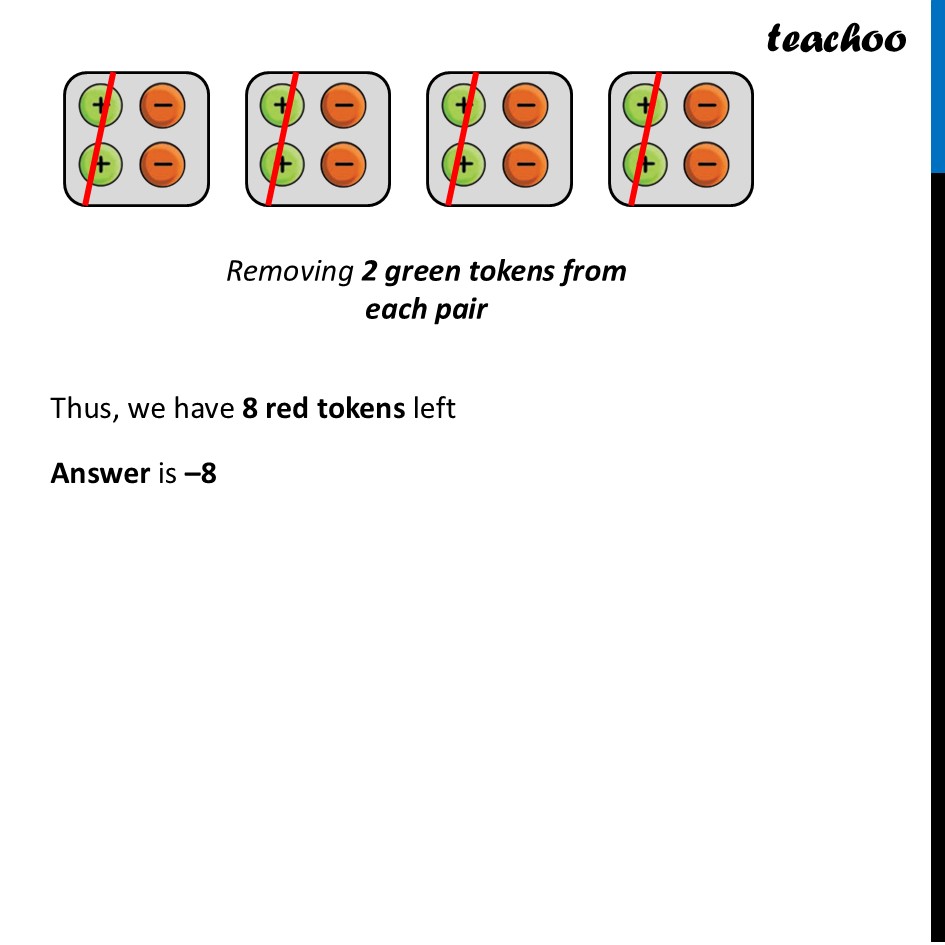
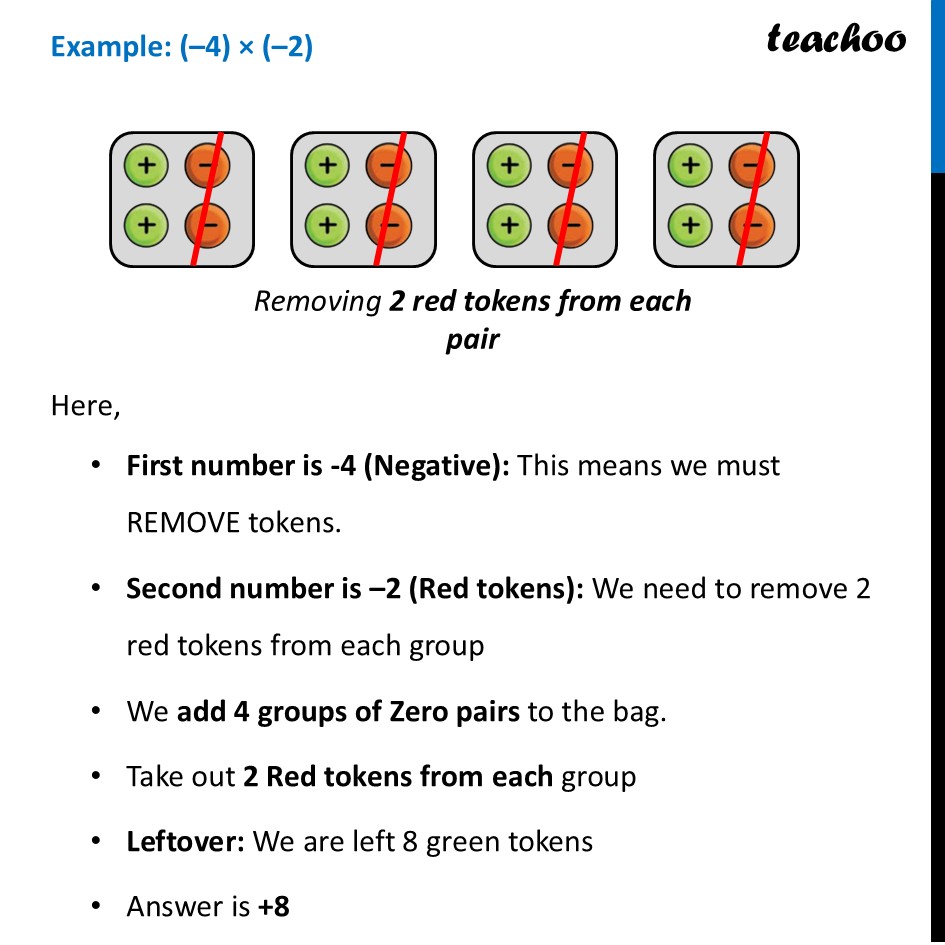
Multiplication of Integers (using Tokens)Imagine you have an empty bag. Green Tokens (🟢) are Positive (+). Red Tokens (🔴) are Negative (-). The first number in your multiplication tells you what to do with the bag: Positive Number (e.g., 4 × ...): You PUT tokens into the bag. Negative Number (e.g., -4 × ...): You REMOVE (take out) tokens from the bag. The second number tells you what kind of tokens you are dealing with. Example: 4 × (–2) Here, First number is 4 (Positive): This means we "Put in” Second number is -2 (Red tokens): We are using groups of 2 red tokens. Put 2 red tokens into the bag, 4 times. Thus, we have 8 red tokens in the bag. Answer is –8 Example: 4 × (–6) Here, First number is 4 (Positive): This means we "Put in” Second number is -6 (Red tokens): We are using groups of 6 red tokens. Put 6 red tokens into the bag, 4 times. Thus, we have 24 red tokens in the bag. Answer is –24 Example: 9 × (–7) Here, First number is 9 (Positive): This means we "Put in” Second number is -7 (Red tokens): We are using groups of 7 red tokens. Put 7 red tokens into the bag, 9 times. Thus, we have 63 red tokens in the bag. Answer is –63 Example: (–4) × 2 Here, First number is -4 (Negative): This means we must REMOVE tokens. Second number is 2 (Green tokens): We need to remove groups of 2 green tokens. The Problem: The bag is empty! How can you take green tokens out of an empty bag? The Solution (The "Zero Pair" Trick): In math, if you add a Green Token (+1) and a Red Token (-1) together, they equal Zero. You can add as many "Zero Pairs" (one green, one red) to the bag as you want without changing the value (because it's just adding zero). Step 1: Put in "Zero Pairs" (Green + Red together). Step 2: Now you have tokens in the bag. Step 3: Perform the removal. For (-4) × 2 Put in 4 groups of Zero Pairs. In each group, we would have 2 green tokens (as we need to remove 2 green tokens) And, 2 red tokens, to balance the green tokens Removing 2 green tokens from each pair Thus, we have 8 red tokens left Answer is –8 Example: (–4) × (–2) Here, First number is -4 (Negative): This means we must REMOVE tokens. Second number is –2 (Red tokens): We need to remove 2 red tokens from each group We add 4 groups of Zero pairs to the bag. Take out 2 Red tokens from each group Leftover: We are left 8 green tokens Answer is +8
