 You are here

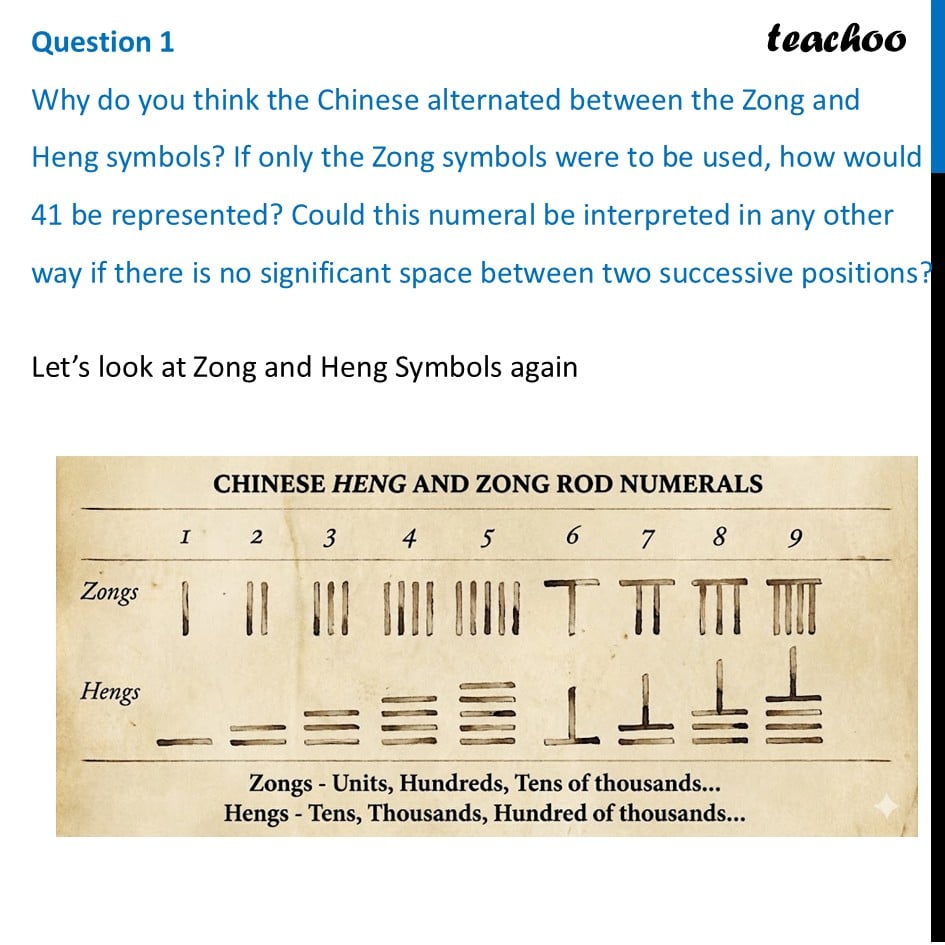
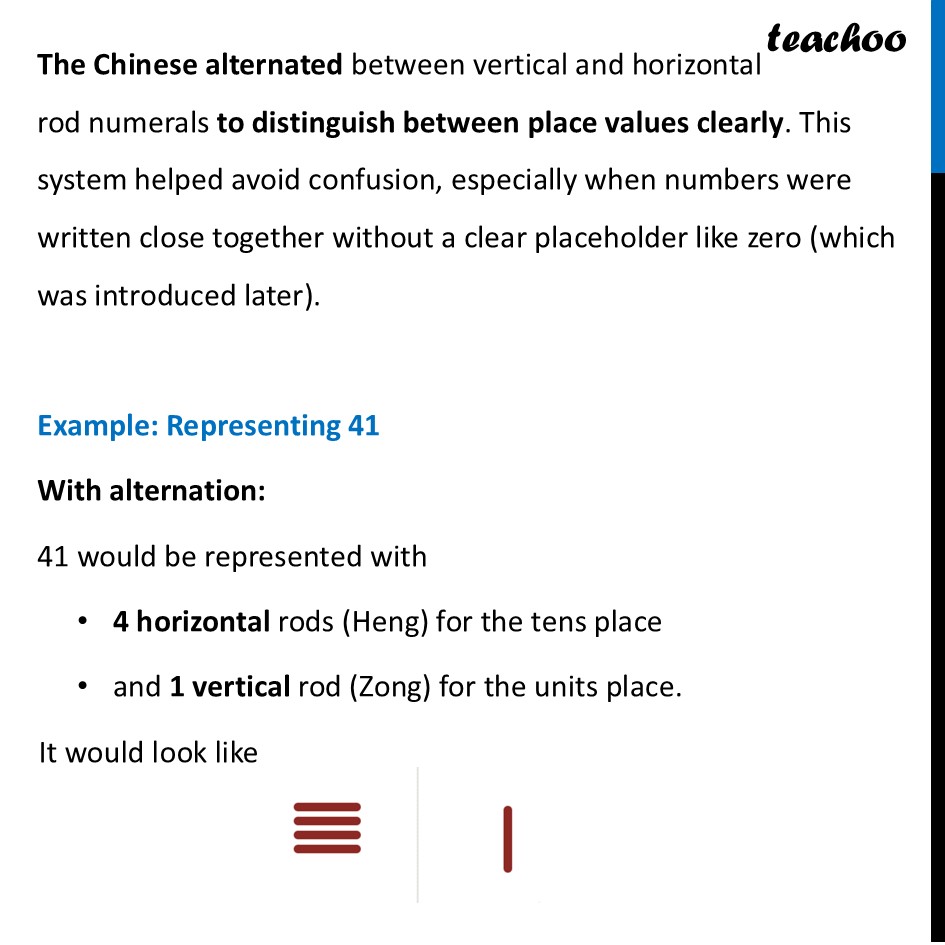
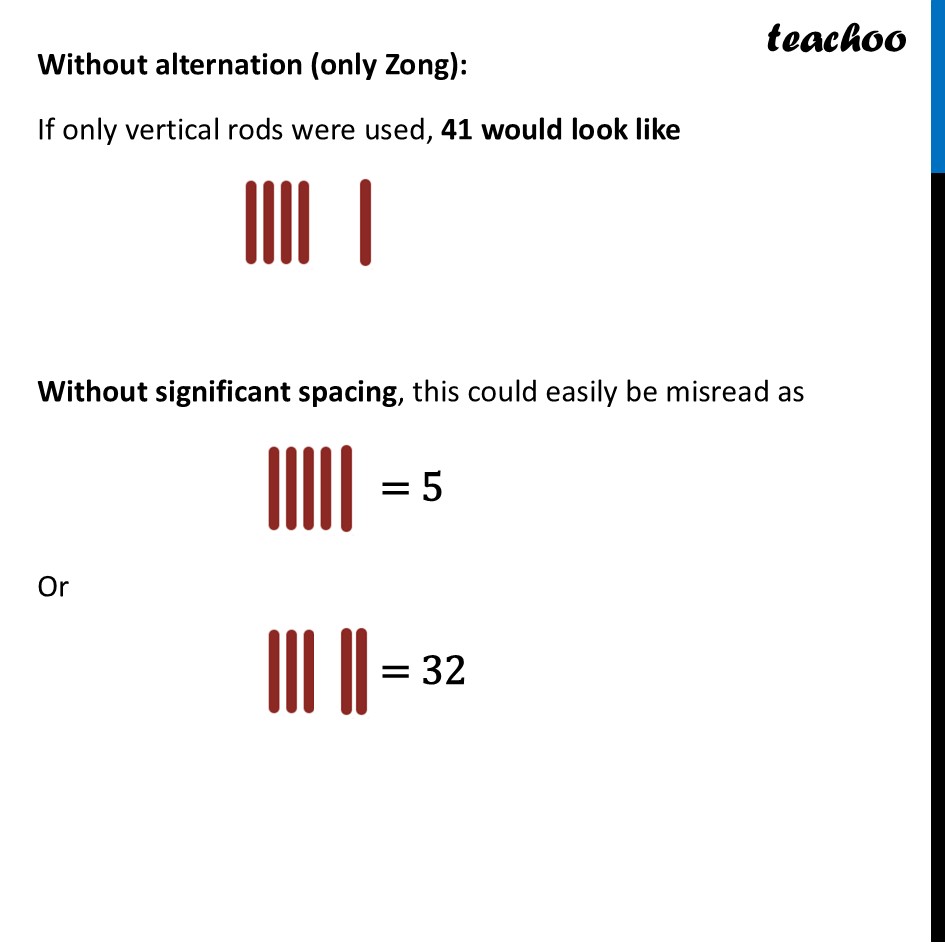
Figure it out - Page 80
Last updated at November 25, 2025 by Teachoo
Transcript
Question 1 Why do you think the Chinese alternated between the Zong and Heng symbols? If only the Zong symbols were to be used, how would 41 be represented? Could this numeral be interpreted in any other way if there is no significant space between two successive positions?Let’s look at Zong and Heng Symbols again The Chinese alternated between vertical and horizontal rod numerals to distinguish between place values clearly. This system helped avoid confusion, especially when numbers were written close together without a clear placeholder like zero (which was introduced later). Example: Representing 41 With alternation: 41 would be represented with 4 horizontal rods (Heng) for the tens place and 1 vertical rod (Zong) for the units place. It would look like Without alternation (only Zong): If only vertical rods were used, 41 would look like Without significant spacing, this could easily be misread as Or
