Find equivalent fractions for the given pairs of fractions such that - Questions - Page 168 to 172

part 2 - Question (a) to (h) - Figure it out (Page 172) - Questions - Page 168 to 172 - Chapter 7 Class 6 - Fractions (Ganita Prakash) - Class 6 (Ganita Prakash & Old NCERT)
part 3 - Question (a) to (h) - Figure it out (Page 172) - Questions - Page 168 to 172 - Chapter 7 Class 6 - Fractions (Ganita Prakash) - Class 6 (Ganita Prakash & Old NCERT) part 4 - Question (a) to (h) - Figure it out (Page 172) - Questions - Page 168 to 172 - Chapter 7 Class 6 - Fractions (Ganita Prakash) - Class 6 (Ganita Prakash & Old NCERT) part 5 - Question (a) to (h) - Figure it out (Page 172) - Questions - Page 168 to 172 - Chapter 7 Class 6 - Fractions (Ganita Prakash) - Class 6 (Ganita Prakash & Old NCERT) part 6 - Question (a) to (h) - Figure it out (Page 172) - Questions - Page 168 to 172 - Chapter 7 Class 6 - Fractions (Ganita Prakash) - Class 6 (Ganita Prakash & Old NCERT) part 7 - Question (a) to (h) - Figure it out (Page 172) - Questions - Page 168 to 172 - Chapter 7 Class 6 - Fractions (Ganita Prakash) - Class 6 (Ganita Prakash & Old NCERT) part 8 - Question (a) to (h) - Figure it out (Page 172) - Questions - Page 168 to 172 - Chapter 7 Class 6 - Fractions (Ganita Prakash) - Class 6 (Ganita Prakash & Old NCERT) part 9 - Question (a) to (h) - Figure it out (Page 172) - Questions - Page 168 to 172 - Chapter 7 Class 6 - Fractions (Ganita Prakash) - Class 6 (Ganita Prakash & Old NCERT) part 10 - Question (a) to (h) - Figure it out (Page 172) - Questions - Page 168 to 172 - Chapter 7 Class 6 - Fractions (Ganita Prakash) - Class 6 (Ganita Prakash & Old NCERT) part 11 - Question (a) to (h) - Figure it out (Page 172) - Questions - Page 168 to 172 - Chapter 7 Class 6 - Fractions (Ganita Prakash) - Class 6 (Ganita Prakash & Old NCERT) part 12 - Question (a) to (h) - Figure it out (Page 172) - Questions - Page 168 to 172 - Chapter 7 Class 6 - Fractions (Ganita Prakash) - Class 6 (Ganita Prakash & Old NCERT) part 13 - Question (a) to (h) - Figure it out (Page 172) - Questions - Page 168 to 172 - Chapter 7 Class 6 - Fractions (Ganita Prakash) - Class 6 (Ganita Prakash & Old NCERT) part 14 - Question (a) to (h) - Figure it out (Page 172) - Questions - Page 168 to 172 - Chapter 7 Class 6 - Fractions (Ganita Prakash) - Class 6 (Ganita Prakash & Old NCERT) part 15 - Question (a) to (h) - Figure it out (Page 172) - Questions - Page 168 to 172 - Chapter 7 Class 6 - Fractions (Ganita Prakash) - Class 6 (Ganita Prakash & Old NCERT) part 16 - Question (a) to (h) - Figure it out (Page 172) - Questions - Page 168 to 172 - Chapter 7 Class 6 - Fractions (Ganita Prakash) - Class 6 (Ganita Prakash & Old NCERT)

Remove Ads

Transcript

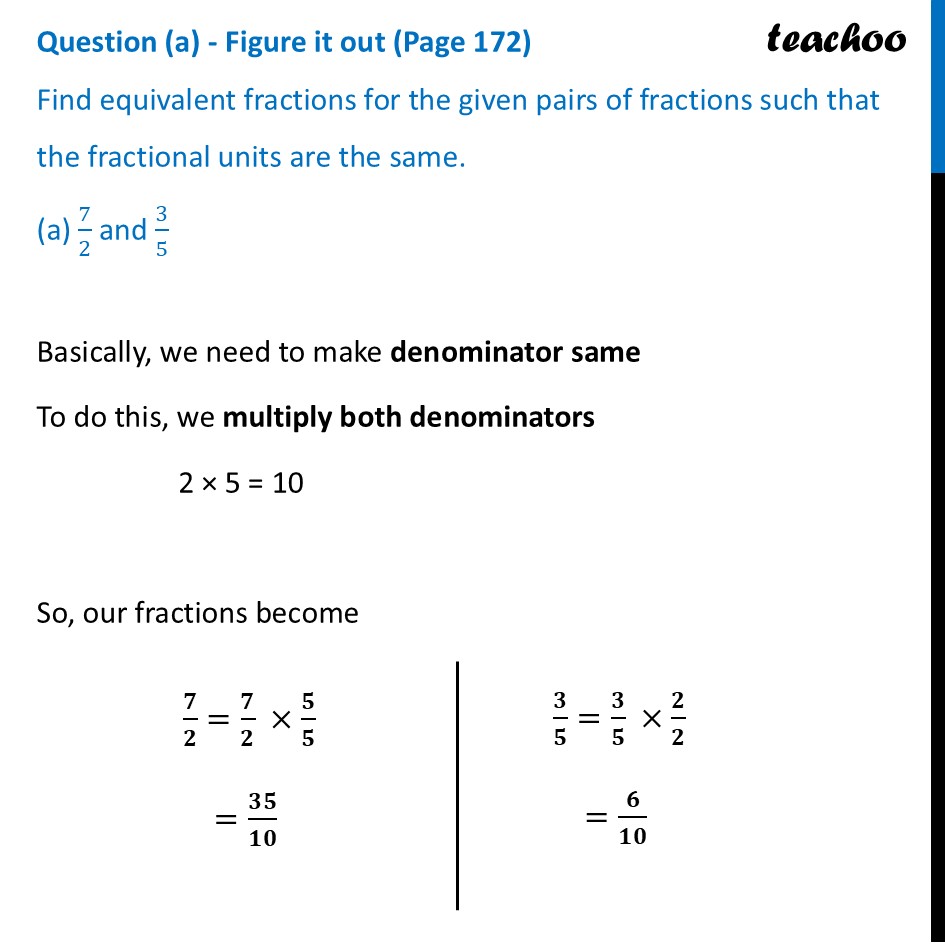
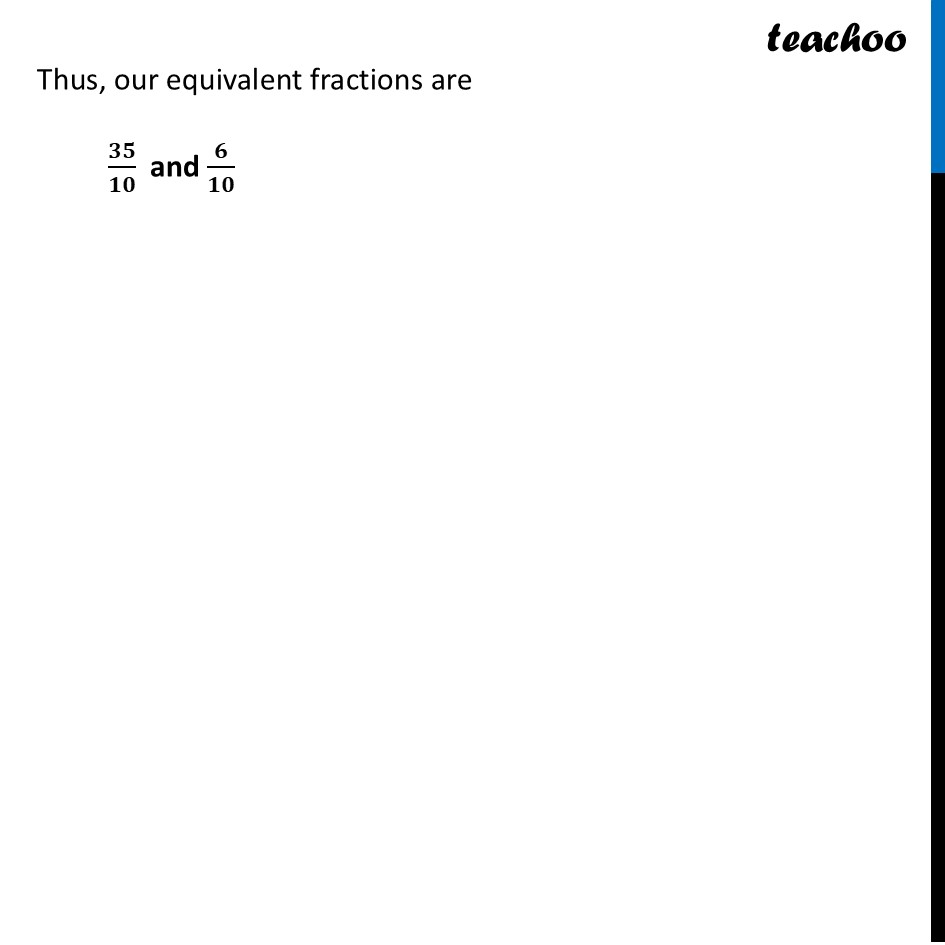
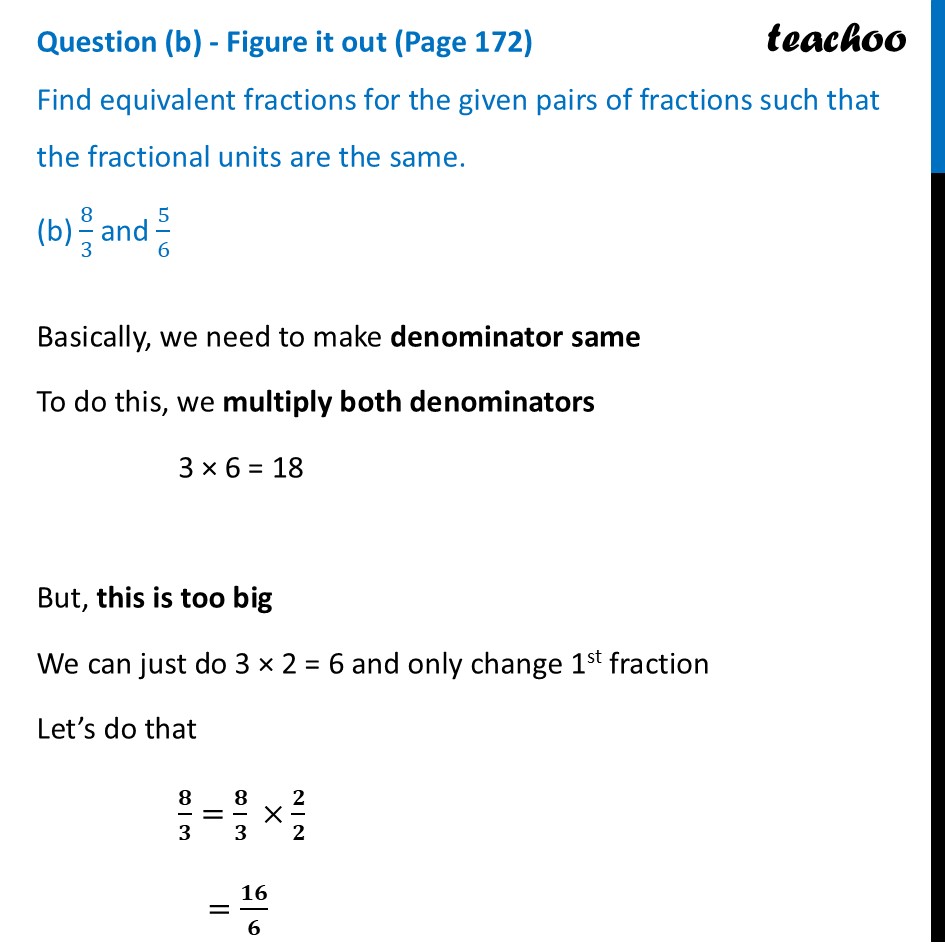
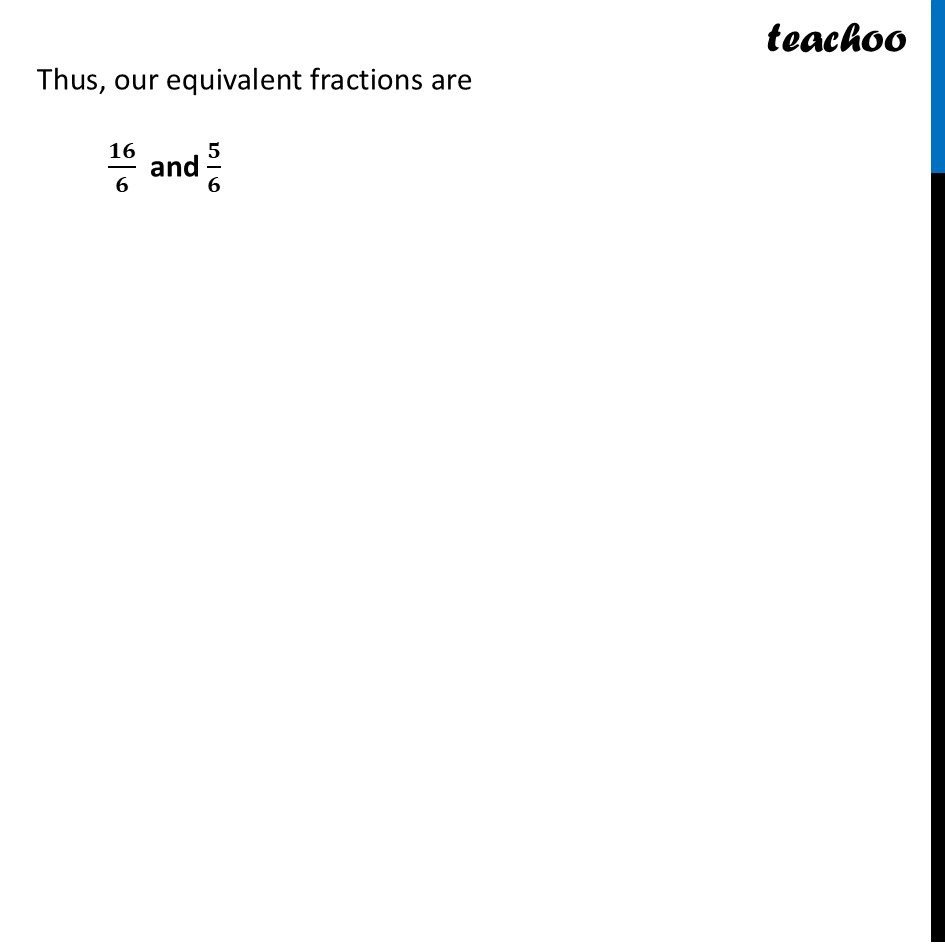
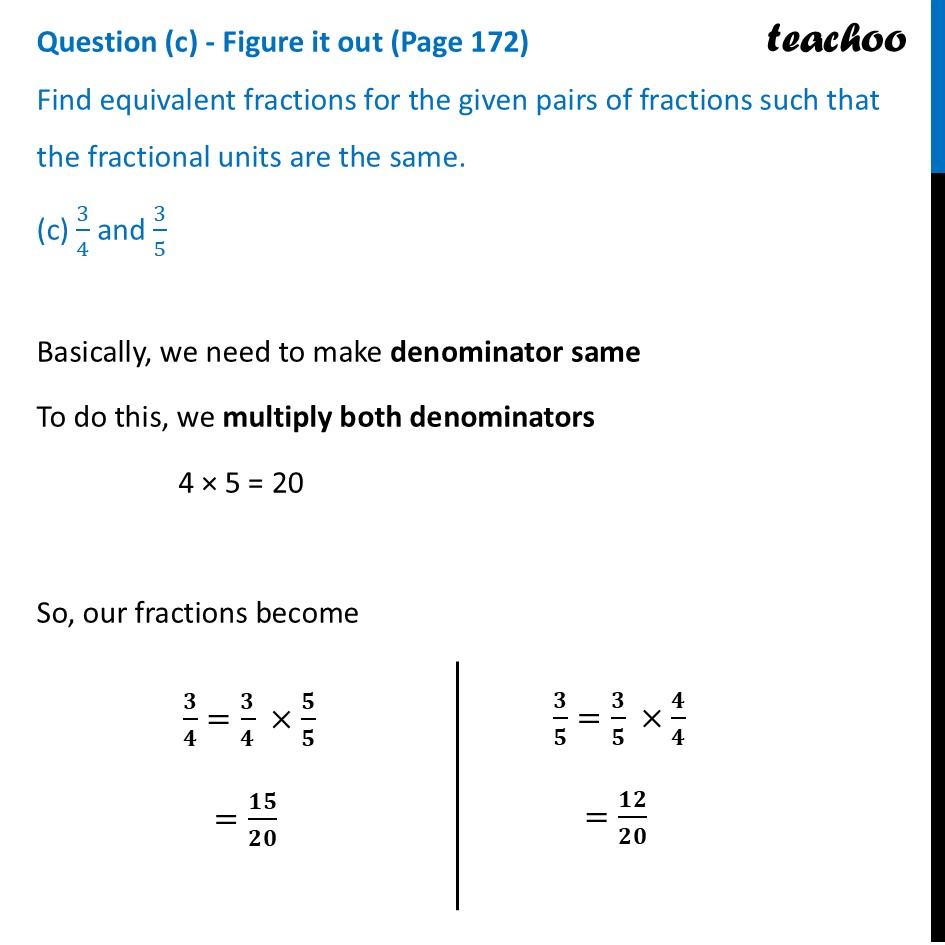
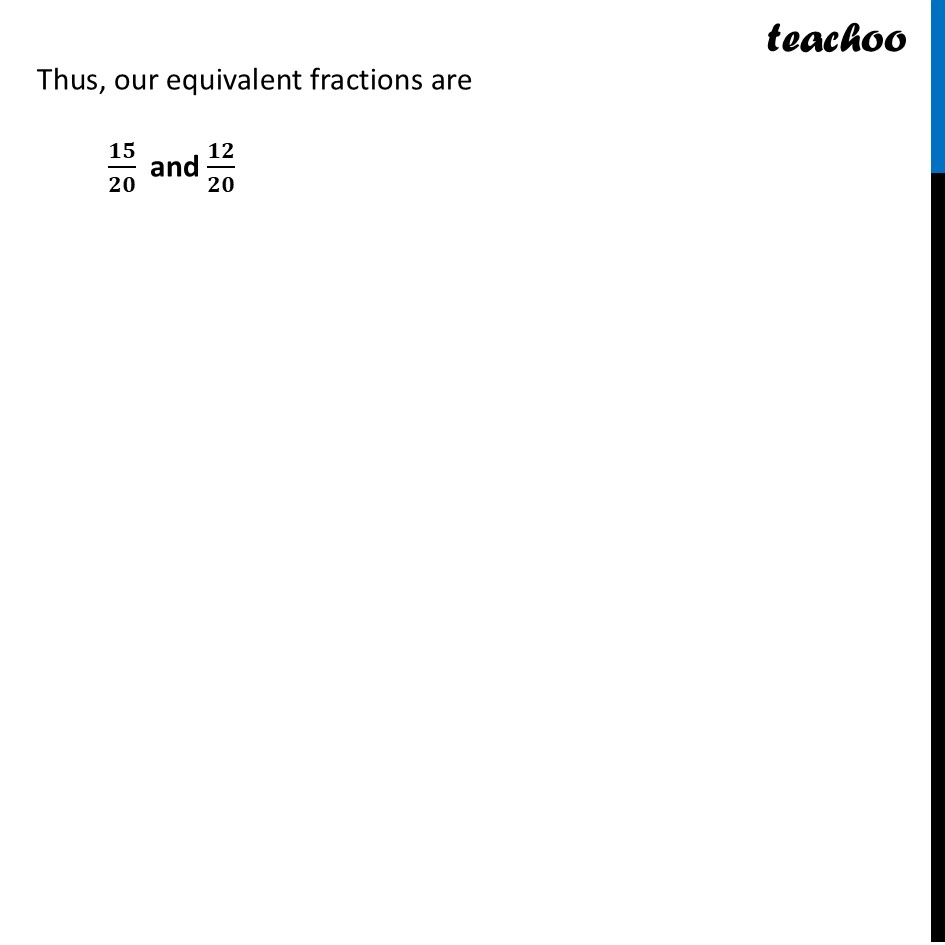
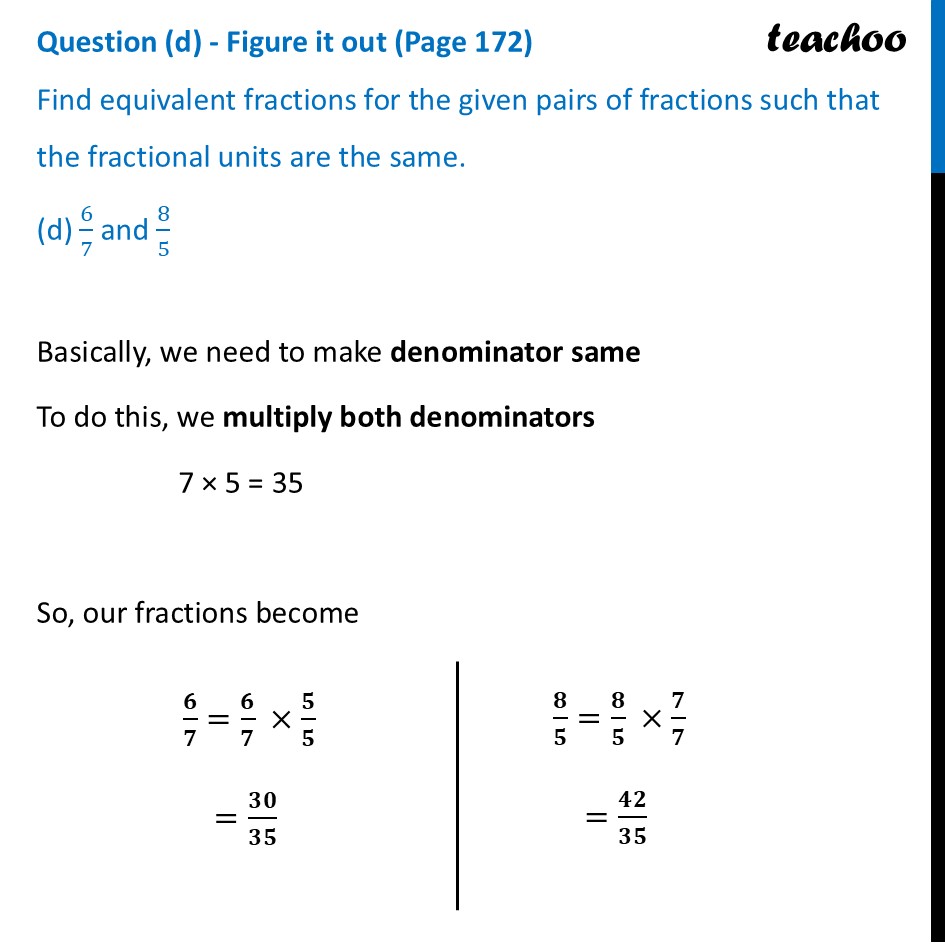
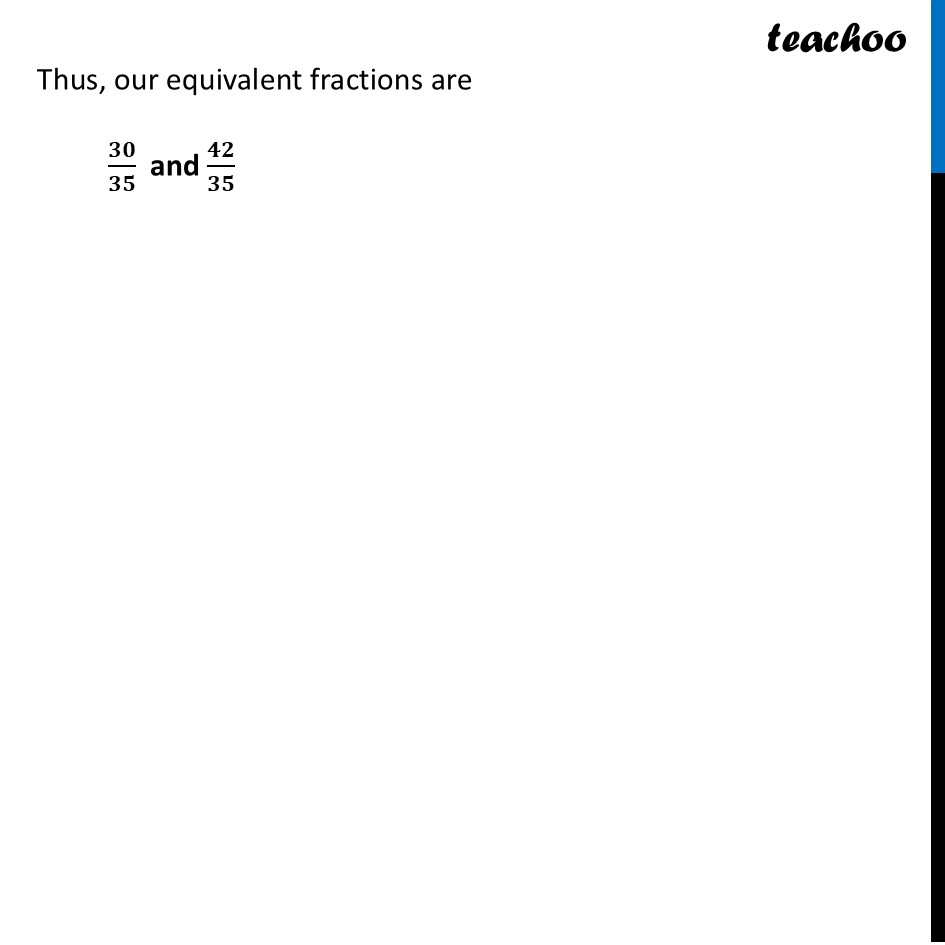
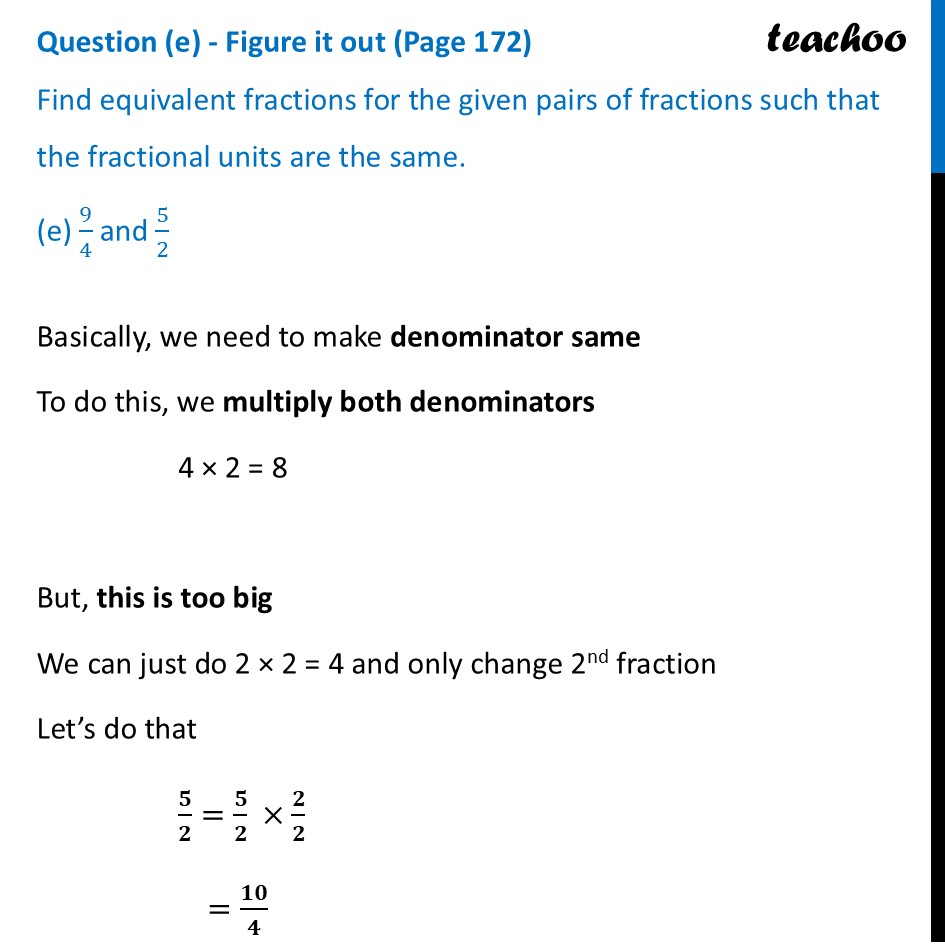
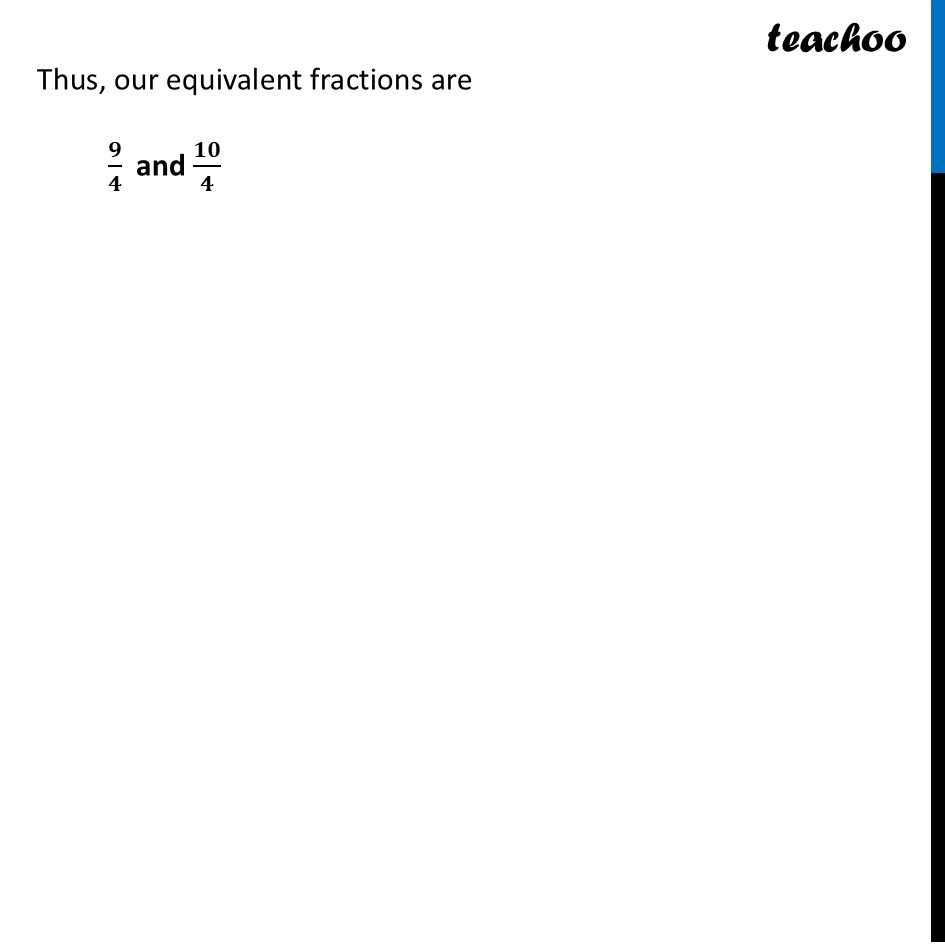
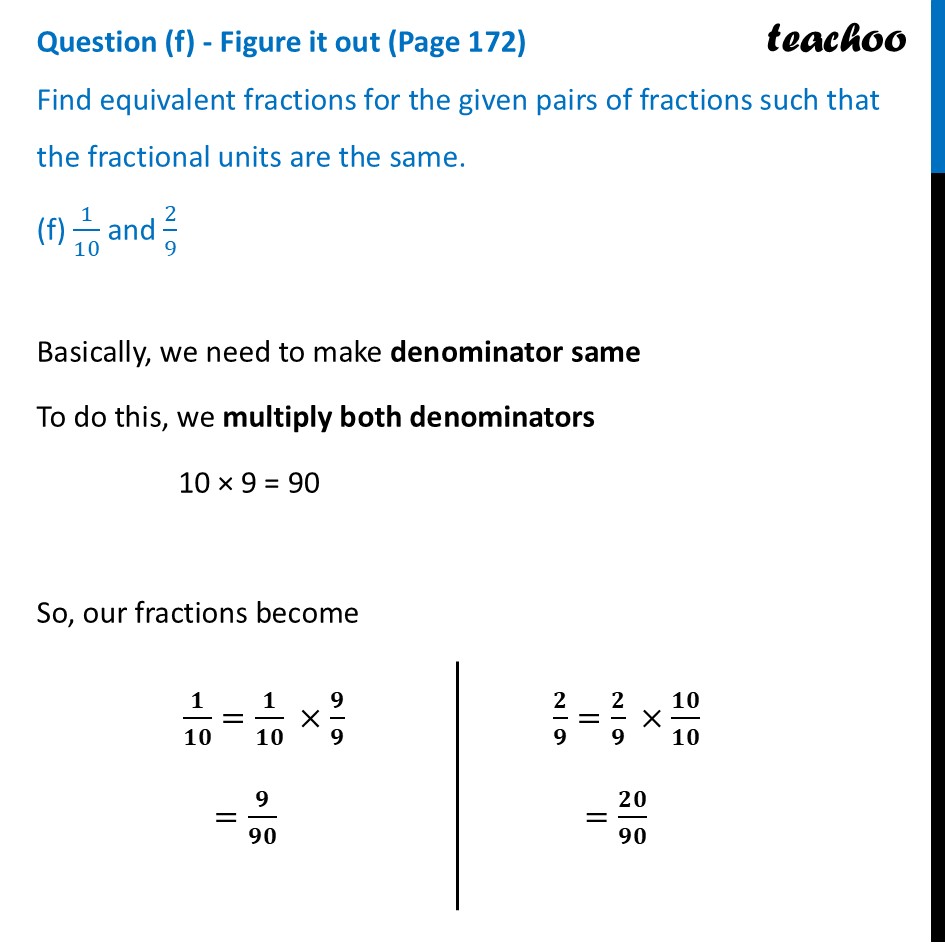
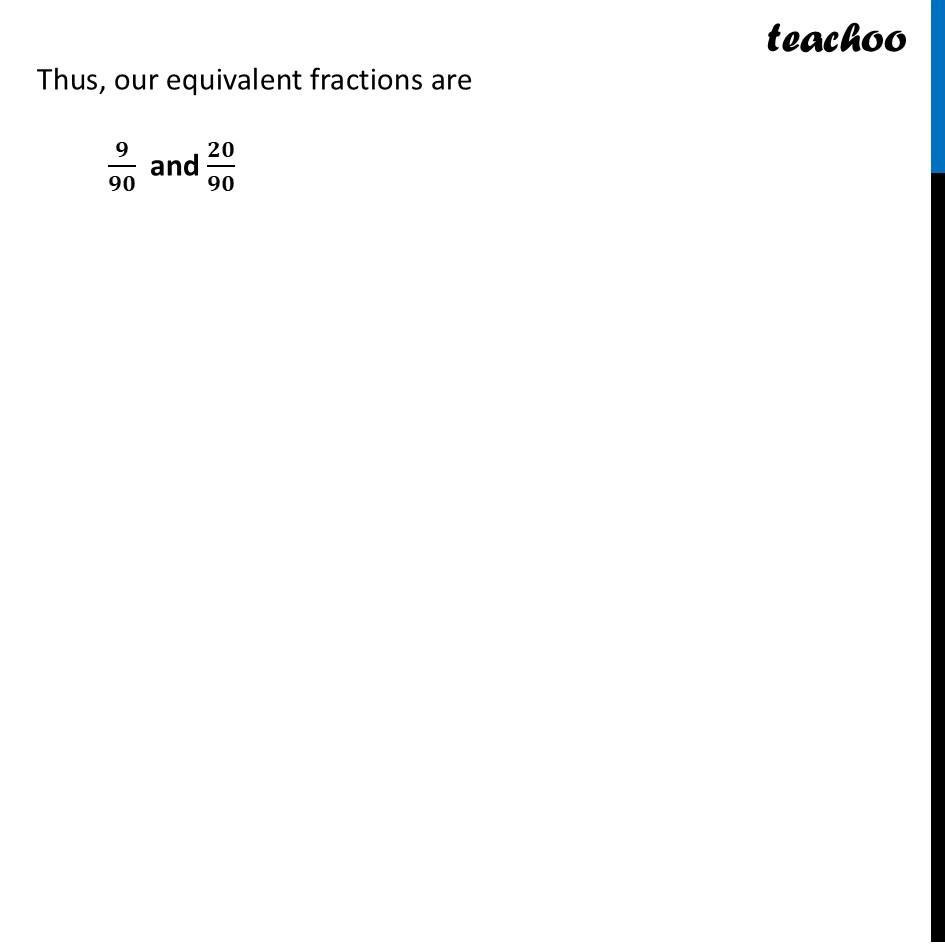
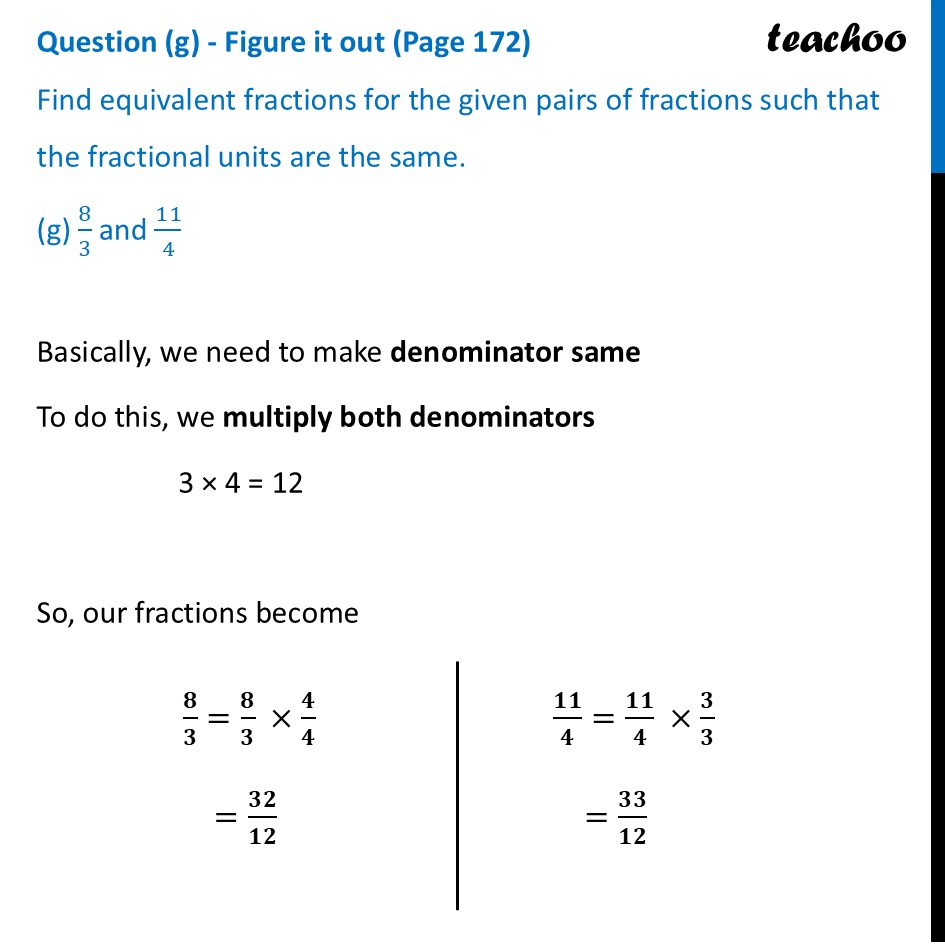
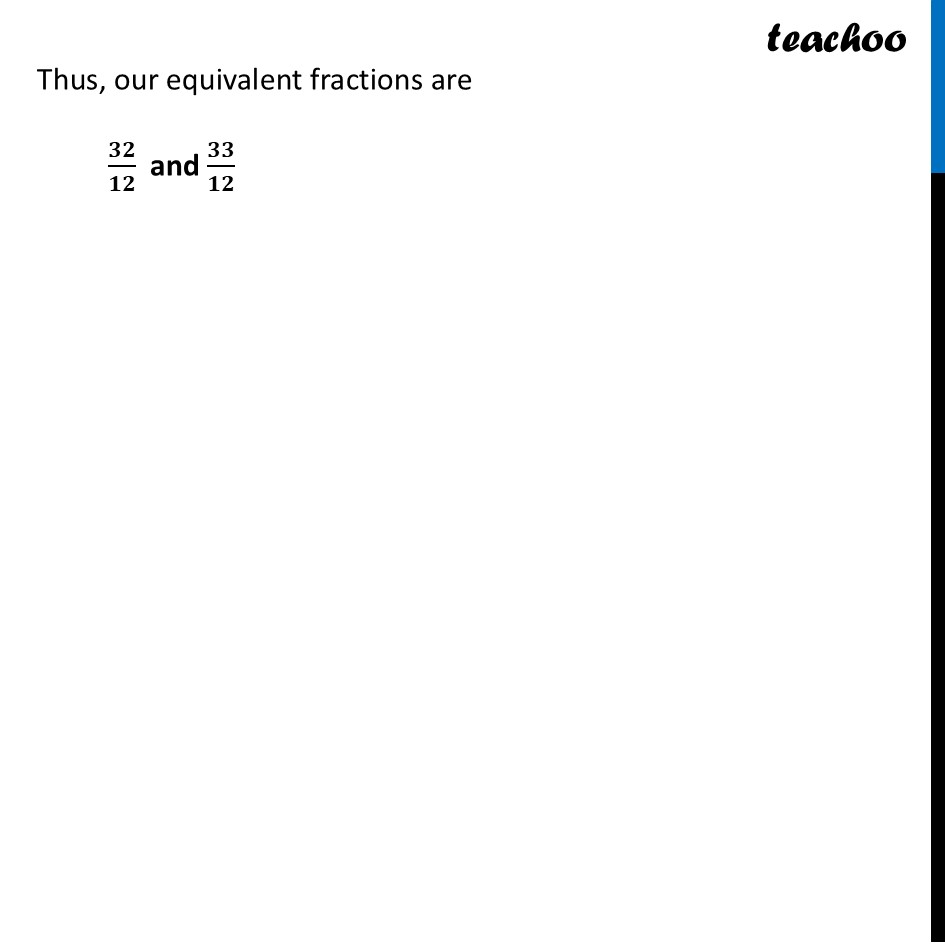
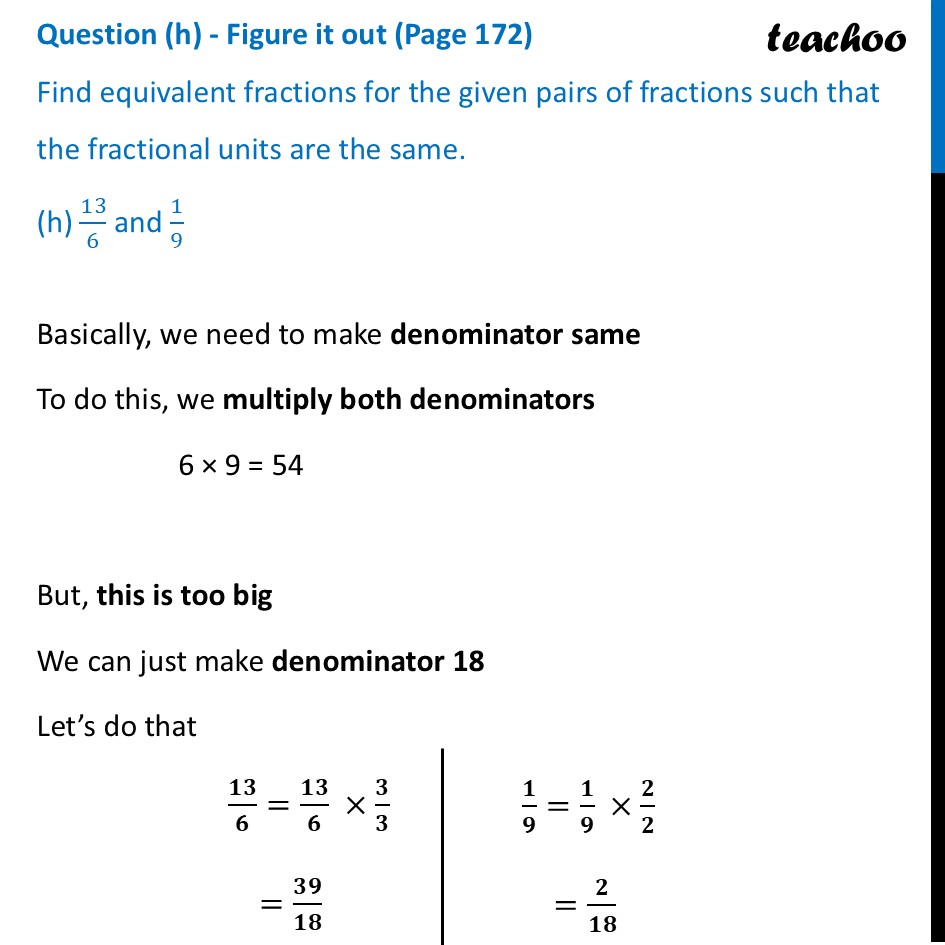
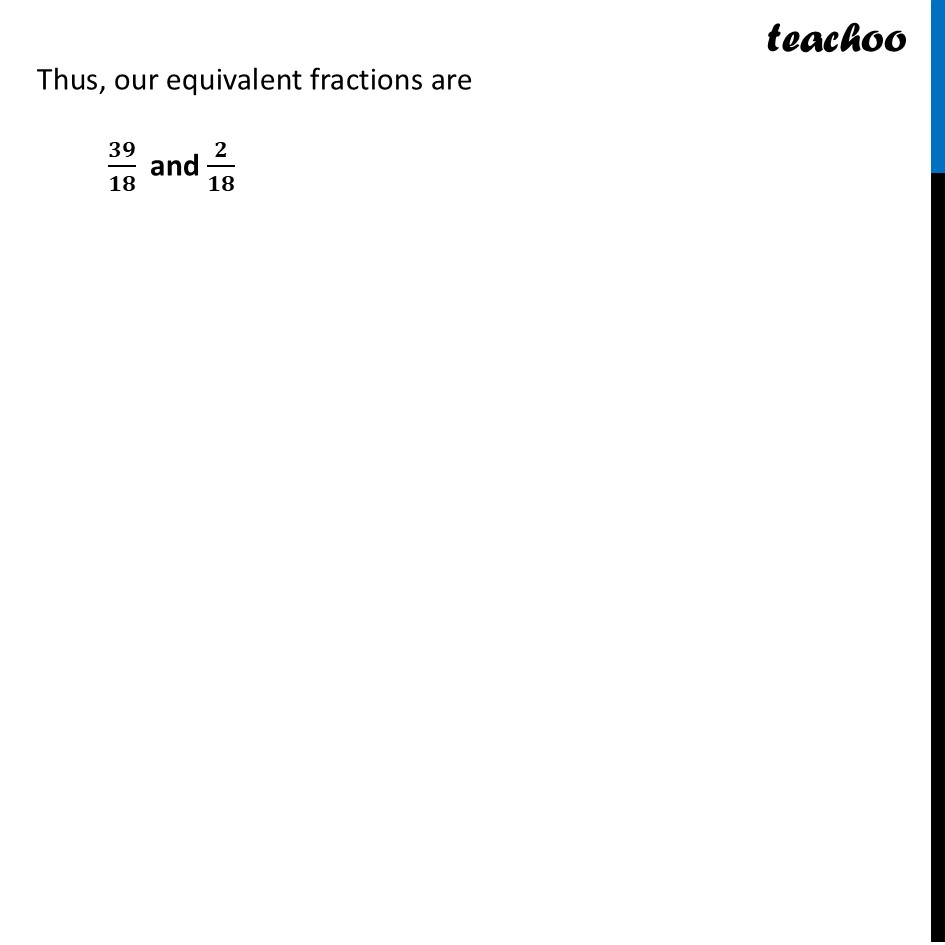
Question (a) - Figure it out (Page 172) Find equivalent fractions for the given pairs of fractions such that the fractional units are the same. (a) 7/2 and 3/5Basically, we need to make denominator same To do this, we multiply both denominators 2 Γ— 5 = 10 So, our fractions become πŸ•/𝟐=πŸ•/𝟐 Γ—πŸ“/πŸ“ =πŸ‘πŸ“/𝟏𝟎 πŸ‘/πŸ“=πŸ‘/πŸ“ Γ—πŸ/𝟐 =πŸ”/𝟏𝟎 Thus, our equivalent fractions are πŸ‘πŸ“/𝟏𝟎 and πŸ”/𝟏𝟎 Question (b) - Figure it out (Page 172) Find equivalent fractions for the given pairs of fractions such that the fractional units are the same. (b) 8/3 and 5/6Basically, we need to make denominator same To do this, we multiply both denominators 3 Γ— 6 = 18 But, this is too big We can just do 3 Γ— 2 = 6 and only change 1st fraction Let’s do that πŸ–/πŸ‘=πŸ–/πŸ‘ Γ—πŸ/𝟐 =πŸπŸ”/πŸ” Thus, our equivalent fractions are πŸπŸ”/πŸ” and πŸ“/πŸ” Question (c) - Figure it out (Page 172) Find equivalent fractions for the given pairs of fractions such that the fractional units are the same. (c) 3/4 and 3/5Basically, we need to make denominator same To do this, we multiply both denominators 4 Γ— 5 = 20 So, our fractions become πŸ‘/πŸ’=πŸ‘/πŸ’ Γ—πŸ“/πŸ“ =πŸπŸ“/𝟐𝟎 πŸ‘/πŸ“=πŸ‘/πŸ“ Γ—πŸ’/πŸ’ =𝟏𝟐/𝟐𝟎 Thus, our equivalent fractions are πŸπŸ“/𝟐𝟎 and 𝟏𝟐/𝟐𝟎 Question (d) - Figure it out (Page 172) Find equivalent fractions for the given pairs of fractions such that the fractional units are the same. (d) 6/7 and 8/5Basically, we need to make denominator same To do this, we multiply both denominators 7 Γ— 5 = 35 So, our fractions become πŸ”/πŸ•=πŸ”/πŸ• Γ—πŸ“/πŸ“ =πŸ‘πŸŽ/πŸ‘πŸ“ πŸ–/πŸ“=πŸ–/πŸ“ Γ—πŸ•/πŸ• =πŸ’πŸ/πŸ‘πŸ“ Thus, our equivalent fractions are πŸ‘πŸŽ/πŸ‘πŸ“ and πŸ’πŸ/πŸ‘πŸ“ Question (e) - Figure it out (Page 172) Find equivalent fractions for the given pairs of fractions such that the fractional units are the same. (e) 9/4 and 5/2Basically, we need to make denominator same To do this, we multiply both denominators 4 Γ— 2 = 8 But, this is too big We can just do 2 Γ— 2 = 4 and only change 2nd fraction Let’s do that πŸ“/𝟐=πŸ“/𝟐 Γ—πŸ/𝟐 =𝟏𝟎/πŸ’ Thus, our equivalent fractions are πŸ—/πŸ’ and 𝟏𝟎/πŸ’ Question (f) - Figure it out (Page 172) Find equivalent fractions for the given pairs of fractions such that the fractional units are the same. (f) 1/10 and 2/9Basically, we need to make denominator same To do this, we multiply both denominators 10 Γ— 9 = 90 So, our fractions become 𝟏/𝟏𝟎=𝟏/𝟏𝟎 Γ—πŸ—/πŸ— =πŸ—/πŸ—πŸŽ 𝟐/πŸ—=𝟐/πŸ— Γ—πŸπŸŽ/𝟏𝟎 =𝟐𝟎/πŸ—πŸŽ Thus, our equivalent fractions are πŸ—/πŸ—πŸŽ and 𝟐𝟎/πŸ—πŸŽ Question (g) - Figure it out (Page 172) Find equivalent fractions for the given pairs of fractions such that the fractional units are the same. (g) 8/3 and 11/4Basically, we need to make denominator same To do this, we multiply both denominators 3 Γ— 4 = 12 So, our fractions become πŸ–/πŸ‘=πŸ–/πŸ‘ Γ—πŸ’/πŸ’ =πŸ‘πŸ/𝟏𝟐 𝟏𝟏/πŸ’=𝟏𝟏/πŸ’ Γ—πŸ‘/πŸ‘ =πŸ‘πŸ‘/𝟏𝟐 Thus, our equivalent fractions are πŸ‘πŸ/𝟏𝟐 and πŸ‘πŸ‘/𝟏𝟐 Question (h) - Figure it out (Page 172) Find equivalent fractions for the given pairs of fractions such that the fractional units are the same. (h) 13/6 and 1/9Basically, we need to make denominator same To do this, we multiply both denominators 6 Γ— 9 = 54 But, this is too big We can just make denominator 18 Let’s do that πŸπŸ‘/πŸ”=πŸπŸ‘/πŸ” Γ—πŸ‘/πŸ‘ =πŸ‘πŸ—/πŸπŸ– 𝟏/πŸ—=𝟏/πŸ— Γ—πŸ/𝟐 =𝟐/πŸπŸ– Thus, our equivalent fractions are πŸ‘πŸ—/πŸπŸ– and 𝟐/πŸπŸ–

Davneet Singh's photo - Co-founder, Teachoo

Made by

Davneet Singh

Davneet Singh is an IIT Kanpur graduate and has been teaching for 16+ years. At Teachoo, he breaks down Maths, Science and Computer Science into simple steps so students understand concepts deeply and score with confidence.

Many students prefer Teachoo Black for a smooth, ad-free learning experience.