
 You are here
Solid Shapes
Last updated at August 14, 2026 by Teachoo
Transcript
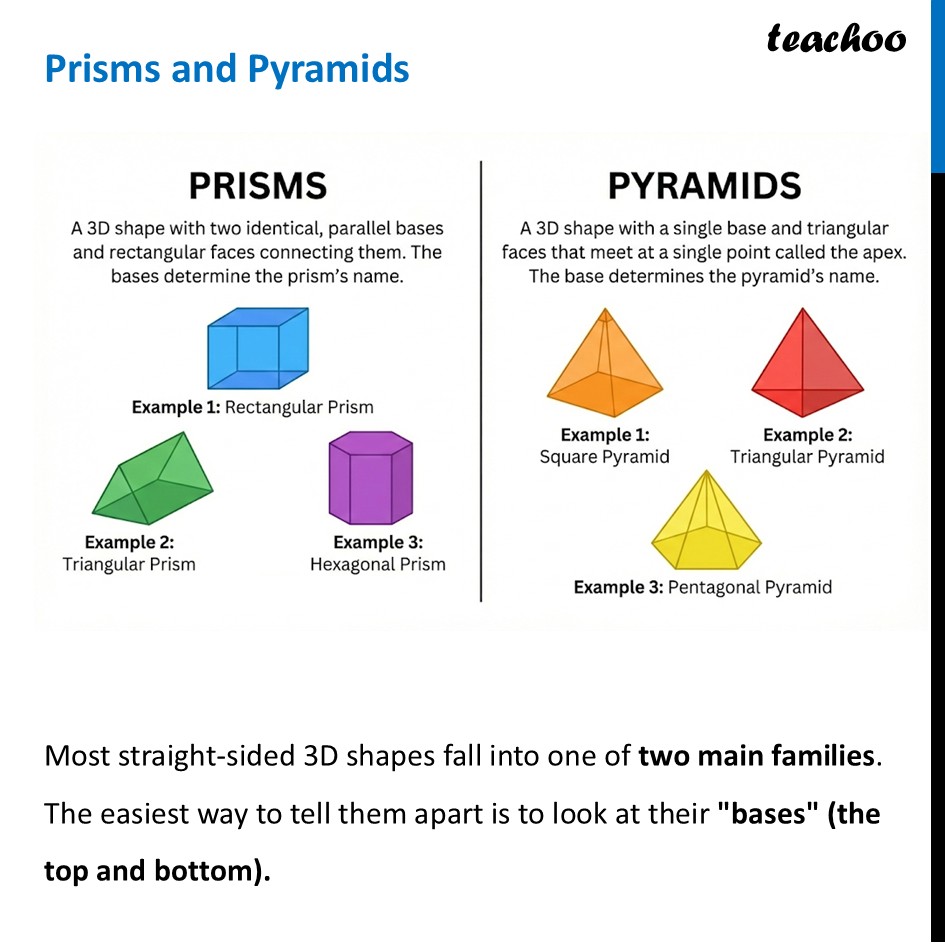
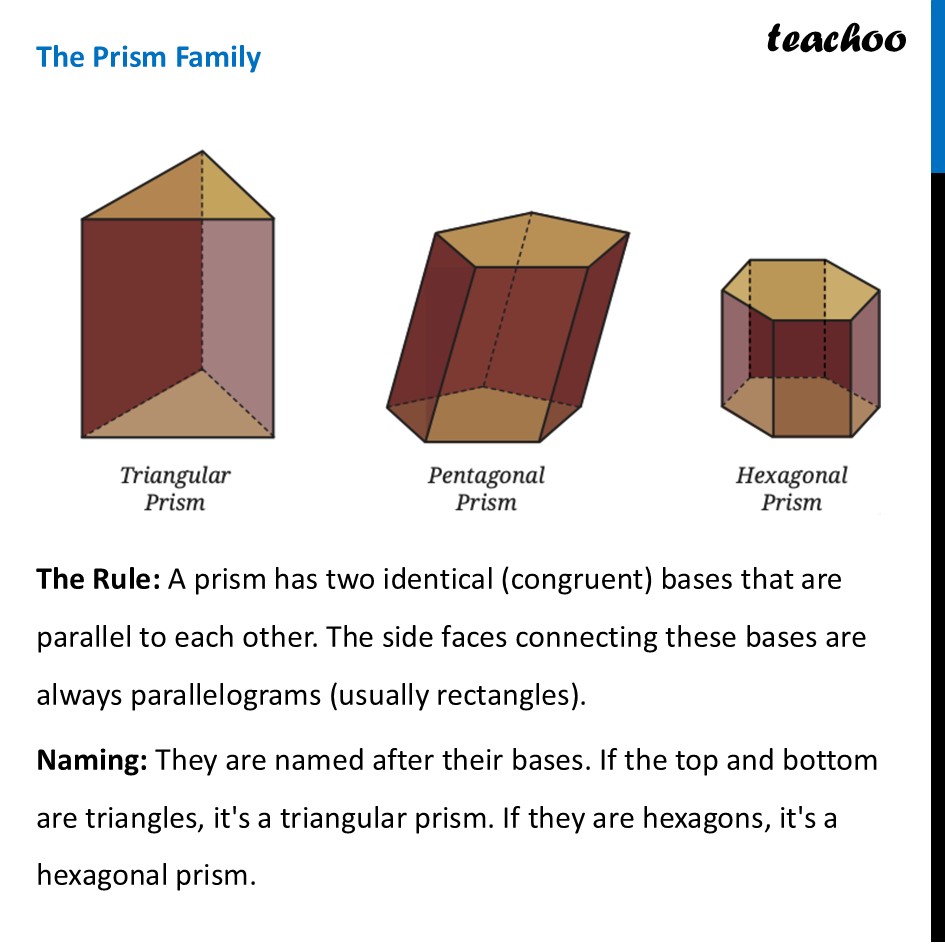
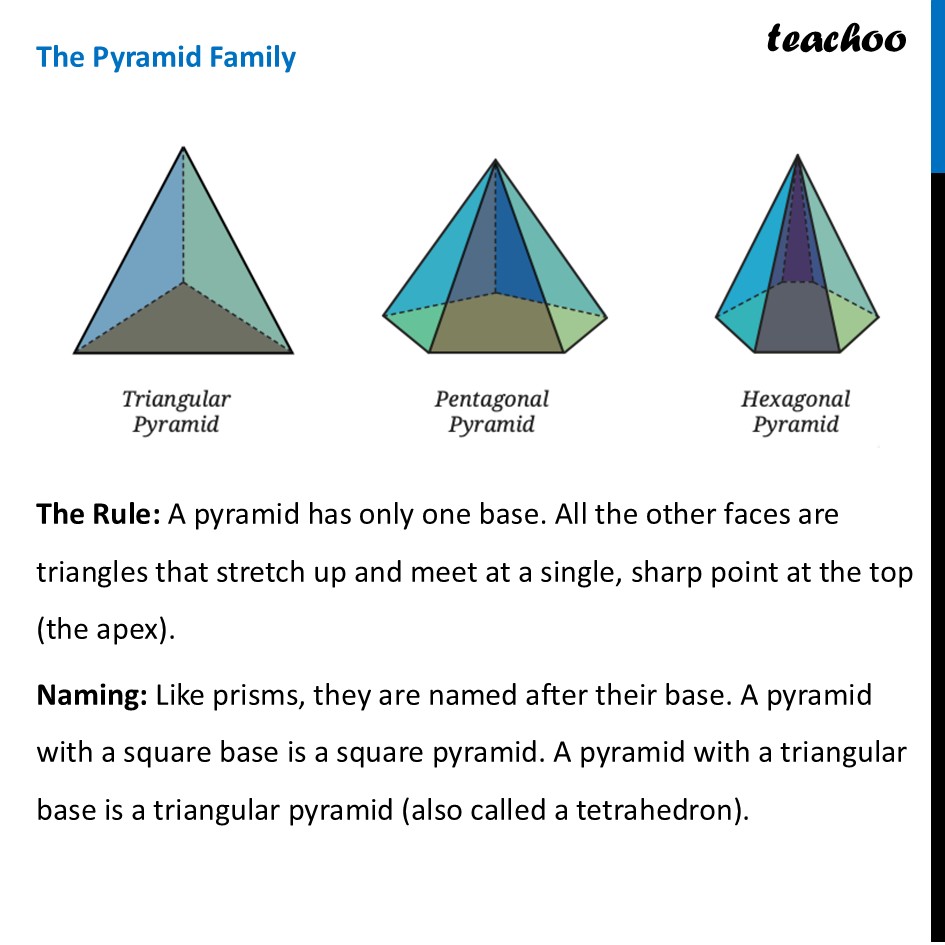
Prisms and PyramidsPRISMS A 3D shape with two identical, parallel bases and rectangular faces connecting them. The bases determine the prism's name. Example 1: Rectangular Prism Example 2: Triangular Prism Example 3: Hexagonal PrismPYRAMIDS A 3D shape with a single base and triangular faces that meet at a single point called the apex. The base determines the pyramid's name. Example 1: Square Pyramid Example 2: Triangular Pyramid Example 3: Pentagonal PyramidThe Prism Family The Rule: A prism has two identical (congruent) bases that are parallel to each other. The side faces connecting these bases are always parallelograms (usually rectangles). Naming: They are named after their bases. If the top and bottom are triangles, it's a triangular prism. If they are hexagons, it's a hexagonal prism. The Pyramid Family The Rule: A pyramid has only one base. All the other faces are triangles that stretch up and meet at a single, sharp point at the top (the apex). Naming: Like prisms, they are named after their base. A pyramid with a square base is a square pyramid. A pyramid with a triangular base is a triangular pyramid (also called a tetrahedron).

