
 You are here


Last updated at February 2, 2026 by Teachoo
Transcript
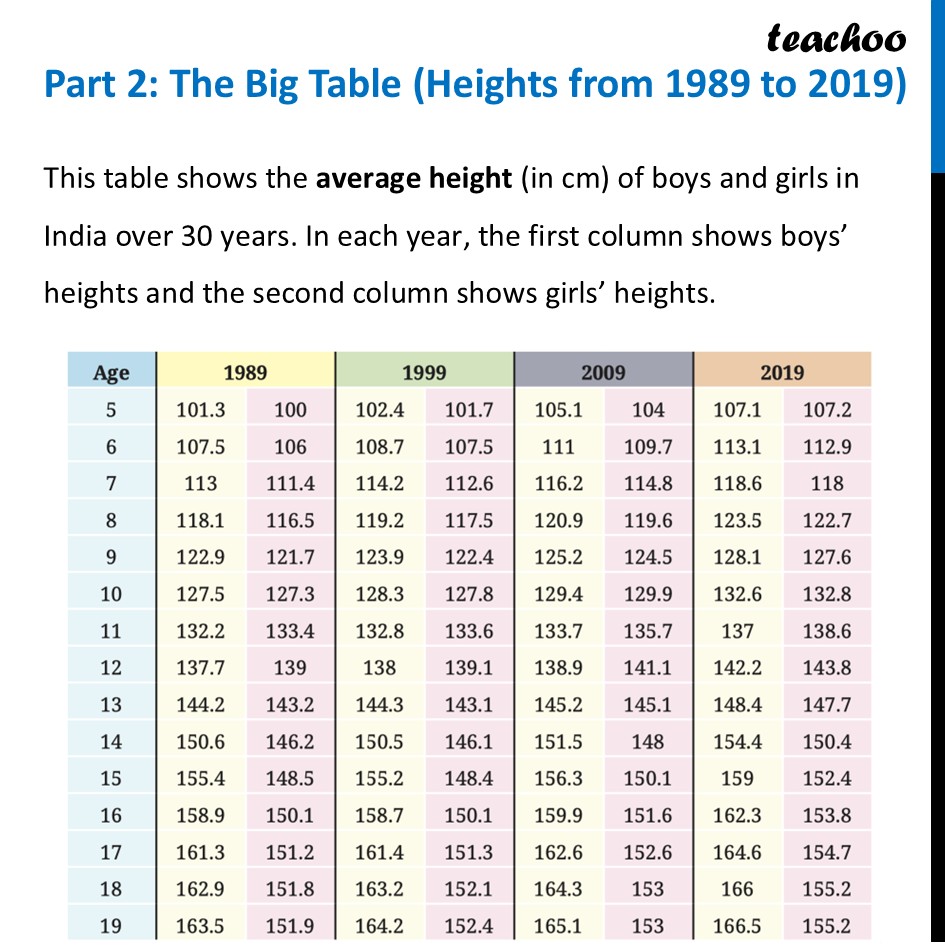
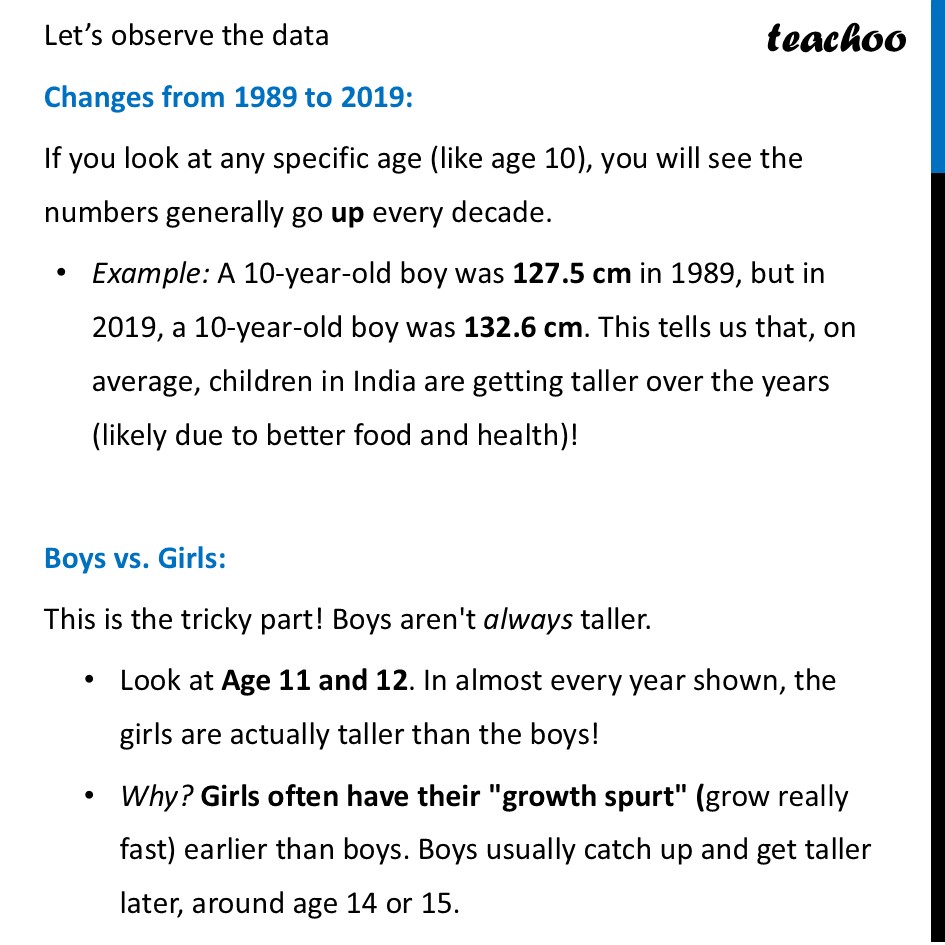
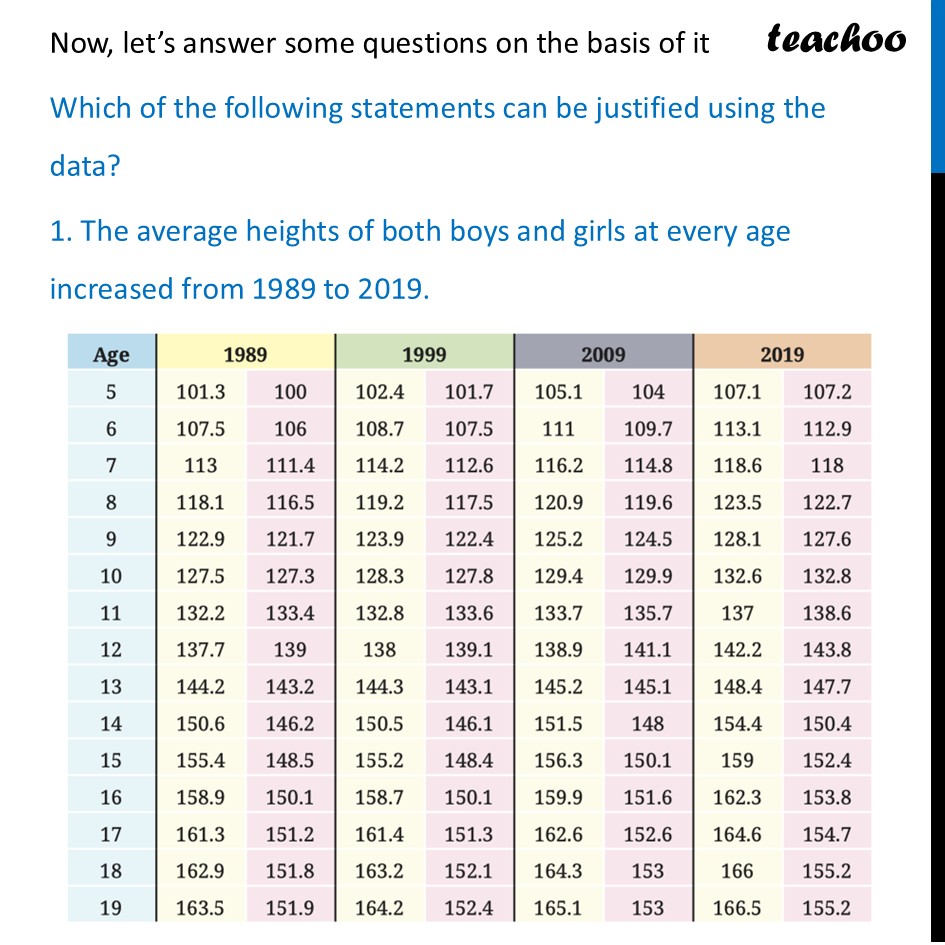
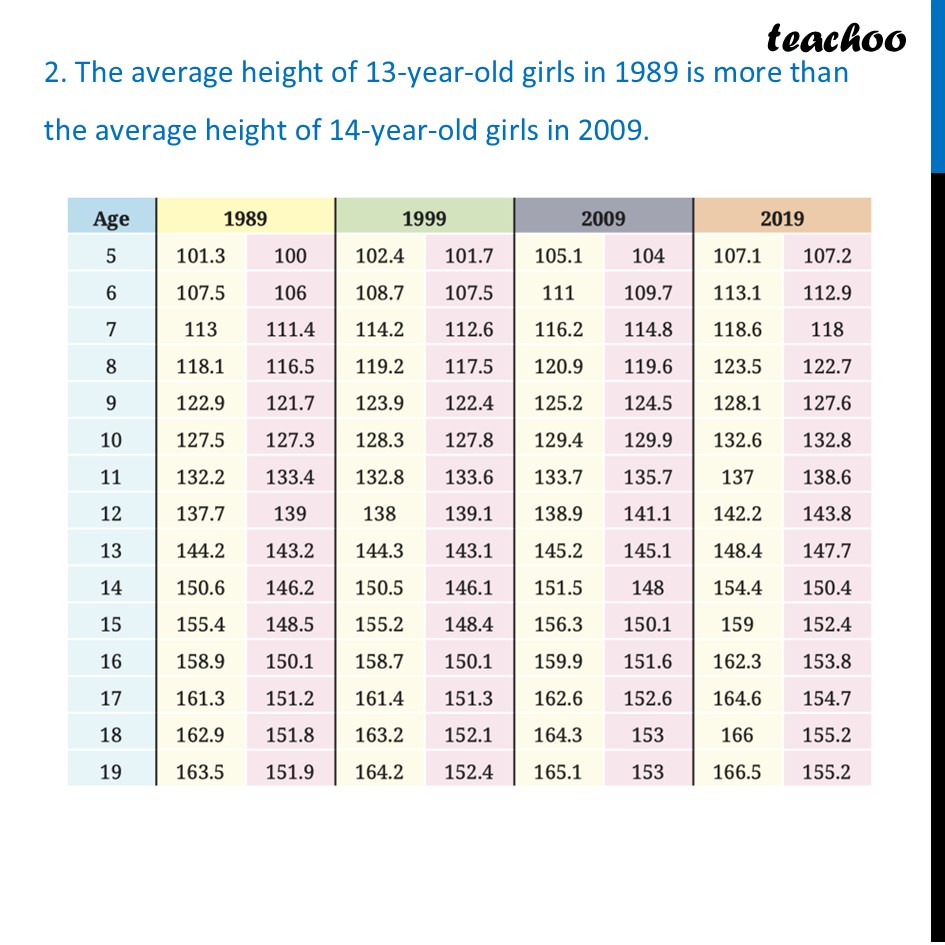
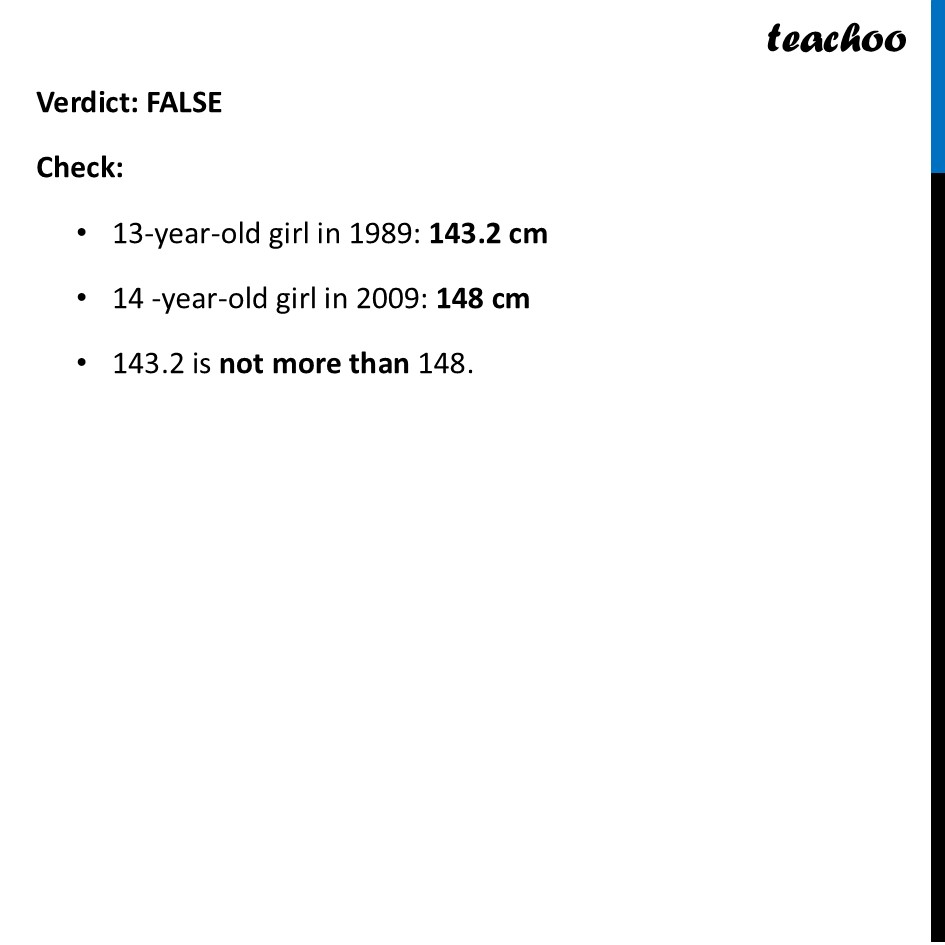
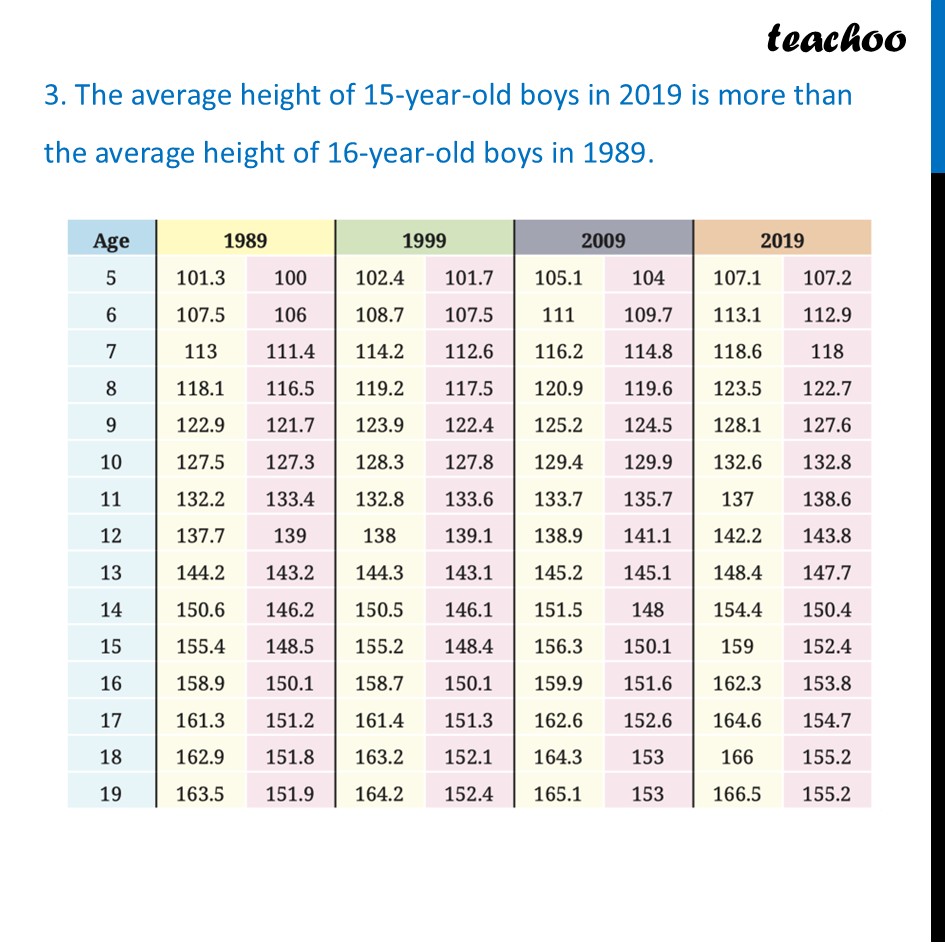
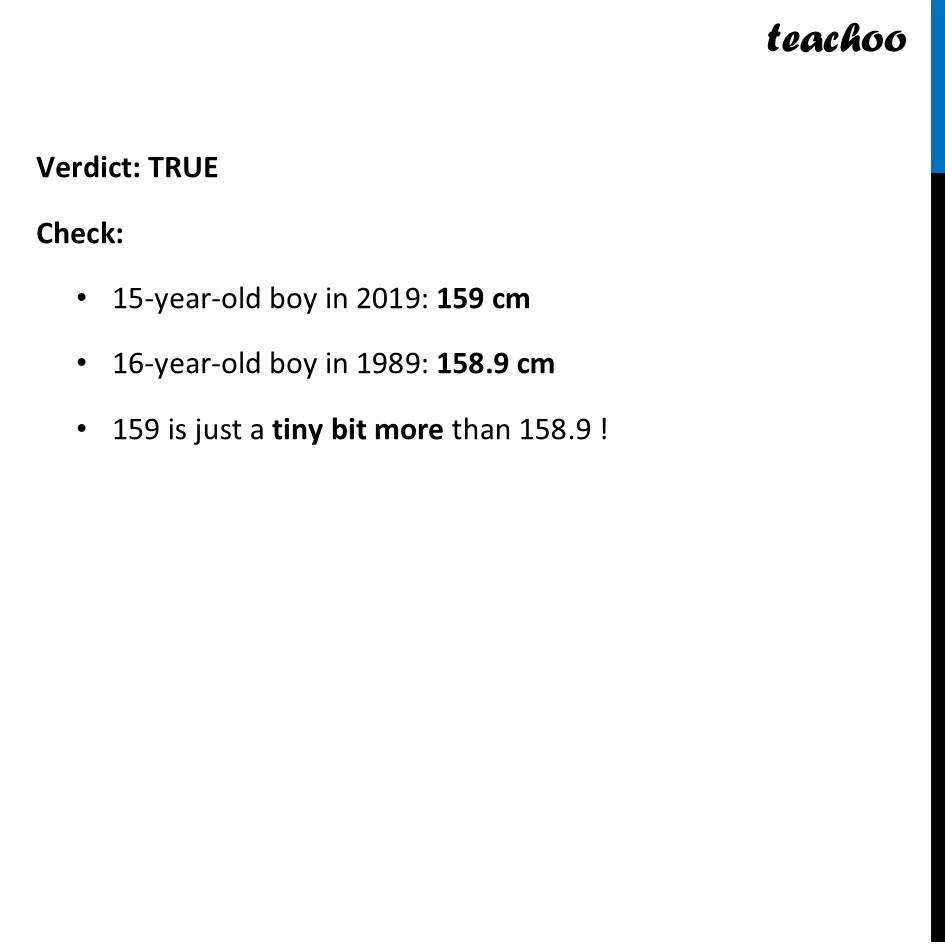
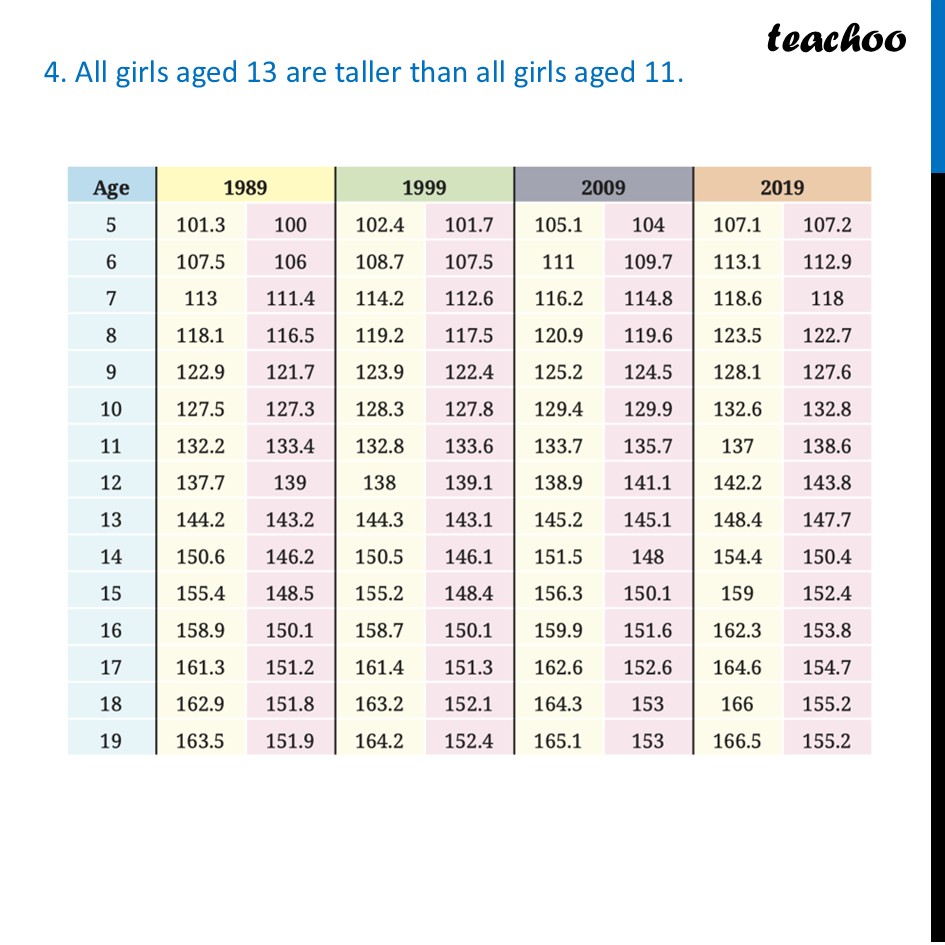
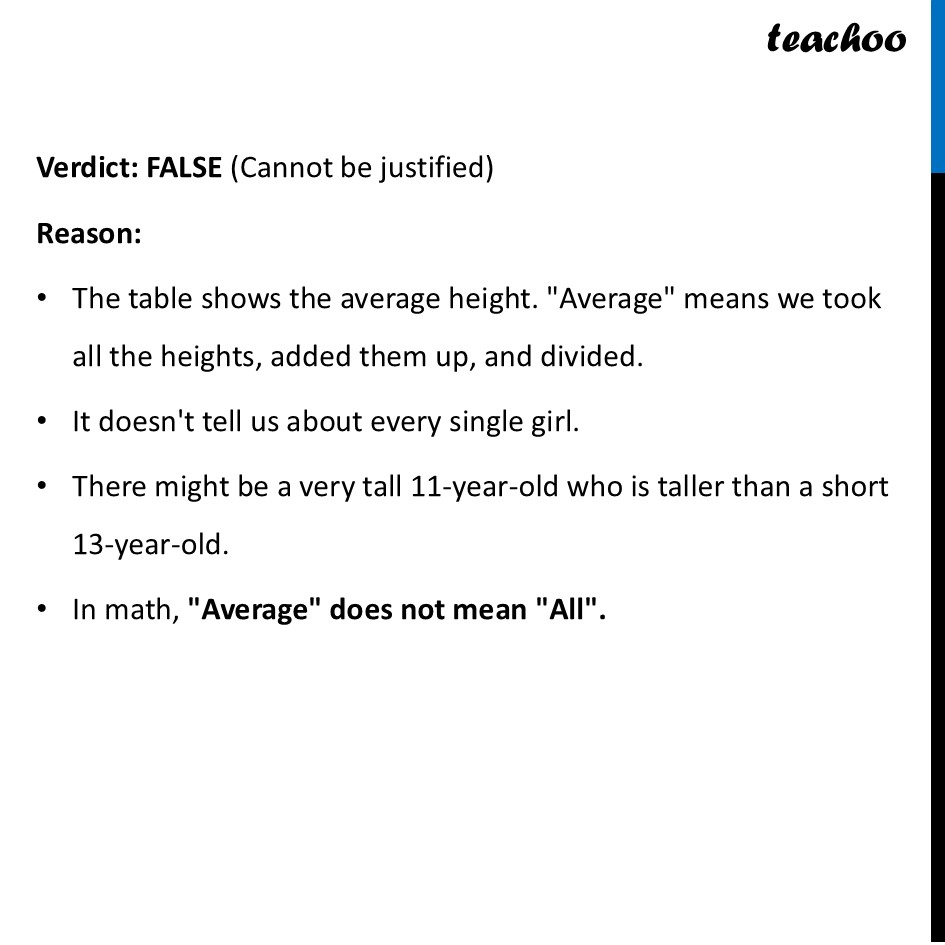
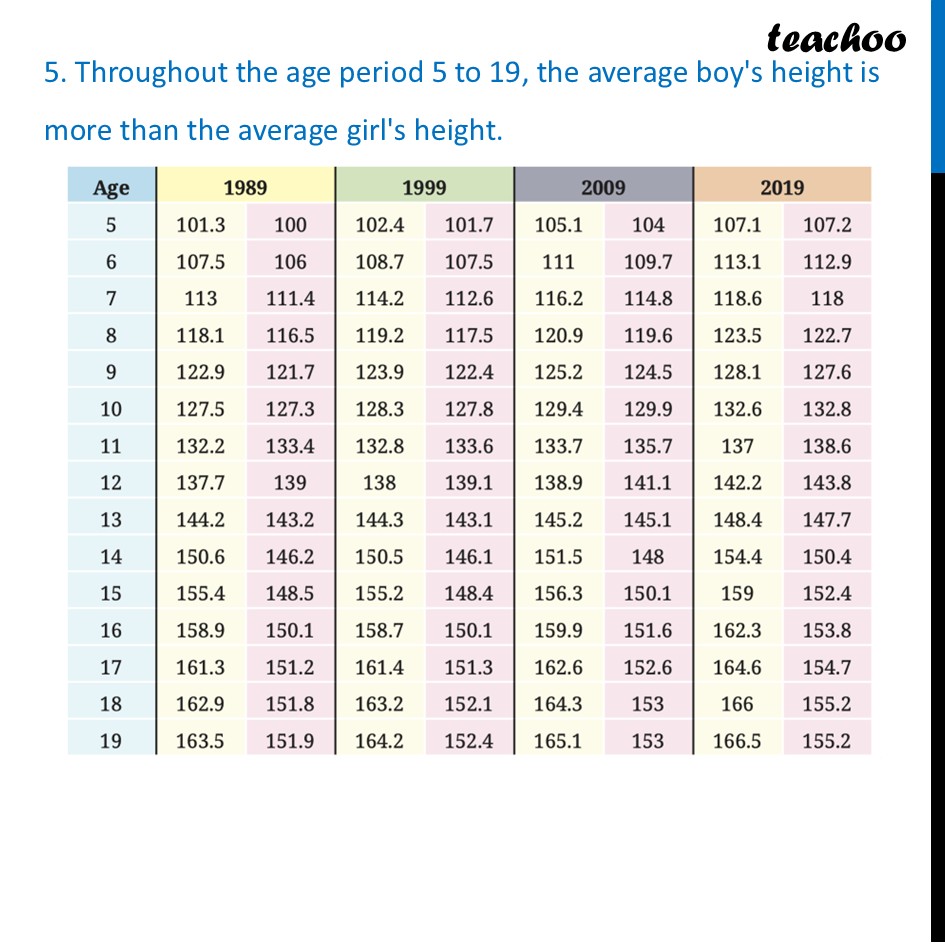
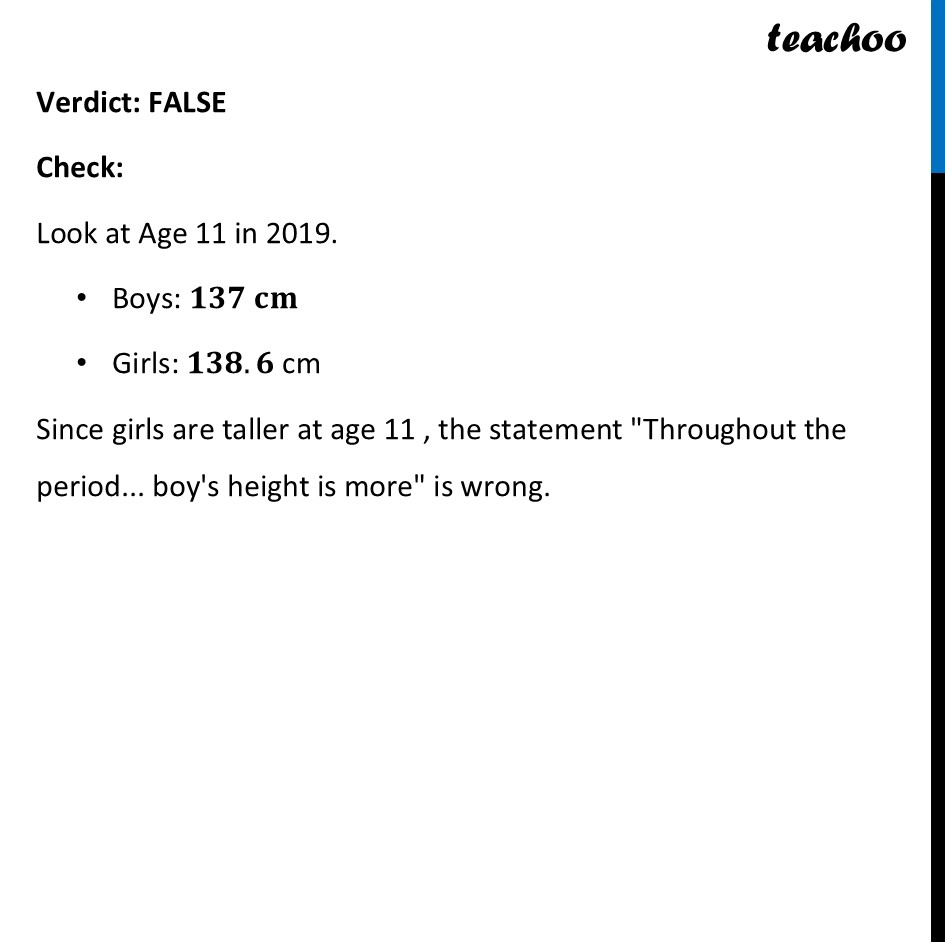
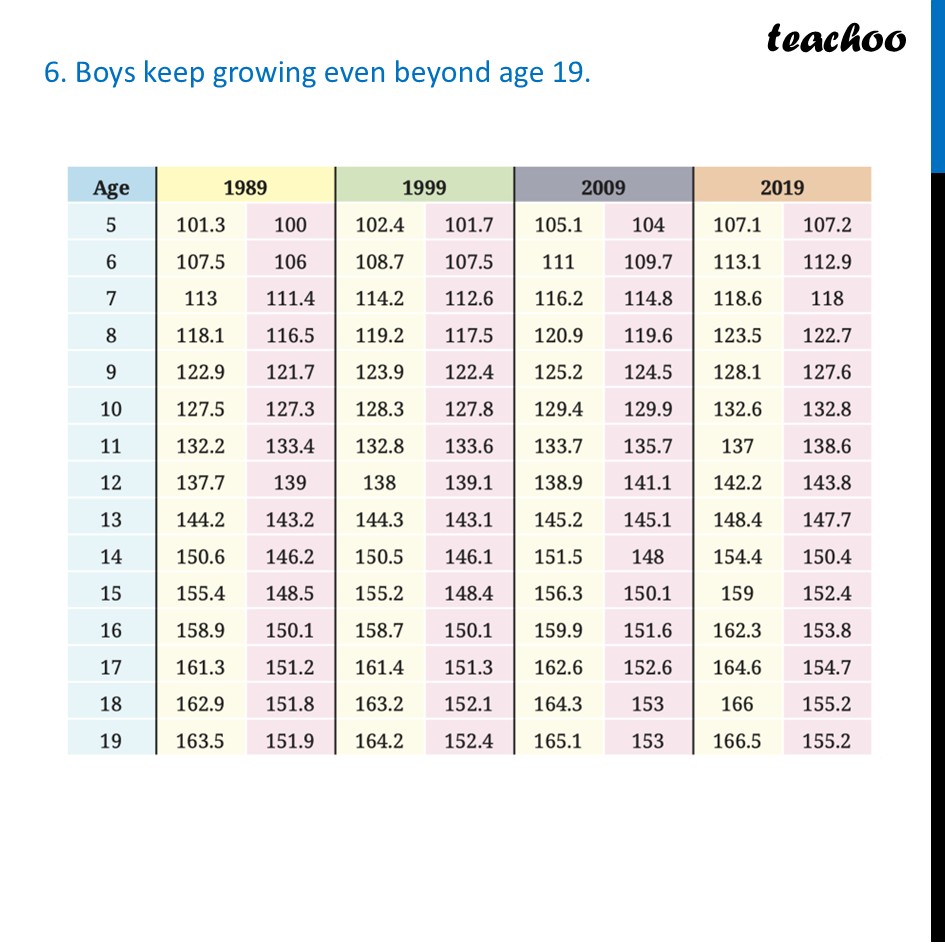
Part 2: The Big Table (Heights from 1989 to 2019)This table shows the average height (in cm) of boys and girls in India over 30 years. In each year, the first column shows boys’ heights and the second column shows girls’ heights. Age 1989 1999 2009 2019 5 101.3 100 102.4 101.7 105.1 104 107.1 107.2 6 107.5 106 108.7 107.5 111 109.7 113.1 112.9 7 113 111.4 114.2 112.6 116.2 114.8 118.6 118 8 118.1 116.5 119.2 117.5 120.9 119.6 123.5 122.7 9 122.9 121.7 123.9 122.4 125.2 124.5 128.1 127.6 10 127.5 127.3 128.3 127.8 129.4 129.9 132.6 132.8 11 132.2 133.4 132.8 133.6 133.7 135.7 137 138.6 12 137.7 139 138 139.1 138.9 141.1 142.2 143.8 13 144.2 143.2 144.3 143.1 145.2 145.1 148.4 147.7 14 150.6 146.2 150.5 146.1 151.5 148 154.4 150.4 15 155.4 148.5 155.2 148.4 156.3 150.1 159 152.4 16 158.9 150.1 158.7 150.1 159.9 151.6 162.3 153.8 17 161.3 151.2 161.4 151.3 162.6 152.6 164.6 154.7 18 162.9 151.8 163.2 152.1 164.3 153 166 155.2 19 163.5 151.9 164.2 152.4 165.1 153 166.5 155.2Let’s observe the data Changes from 1989 to 2019: If you look at any specific age (like age 10), you will see the numbers generally go up every decade. Example: A 10-year-old boy was 127.5 cm in 1989, but in 2019, a 10-year-old boy was 132.6 cm. This tells us that, on average, children in India are getting taller over the years (likely due to better food and health)! Boys vs. Girls: This is the tricky part! Boys aren't always taller. Look at Age 11 and 12. In almost every year shown, the girls are actually taller than the boys! Why? Girls often have their "growth spurt" (grow really fast) earlier than boys. Boys usually catch up and get taller later, around age 14 or 15. Now, let’s answer some questions on the basis of it Which of the following statements can be justified using the data? 1. The average heights of both boys and girls at every age increased from 1989 to 2019. Verdict: TRUE Check: Pick any age row (like Age 5 or Age 19). The number in the "2019" column is always bigger than the number in the "1989" column for both boys and girls. 2. The average height of 13-year-old girls in 1989 is more than the average height of 14-year-old girls in 2009. Verdict: FALSE Check: 13-year-old girl in 1989: 143.2 cm 14 -year-old girl in 2009: 148 cm 143.2 is not more than 148. 3. The average height of 15-year-old boys in 2019 is more than the average height of 16-year-old boys in 1989. Verdict: TRUE Check: 15-year-old boy in 2019: 159 cm 16-year-old boy in 1989: 158.9 cm 159 is just a tiny bit more than 158.9 ! 4. All girls aged 13 are taller than all girls aged 11. Verdict: FALSE (Cannot be justified) Reason: The table shows the average height. "Average" means we took all the heights, added them up, and divided. It doesn't tell us about every single girl. There might be a very tall 11-year-old who is taller than a short 13-year-old. In math, "Average" does not mean "All". 5. Throughout the age period 5 to 19, the average boy's height is more than the average girl's height. Verdict: FALSE Check: Look at Age 11 in 2019. Boys: 𝟏𝟑𝟕" " 𝐜𝐦 Girls: 𝟏𝟑𝟖.𝟔 cm Since girls are taller at age 11 , the statement "Throughout the period... boy's height is more" is wrong. 6. Boys keep growing even beyond age 19. Verdict: FALSE (Cannot be justified from this data) Reason: While this might be true in real life for some people, we cannot justify it using this table. The data stops at age 19. As data scientists, we can only claim what the data shows us!
