
 You are here
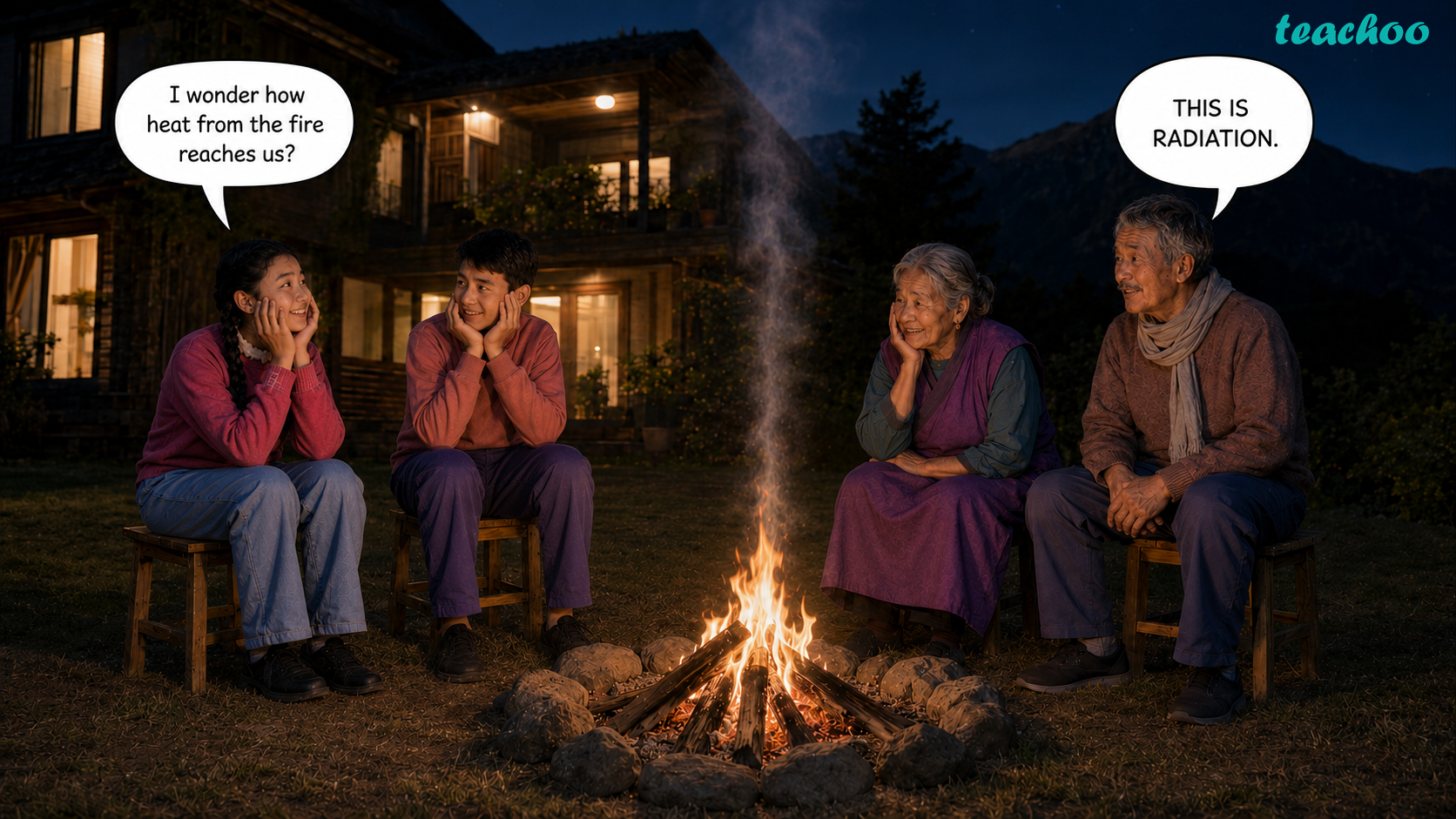
Pema and Palden feel warm near the fireplace.
They are not touching the fire.
Their grandfather explains: this is radiation .
What is Radiation?
It is a process which transfers heat from a hot object to a cooler one.
No medium is needed.
It can even travel through vacuum (empty space).
-
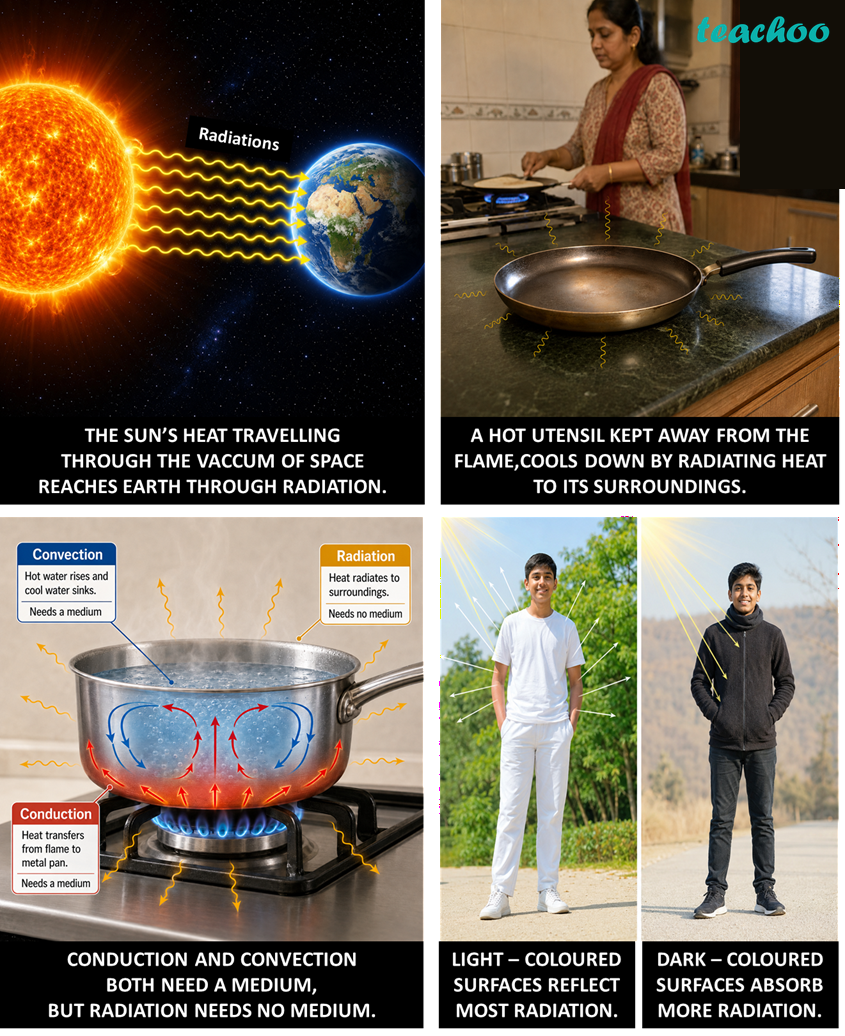
Image 1 -The Sun 's heat reaches Earth through radiation.It travels through the vacuum of space.
-
Image 2 -
All objects radiate heat to their surroundings.A hot utensil kept away from the flame cools down.It cools by radiating heat to its surroundings.
-
Image 3 -
Radiation needs no medium .Conduction and convection both need a medium.
-
Image 4 -
Light-coloured surfaces reflect most radiation.Wear white or light clothes in summer → stay cool.Dark surfaces absorb more radiation.Wear dark clothes in winter → absorb more warmth.
Definition
What is Radiation?
Process of heat transfer from a hot object to a cooler one without any medium.
Example - Rays of the Sun.
Why light colours in summer, dark in winter?
- Light colours reflect most radiation → less heat absorbed → cooler.
- Dark colours absorb more radiation → more heat absorbed → warmer.
The Three Methods of Heat Transfer — Side by Side
Conduction — through solids
Needs a medium (solid) · Particles do not move · Example: metal spoon in hot tea, pin-strip experiment
Convection — through liquids and gases
Needs a medium (fluid) · Particles physically move · Example: sea breeze, smoke rising, water in kettle
Radiation — no medium needed
Works even in vacuum · All objects radiate heat · Example: sunlight, fireplace warmth, hot utensil cooling
🏠
Fascinating Fact — Bukhari (Traditional Himalayan Heater)
- In upper Himalayan regions, a bukhari is used for heating.
- It is a traditional iron stove.
- It burns wood or charcoal for heat.
- Conduction — flame heats the iron body of the stove.
- Heat passes through the iron to the surrounding area.
- Convection — warm air rises from the stove.
- It circulates in the room; smoke exits via the chimney.
- Radiation — the hot stove surface radiates heat outward.
- It warms surrounding people and objects.
- It demonstrates all three heat transfer processes working together.
📋 NCERT Question 4 — Ice Cubes Melting
Ice cubes kept in a dish melt after some time — where do they get the heat for this transformation?
View Answer →
📋 NCERT Question 3(i–iv) — True or False
Four statements about conduction, convection, seepage, and land breeze — True or False?
View Answer →
