You are here
![Brahmagupta’s Definition and Rules for Zero [Class 9 Ganita Manjari I] - The Revolution of Śhūnya](https://cdn.teachoo.com/fd132384-f12b-487d-b88e-825dea045f09/slide29.jpg)
The Revolution of Śhūnya
The Revolution of Śhūnya
Last updated at August 14, 2026 by Teachoo
Transcript
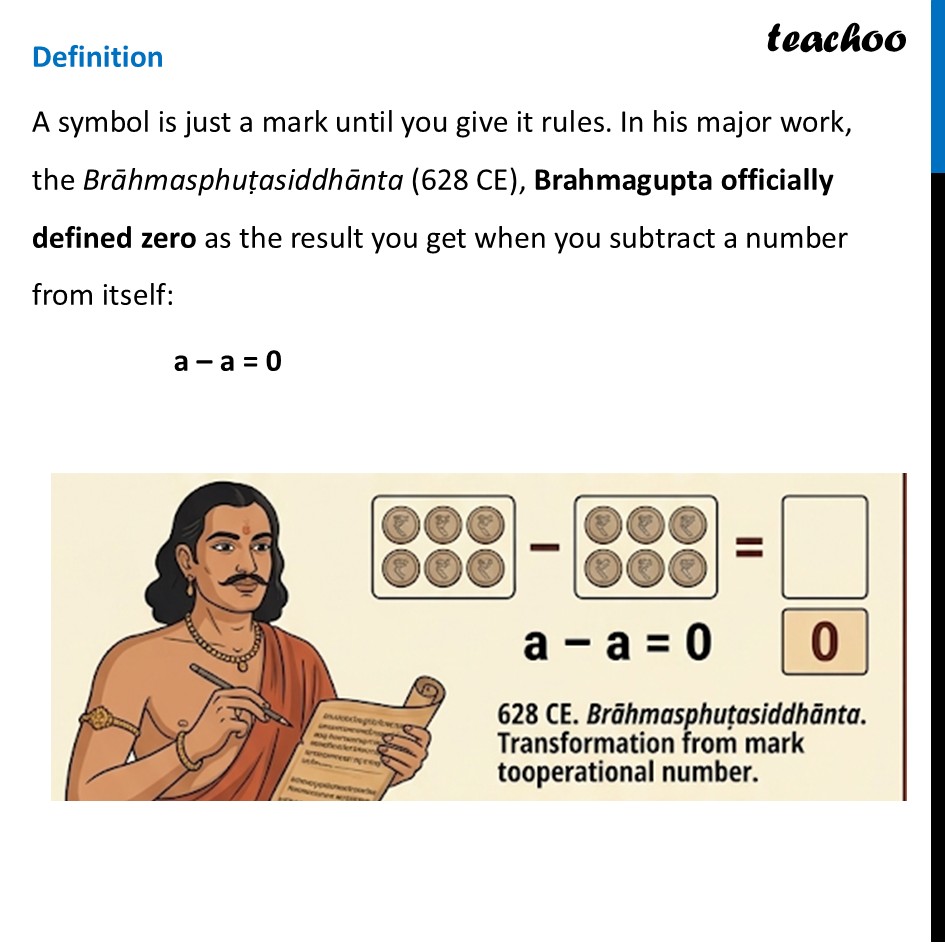
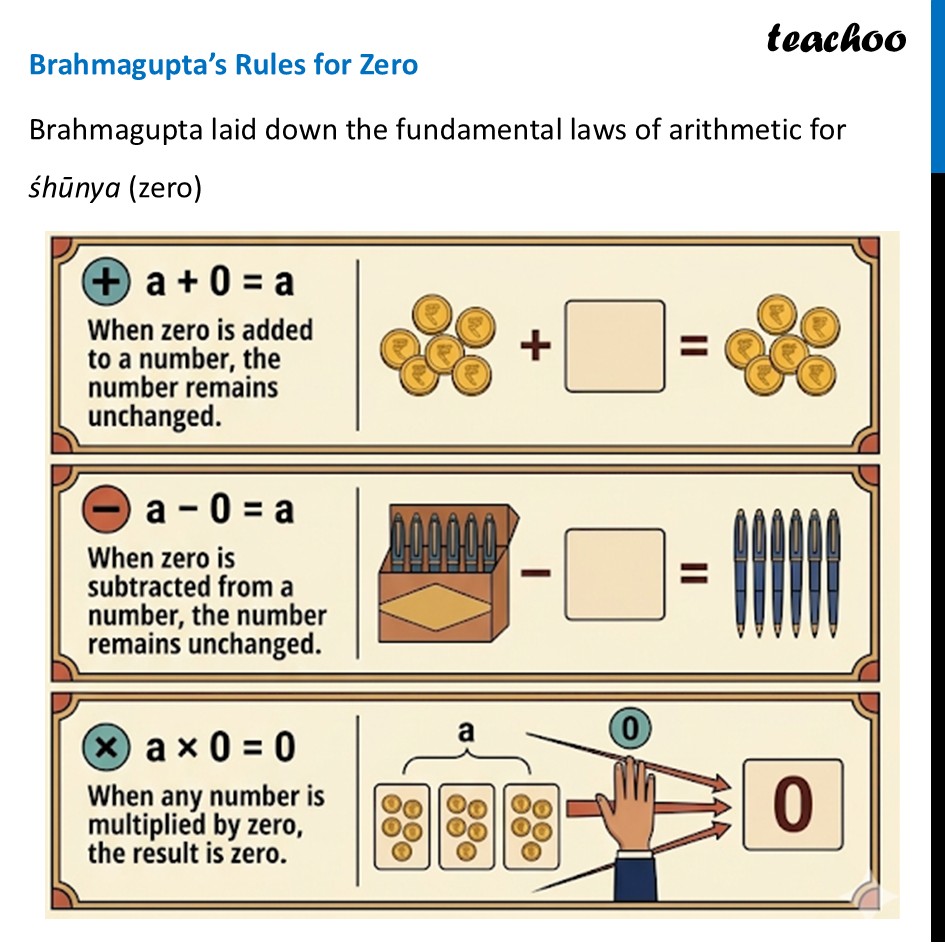
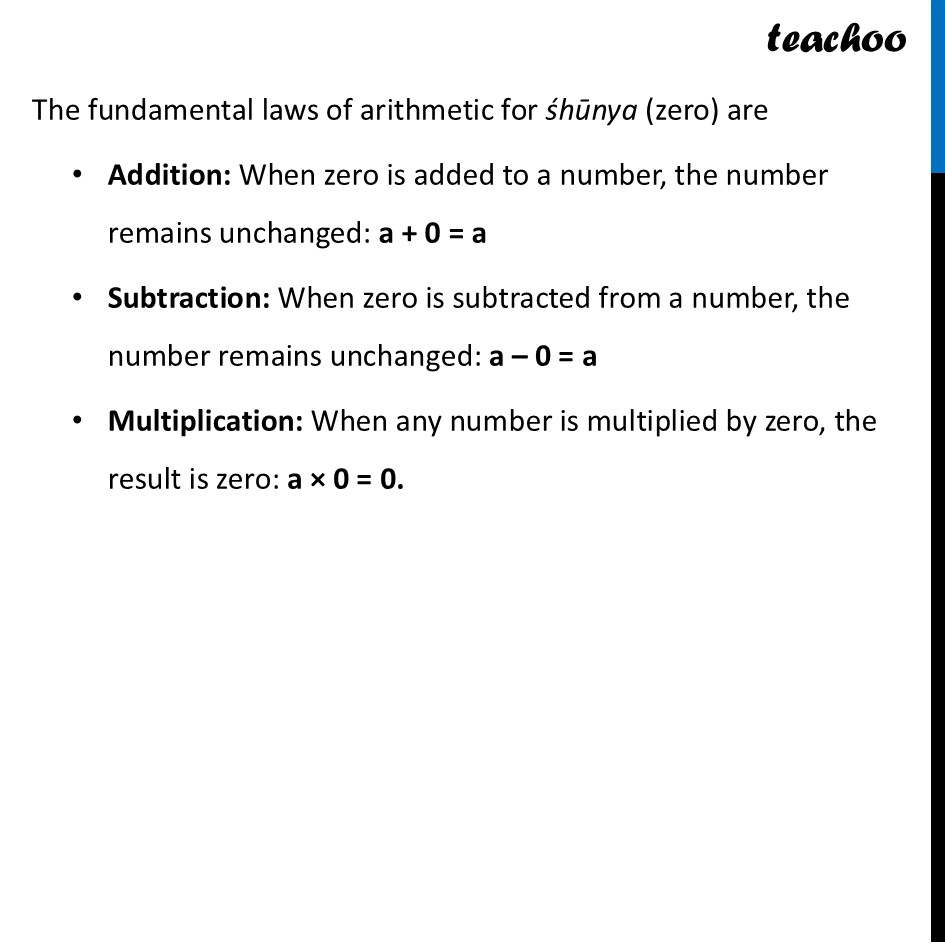
Brahmagupta’s Definition and Rules for Zero A concept is great, but to do math, you need symbols and rules. Symbol The physical transition from leaving a blank space to using an actual symbol can be seen in the Bakhshālī Manuscript (dating to the early centuries CE). It used a bold dot, called a bindu, to represent zero. काझ्सर्रीमवियधः সাય करोम्न રধাवাव नातोयतः भुमुरू मुरक मयानः □ १ २ ३ तुब गेकद्वोतीवोनः मयौः नतिः॥Phase A: [BLANK SPACE/VOID] □ Phase B: [• BOLD DOT/BINDU] Bakhshāli Manuscript binduDefinition A symbol is just a mark until you give it rules. In his major work, the Brāhmasphuṭasiddhānta (628 CE), Brahmagupta officially defined zero as the result you get when you subtract a number from itself: a – a = 0 Brahmagupta’s Rules for Zero Brahmagupta laid down the fundamental laws of arithmetic for śhūnya (zero) When zero is added to a number, the number remains unchanged. When zero is subtracted from a number, the number remains unchanged. When any number is multiplied by zero, the result is zero.The fundamental laws of arithmetic for śhūnya (zero) are Addition: When zero is added to a number, the number remains unchanged: a + 0 = a Subtraction: When zero is subtracted from a number, the number remains unchanged: a – 0 = a Multiplication: When any number is multiplied by zero, the result is zero: a × 0 = 0.