You are here
![The Concept of Śhūnyatā [Class 9 Chapter 3 - Ganita Manjari I] - The Revolution of Śhūnya](https://cdn.teachoo.com/b1c482cb-d3bd-4a67-a468-5fb5433545b5/slide26.jpg)
The Revolution of Śhūnya
The Revolution of Śhūnya
Last updated at August 14, 2026 by Teachoo
Transcript
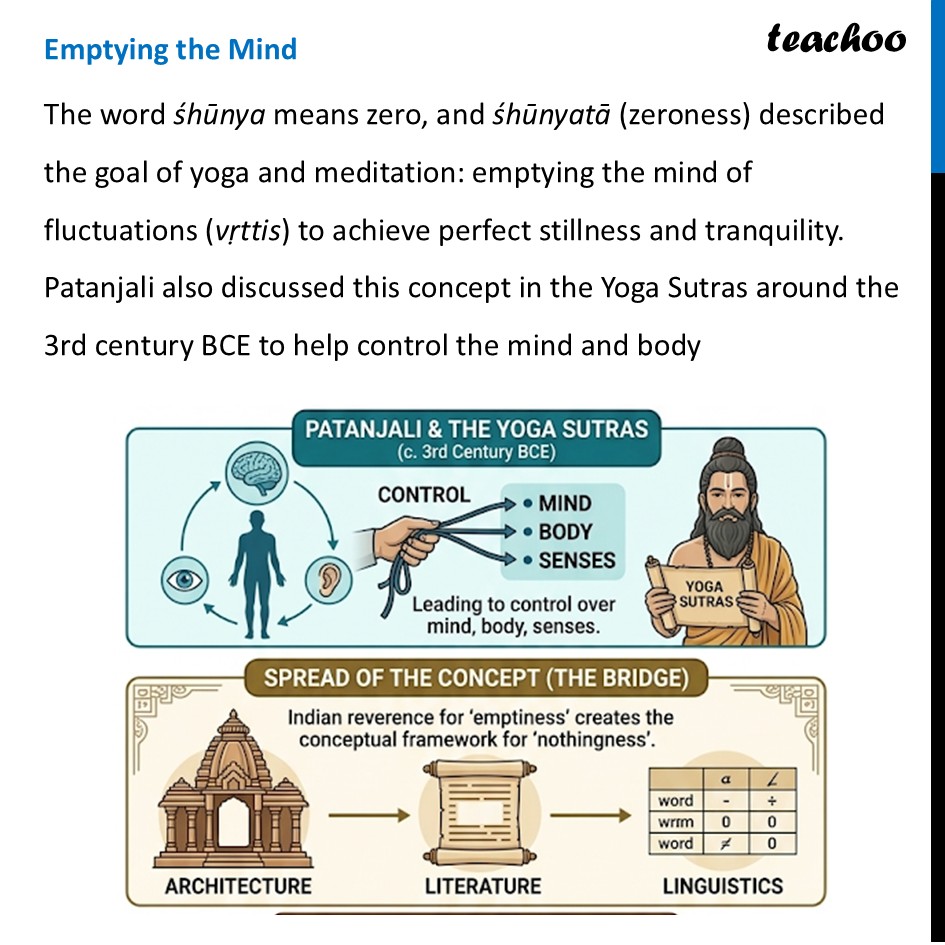
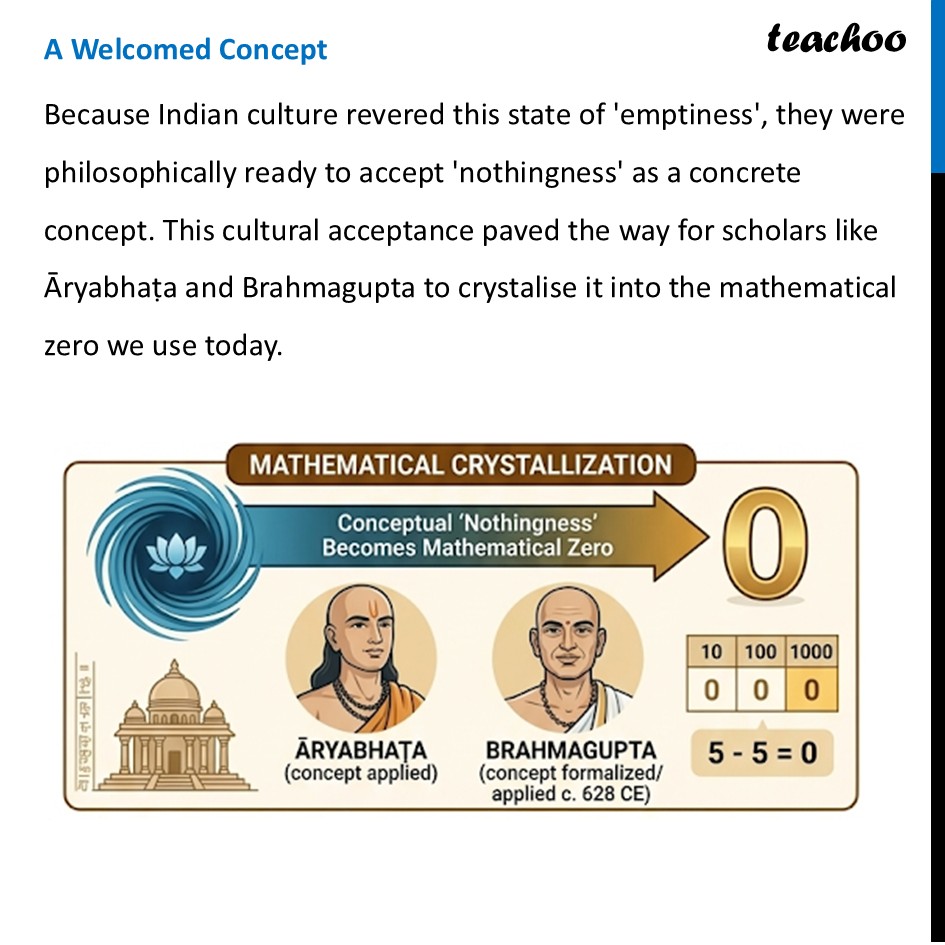
The Concept of Śhūnyatā How did Indian thinkers make this leap? The answer lies in philosophy and meditation! The Goal of Stillness In Buddhist literature and the Upanishads, the concept of Śhūnyatā (meaning emptiness or nothingness) was a profound and highly respected state. ANCIENT INDIAN ROOTS (Upanishads, Buddhist Literature)Emptying the Mind The word śhūnya means zero, and śhūnyatā (zeroness) described the goal of yoga and meditation: emptying the mind of fluctuations (vṛttis) to achieve perfect stillness and tranquility. Patanjali also discussed this concept in the Yoga Sutras around the 3rd century BCE to help control the mind and body PATANJALI & THE YOGA SUTRAS (c. 3rd Century BCE)SPREAD OF THE CONCEPT (THE BRIDGE) Indian reverence for 'emptiness' creates the conceptual framework for 'nothingness'.A Welcomed Concept Because Indian culture revered this state of 'emptiness', they were philosophically ready to accept 'nothingness' as a concrete concept. This cultural acceptance paved the way for scholars like Āryabhaṭa and Brahmagupta to crystalise it into the mathematical zero we use today. MATHEMATICAL CRYSTALLIZATION Conceptual 'Nothingness' Becomes Mathematical Zero ĀRYABHATA (concept applied) BRAHMAGUPTA (concept formalized/ applied c. 628 CE)