You are here
Last updated at August 14, 2026 by Teachoo
Transcript
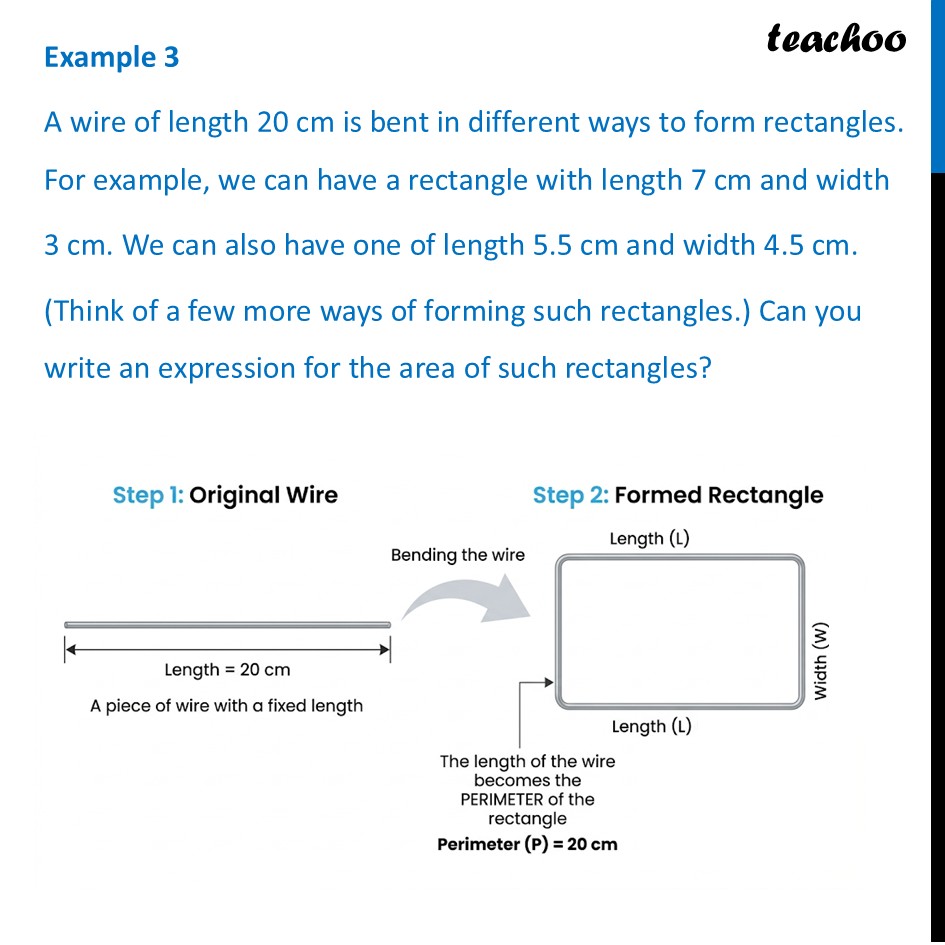
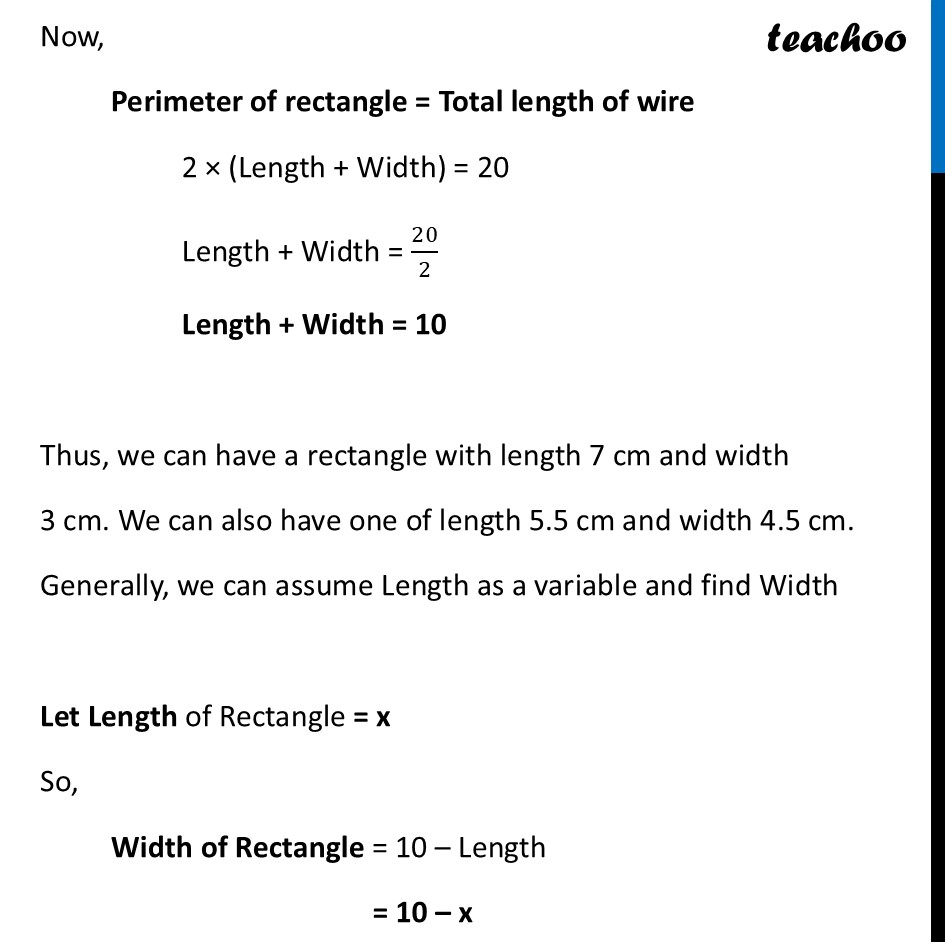
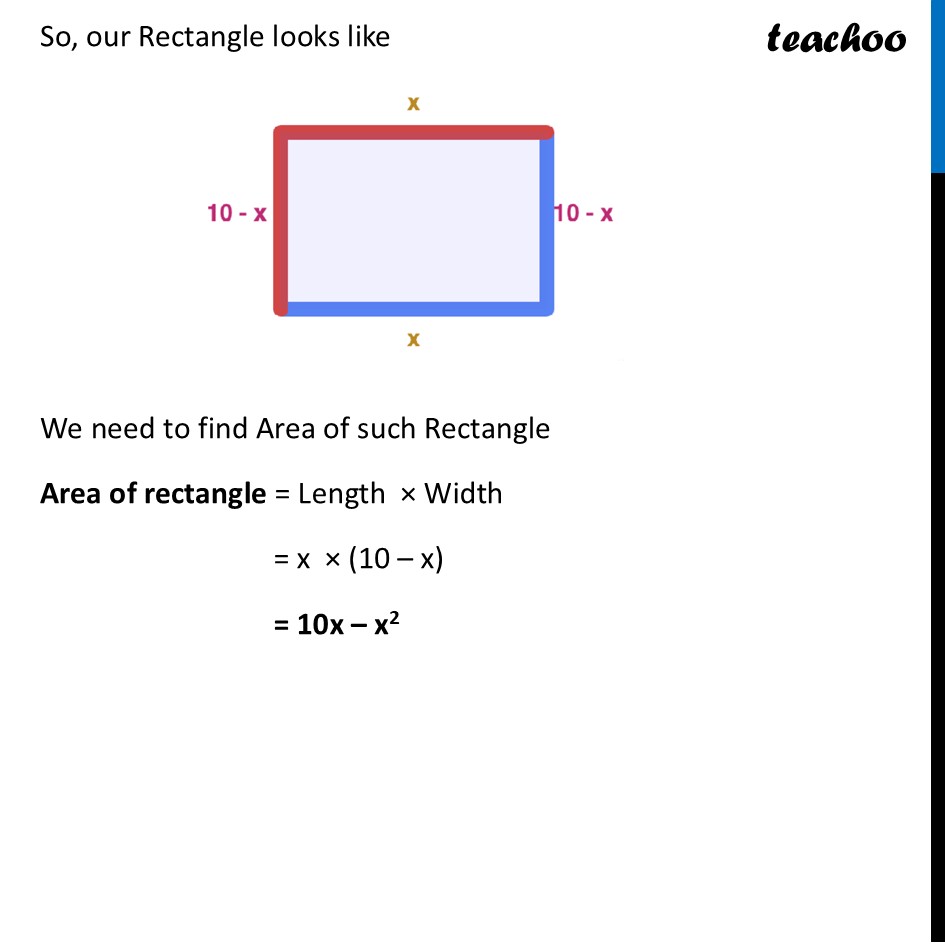
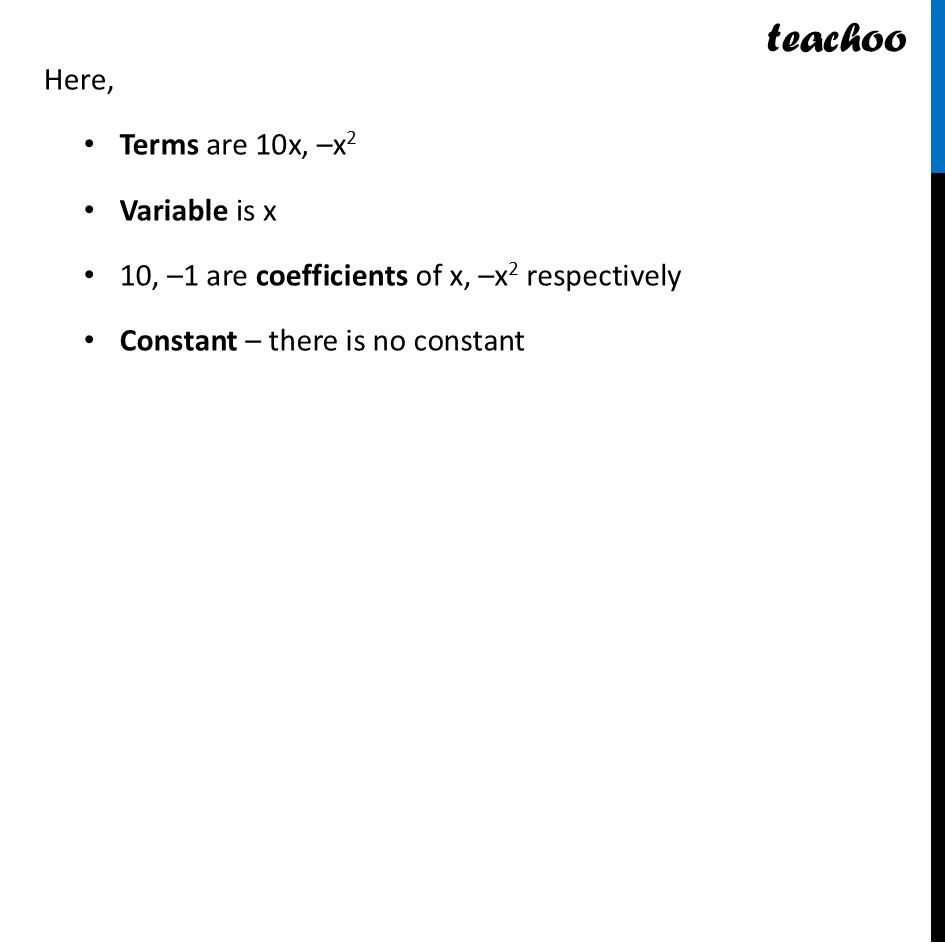
Example 3 A wire of length 20 cm is bent in different ways to form rectangles. For example, we can have a rectangle with length 7 cm and width 3 cm. We can also have one of length 5.5 cm and width 4.5 cm. (Think of a few more ways of forming such rectangles.) Can you write an expression for the area of such rectangles? Step 1: Original Wire Step 2: Formed RectangleLength A piece of wire with a fixed length Length (L) The length of the wire becomes the PERIMETER of the rectangle Perimeter (P) = 20 cmNow, Perimeter of rectangle = Total length of wire 2 × (Length + Width) = 20 Length + Width = 20/2 Length + Width = 10 Thus, we can have a rectangle with length 7 cm and width 3 cm. We can also have one of length 5.5 cm and width 4.5 cm. Generally, we can assume Length as a variable and find Width Let Length of Rectangle = x So, Width of Rectangle = 10 – Length = 10 – x So, our Rectangle looks like We need to find Area of such Rectangle Area of rectangle = Length × Width = x × (10 – x) = 10x – x2 Here, Terms are 10x, –x2 Variable is x 10, –1 are coefficients of x, –x2 respectively Constant – there is no constant Here, Terms are 10x, –x2 Variable is x 10, –1 are coefficients of x, –x2 respectively Constant – there is no constant