
 You are here
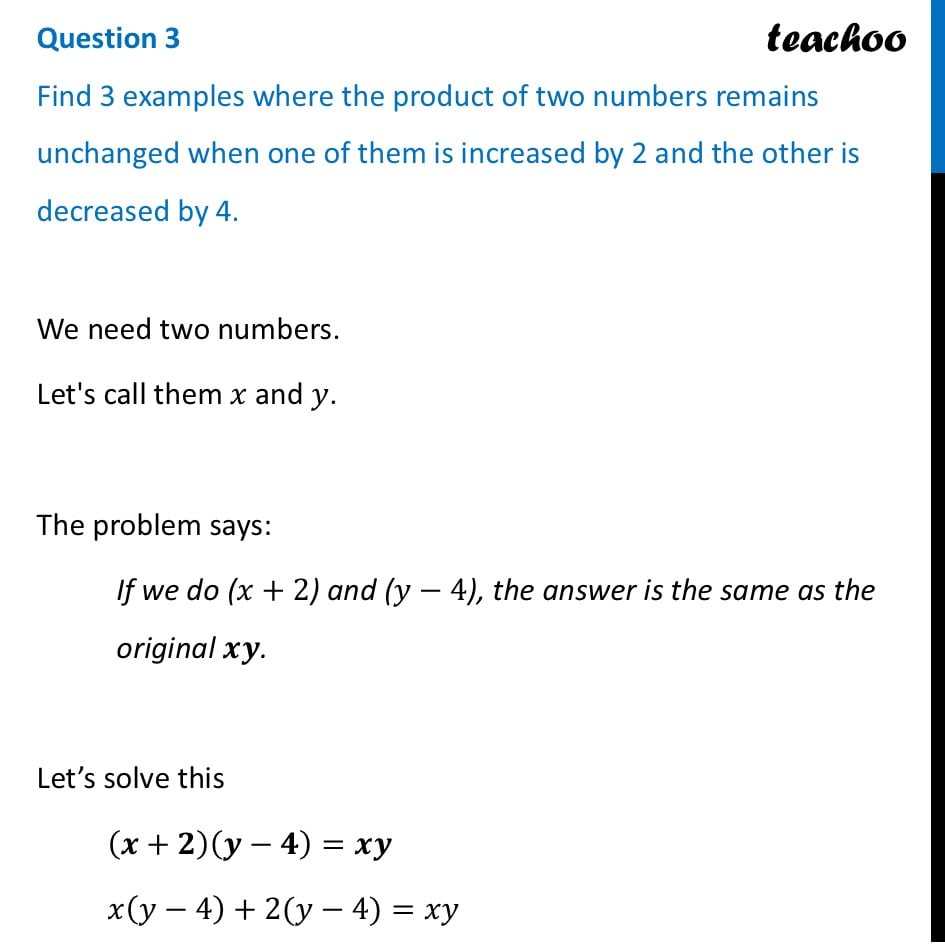
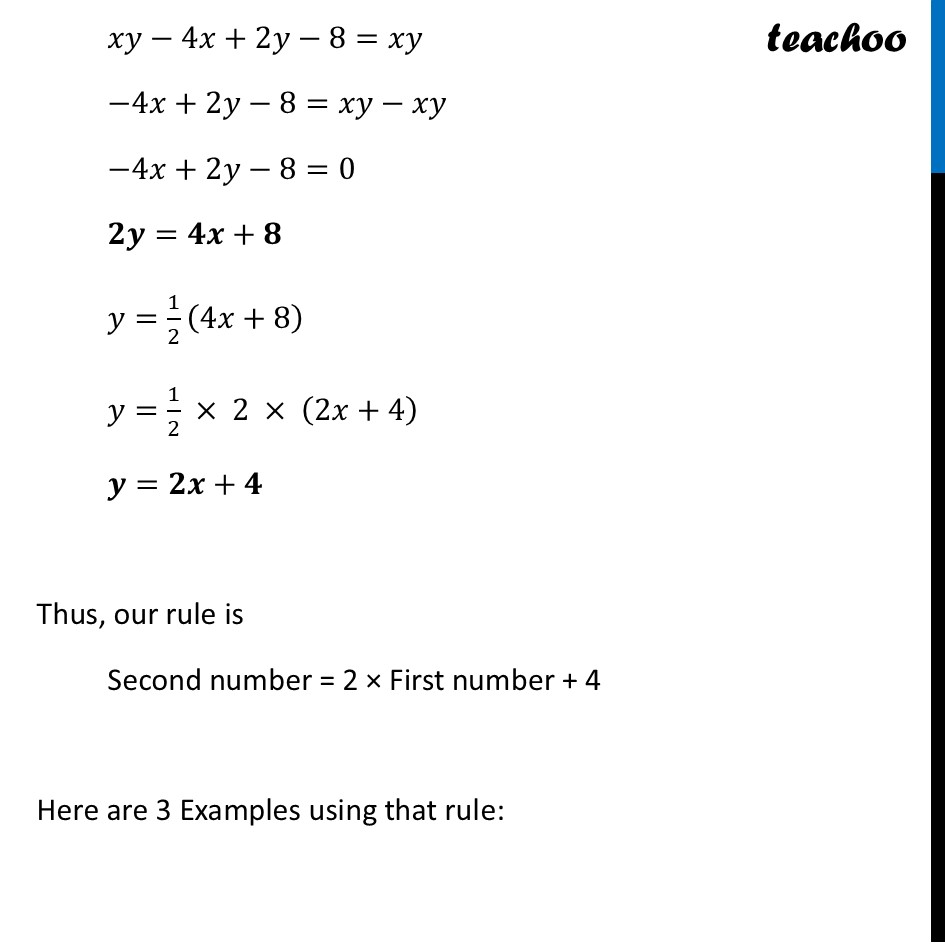
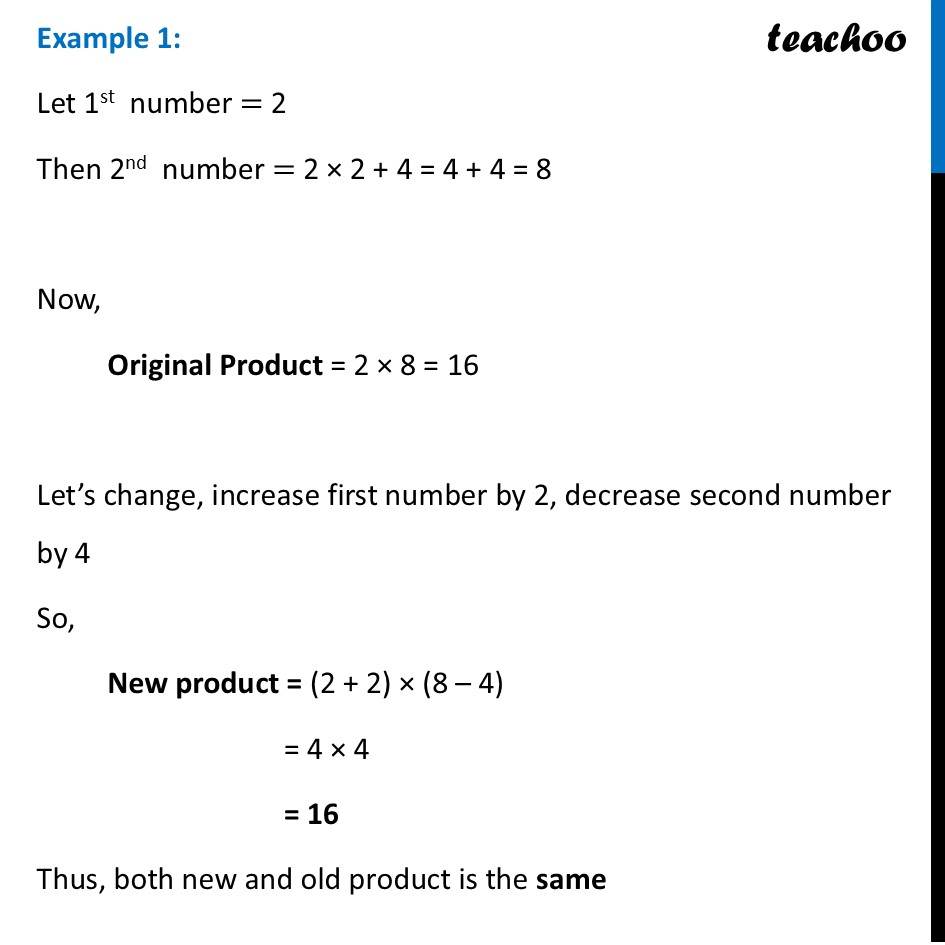
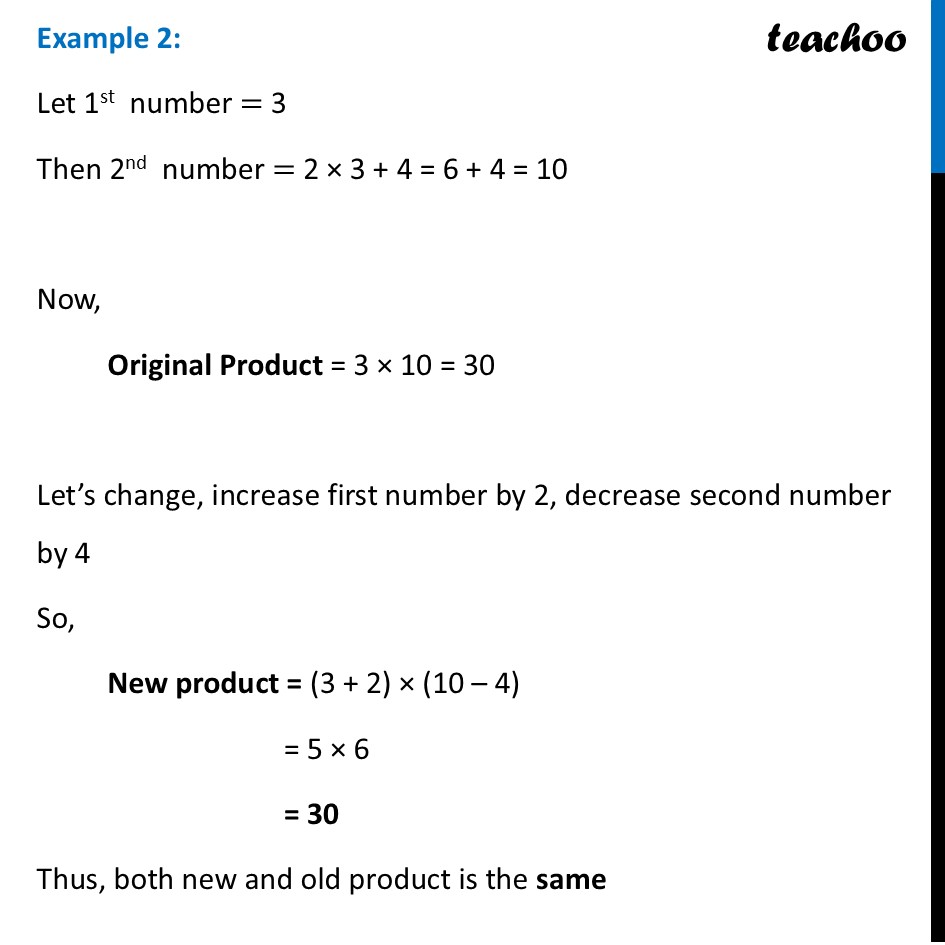
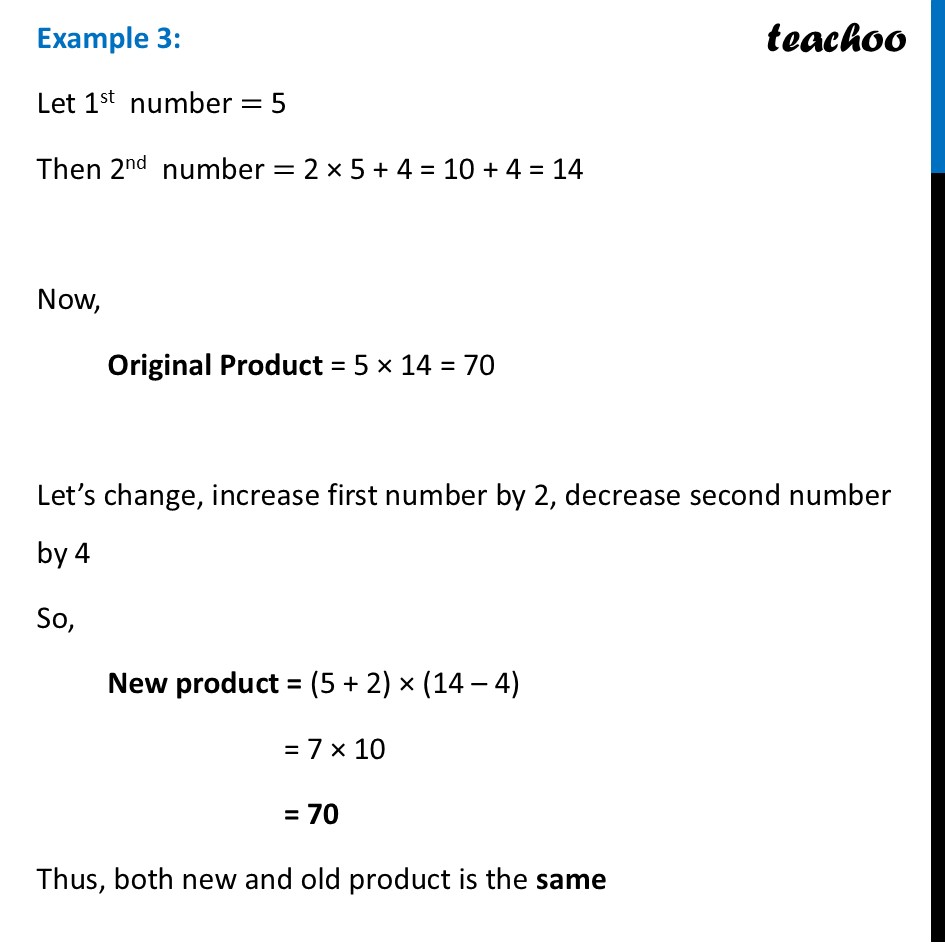
Figure it out - Page 142, 143
Last updated at January 12, 2026 by Teachoo
Transcript
Question 3 Find 3 examples where the product of two numbers remains unchanged when one of them is increased by 2 and the other is decreased by 4. We need two numbers. Let's call them 𝑥 and 𝑦. The problem says: If we do (𝑥+2) and (𝑦−4), the answer is the same as the original 𝒙𝒚. Let’s solve this (𝒙+𝟐)(𝒚−𝟒)=𝒙𝒚 𝑥(𝑦−4)+2(𝑦−4)=𝑥𝑦 𝑥𝑦−4𝑥+2𝑦−8=𝑥𝑦 −4𝑥+2𝑦−8=𝑥𝑦−𝑥𝑦 −4𝑥+2𝑦−8=0 𝟐𝒚=𝟒𝒙+𝟖 𝑦=1/2 (4𝑥+8) 𝑦=1/2 × 2 × (2𝑥+4) 𝒚=𝟐𝒙+𝟒 Thus, our rule is Second number = 2 × First number + 4 Here are 3 Examples using that rule: Example 1: Let 1st number = 2 Then 2nd number = 2 × 2 + 4 = 4 + 4 = 8 Now, Original Product = 2 × 8 = 16 Let’s change, increase first number by 2, decrease second number by 4 So, New product = (2 + 2) × (8 – 4) = 4 × 4 = 16 Thus, both new and old product is the same Example 2: Let 1st number = 3 Then 2nd number = 2 × 3 + 4 = 6 + 4 = 10 Now, Original Product = 3 × 10 = 30 Let’s change, increase first number by 2, decrease second number by 4 So, New product = (3 + 2) × (10 – 4) = 5 × 6 = 30 Thus, both new and old product is the same Example 3: Let 1st number = 5 Then 2nd number = 2 × 5 + 4 = 10 + 4 = 14 Now, Original Product = 5 × 14 = 70 Let’s change, increase first number by 2, decrease second number by 4 So, New product = (5 + 2) × (14 – 4) = 7 × 10 = 70 Thus, both new and old product is the same
