
 You are here
Questions at the end of chapter (Page 161 & 162)
Questions at the end of chapter (Page 161 & 162)
Last updated at August 14, 2026 by Teachoo
Transcript
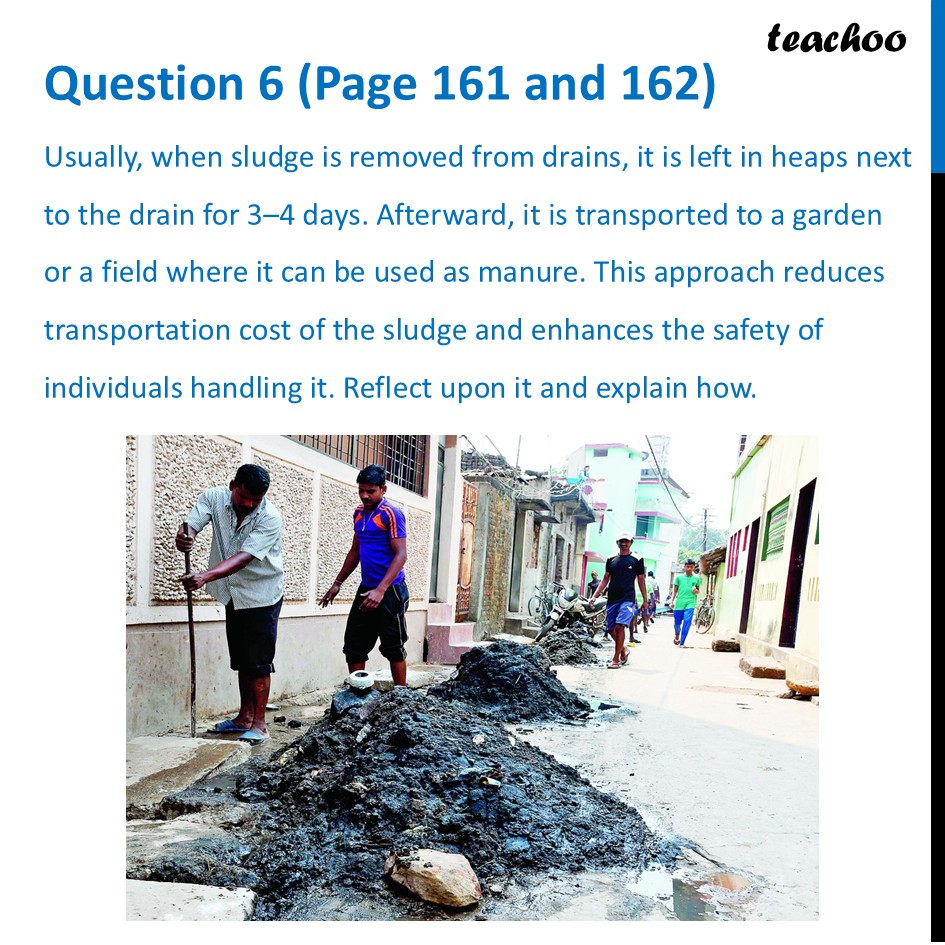
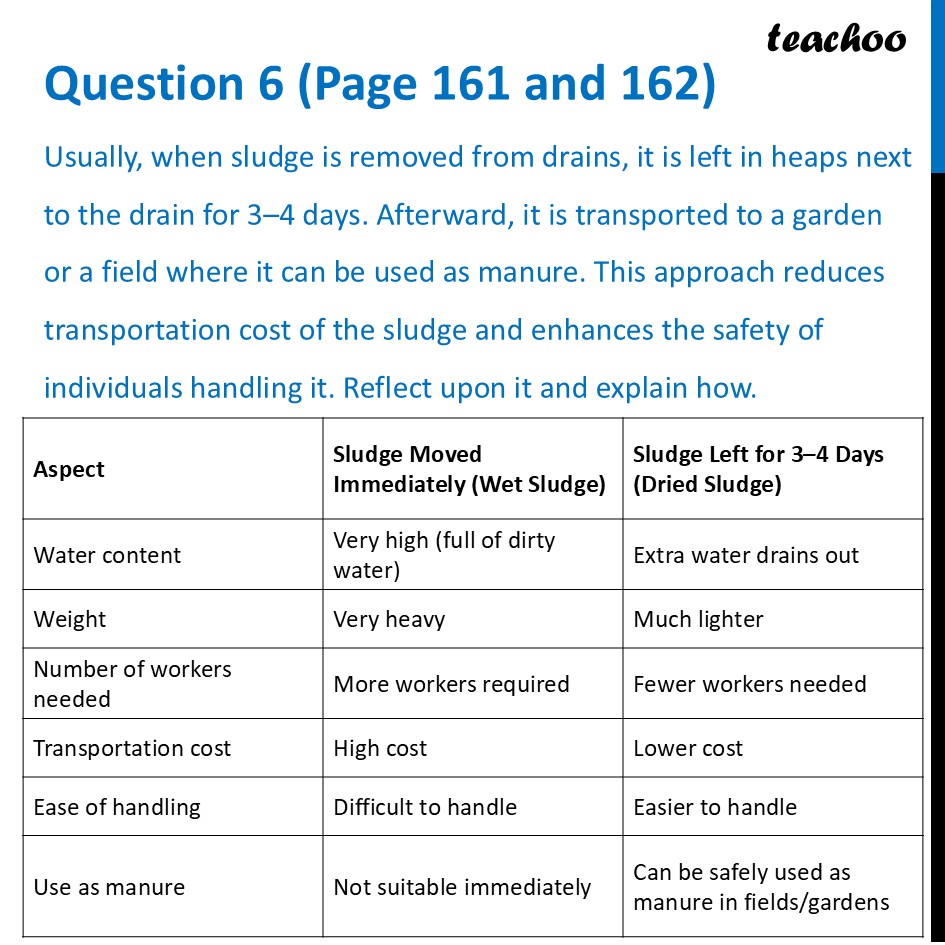
Question 6 (Page 161 and 162) Usually, when sludge is removed from drains, it is left in heaps next to the drain for 3–4 days. Afterward, it is transported to a garden or a field where it can be used as manure. This approach reduces transportation cost of the sludge and enhances the safety of individuals handling it. Reflect upon it and explain how. Question 6 (Page 161 and 162) Usually, when sludge is removed from drains, it is left in heaps next to the drain for 3–4 days. Afterward, it is transported to a garden or a field where it can be used as manure. This approach reduces transportation cost of the sludge and enhances the safety of individuals handling it. Reflect upon it and explain how. Aspect Sludge Moved Immediately (Wet Sludge) Sludge Left for 3-4 Days (Dried Sludge) Water content Very high (full of dirty water) Extra water drains out Weight Very heavy Much lighter Number of workers needed More workers required Fewer workers needed Transportation cost High cost Lower cost Ease of handling Difficult to handle Easier to handle Use as manure Not suitable immediately Can be safely used as manure in fields/gardens
