You are here
Last updated at October 28, 2026 by Teachoo
Transcript
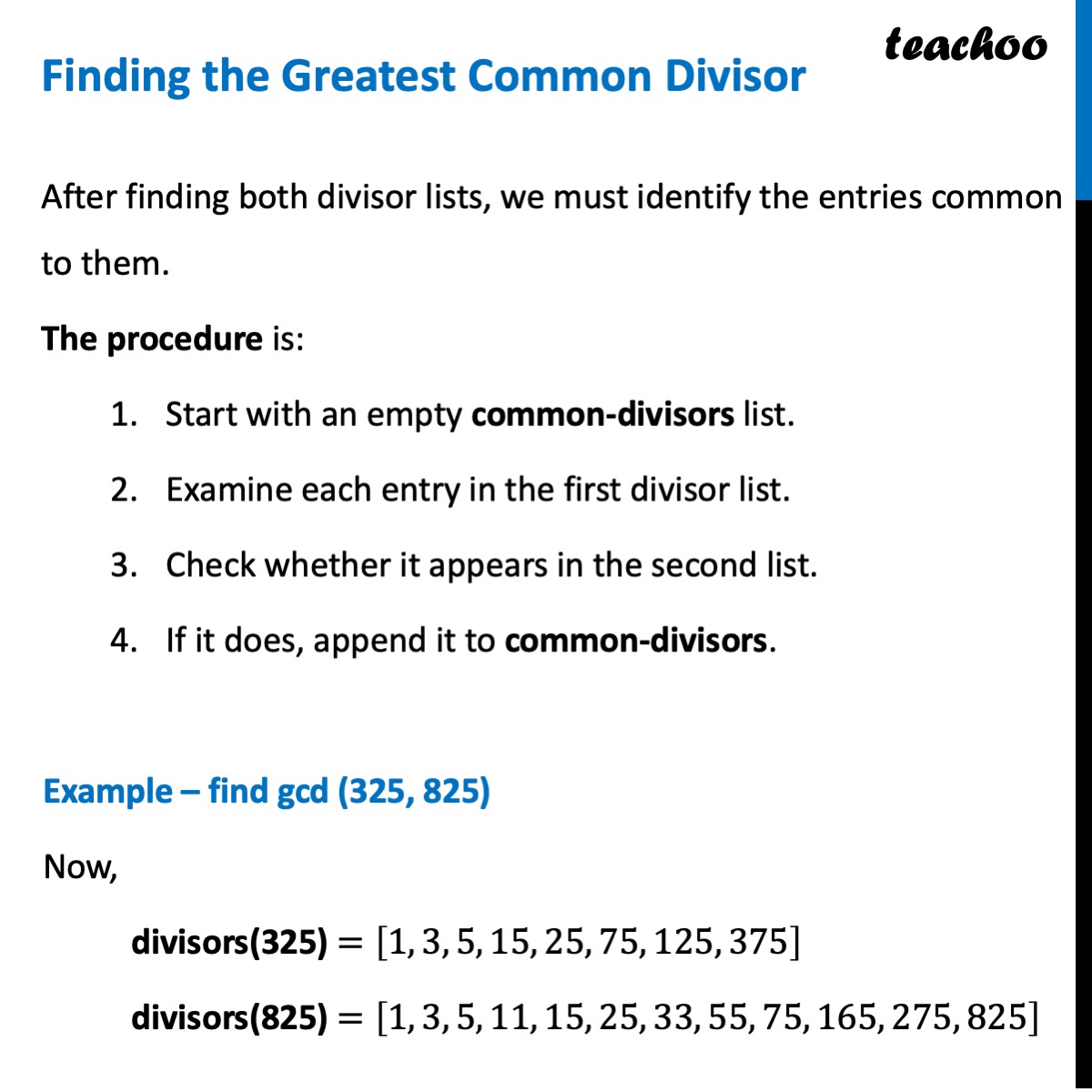
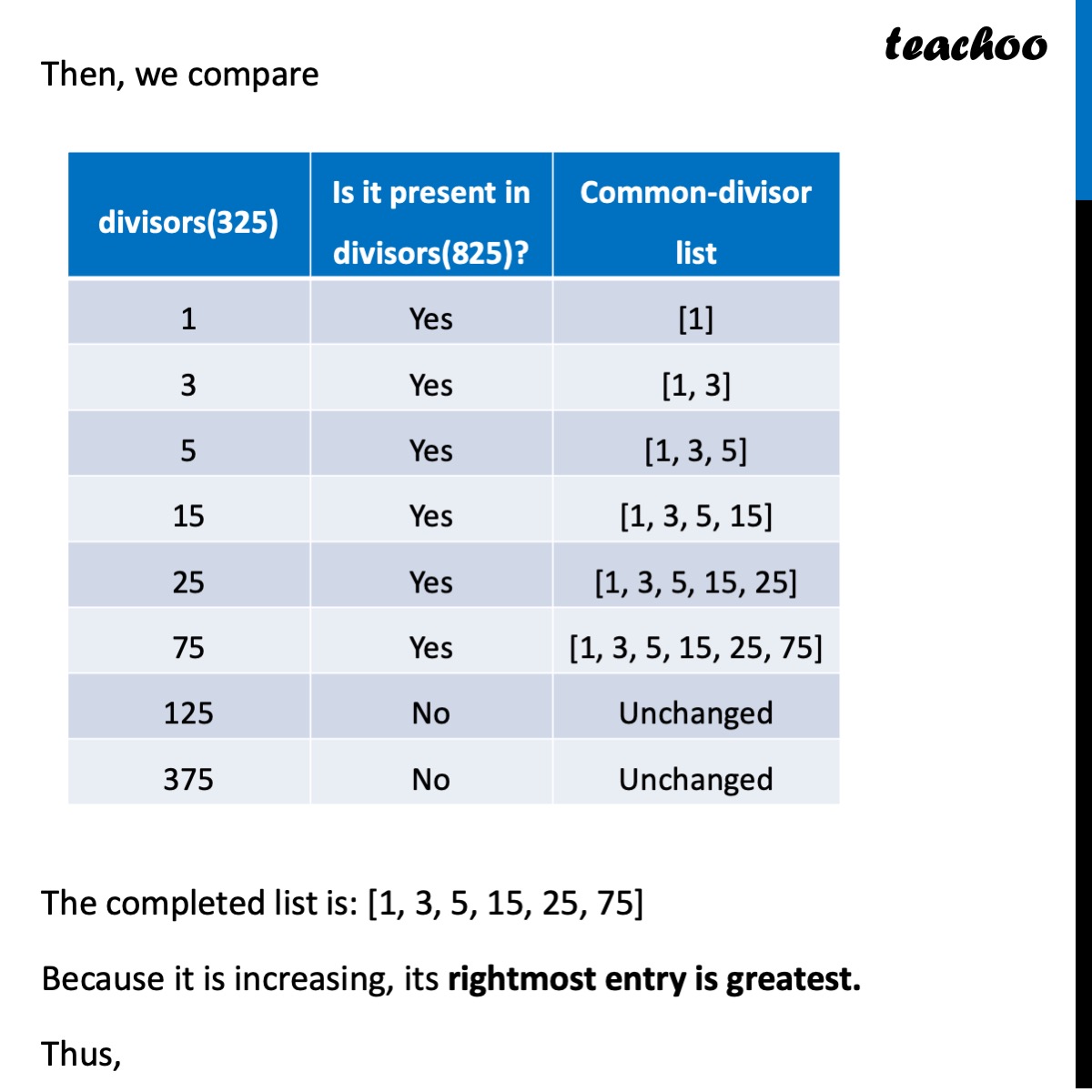
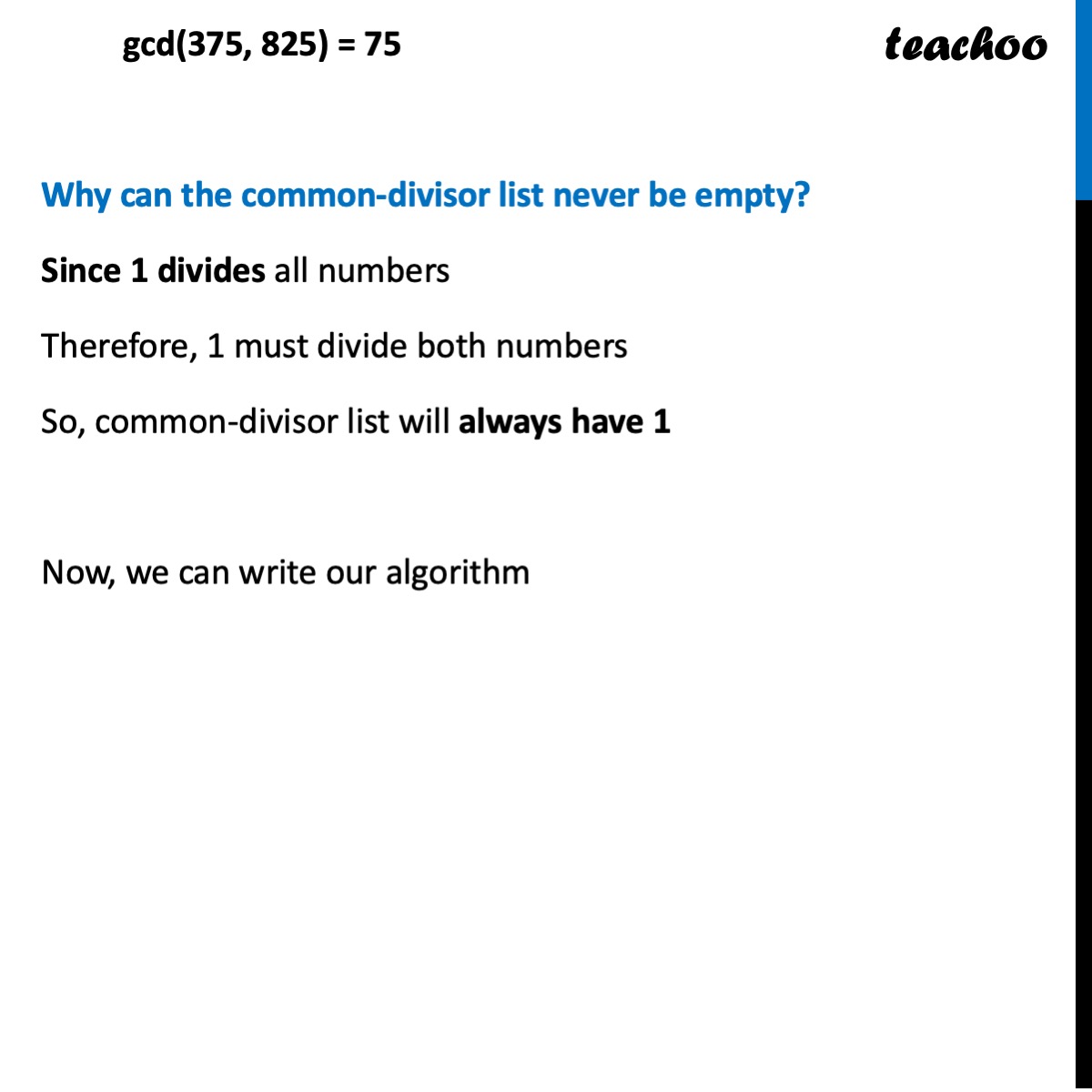
Finding the Greatest Common Divisor After finding both divisor lists, we must identify the entries common to them. The procedure is: Start with an empty common-divisors list. Examine each entry in the first divisor list. Check whether it appears in the second list. If it does, append it to common-divisors. Example – find gcd (325, 825) Now, divisors(325) =[1, 3, 5, 15, 25, 75, 125, 375] divisors(825) =[1, 3, 5, 11, 15, 25, 33, 55, 75, 165, 275, 825] Then, we compare The completed list is: [1, 3, 5, 15, 25, 75] Because it is increasing, its rightmost entry is greatest. Thus, gcd(375, 825) = 75 divisors(325) | Is it present in divisors(825)? | Common-divisor list 1 | Yes | [1] 3 | Yes | [1, 3] 5 | Yes | [1, 3, 5] 15 | Yes | [1, 3, 5, 15] 25 | Yes | [1, 3, 5, 15, 25] 75 | Yes | [1, 3, 5, 15, 25, 75] 125 | No | Unchanged 375 | No | Unchanged gcd(375, 825) = 75 Why can the common-divisor list never be empty? Since 1 divides all numbers Therefore, 1 must divide both numbers So, common-divisor list will always have 1 Now, we can write our algorithm