
 You are here
Addition as an Algorithm
Last updated at October 28, 2026 by Teachoo
Transcript
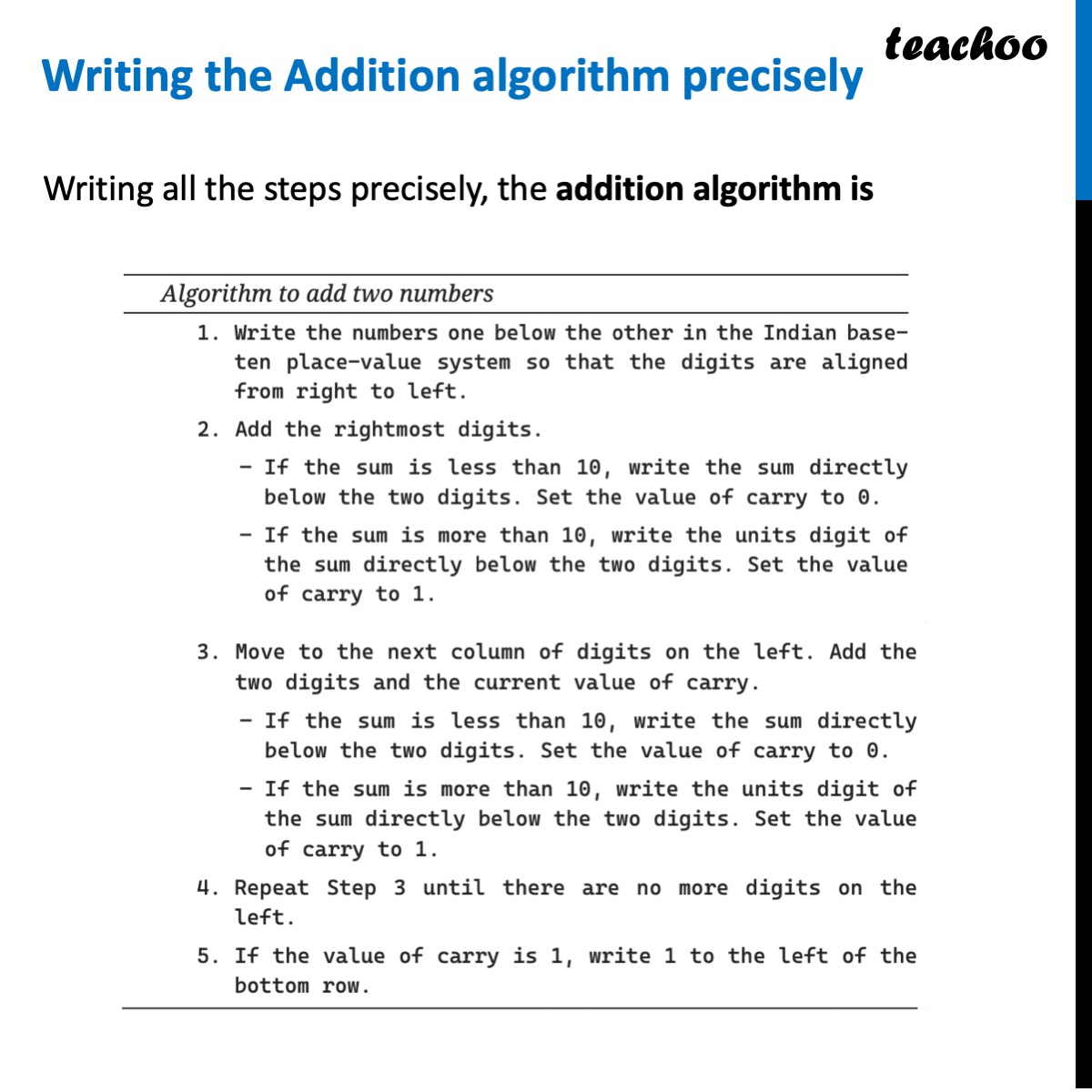
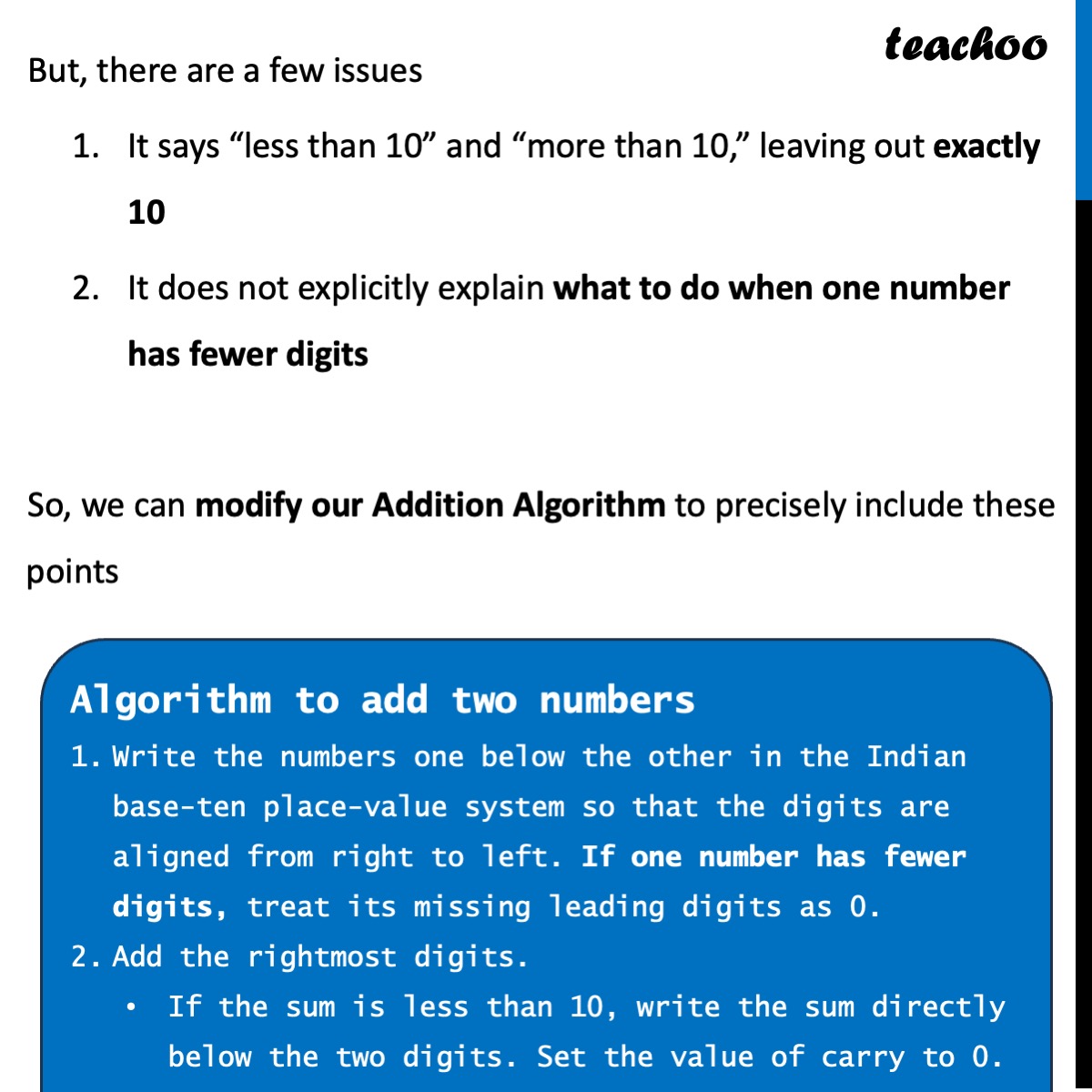
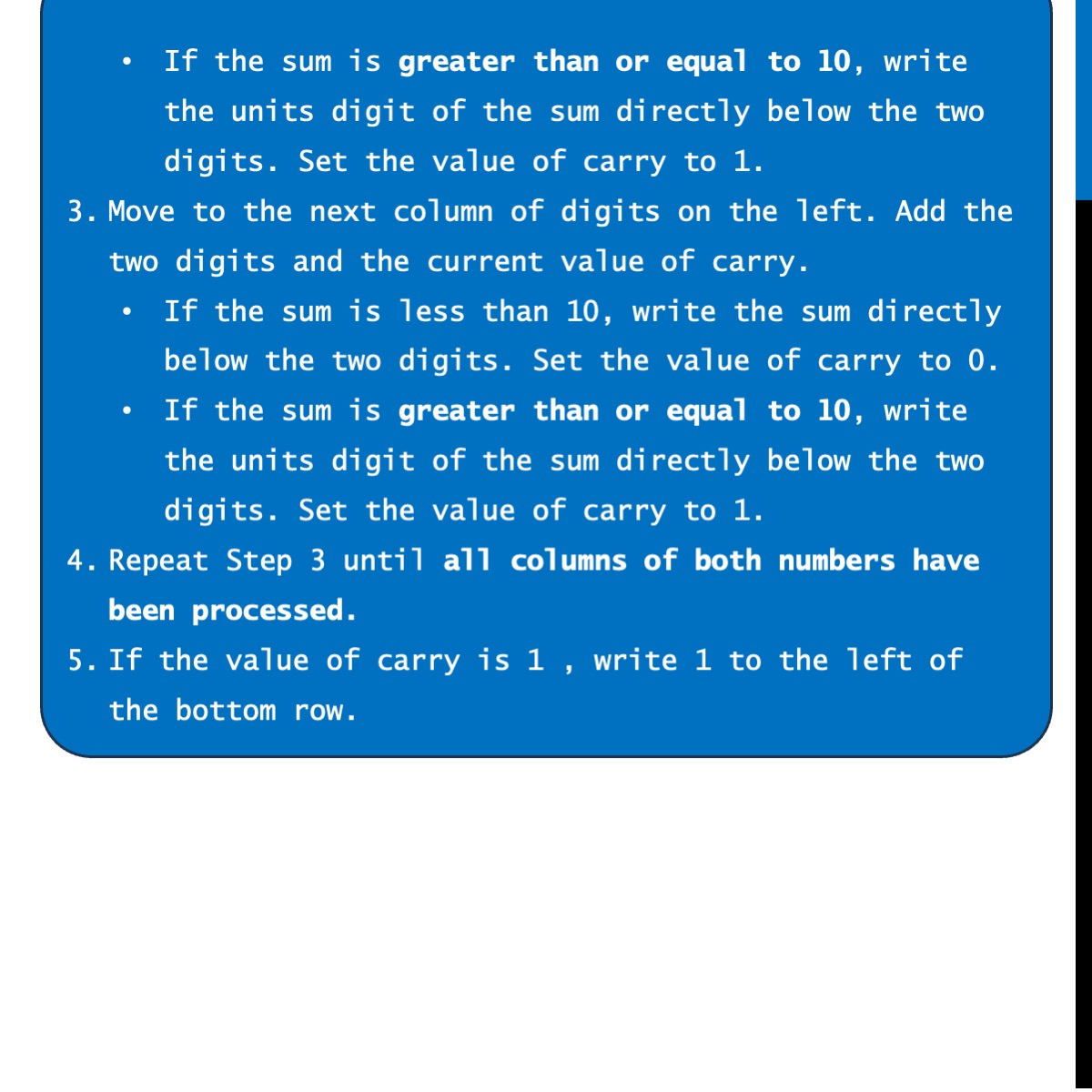
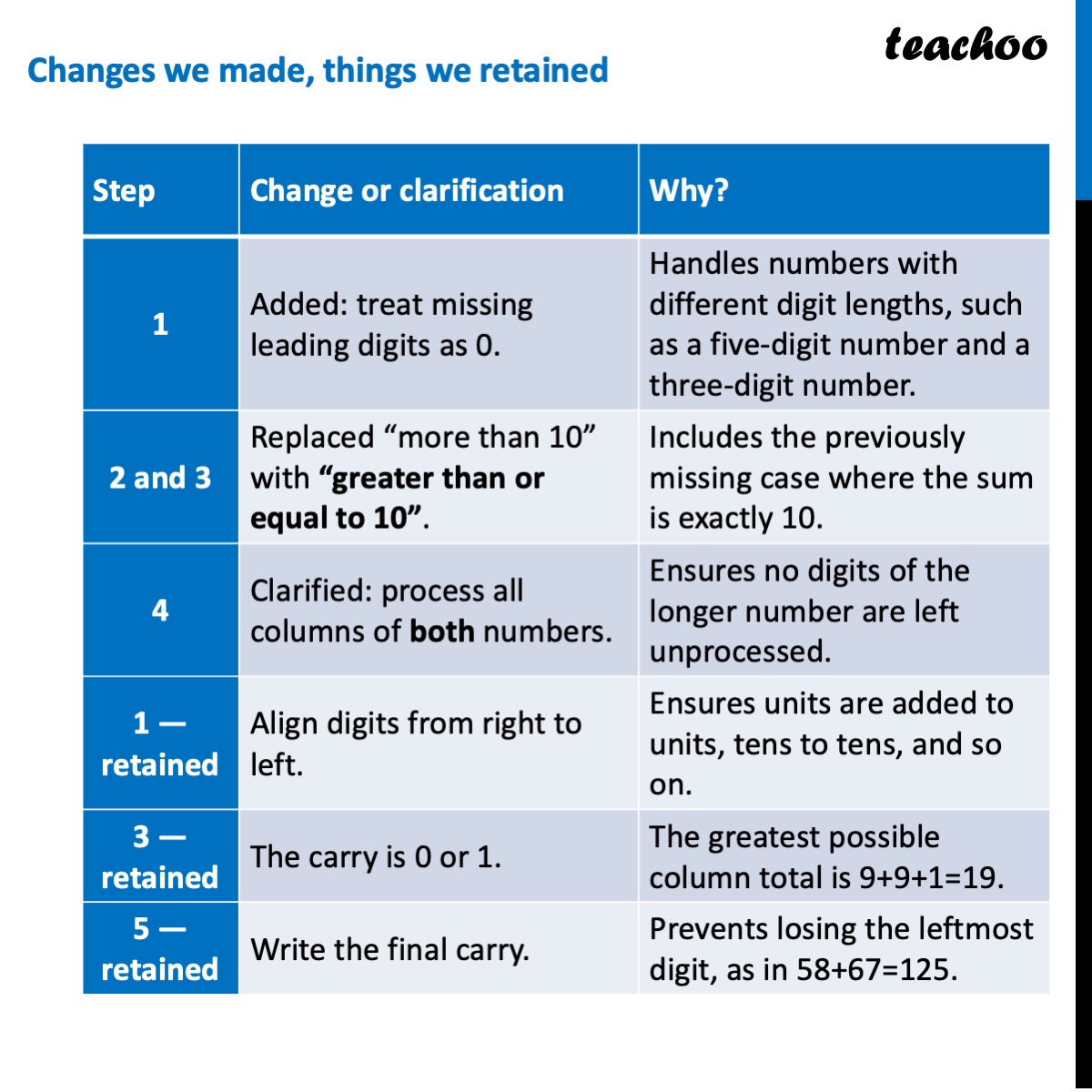
Writing the Addition algorithm precisely Writing all the steps precisely, the addition algorithm is Algorithm to add two numbers 1. Write the numbers one below the other in the Indian base- ten place-value system so that the digits are aligned from right to left. . Add the rightmost digits. -— If the sum is less than 10, write the sum directly below the two digits. Set the value of carry to 0. — If the sum is more than 10, write the units digit of the sum directly below the two digits. Set the value of carry to 1. . Move to the next column of digits on the left. Add the two digits and the current value of carry. . Repeat Step 3 until there are no more digits on the left. . If the value of carry is 1, write 1 to the left of the bottom row. But, there are a few issues It says “less than 10” and “more than 10,” leaving out exactly 10 It does not explicitly explain what to do when one number has fewer digits So, we can modify our Addition Algorithm to precisely include these points Algorithm to add two numbers Write the numbers one below the other in the Indian base-ten place-value system so that the digits are aligned from right to left. If one number has fewer digits, treat its missing leading digits as 0. Add the rightmost digits. If the sum is less than 10, write the sum directly below the two digits. Set the value of carry to 0. If the sum is greater than or equal to 10, write the units digit of the sum directly below the two digits. Set the value of carry to 1. Move to the next column of digits on the left. Add the two digits and the current value of carry. If the sum is less than 10, write the sum directly below the two digits. Set the value of carry to 0. If the sum is greater than or equal to 10, write the units digit of the sum directly below the two digits. Set the value of carry to 1. Repeat Step 3 until all columns of both numbers have been processed. If the value of carry is 1 , write 1 to the left of the bottom row. If the sum is greater than or equal to 10, write the units digit of the sum directly below the two digits. Set the value of carry to 1. Move to the next column of digits on the left. Add the two digits and the current value of carry. If the sum is less than 10, write the sum directly below the two digits. Set the value of carry to 0. If the sum is greater than or equal to 10, write the units digit of the sum directly below the two digits. Set the value of carry to 1. Repeat Step 3 until all columns of both numbers have been processed. If the value of carry is 1 , write 1 to the left of the bottom row. Changes we made, things we retained Step | Change or clarification | Why? 1 | Added: treat missing leading digits as 0. | Handles numbers with different digit lengths, such as a five-digit number and a three-digit number. 2 and 3 | Replaced “more than 10” with “greater than or equal to 10”. | Includes the previously missing case where the sum is exactly 10. 4 | Clarified: process all columns of both numbers. | Ensures no digits of the longer number are left unprocessed. 1 — retained | Align digits from right to left. | Ensures units are added to units, tens to tens, and so on. 3 — retained | The carry is 0 or 1. | The greatest possible column total is 9+9+1=19. 5 — retained | Write the final carry. | Prevents losing the leftmost digit, as in 58+67=125.
