
 You are here
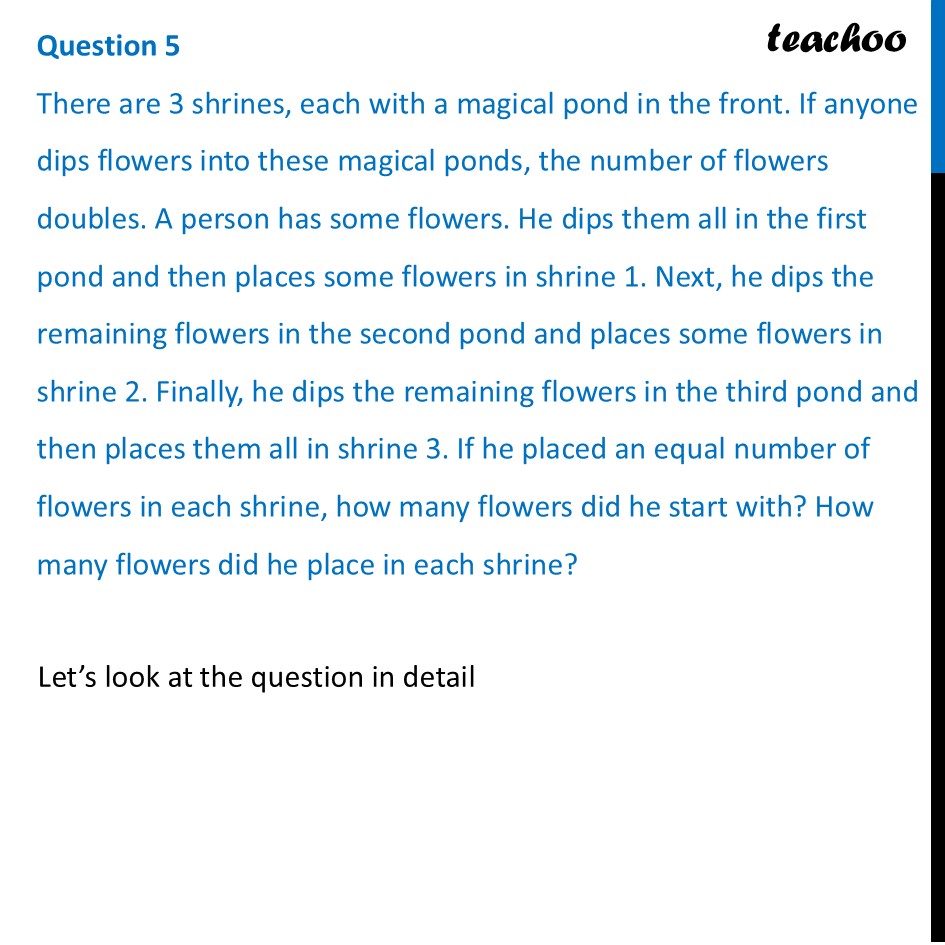
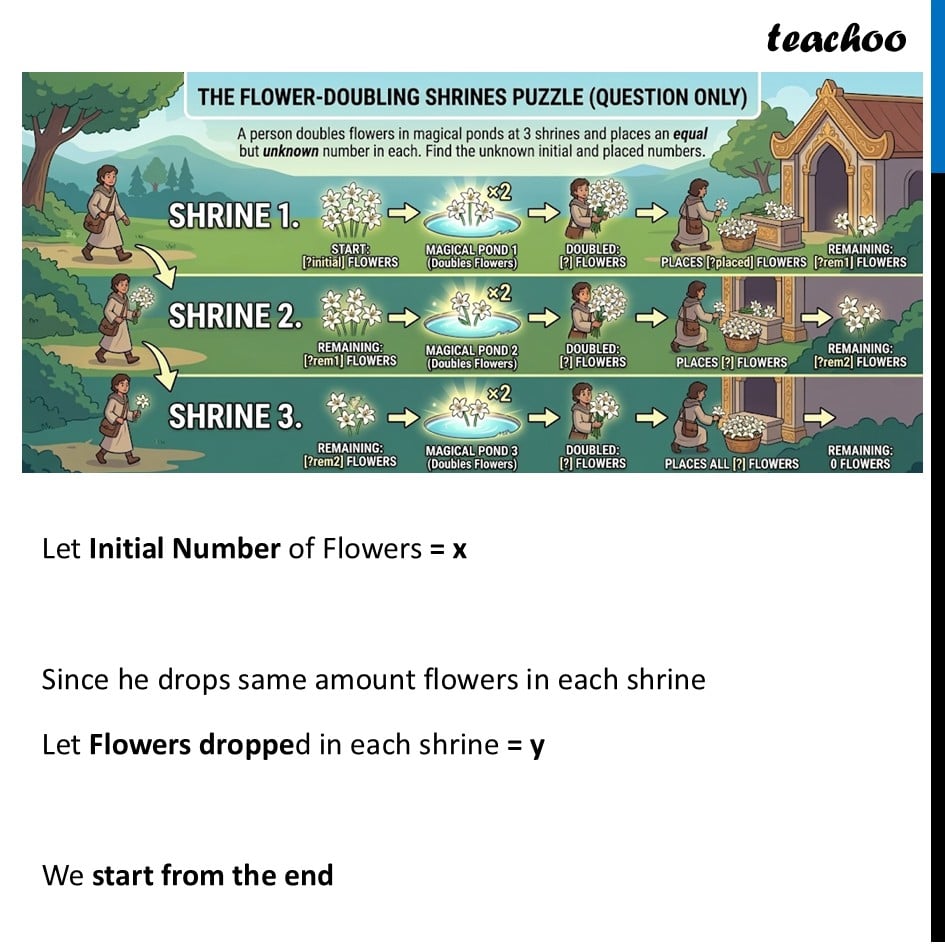
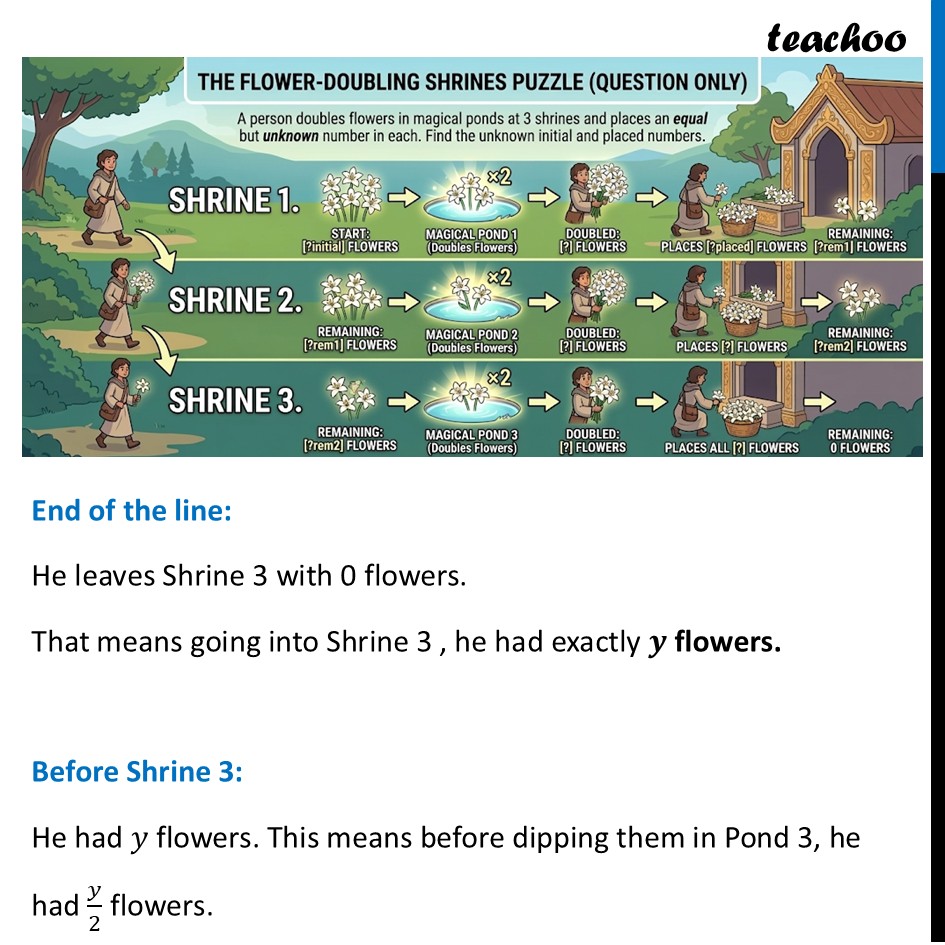
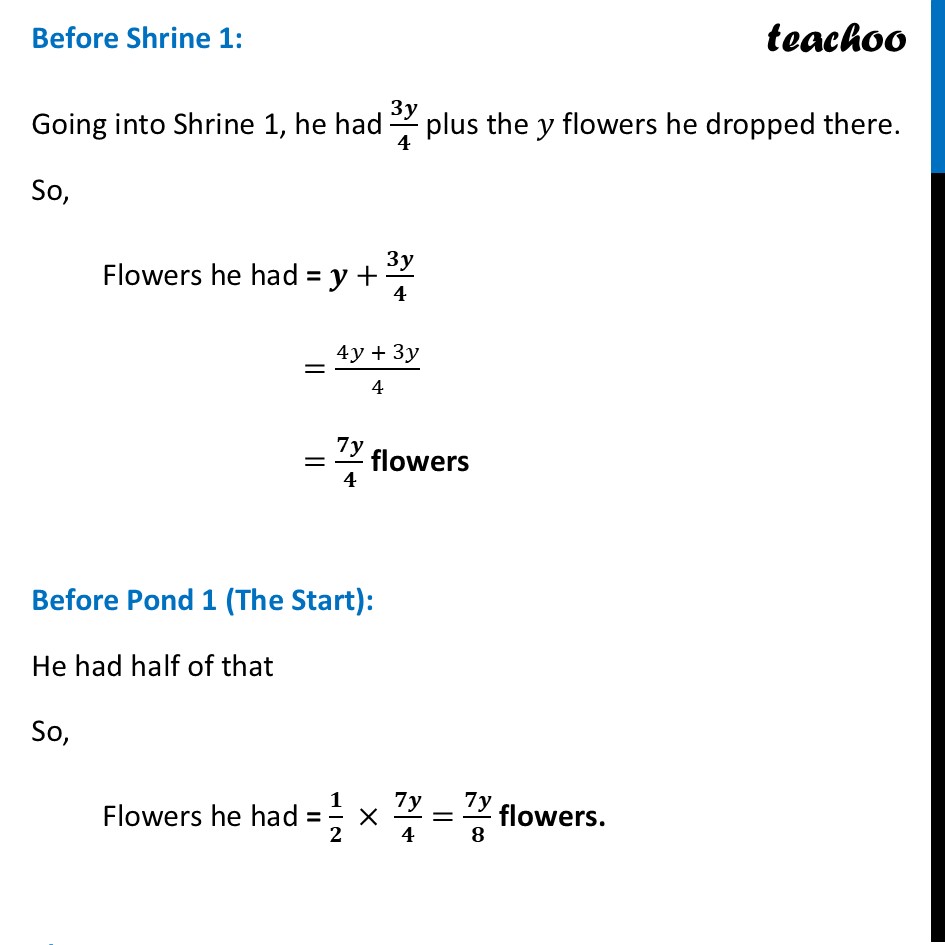
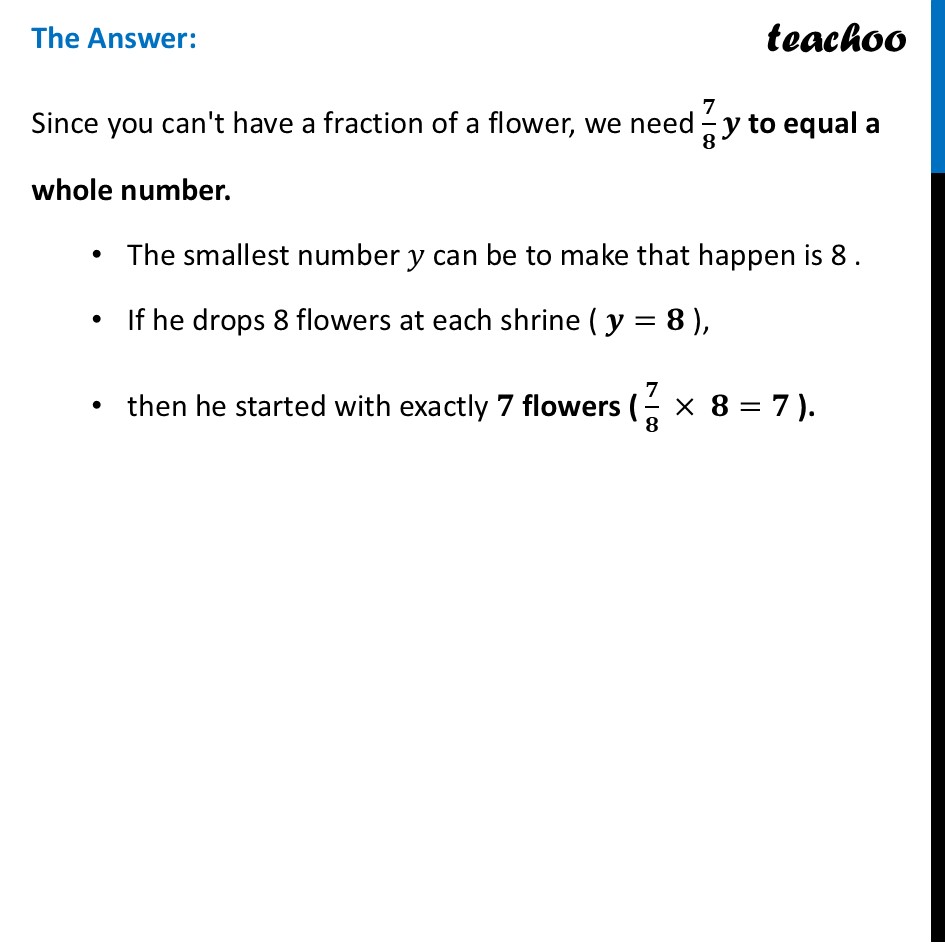
Figure it out - Page 145-147
Last updated at March 6, 2026 by Teachoo
Transcript
Question 5 There are 3 shrines, each with a magical pond in the front. If anyone dips flowers into these magical ponds, the number of flowers doubles. A person has some flowers. He dips them all in the first pond and then places some flowers in shrine 1. Next, he dips the remaining flowers in the second pond and places some flowers in shrine 2. Finally, he dips the remaining flowers in the third pond and then places them all in shrine 3. If he placed an equal number of flowers in each shrine, how many flowers did he start with? How many flowers did he place in each shrine?Let’s look at the question in detail Let Initial Number of Flowers = x Since he drops same amount flowers in each shrine Let Flowers dropped in each shrine = y We start from the end End of the line: He leaves Shrine 3 with 0 flowers. That means going into Shrine 3 , he had exactly 𝒚 flowers. Before Shrine 3: He had 𝑦 flowers. This means before dipping them in Pond 3, he had 𝑦/2 flowers. Before Shrine 2: Going into Shrine 2, he had the 𝑦/2 flowers plus the 𝑦 flowers he dropped there. So, Flowers he had = 𝒚+𝒚/𝟐 = (2𝑦 + 𝑦)/2 =𝟑𝒚/𝟐 flowers. Before Pond 2: He had half of that So, Flowers he had = 𝟏/𝟐 × 𝟑𝒚/𝟐=𝟑𝒚/𝟒 flowers. Before Shrine 1: Going into Shrine 1, he had 𝟑𝒚/𝟒 plus the 𝑦 flowers he dropped there. So, 1.75𝑦 flowers. So, Flowers he had = 𝒚+𝟑𝒚/𝟒 =(4𝑦 + 3𝑦)/4 =𝟕𝒚/𝟒 flowers Before Pond 1 (The Start): He had half of that So, Flowers he had = 𝟏/𝟐 × 𝟕𝒚/𝟒=𝟕𝒚/𝟖 flowers. The Answer: Since you can't have a fraction of a flower, we need 7/8 𝑦 to equal a whole number. The smallest number 𝑦 can be to make that happen is 8 . If he drops 8 flowers at each shrine ( 𝒚=𝟖 ), then he started with exactly 𝟕 flowers ( 𝟕/𝟖 × 𝟖=𝟕 ).
