
 You are here
Property Involving both the HCF and the LCM
Property Involving both the HCF and the LCM
Last updated at January 23, 2026 by Teachoo
Transcript
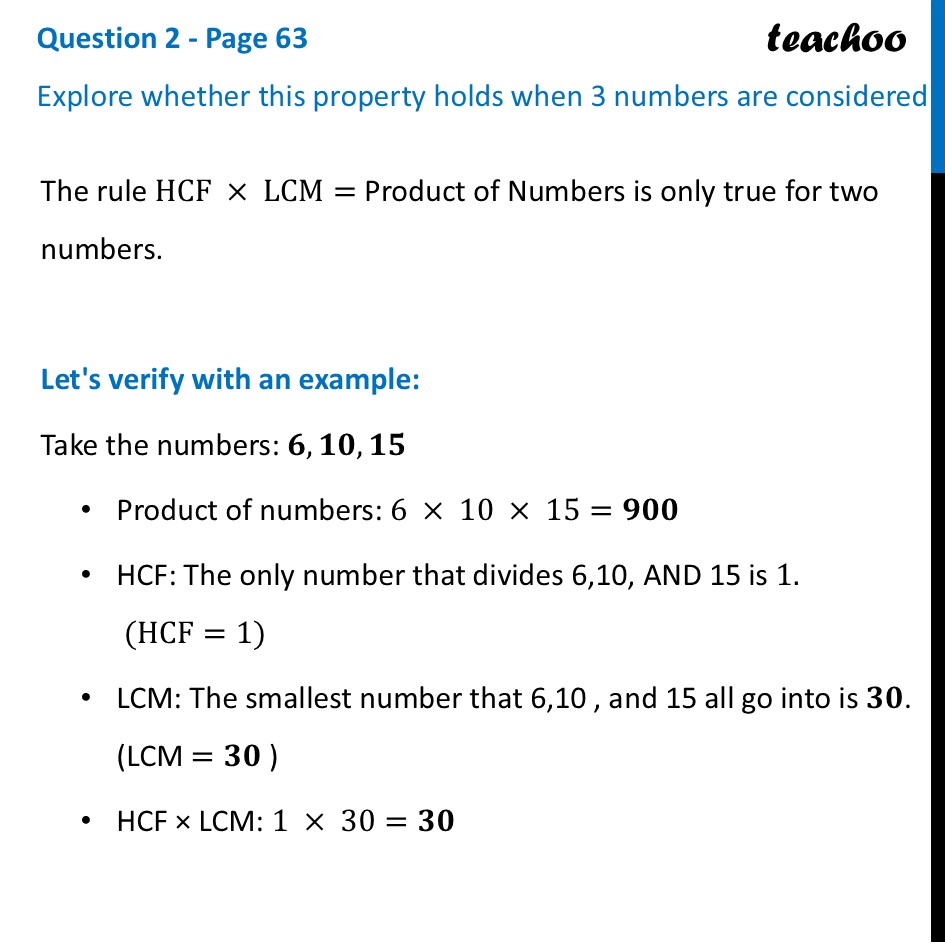
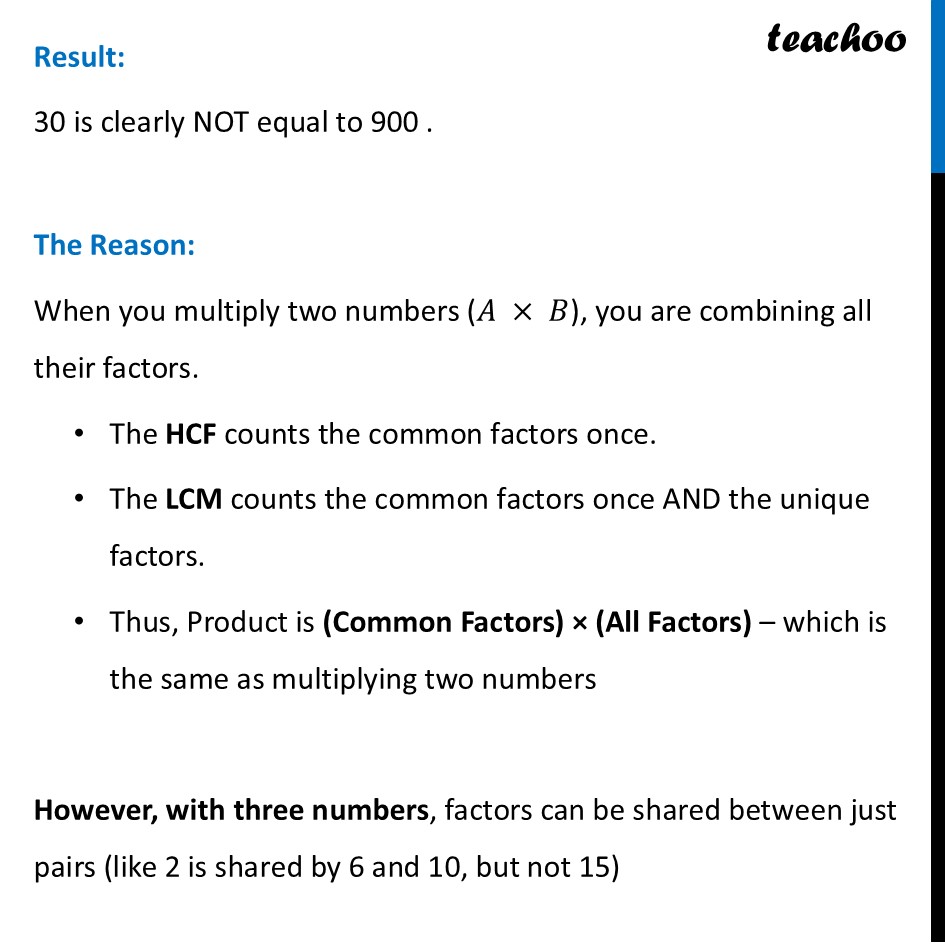
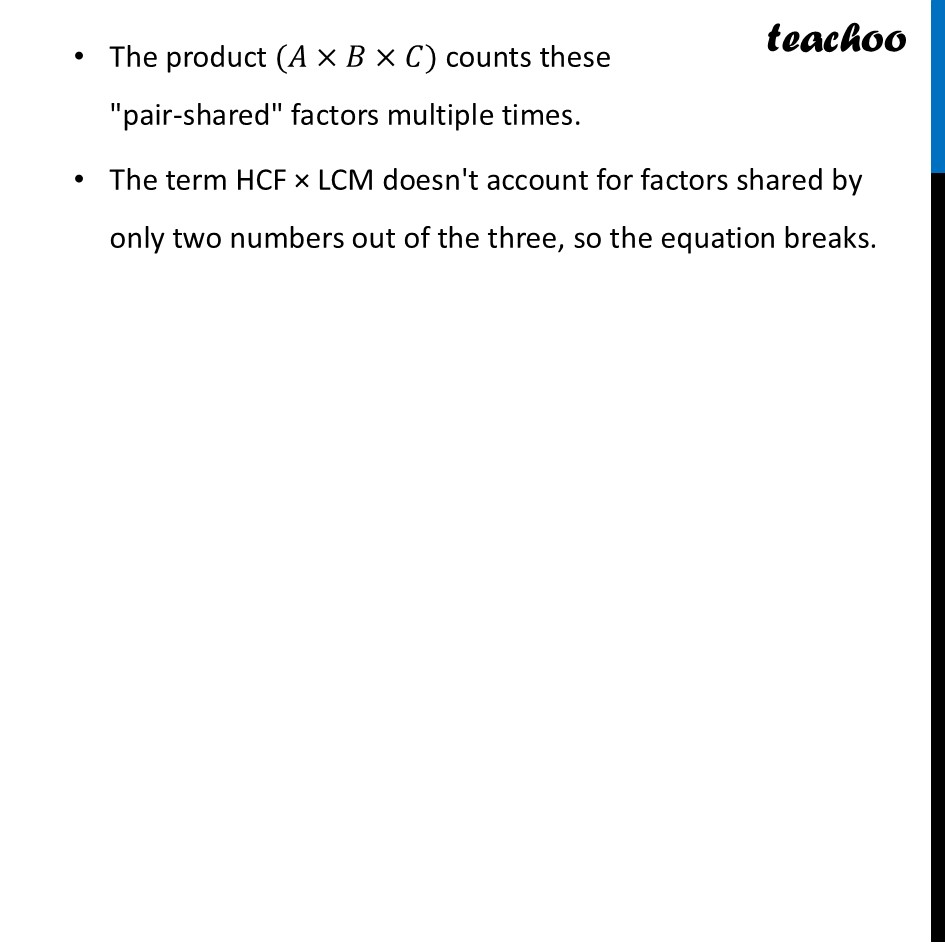
Question 2 - Page 63 Explore whether this property holds when 3 numbers are considered The rule HCF × LCM= Product of Numbers is only true for two numbers. Let's verify with an example: Take the numbers: 𝟔,𝟏𝟎,𝟏𝟓 Product of numbers: 6 × 10 × 15=𝟗𝟎𝟎 HCF: The only number that divides 6,10, AND 15 is 1. (HCF=1) LCM: The smallest number that 6,10 , and 15 all go into is 𝟑𝟎. (LCM =𝟑𝟎 ) HCF × LCM: 1 × 30=𝟑𝟎 Result: 30 is clearly NOT equal to 900 . The Reason: When you multiply two numbers (𝐴 × 𝐵), you are combining all their factors. The HCF counts the common factors once. The LCM counts the common factors once AND the unique factors. Thus, Product is (Common Factors) × (All Factors) – which is the same as multiplying two numbers However, with three numbers, factors can be shared between just pairs (like 2 is shared by 6 and 10, but not 15) The product (𝐴×𝐵×𝐶) counts these "pair-shared" factors multiple times. The term HCF × LCM doesn't account for factors shared by only two numbers out of the three, so the equation breaks.
