
 You are here
Trairasika—The Rule of Three
Last updated at January 15, 2026 by Teachoo
Transcript
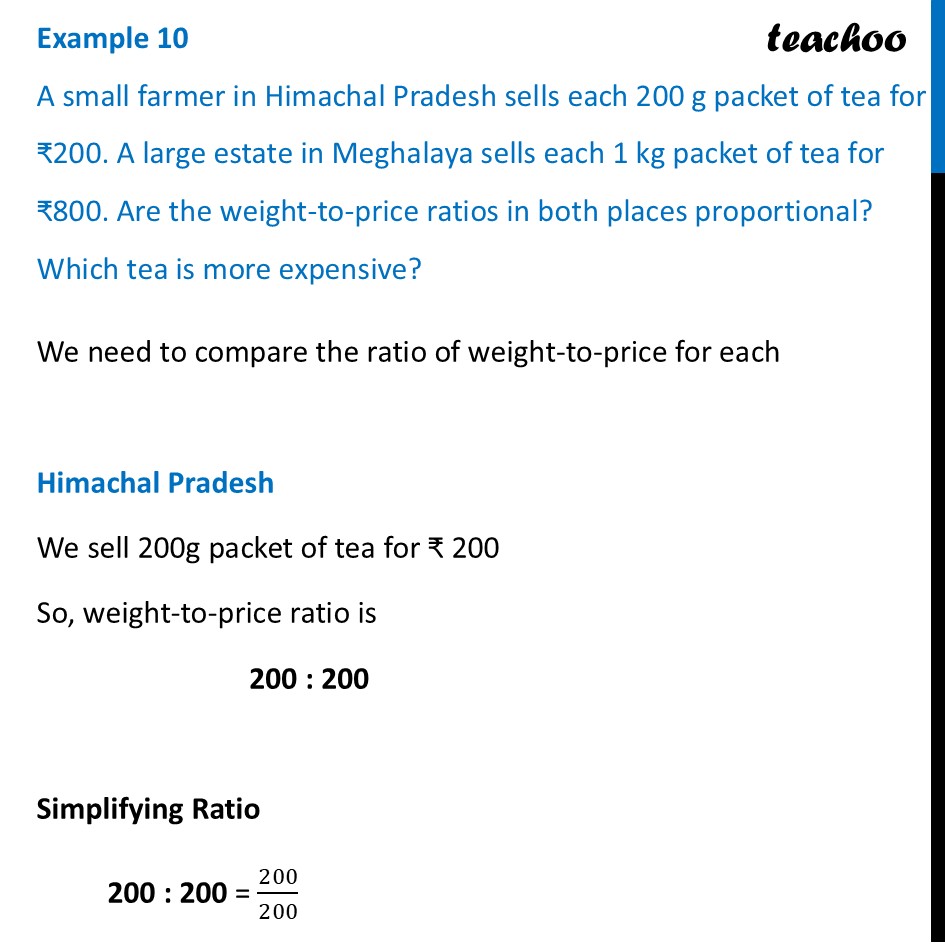
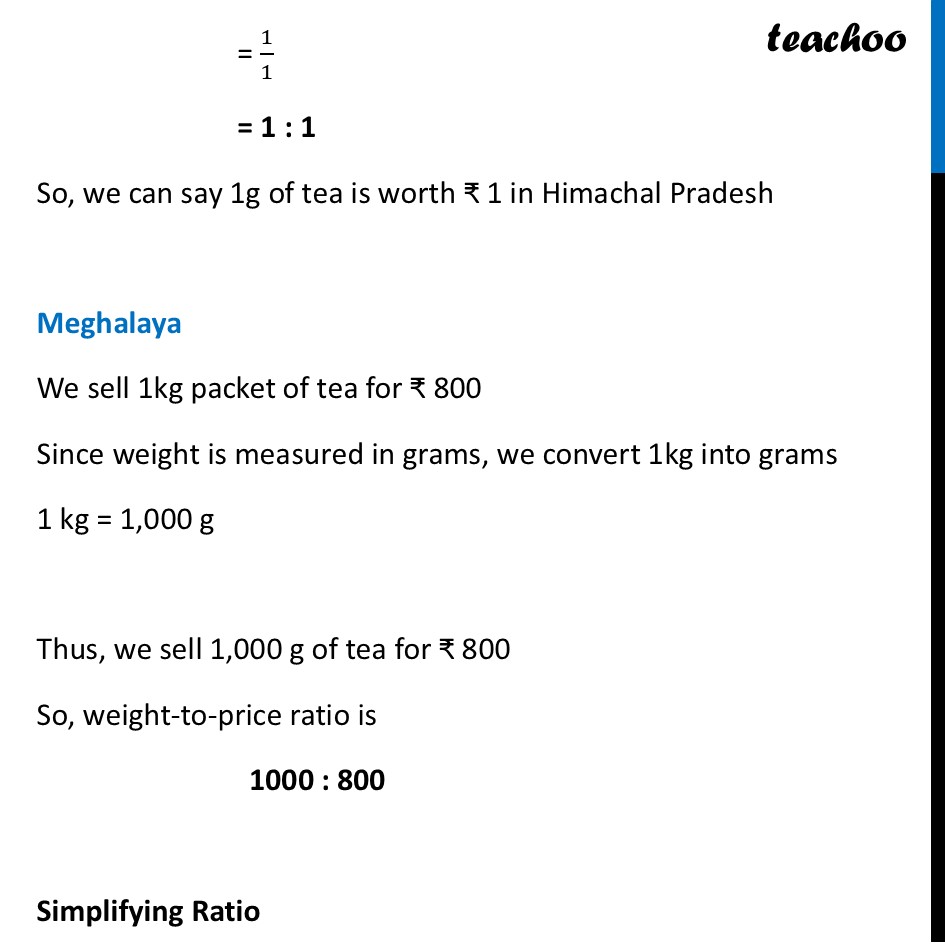
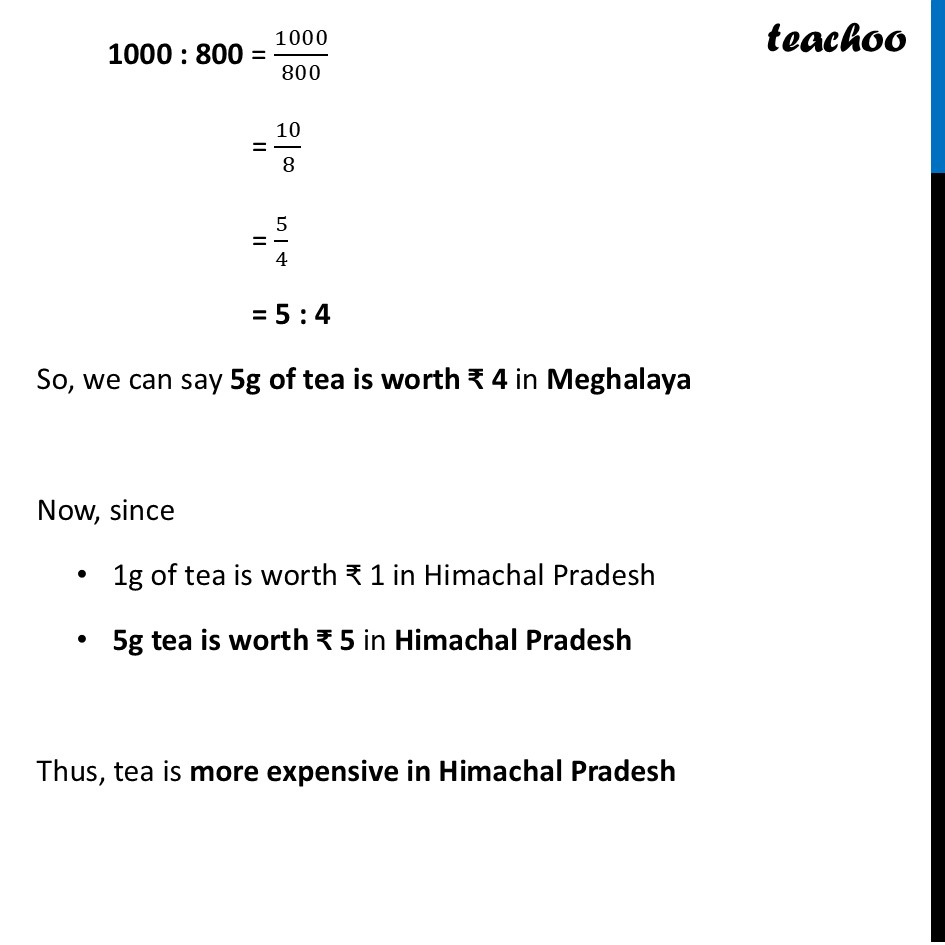
Example 10 A small farmer in Himachal Pradesh sells each 200 g packet of tea for ₹200. A large estate in Meghalaya sells each 1 kg packet of tea for ₹800. Are the weight-to-price ratios in both places proportional? Which tea is more expensive?We need to compare the ratio of weight-to-price for each Himachal Pradesh We sell 200g packet of tea for ₹ 200 So, weight-to-price ratio is 200 : 200 Simplifying Ratio 200 : 200 = 200/200 = 1/1 = 1 : 1 So, we can say 1g of tea is worth ₹ 1 in Himachal Pradesh Meghalaya We sell 1kg packet of tea for ₹ 800 Since weight is measured in grams, we convert 1kg into grams 1 kg = 1,000 g Thus, we sell 1,000 g of tea for ₹ 800 So, weight-to-price ratio is 1000 : 800 Simplifying Ratio 1000 : 800 = 1000/800 = 10/8 = 5/4 = 5 : 4 So, we can say 5g of tea is worth ₹ 4 in Meghalaya Now, since 1g of tea is worth ₹ 1 in Himachal Pradesh 5g tea is worth ₹ 5 in Himachal Pradesh Thus, tea is more expensive in Himachal Pradesh 1000 : 800 = 1000/800 = 10/8 = 5/4 = 5 : 4 So, we can say 5g of tea is worth ₹ 4 in Meghalaya Now, since 1g of tea is worth ₹ 1 in Himachal Pradesh 5g tea is worth ₹ 5 in Himachal Pradesh Thus, tea is more expensive in Himachal Pradesh
