
 You are here
Last updated at April 6, 2026 by Teachoo
Transcript
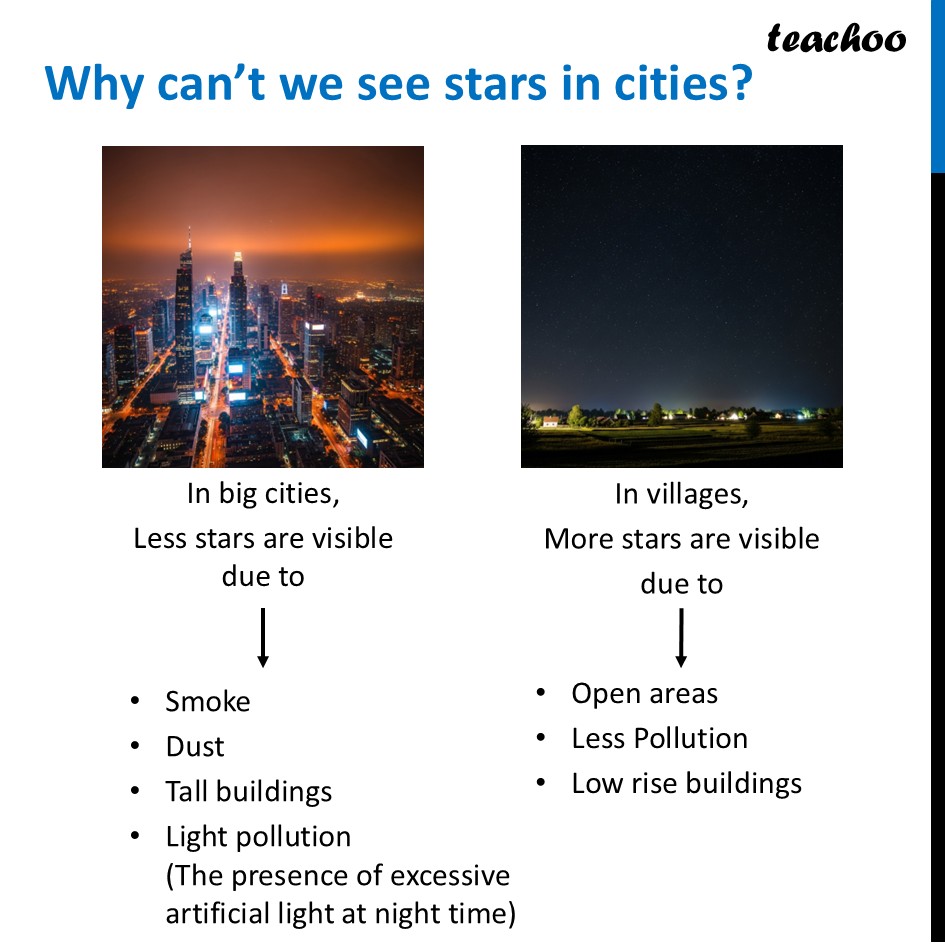
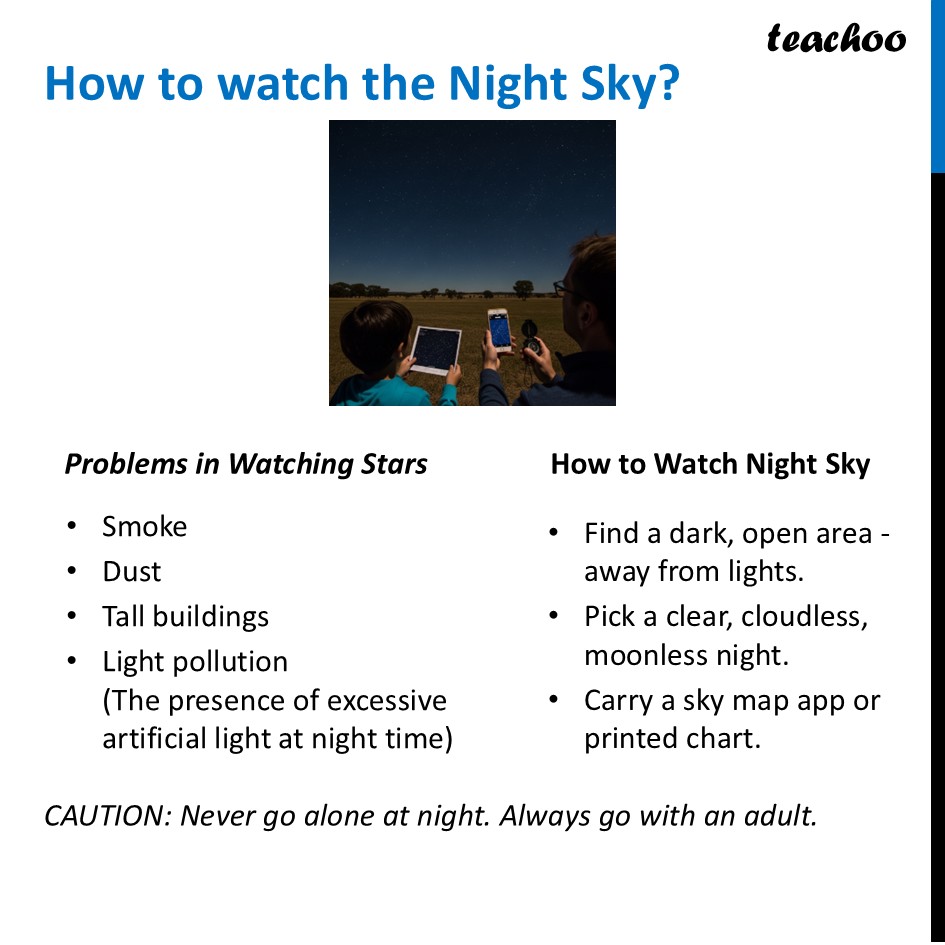
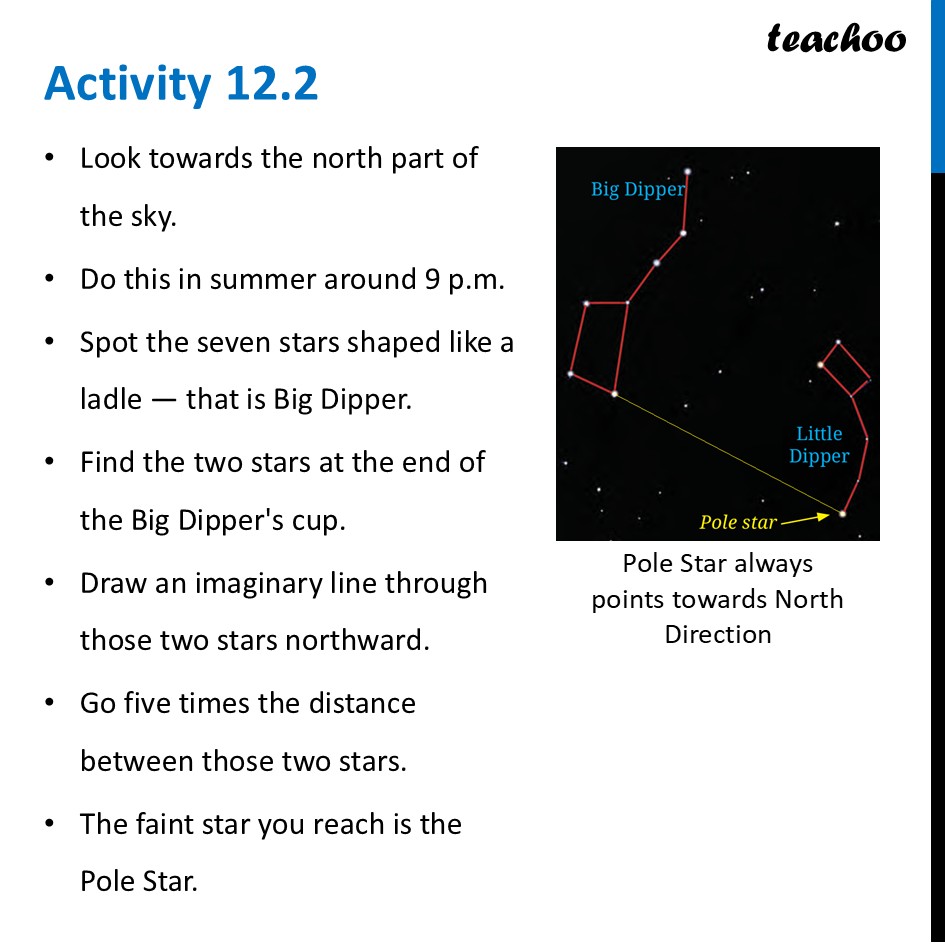
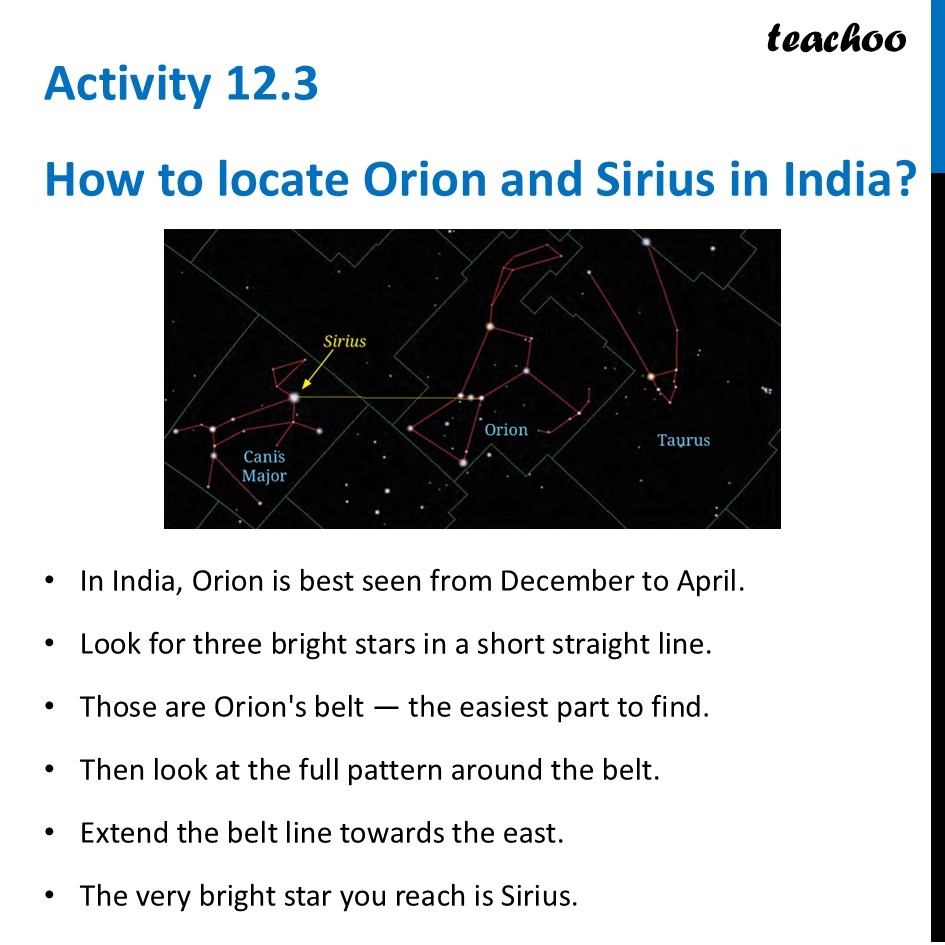
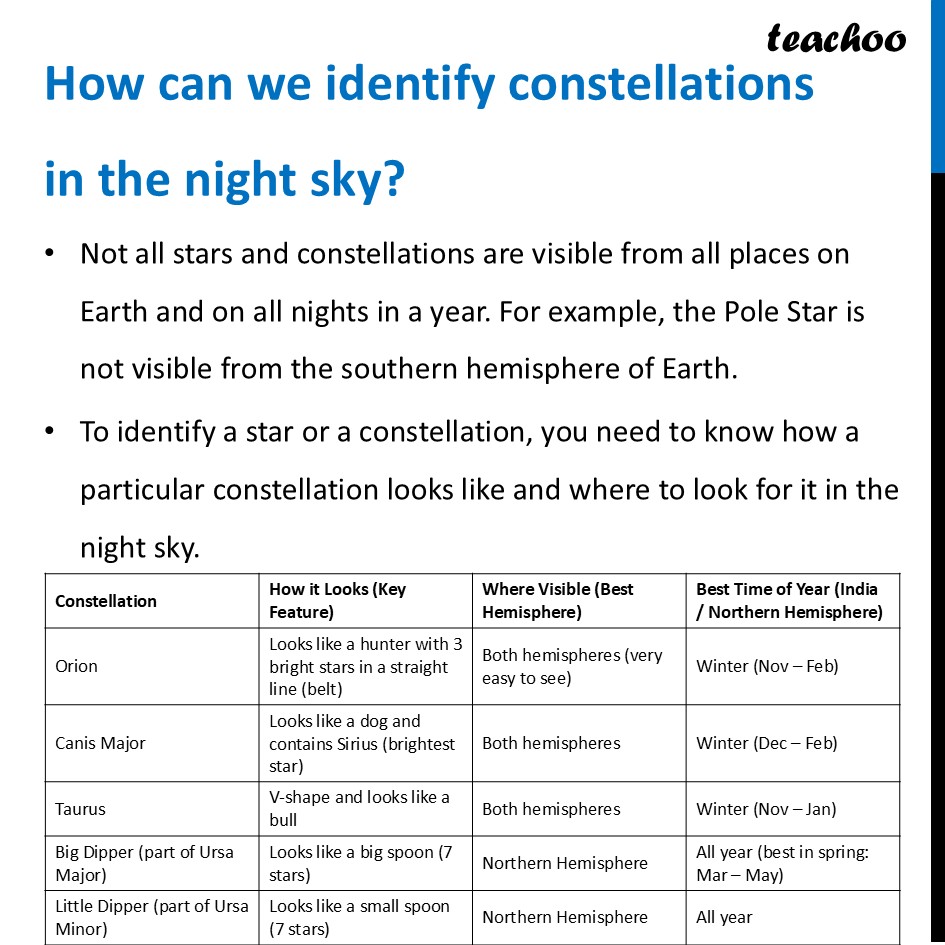
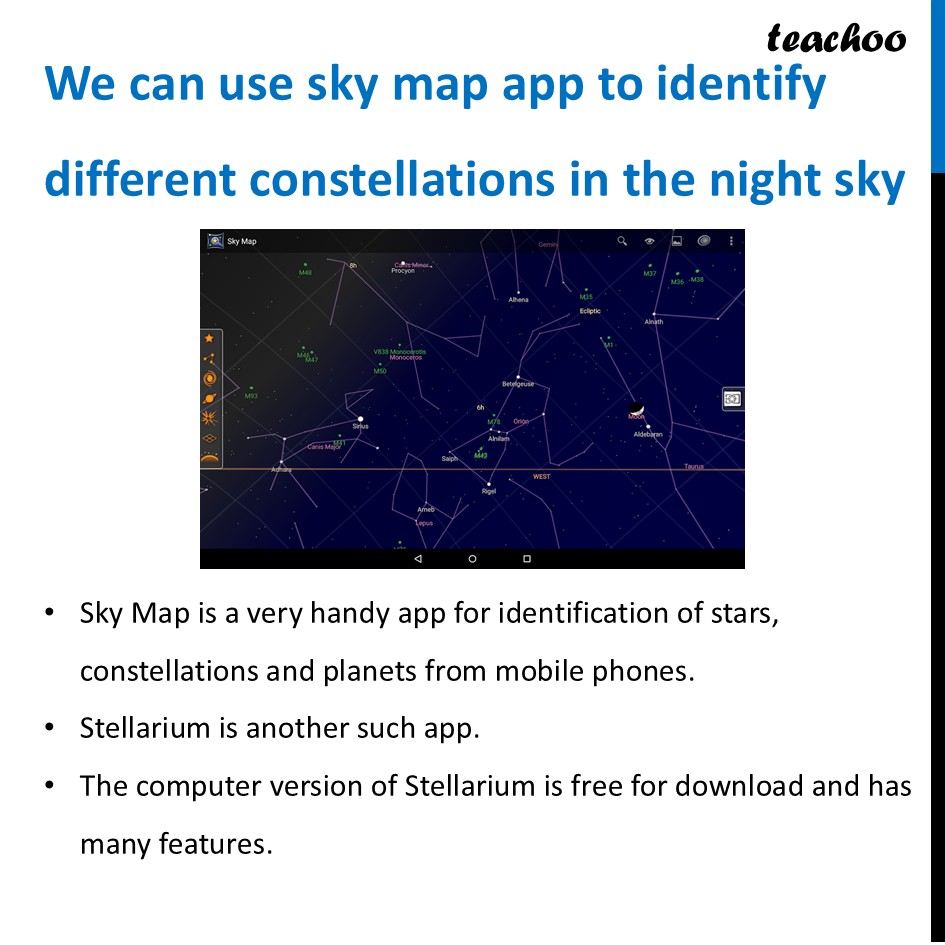
Why can’t we see stars in cities?In big cities, Less stars are visible due to In villages, More stars are visible due to Smoke Dust Tall buildings Light pollution (The presence of excessive artificial light at night time) Open areas Less Pollution Low rise buildings How to watch the Night Sky?Problems in Watching Stars Smoke Dust Tall buildings Light pollution (The presence of excessive artificial light at night time) How to Watch Night Sky Find a dark, open area - away from lights. Pick a clear, cloudless, moonless night. Carry a sky map app or printed chart. CAUTION: Never go alone at night. Always go with an adult. Activity 12.2Look towards the north part of the sky. Do this in summer around 9 p.m. Spot the seven stars shaped like a ladle — that is Big Dipper. Find the two stars at the end of the Big Dipper's cup. Draw an imaginary line through those two stars northward. Go five times the distance between those two stars. The faint star you reach is the Pole Star. Pole Star always points towards North Direction Activity 12.3 How to locate Orion and Sirius in India?In India, Orion is best seen from December to April. Look for three bright stars in a short straight line. Those are Orion's belt — the easiest part to find. Then look at the full pattern around the belt. Extend the belt line towards the east. The very bright star you reach is Sirius. How can we identify constellations in the night sky?Not all stars and constellations are visible from all places on Earth and on all nights in a year. For example, the Pole Star is not visible from the southern hemisphere of Earth. To identify a star or a constellation, you need to know how a particular constellation looks like and where to look for it in the night sky. Constellation How it Looks (Key Feature) Where Visible (Best Hemisphere) Best Time of Year (India / Northern Hemisphere) Orion Looks like a hunter with 3 bright stars in a straight line (belt) Both hemispheres (very easy to see) Winter (Nov - Feb) Canis Major Looks like a dog and contains Sirius (brightest star) Both hemispheres Winter (Dec - Feb) Taurus V-shape and looks like a bull Both hemispheres Winter (Nov - Jan) Big Dipper (part of Ursa Major) Looks like a big spoon (7 stars) Northern Hemisphere All year (best in spring: Mar - May) Little Dipper (part of Ursa Minor) Looks like a small spoon (7 stars) Northern Hemisphere All yearWe can use sky map app to identify different constellations in the night skySky Map is a very handy app for identification of stars, constellations and planets from mobile phones. Stellarium is another such app. The computer version of Stellarium is free for download and has many features.
