
 You are here
![Water Conservation [With Example] - Class 6 Chapter 11 - Curiosity - Concepts](https://cdn.teachoo.com/c7528e51-a883-442c-81d2-82a9186bc00a/slide38.jpg)
Last updated at March 31, 2026 by Teachoo
Transcript
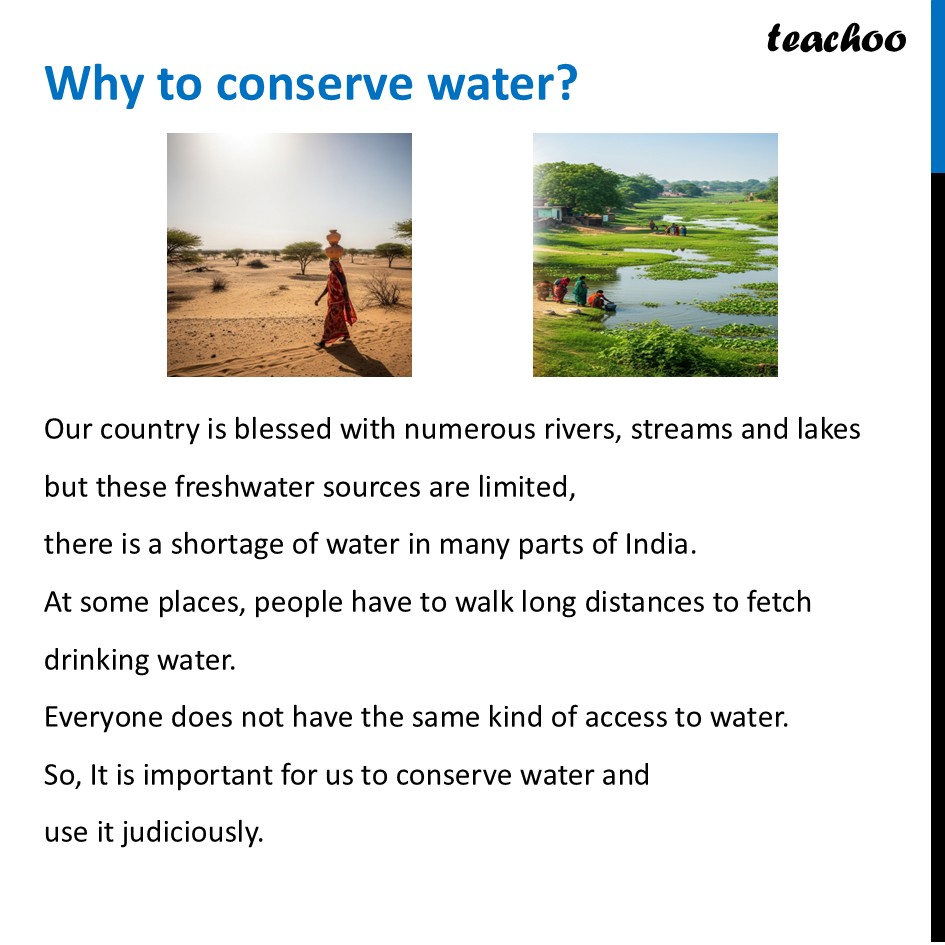
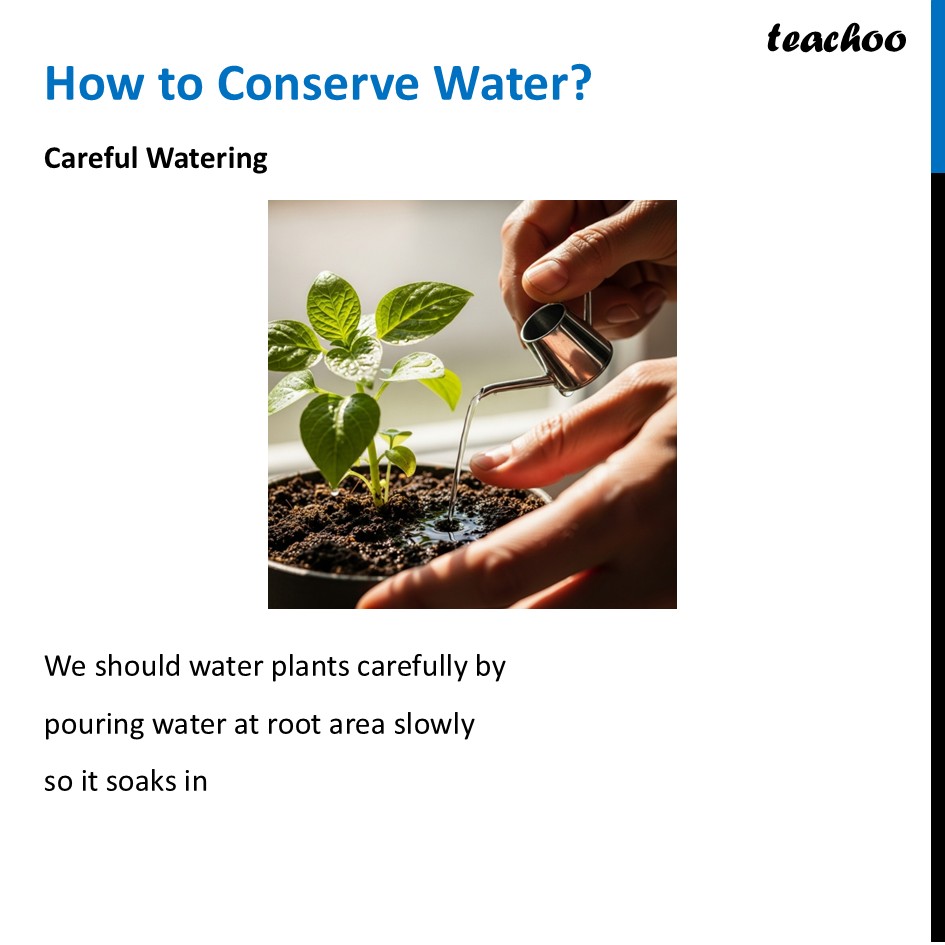
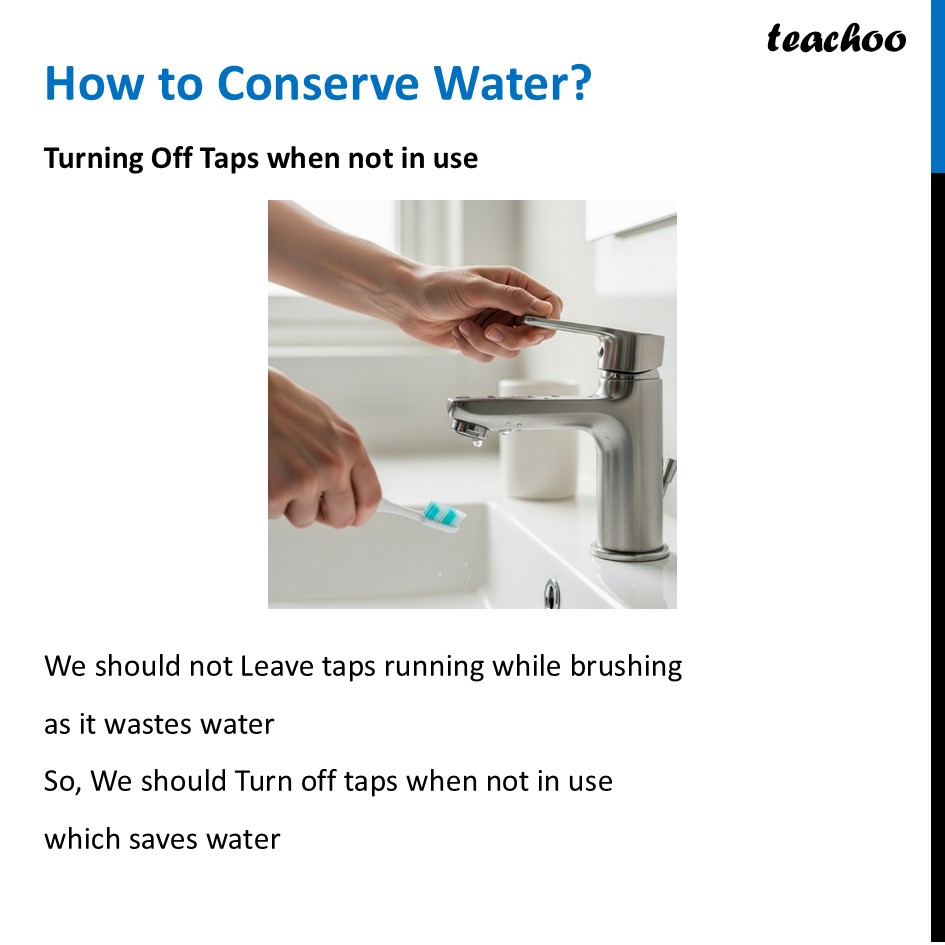
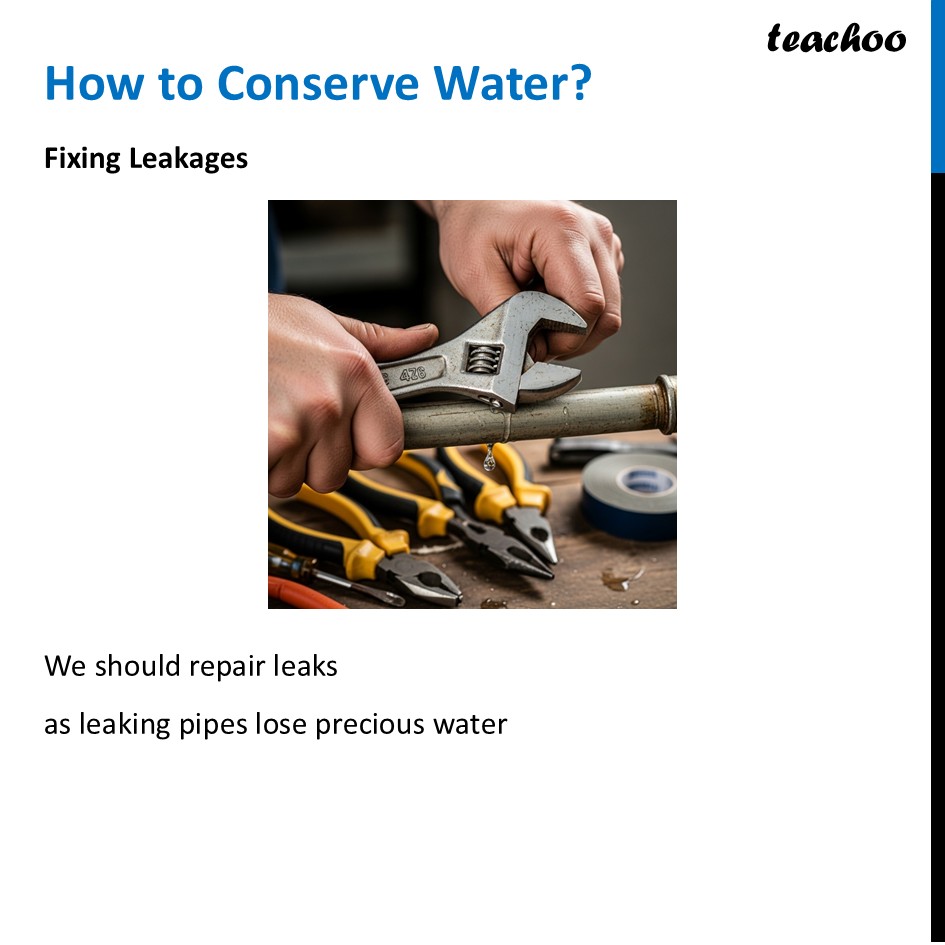
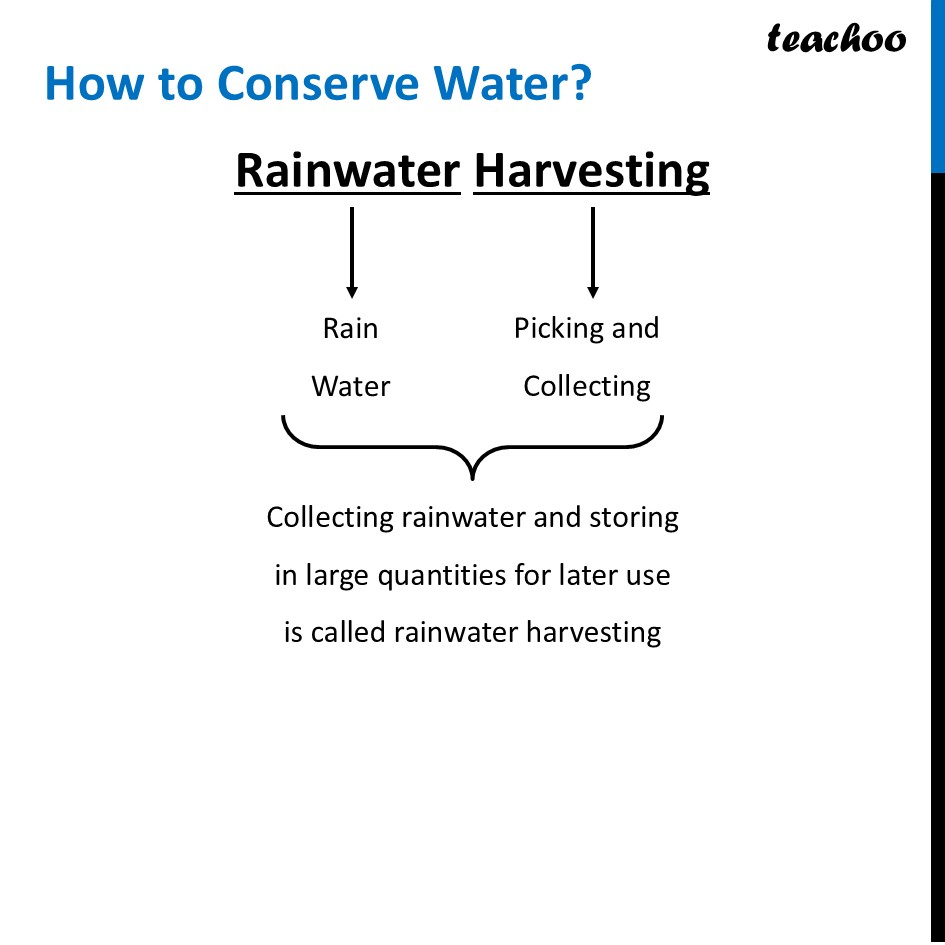
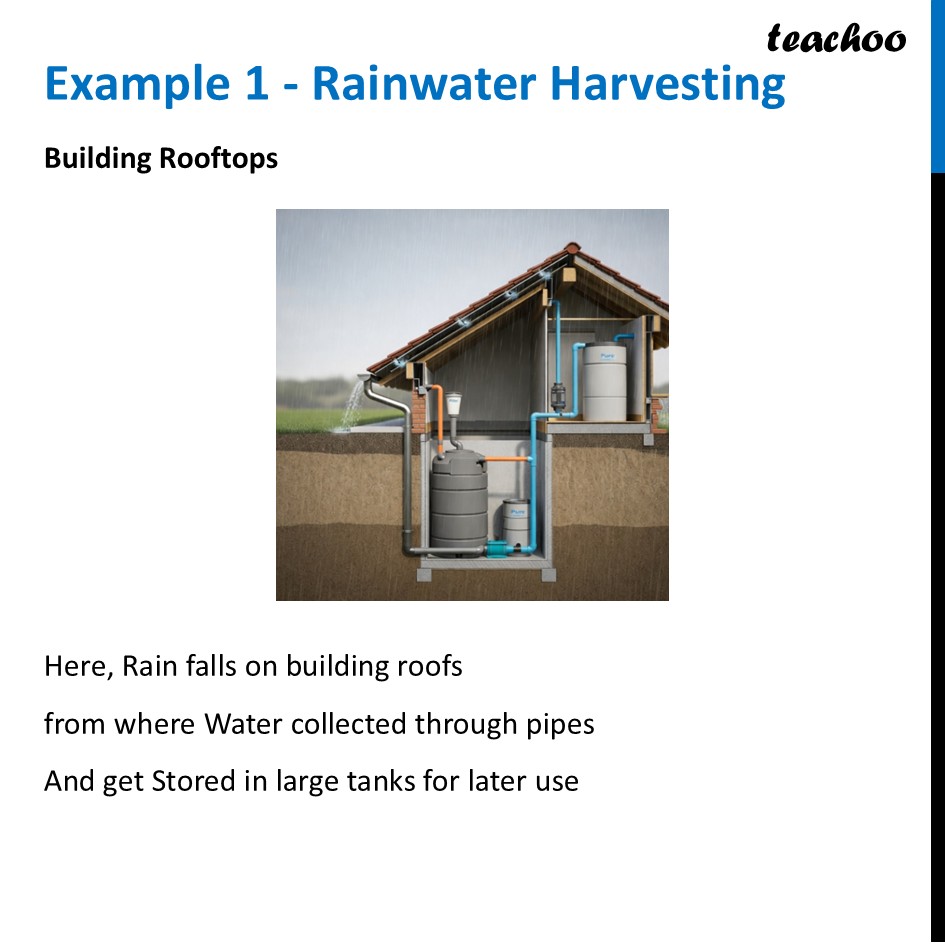
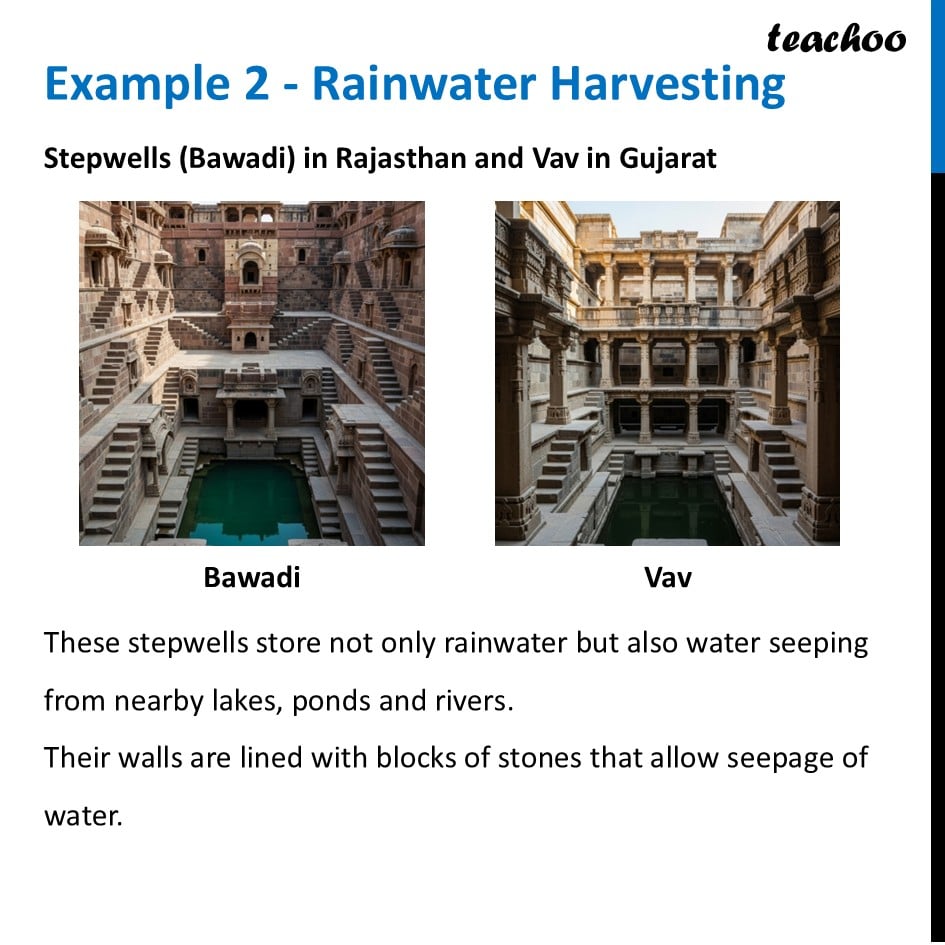
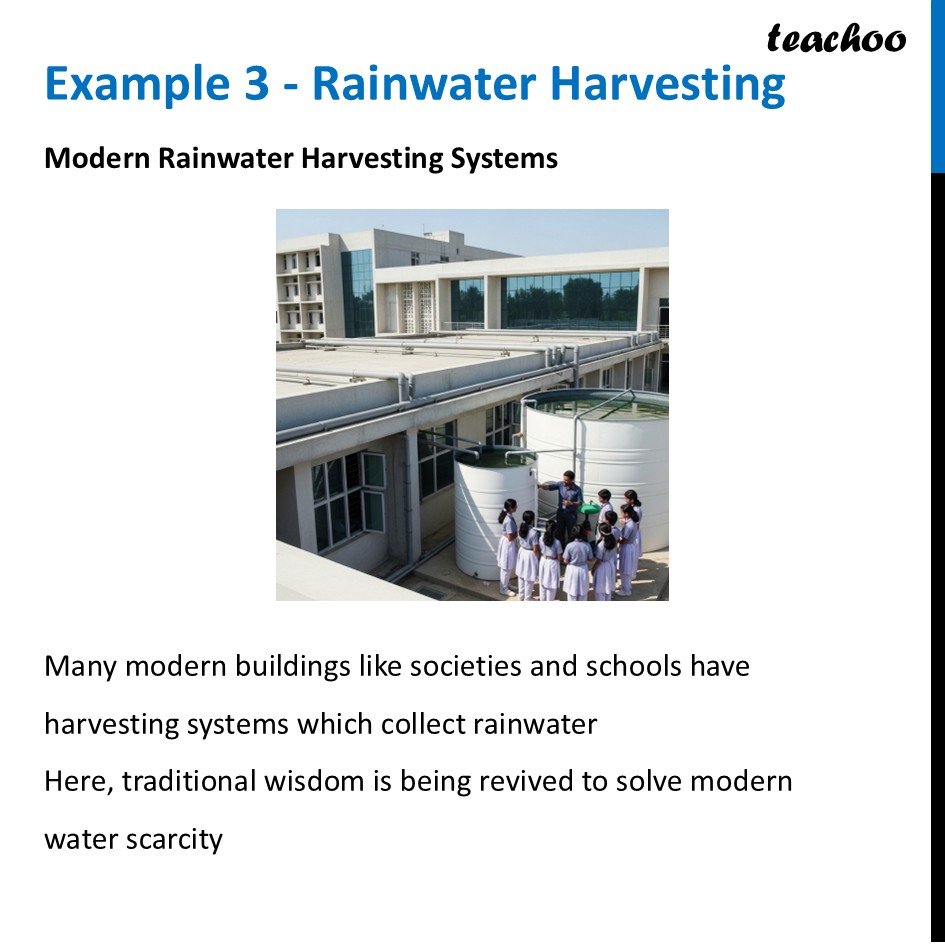
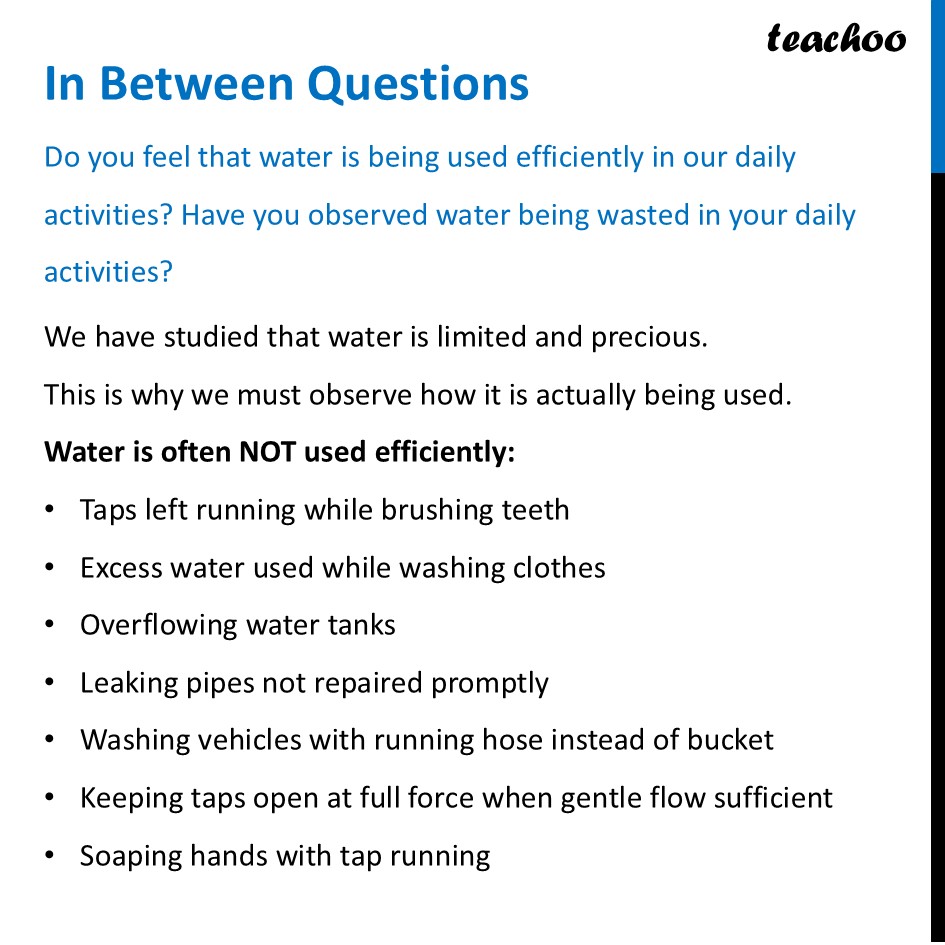
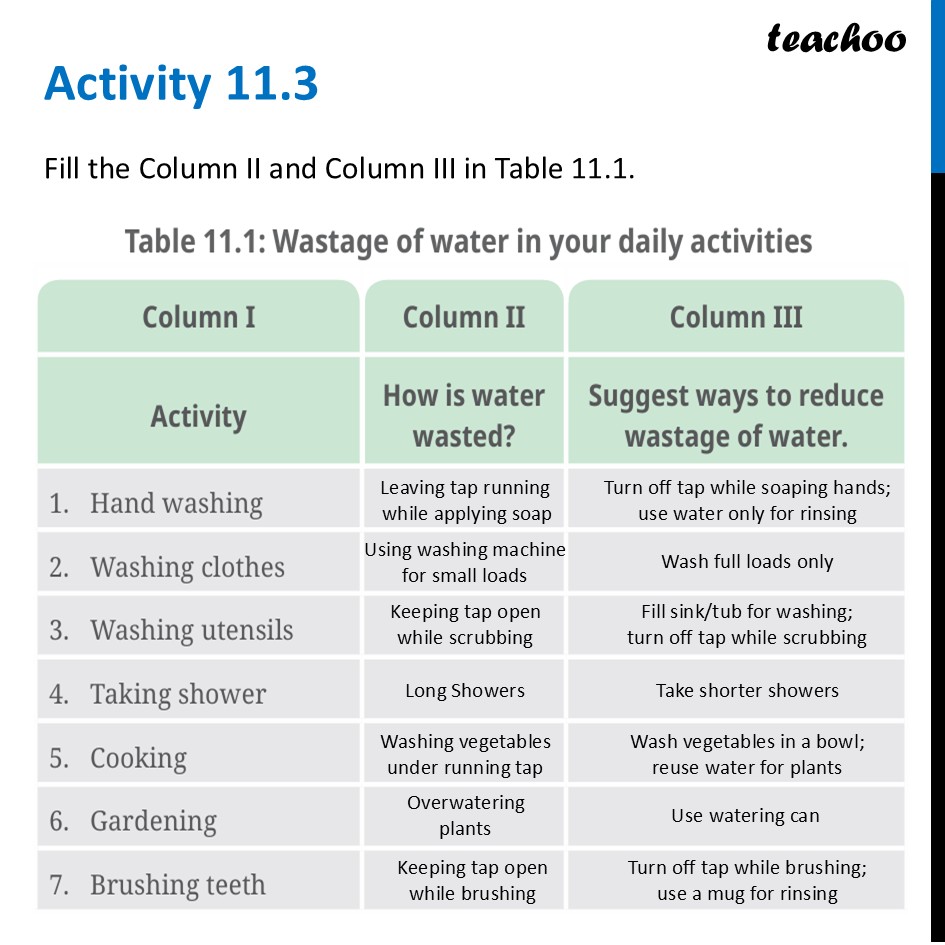
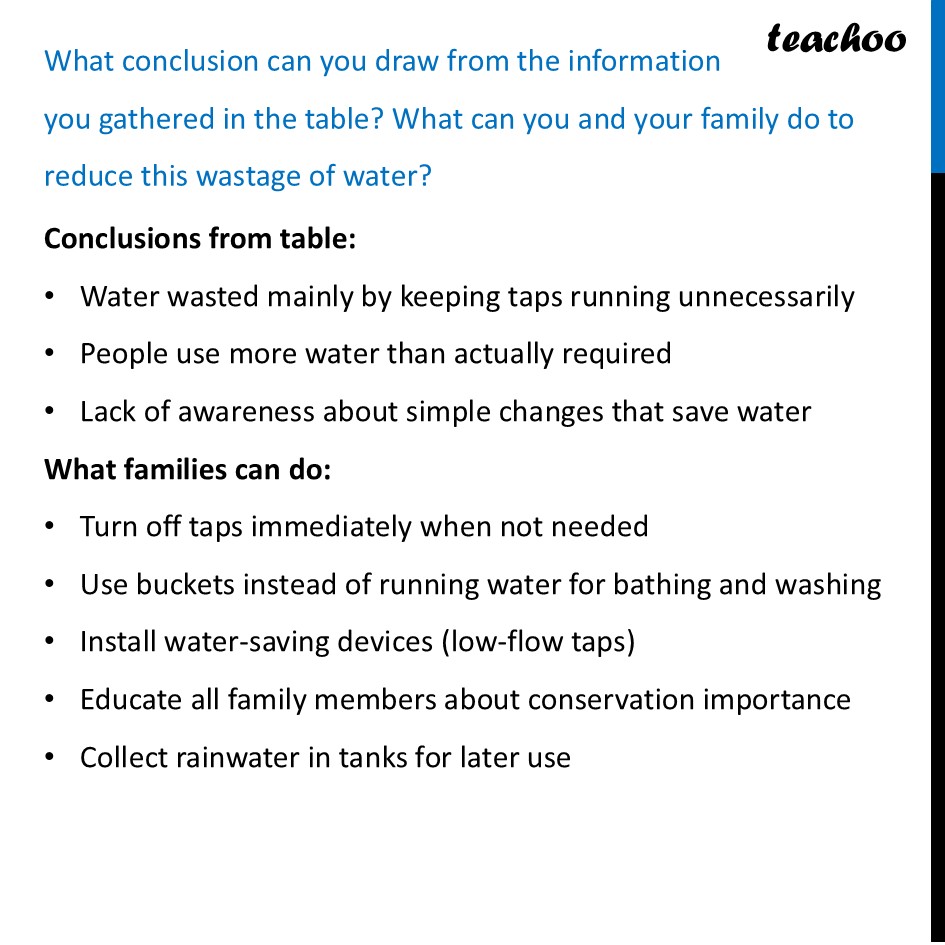
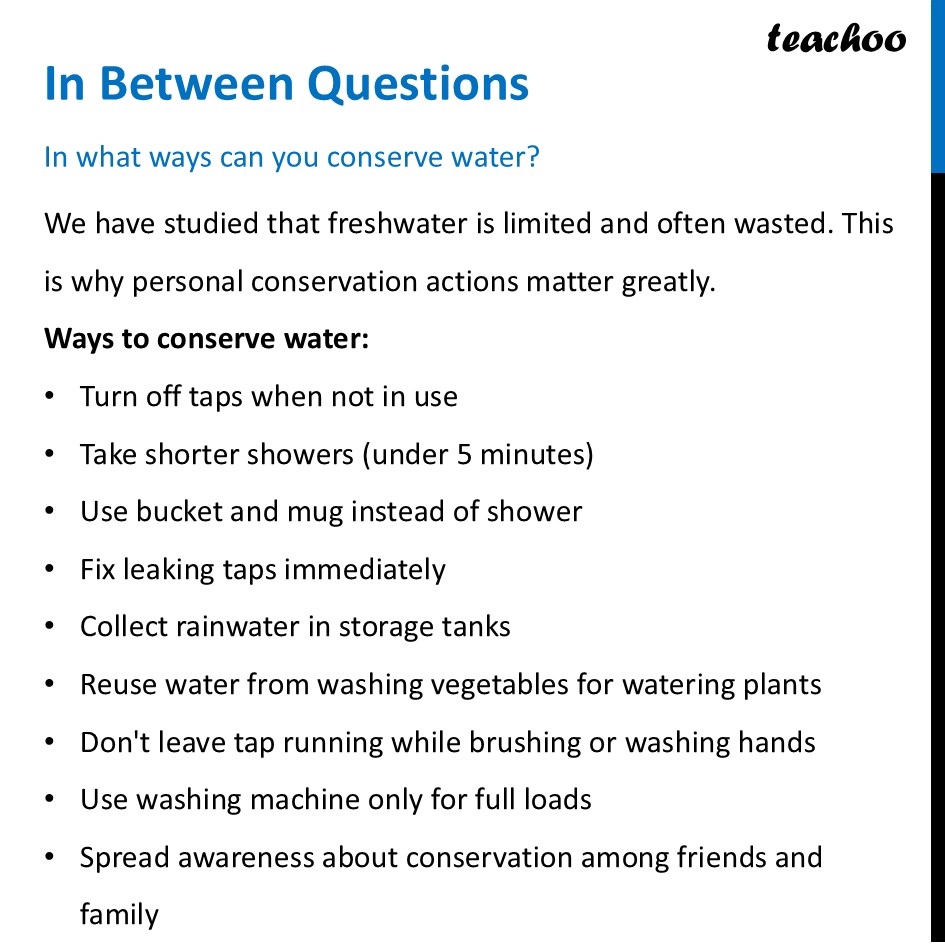
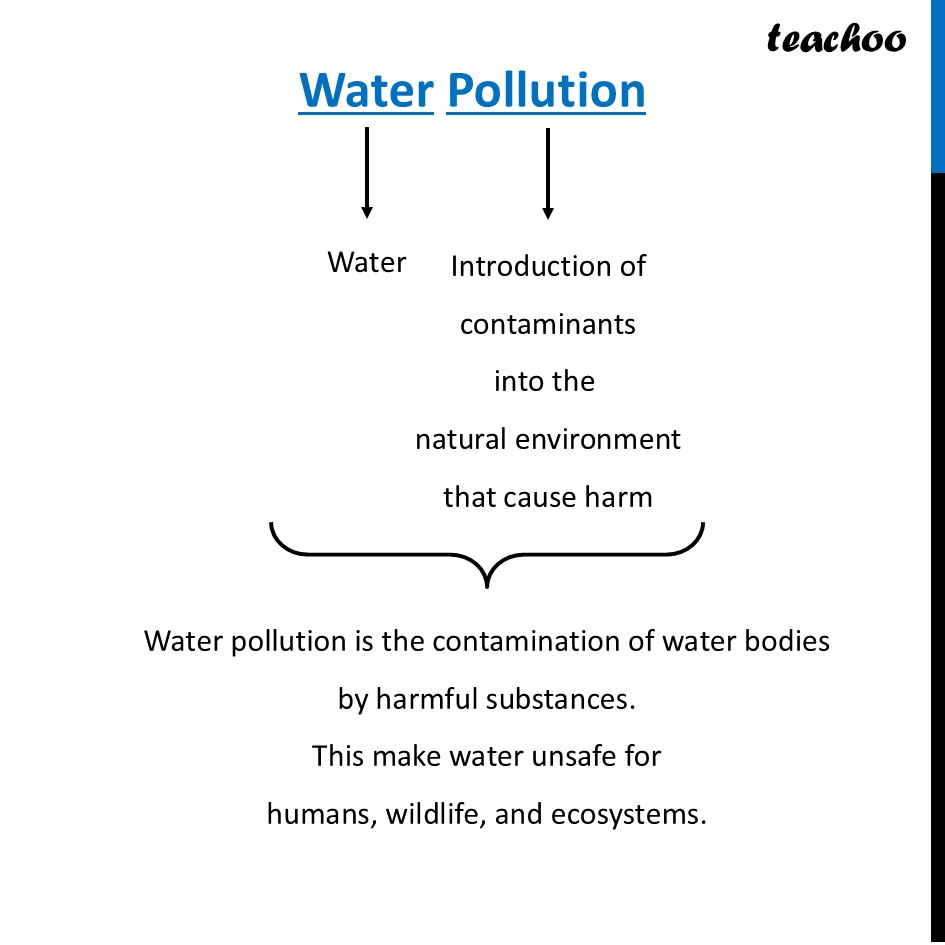
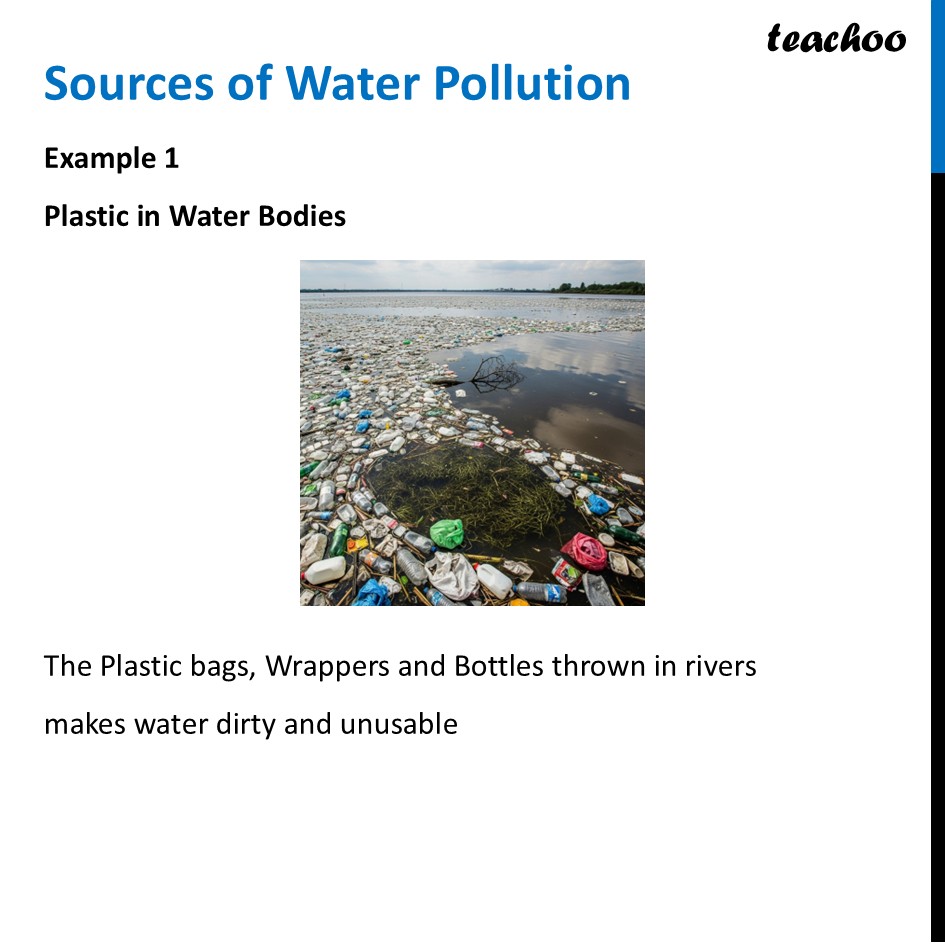
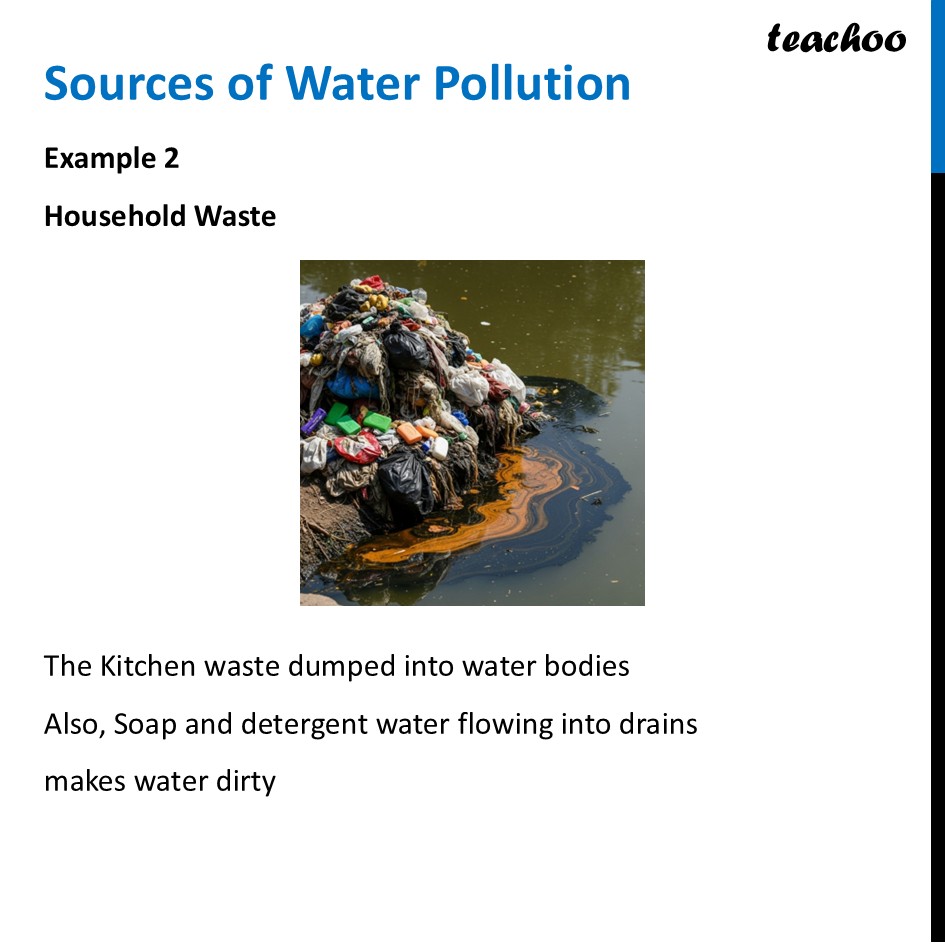
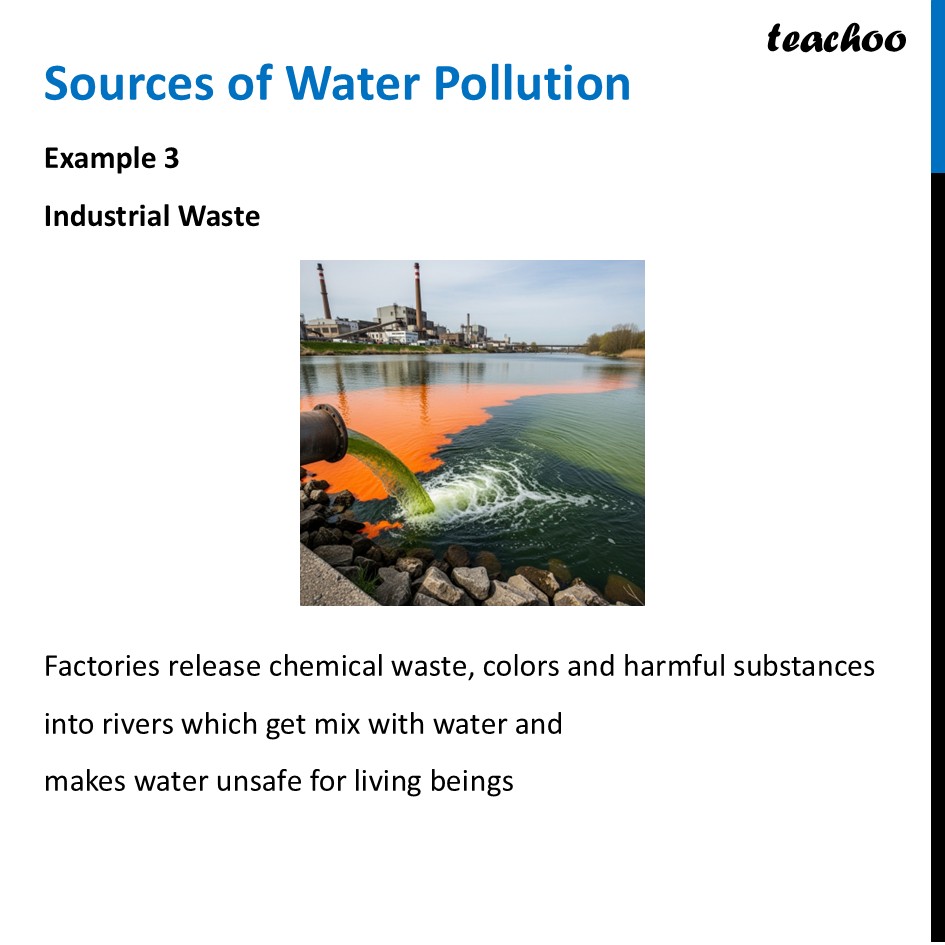
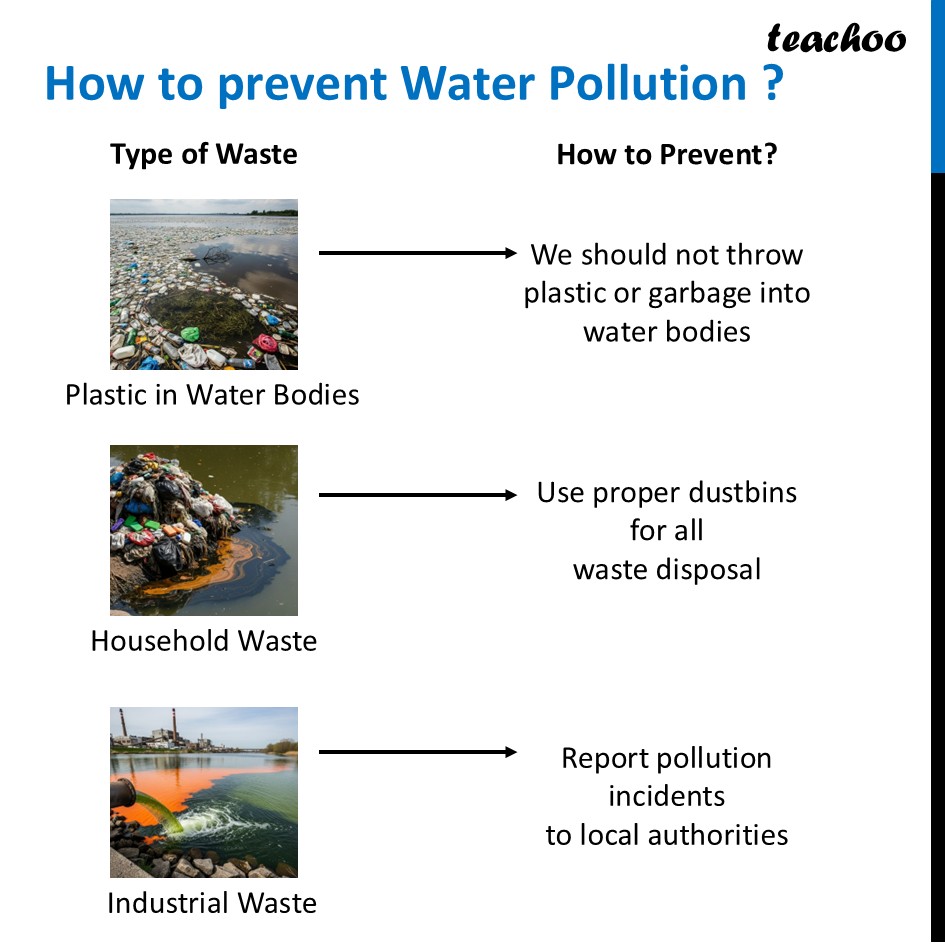
Water ConservationWater is limited Use it wisely Water Conservation means Using water wisely, avoiding waste, and protecting our limited, precious water sources for the future Why to conserve water? Our country is blessed with numerous rivers, streams and lakes but these freshwater sources are limited, there is a shortage of water in many parts of India. At some places, people have to walk long distances to fetch drinking water. Everyone does not have the same kind of access to water. So, It is important for us to conserve water and use it judiciously. How to Conserve Water?Careful Watering We should water plants carefully by pouring water at root area slowly so it soaks in How to Conserve Water?Turning Off Taps when not in use We should not Leave taps running while brushing as it wastes water So, We should Turn off taps when not in use which saves water How to Conserve Water?Fixing Leakages We should repair leaks as leaking pipes lose precious water How to Conserve Water?Rainwater Harvesting Rain Water Picking and Collecting Collecting rainwater and storing in large quantities for later use is called rainwater harvesting Example 1 - Rainwater HarvestingBuilding Rooftops Here, Rain falls on building roofs from where Water collected through pipes And get Stored in large tanks for later use Example 2 - Rainwater HarvestingStepwells (Bawadi) in Rajasthan and Vav in Gujarat Bawadi Vav These stepwells store not only rainwater but also water seeping from nearby lakes, ponds and rivers. Their walls are lined with blocks of stones that allow seepage of water. Example 3 - Rainwater Harvesting Modern Rainwater Harvesting Systems Many modern buildings like societies and schools have harvesting systems which collect rainwater Here, traditional wisdom is being revived to solve modern water scarcity In Between Questions Do you feel that water is being used efficiently in our daily activities? Have you observed water being wasted in your daily activities?We have studied that water is limited and precious. This is why we must observe how it is actually being used. Water is often NOT used efficiently: Taps left running while brushing teeth Excess water used while washing clothes Overflowing water tanks Leaking pipes not repaired promptly Washing vehicles with running hose instead of bucket Keeping taps open at full force when gentle flow sufficient Soaping hands with tap running Activity 11.3 Fill the Column II and Column III in Table 11.1. Table 11.1: Wastage of water in your daily activities Column I Column II Column III Activity How is water wasted? Suggest ways to reduce wastage of water. Hand washing Leaving tap running while applying soap Turn off tap while soaping hands; use water only for rinsing Washing clothes Using washing machine for small loads Wash full loads only Washing utensils Keeping tap open while scrubbing Fill sink/tub for washing; turn off tap while scrubbing Taking shower Long Showers Take shorter showers Cooking Washing vegetables under running tap Wash vegetables in a bowl; reuse water for plants Gardening Overwatering plants Use watering can . Brushing teeth Keeping tap open while brushing Turn off tap while brushing; use a mug for rinsingWhat conclusion can you draw from the information you gathered in the table? What can you and your family do to reduce this wastage of water?Conclusions from table: Water wasted mainly by keeping taps running unnecessarily People use more water than actually required Lack of awareness about simple changes that save water What families can do: Turn off taps immediately when not needed Use buckets instead of running water for bathing and washing Install water-saving devices (low-flow taps) Educate all family members about conservation importance Collect rainwater in tanks for later use In Between Questions In what ways can you conserve water?We have studied that freshwater is limited and often wasted. This is why personal conservation actions matter greatly. Ways to conserve water: Turn off taps when not in use Take shorter showers (under 5 minutes) Use bucket and mug instead of shower Fix leaking taps immediately Collect rainwater in storage tanks Reuse water from washing vegetables for watering plants Don't leave tap running while brushing or washing hands Use washing machine only for full loads Spread awareness about conservation among friends and family Water PollutionWater Introduction of contaminants into the natural environment that cause harm Water pollution is the contamination of water bodies by harmful substances. This make water unsafe for humans, wildlife, and ecosystems. Sources of Water PollutionExample 1 Plastic in Water Bodies The Plastic bags, Wrappers and Bottles thrown in rivers makes water dirty and unusable Sources of Water PollutionExample 2 Household Waste The Kitchen waste dumped into water bodies Also, Soap and detergent water flowing into drains makes water dirty Sources of Water PollutionExample 3 Industrial Waste Factories release chemical waste, colors and harmful substances into rivers which get mix with water and makes water unsafe for living beings How to prevent Water Pollution ? Type of Waste How to Prevent? Plastic in Water Bodies We should not throw plastic or garbage into water bodies Household Waste Use proper dustbins for all waste disposal Industrial Waste Report pollution incidents to local authorities
