
 You are here
![Sedimentation, Decantation and Filtration [Chapter 9 Science] Teachoo - Concepts](https://cdn.teachoo.com/47336ba3-313d-4910-957b-514767c94d90/slide32.jpg)
Last updated at January 16, 2026 by Teachoo
Transcript
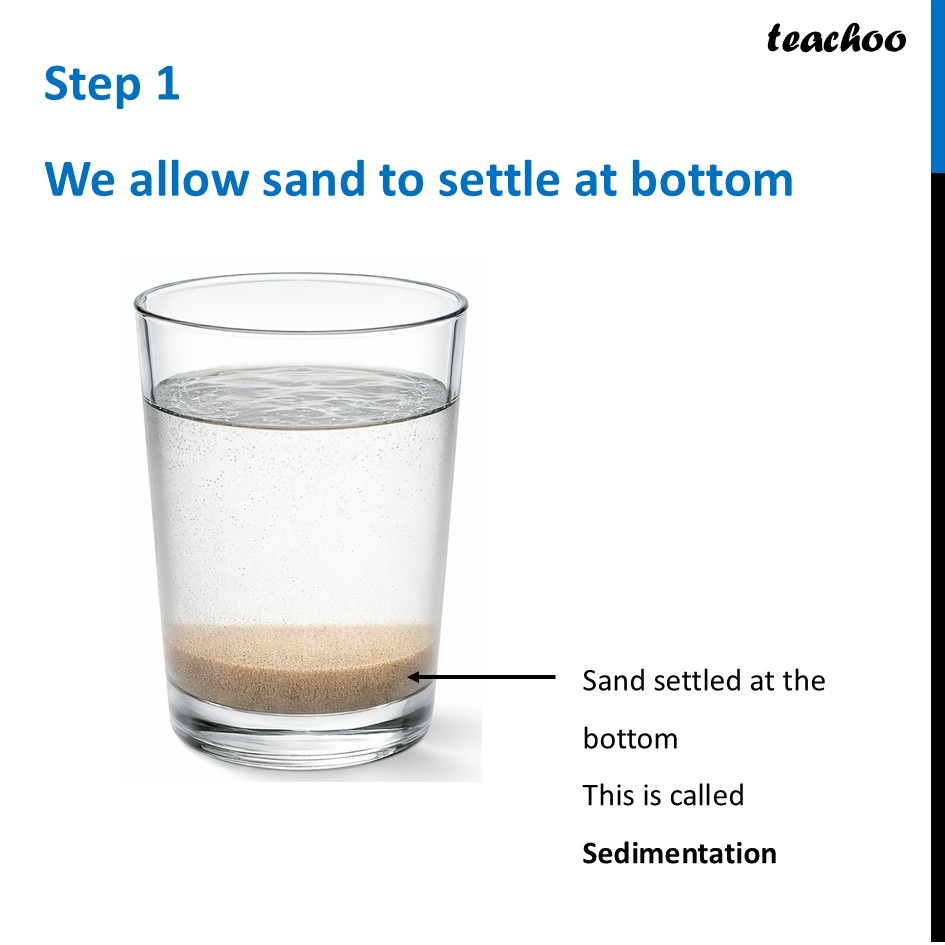
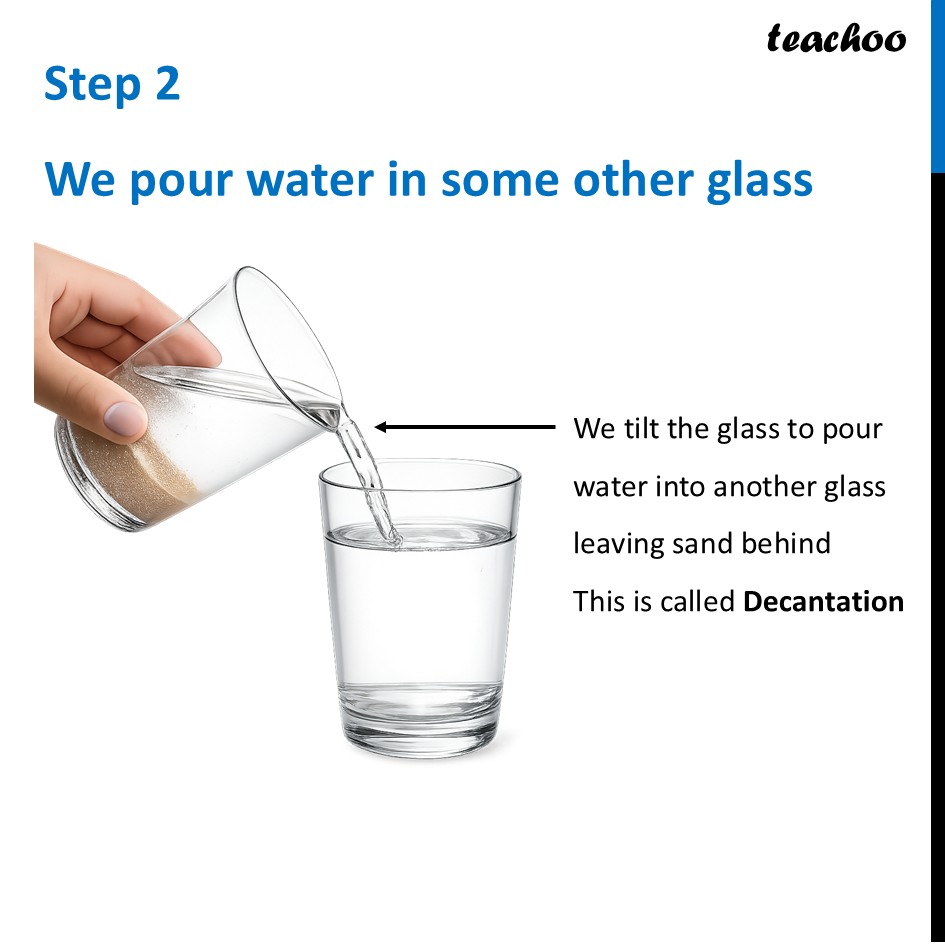
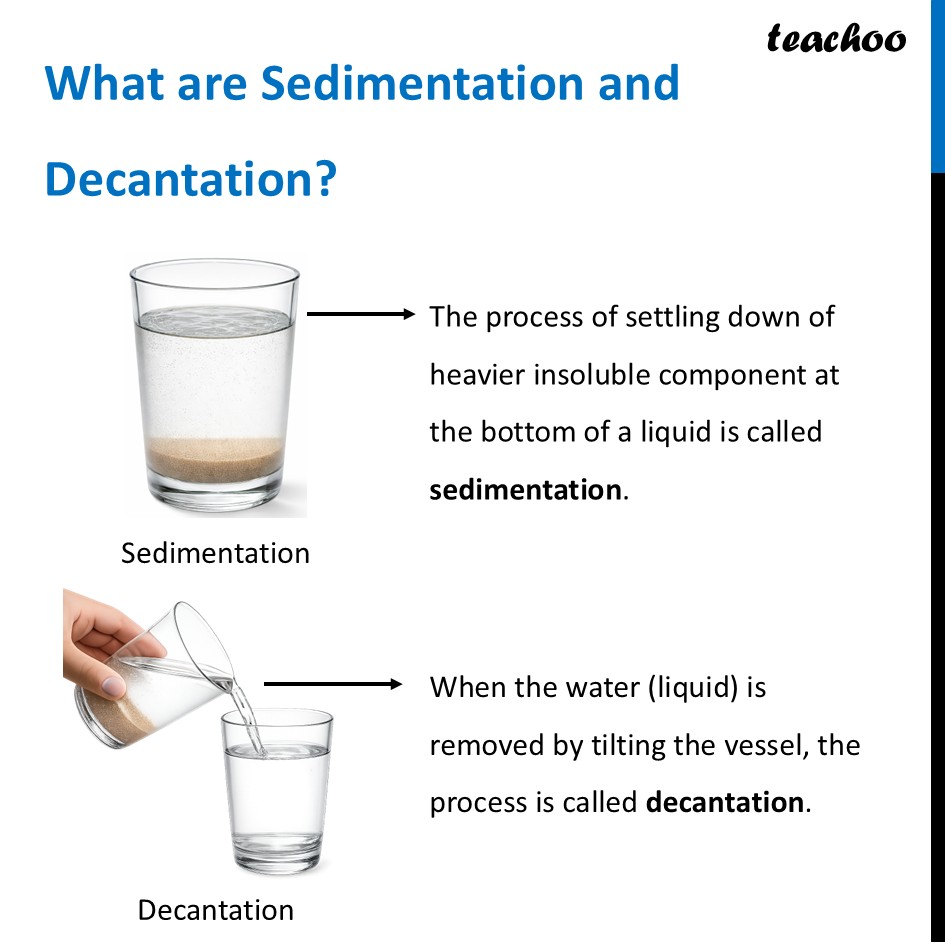
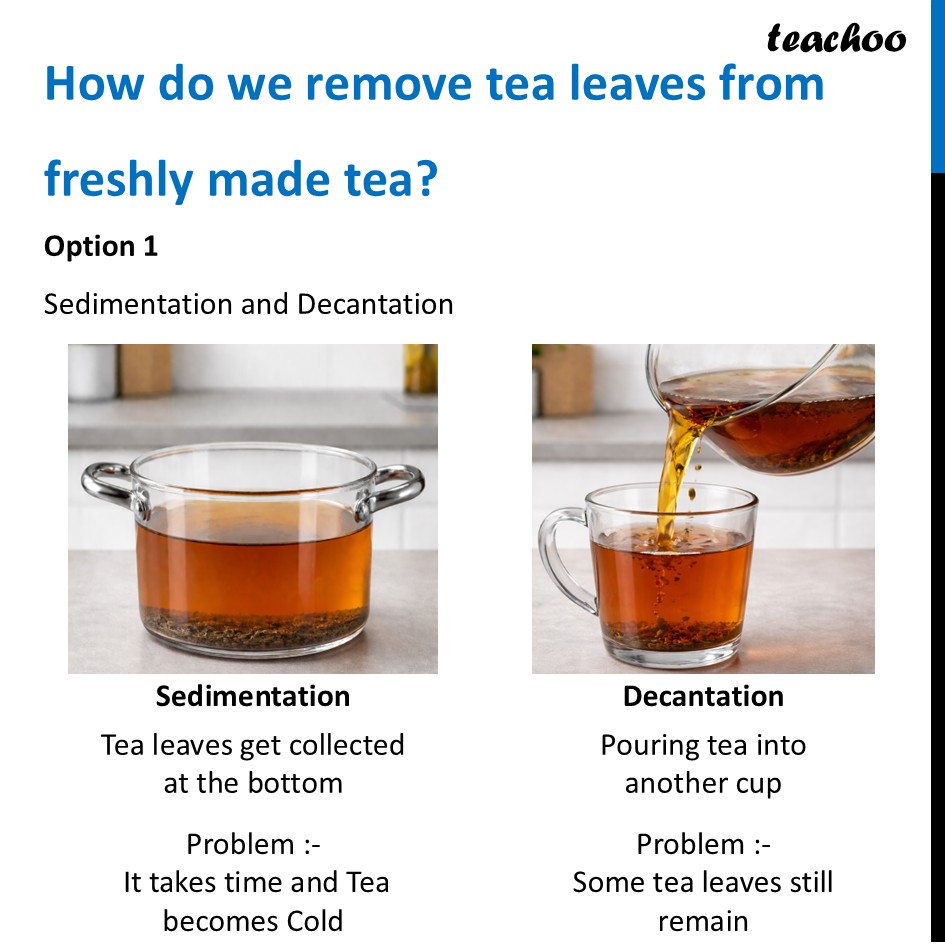
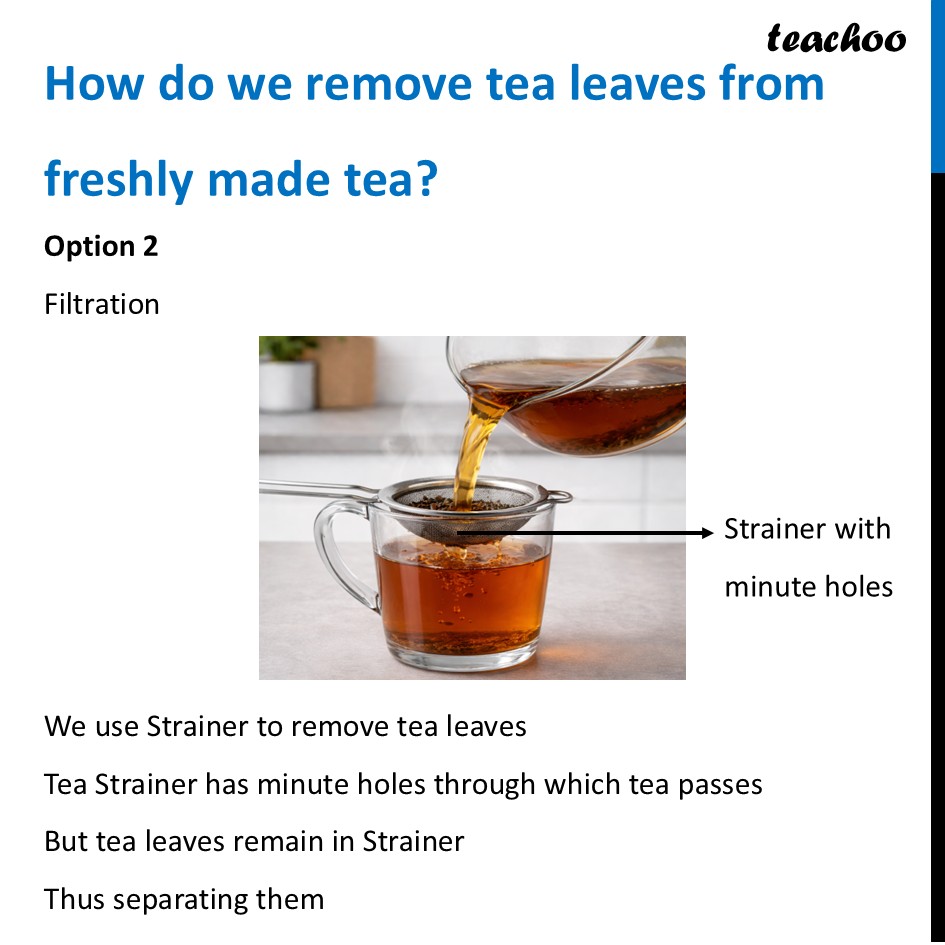
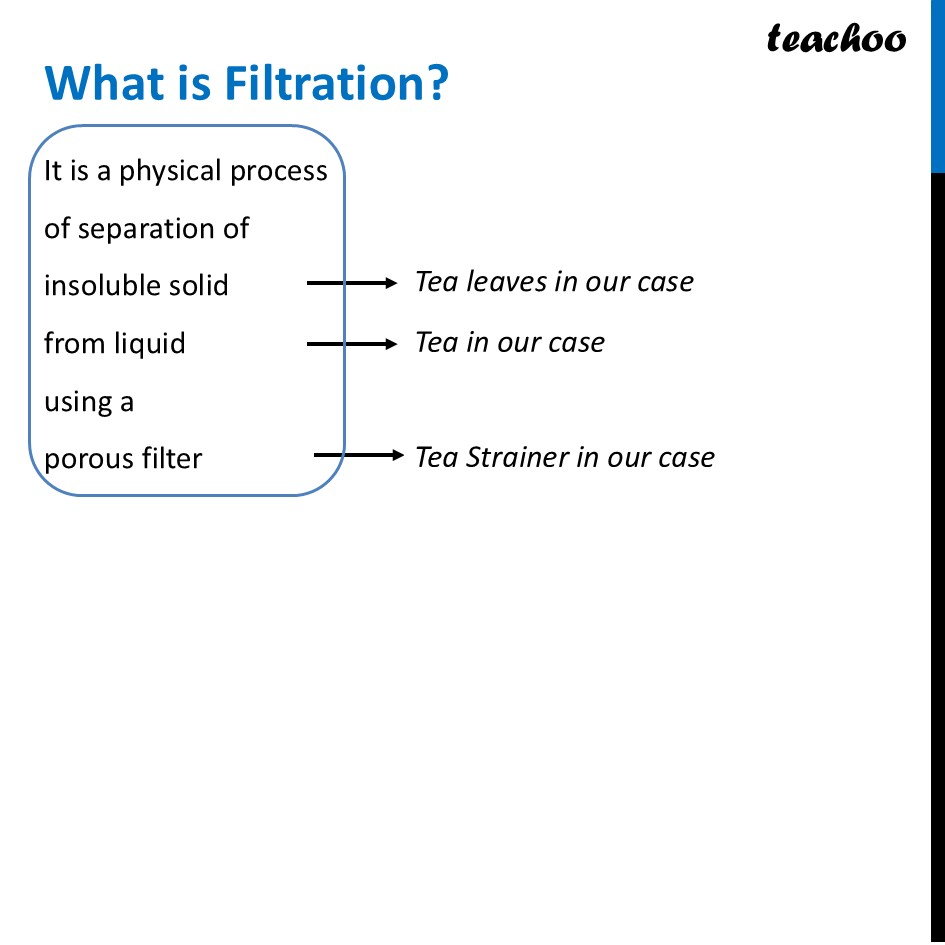
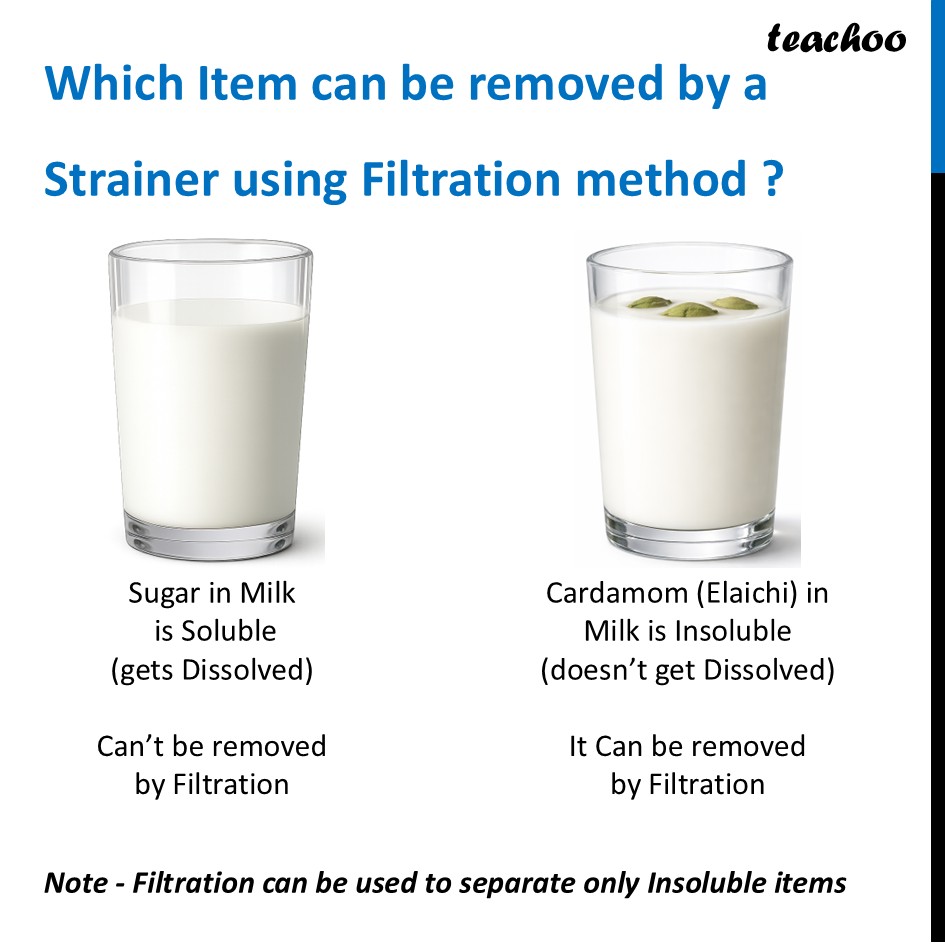
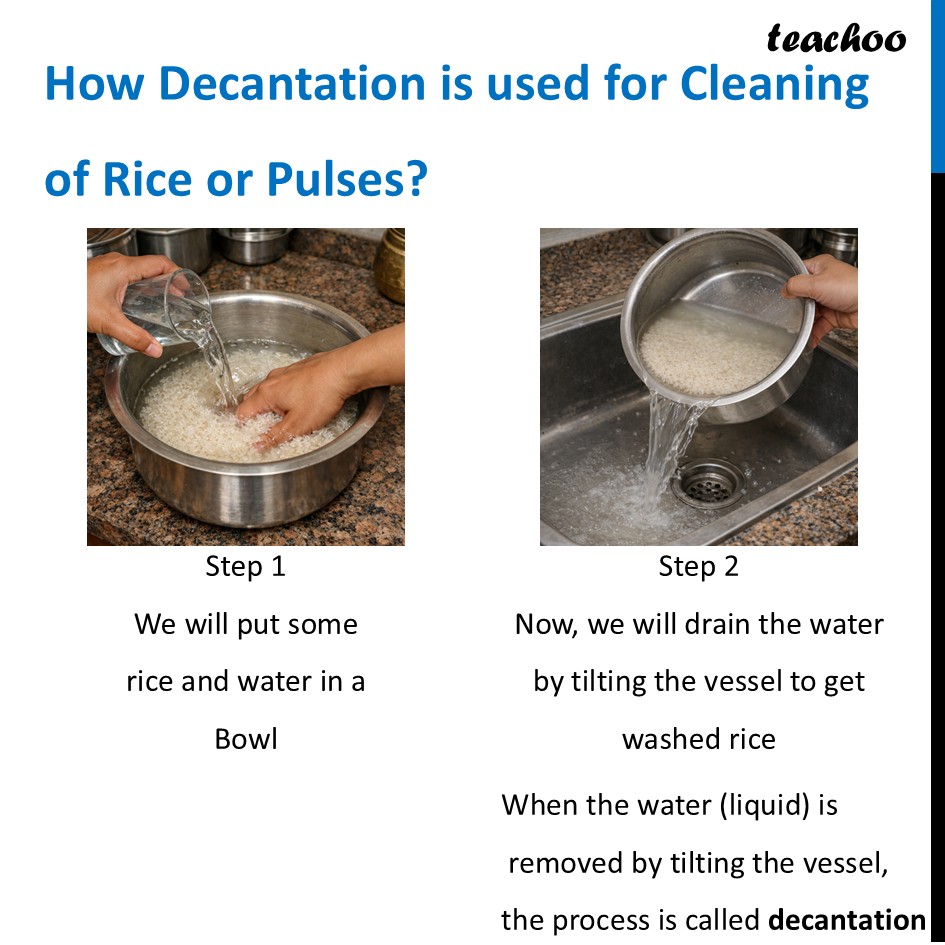
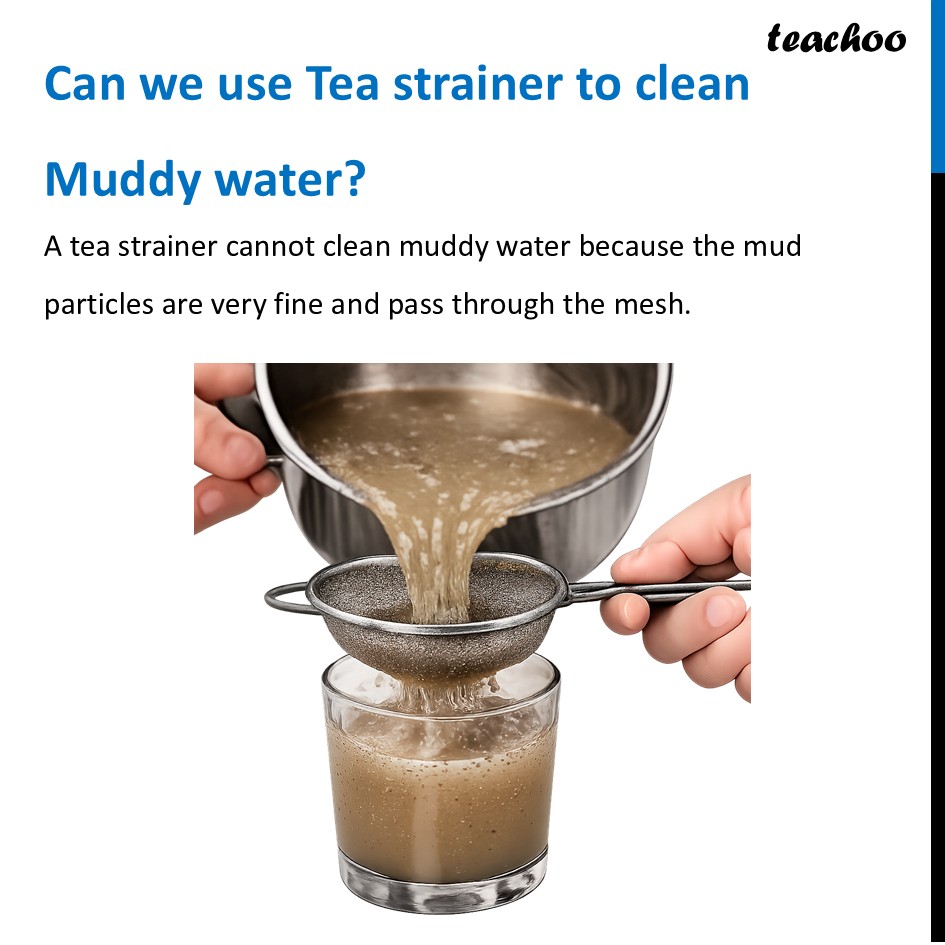
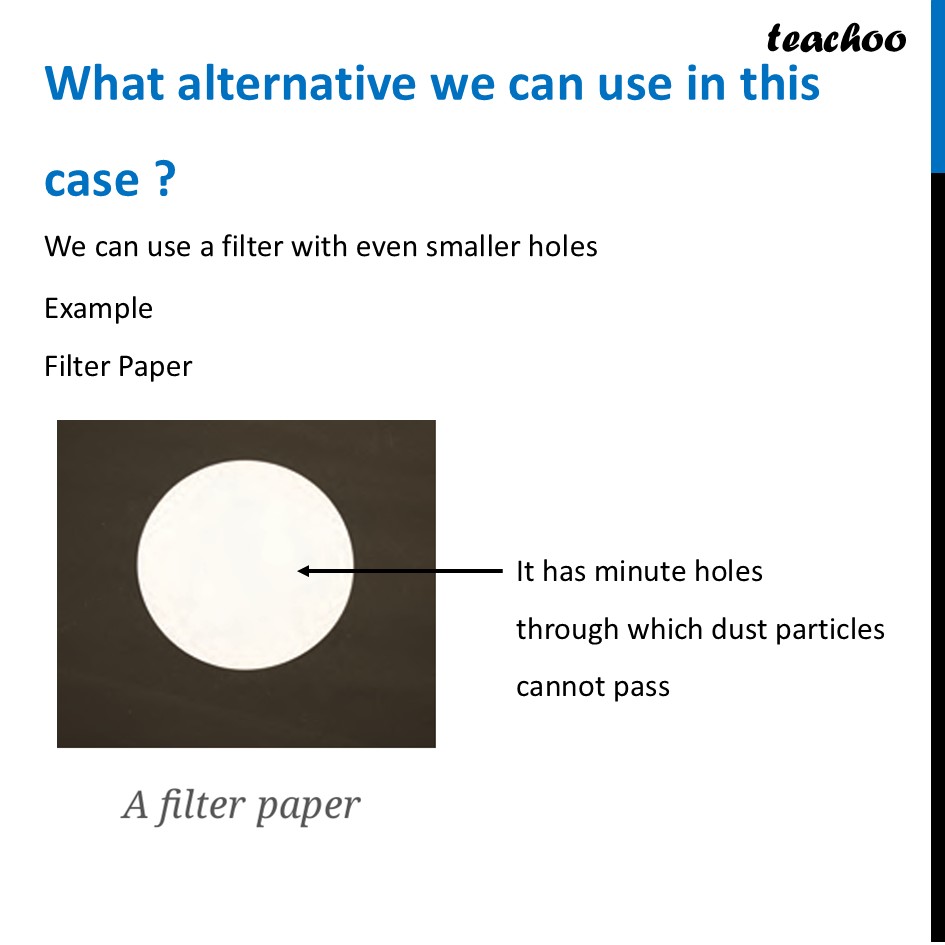
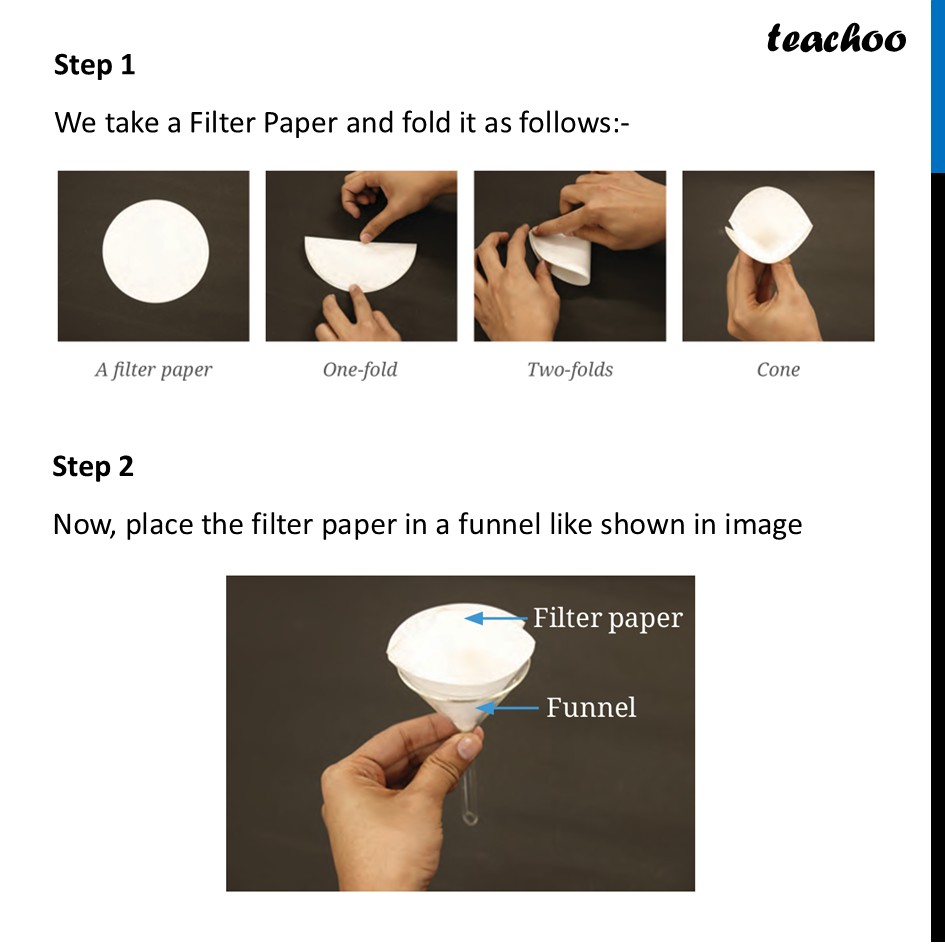
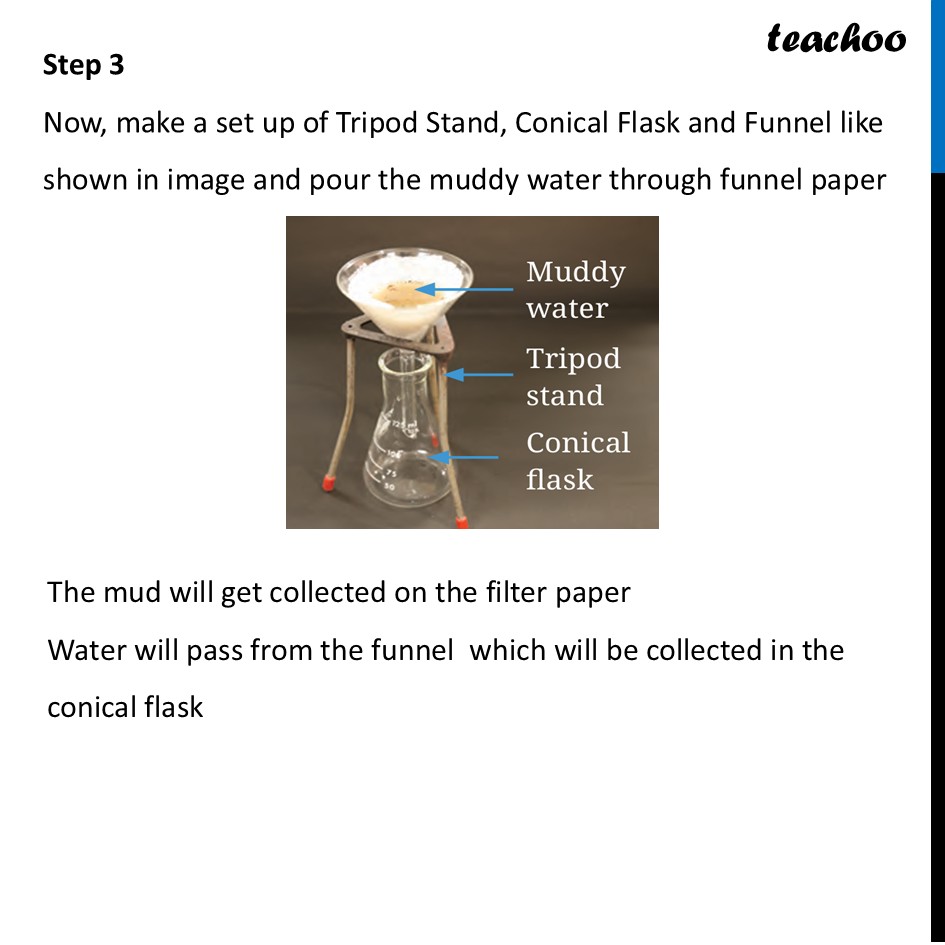
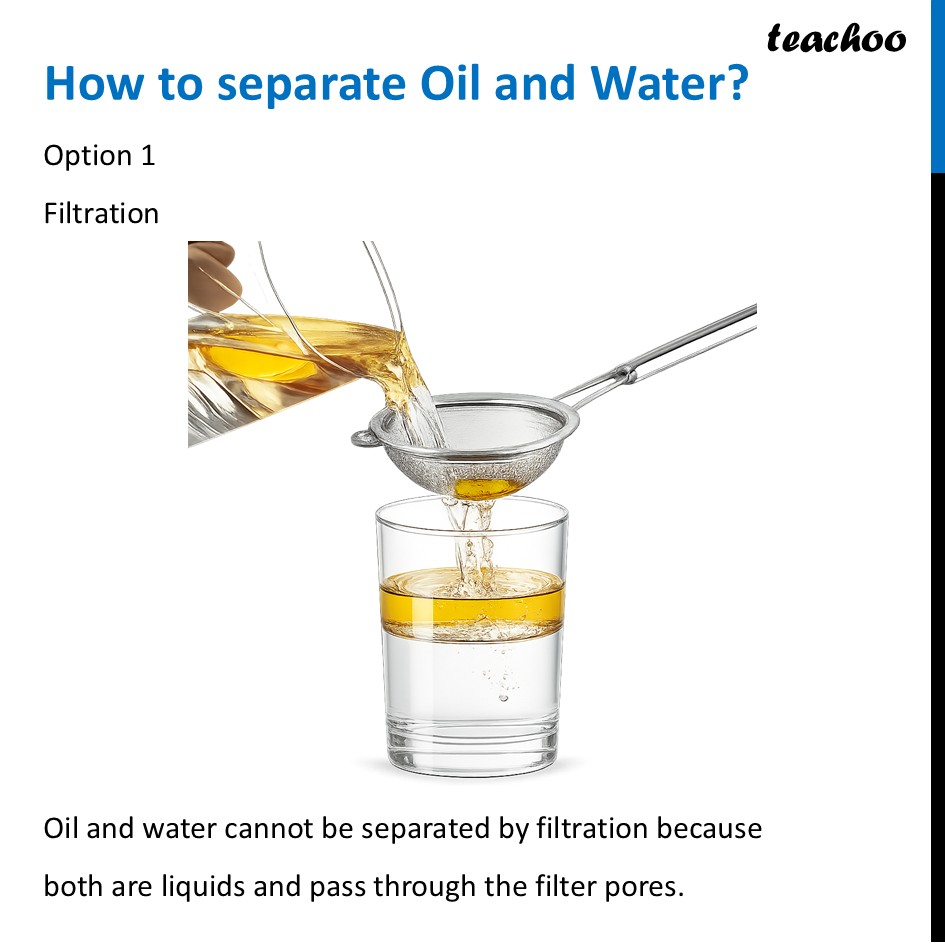
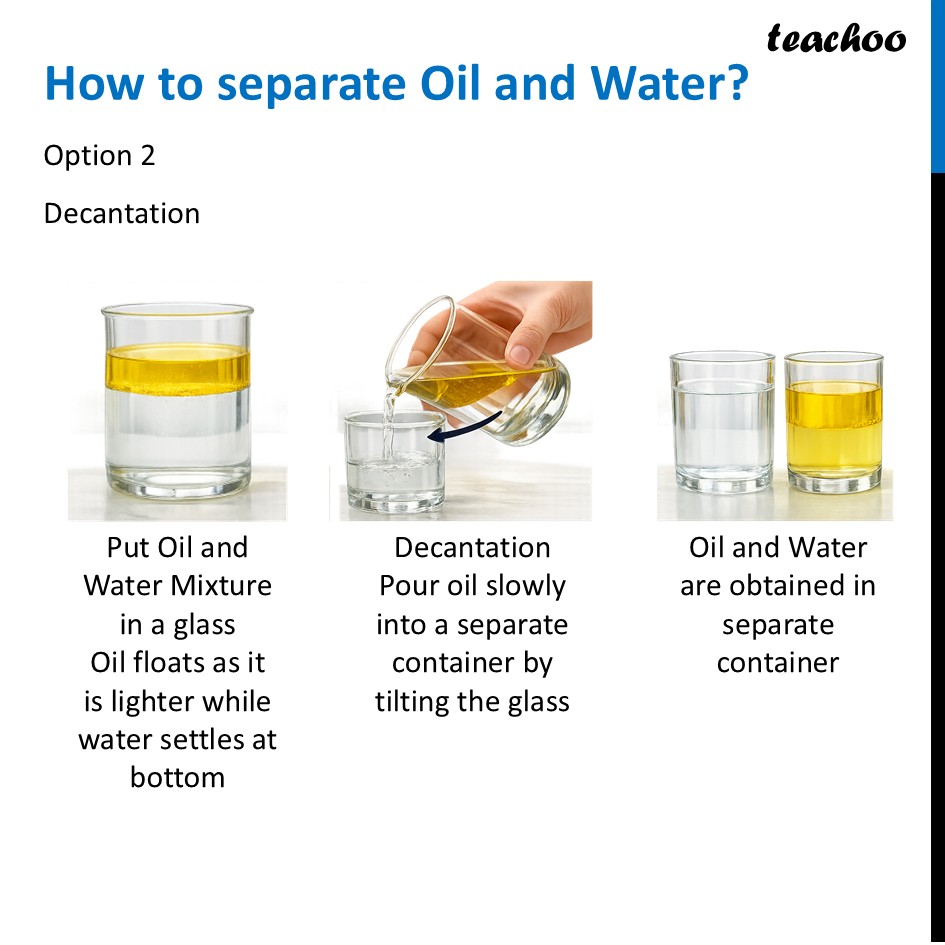
Example Suppose we take a glass of water and put some sand in it How can we remove sand ?Sand mixed in Water Step 1 We allow sand to settle at bottomSand settled at the bottom This is called Sedimentation Step 2 We pour water in some other glass We tilt the glass to pour water into another glass leaving sand behind This is called Decantation What are Sedimentation and Decantation?The process of settling down of heavier insoluble component at the bottom of a liquid is called sedimentation. Sedimentation When the water (liquid) is removed by tilting the vessel, the process is called decantation. Decantation How do we remove tea leaves from freshly made tea?Option 1 Sedimentation and Decantation Sedimentation Tea leaves get collected at the bottom Problem :- It takes time and Tea becomes Cold Decantation Pouring tea into another cup Problem :- Some tea leaves still remain How do we remove tea leaves from freshly made tea?Option 2 Filtration We use Strainer to remove tea leaves Tea Strainer has minute holes through which tea passes But tea leaves remain in Strainer Thus separating them Strainer with minute holes What is Filtration?It is a physical process of separation of insoluble solid from liquid using a porous filter Tea leaves in our case Tea in our case Tea Strainer in our case Which Item can be removed by a Strainer using Filtration method ? Sugar in Milk is Soluble (gets Dissolved) Can’t be removed by Filtration Cardamom (Elaichi) in Milk is Insoluble (doesn’t get Dissolved) It Can be removed by Filtration Note - Filtration can be used to separate only Insoluble itemsHow Decantation is used for Cleaning of Rice or Pulses?Step 1 We will put some rice and water in a Bowl Step 2 Now, we will drain the water by tilting the vessel to get washed rice When the water (liquid) is removed by tilting the vessel, the process is called decantation Can we use Tea strainer to clean Muddy water?A tea strainer cannot clean muddy water because the mud particles are very fine and pass through the mesh. What alternative we can use in this case ?We can use a filter with even smaller holes Example Filter Paper It has minute holes through which dust particles cannot pass Step 1 We take a Filter Paper and fold it as follows:- Step 2 Now, place the filter paper in a funnel like shown in image Step 3 Now, make a set up of Tripod Stand, Conical Flask and Funnel like shown in image and pour the muddy water through funnel paper The mud will get collected on the filter paper Water will pass from the funnel which will be collected in the conical flask How to separate Oil and Water?Option 1 Filtration Oil and water cannot be separated by filtration because both are liquids and pass through the filter pores. How to separate Oil and Water?Option 2 Decantation Put Oil and Water Mixture in a glass Oil floats as it is lighter while water settles at bottom Decantation Pour oil slowly into a separate container by tilting the glass Oil and Water are obtained in separate container
