
 You are here
Sharing, but Not Equally!
Sharing, but Not Equally!
Last updated at January 15, 2026 by Teachoo
Transcript
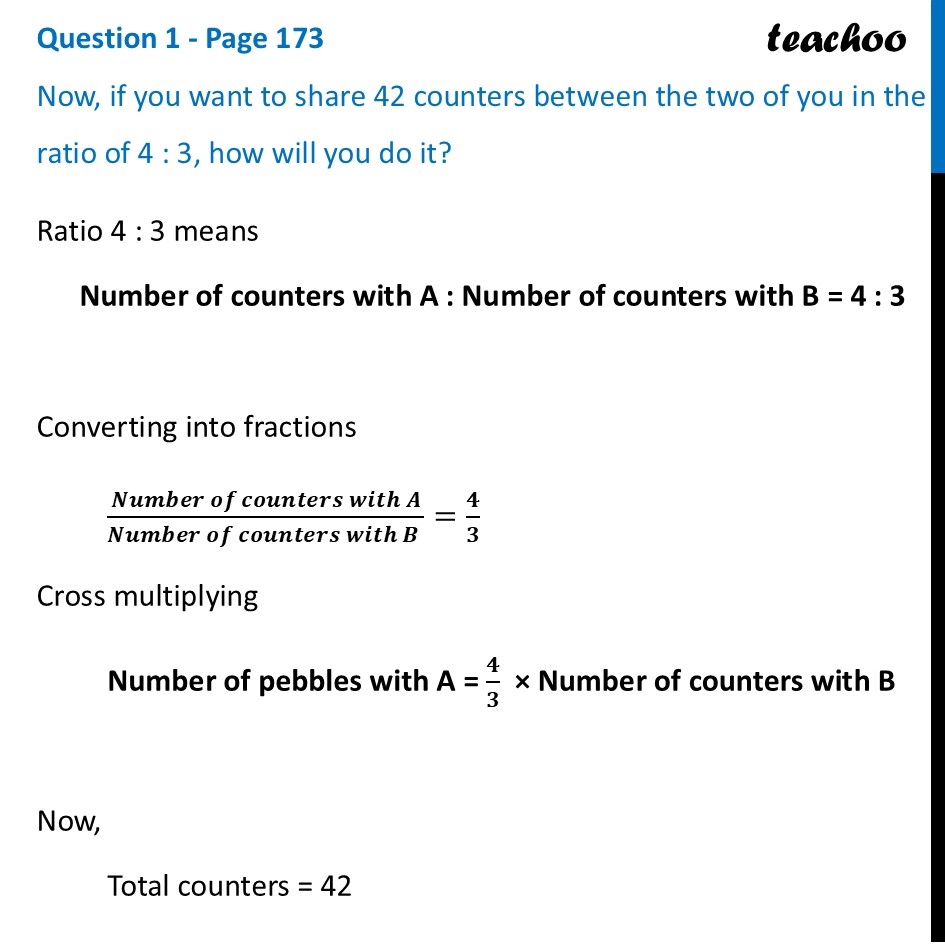
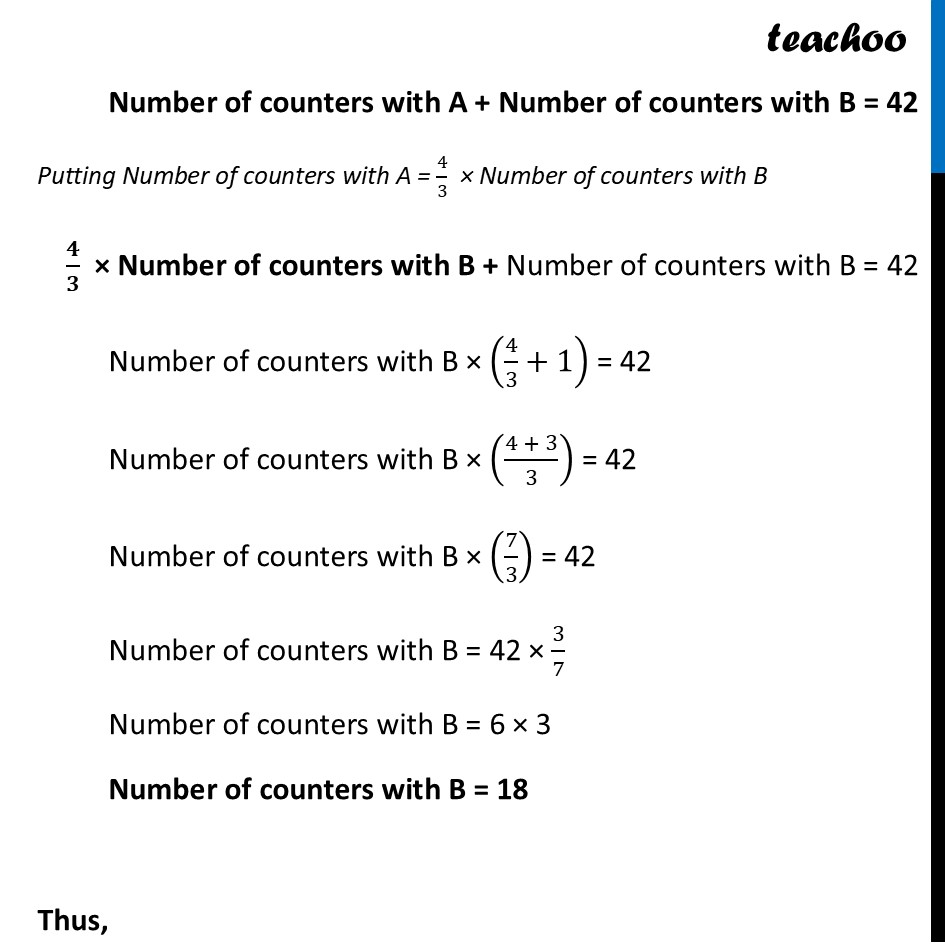
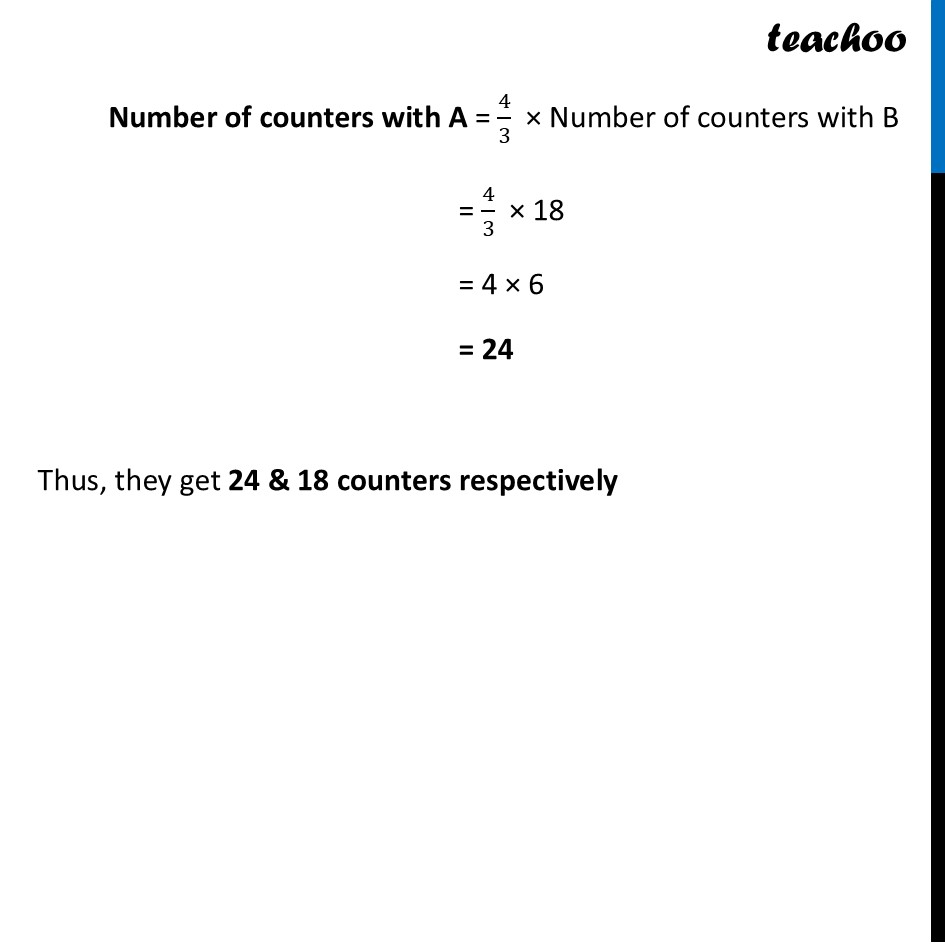
Question 1 - Page 173 Now, if you want to share 42 counters between the two of you in the ratio of 4 : 3, how will you do it? Ratio 4 : 3 means Number of counters with A : Number of counters with B = 4 : 3 Converting into fractions (𝑵𝒖𝒎𝒃𝒆𝒓 𝒐𝒇 𝒄𝒐𝒖𝒏𝒕𝒆𝒓𝒔 𝒘𝒊𝒕𝒉 𝑨)/(𝑵𝒖𝒎𝒃𝒆𝒓 𝒐𝒇 𝒄𝒐𝒖𝒏𝒕𝒆𝒓𝒔 𝒘𝒊𝒕𝒉 𝑩 )=𝟒/𝟑 Cross multiplying Number of pebbles with A = 𝟒/𝟑 × Number of counters with B Now, Total counters = 42 Number of counters with A + Number of counters with B = 42 Putting Number of counters with A = 4/3 × Number of counters with B 𝟒/𝟑 × Number of counters with B + Number of counters with B = 42 Number of counters with B × (4/3+1) = 42 Number of counters with B × ((4 + 3)/3) = 42 Number of counters with B × (7/3) = 42 Number of counters with B = 42 × 3/7 Number of counters with B = 6 × 3 Number of counters with B = 18 Thus, Number of counters with A = 4/3 × Number of counters with B = 4/3 × 18 = 4 × 6 = 24 Thus, they get 24 & 18 counters respectively
