 You are here

![[Activity 3] Form a pair. Collect 12 countable objects or counters - Sharing, but Not Equally!](https://cdn.teachoo.com/55a3c96b-33be-4384-935c-a985c5f53081/slide103.jpg)
Sharing, but Not Equally!
Sharing, but Not Equally!
Last updated at January 15, 2026 by Teachoo
Transcript
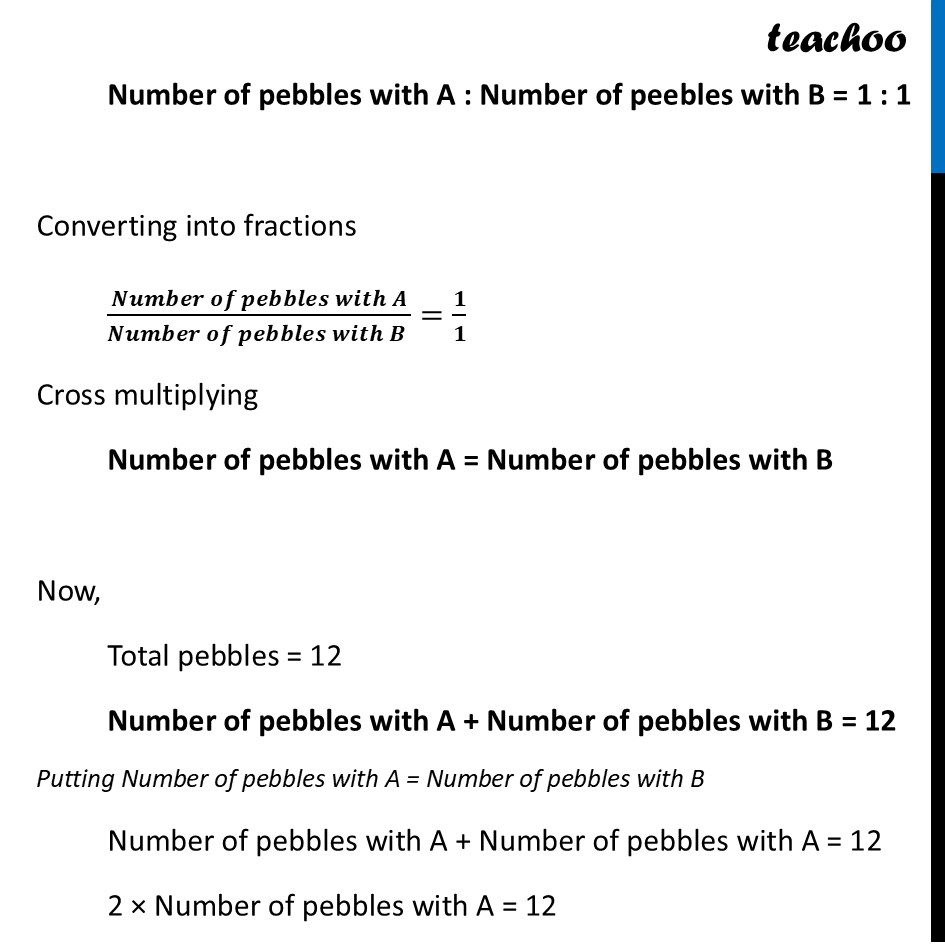
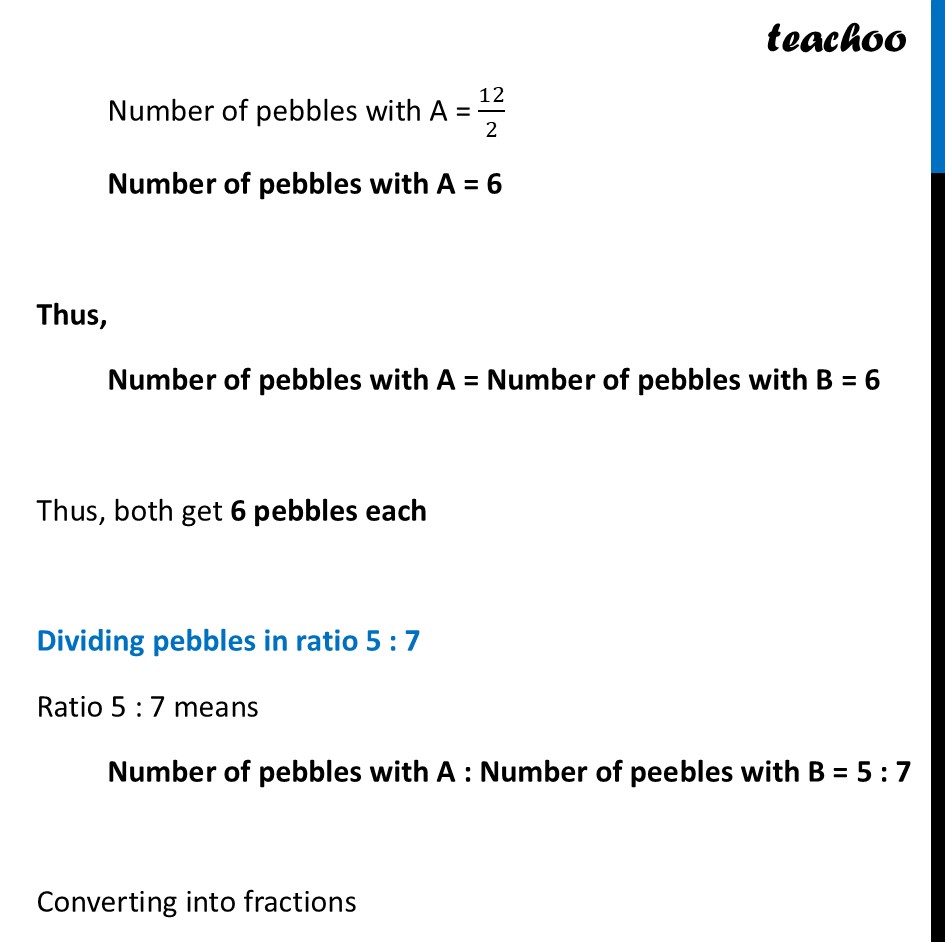
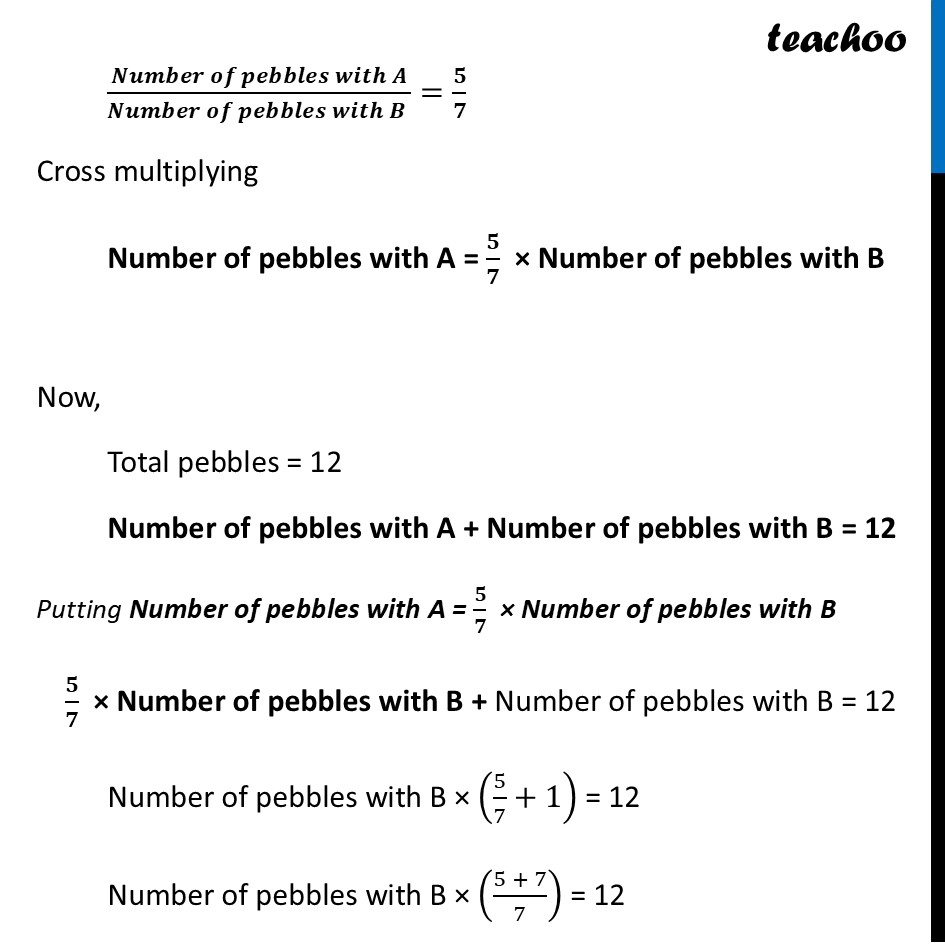
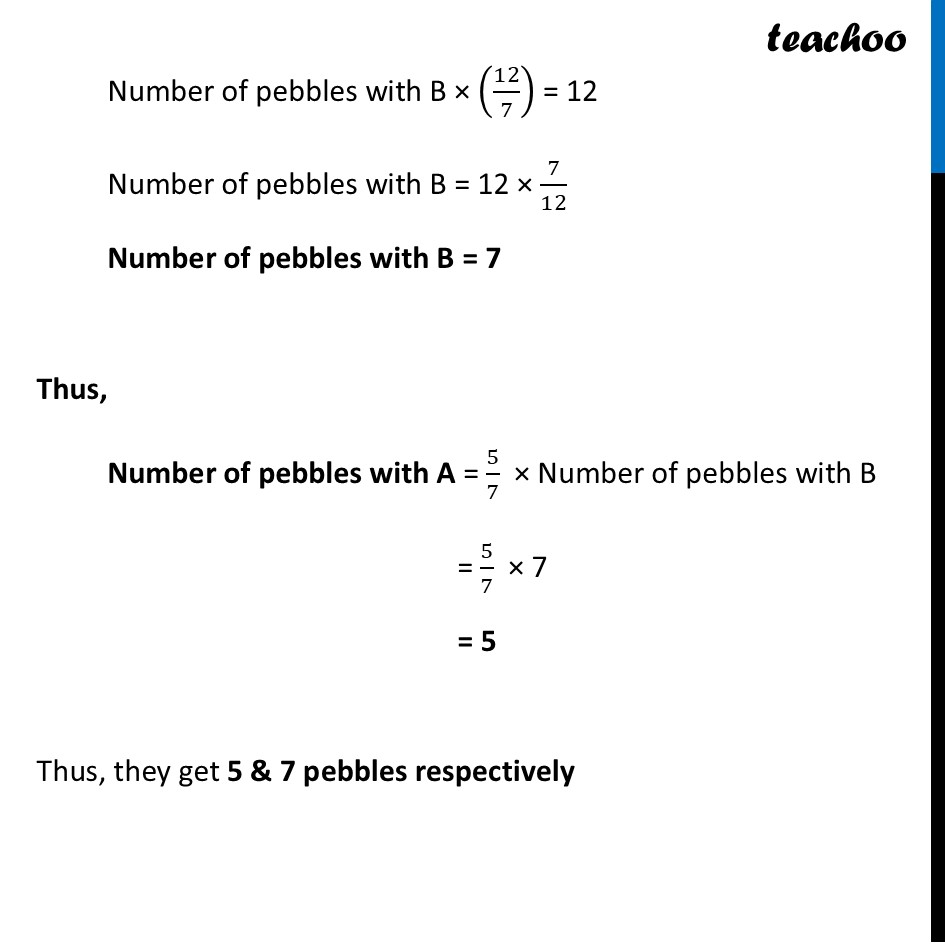
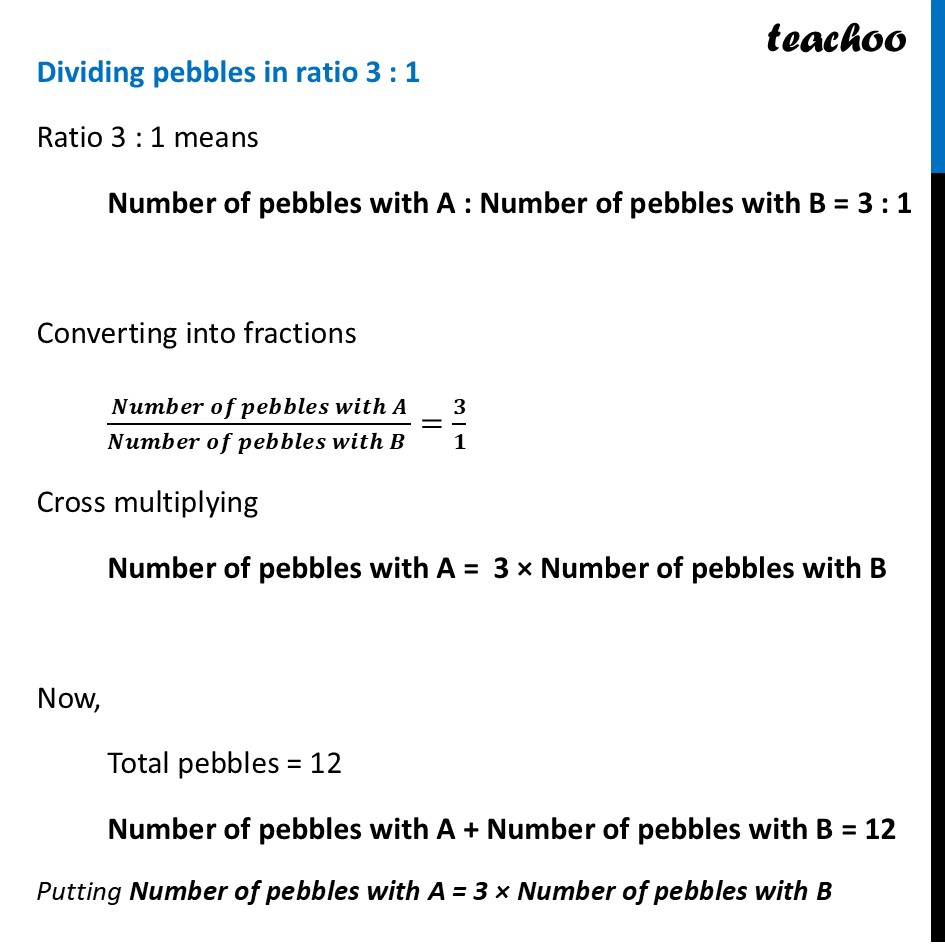
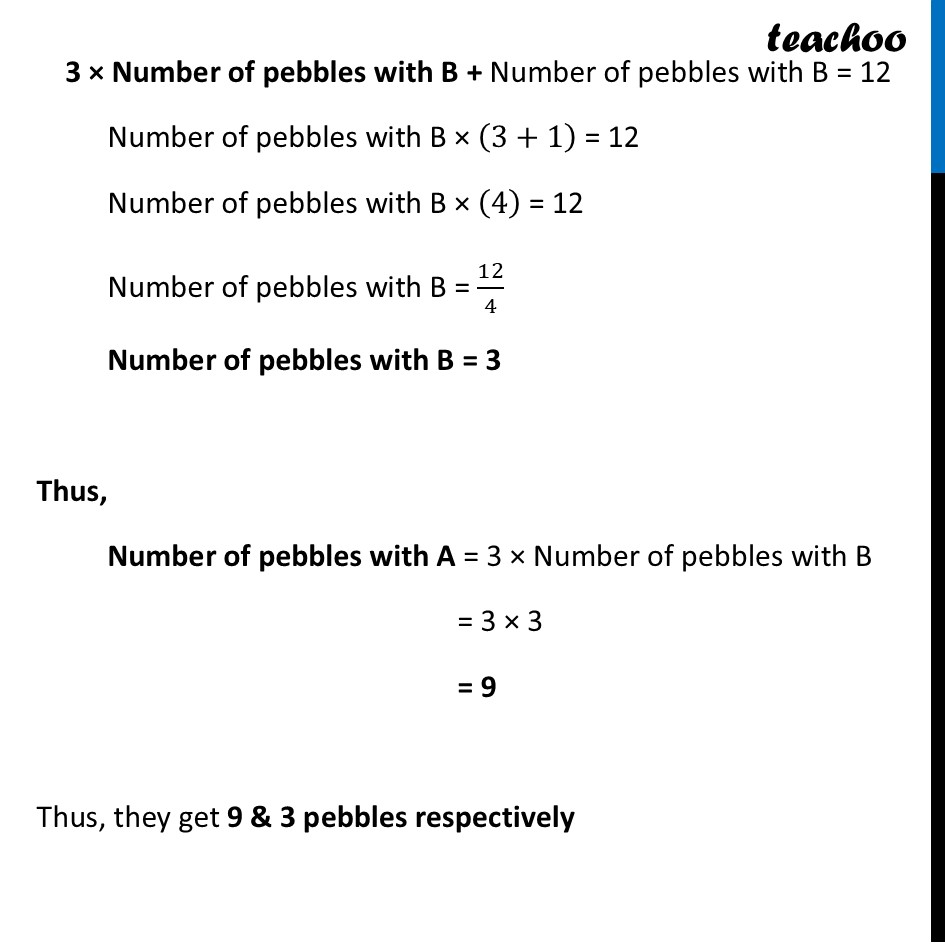
Activity 3 Form a pair. Collect 12 countable objects or counters (it can be coins, seeds, or pebbles). Now, share them between the two of you in different ways.Basically, here we have 12 share pebbles in different Ratios And, we need to find out how much Pebbles each person gets Dividing pebbles in ratio 1 : 1 Ratio 1 : 1 means Number of pebbles with A : Number of peebles with B = 1 : 1 Converting into fractions (𝑵𝒖𝒎𝒃𝒆𝒓 𝒐𝒇 𝒑𝒆𝒃𝒃𝒍𝒆𝒔 𝒘𝒊𝒕𝒉 𝑨)/(𝑵𝒖𝒎𝒃𝒆𝒓 𝒐𝒇 𝒑𝒆𝒃𝒃𝒍𝒆𝒔 𝒘𝒊𝒕𝒉 𝑩 )=𝟏/𝟏 Cross multiplying Number of pebbles with A = Number of pebbles with B Now, Total pebbles = 12 Number of pebbles with A + Number of pebbles with B = 12 Putting Number of pebbles with A = Number of pebbles with B Number of pebbles with A + Number of pebbles with A = 12 2 × Number of pebbles with A = 12 Number of pebbles with A = 12/2 Number of pebbles with A = 6 Thus, Number of pebbles with A = Number of pebbles with B = 6 Thus, both get 6 pebbles each Dividing pebbles in ratio 5 : 7 Ratio 5 : 7 means Number of pebbles with A : Number of peebles with B = 5 : 7 Converting into fractions (𝑵𝒖𝒎𝒃𝒆𝒓 𝒐𝒇 𝒑𝒆𝒃𝒃𝒍𝒆𝒔 𝒘𝒊𝒕𝒉 𝑨)/(𝑵𝒖𝒎𝒃𝒆𝒓 𝒐𝒇 𝒑𝒆𝒃𝒃𝒍𝒆𝒔 𝒘𝒊𝒕𝒉 𝑩 )=𝟓/𝟕 Cross multiplying Number of pebbles with A = 𝟓/𝟕 × Number of pebbles with B Now, Total pebbles = 12 Number of pebbles with A + Number of pebbles with B = 12 Putting Number of pebbles with A = 𝟓/𝟕 × Number of pebbles with B 𝟓/𝟕 × Number of pebbles with B + Number of pebbles with B = 12 Number of pebbles with B × (5/7+1) = 12 Number of pebbles with B × ((5 + 7)/7) = 12 Number of pebbles with B × (12/7) = 12 Number of pebbles with B = 12 × 7/12 Number of pebbles with B = 7 Thus, Number of pebbles with A = 5/7 × Number of pebbles with B = 5/7 × 7 = 5 Thus, they get 5 & 7 pebbles respectively Dividing pebbles in ratio 3 : 1 Ratio 3 : 1 means Number of pebbles with A : Number of pebbles with B = 3 : 1 Converting into fractions (𝑵𝒖𝒎𝒃𝒆𝒓 𝒐𝒇 𝒑𝒆𝒃𝒃𝒍𝒆𝒔 𝒘𝒊𝒕𝒉 𝑨)/(𝑵𝒖𝒎𝒃𝒆𝒓 𝒐𝒇 𝒑𝒆𝒃𝒃𝒍𝒆𝒔 𝒘𝒊𝒕𝒉 𝑩 )=𝟑/𝟏 Cross multiplying Number of pebbles with A = 3 × Number of pebbles with B Now, Total pebbles = 12 Number of pebbles with A + Number of pebbles with B = 12 Putting Number of pebbles with A = 3 × Number of pebbles with B 3 × Number of pebbles with B + Number of pebbles with B = 12 Number of pebbles with B × (3+1) = 12 Number of pebbles with B × (4) = 12 Number of pebbles with B = 12/4 Number of pebbles with B = 3 Thus, Number of pebbles with A = 3 × Number of pebbles with B = 3 × 3 = 9 Thus, they get 9 & 3 pebbles respectively
