
 You are here
![[Accounting] Different Types of Liabilities - Current and Non Current? - Chapter 1 - Introduction to Accounting](https://cdn.teachoo.com/8ef92fb0-0b22-4f2e-bacd-25594f9771b0/slide12.jpg)

Select the correct alternative:
Question (xi)
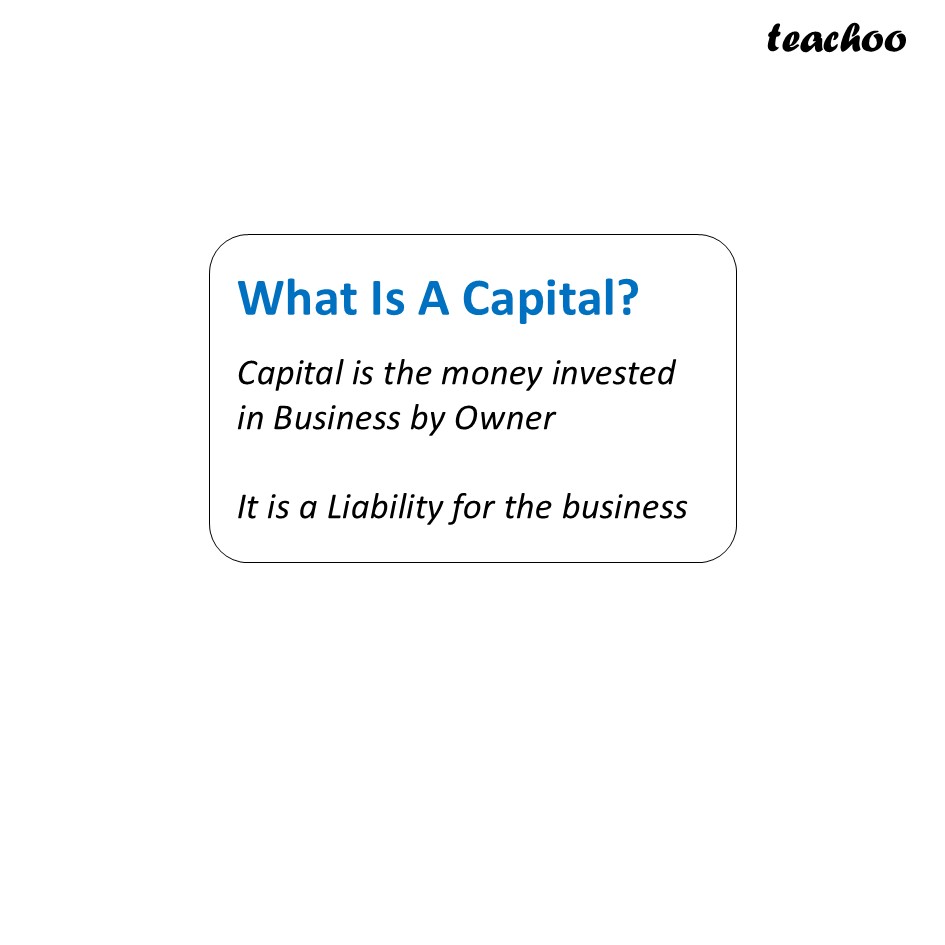
The amount invested by the proprietor in a business is termed
(a) capital.
(b) cash.
(c) revenues.
(d) loan.
Answer:- (a) Capital
Explanation:
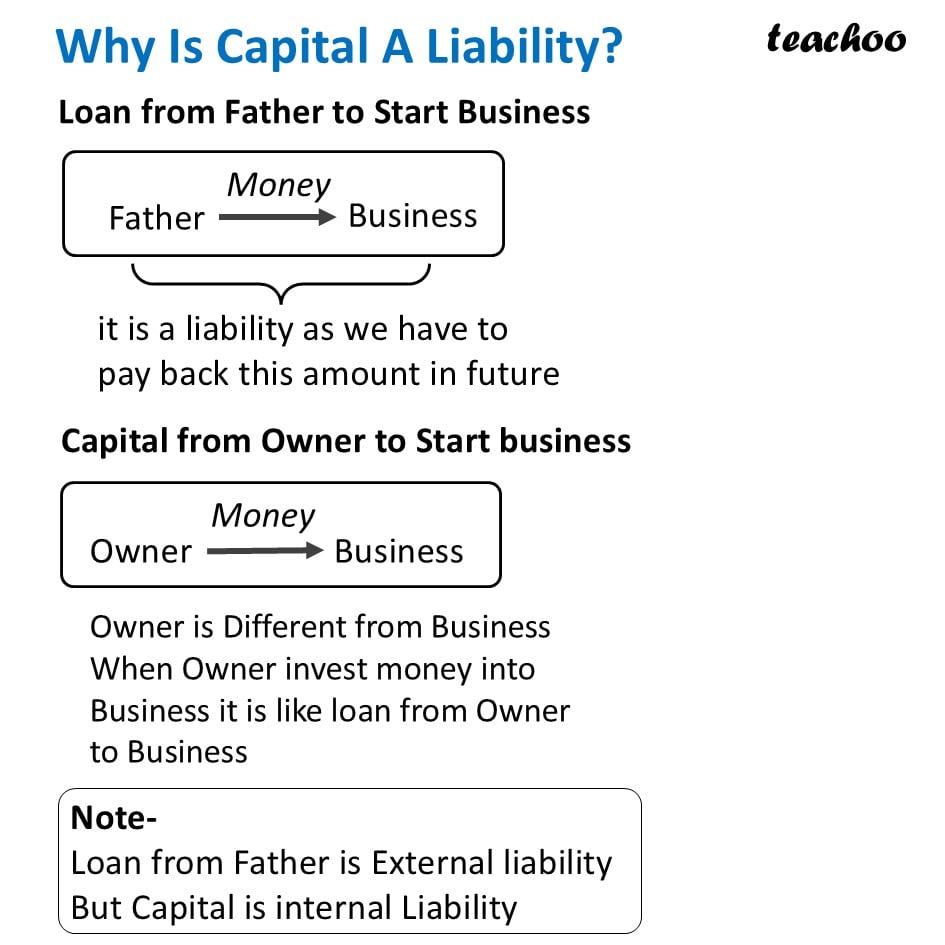
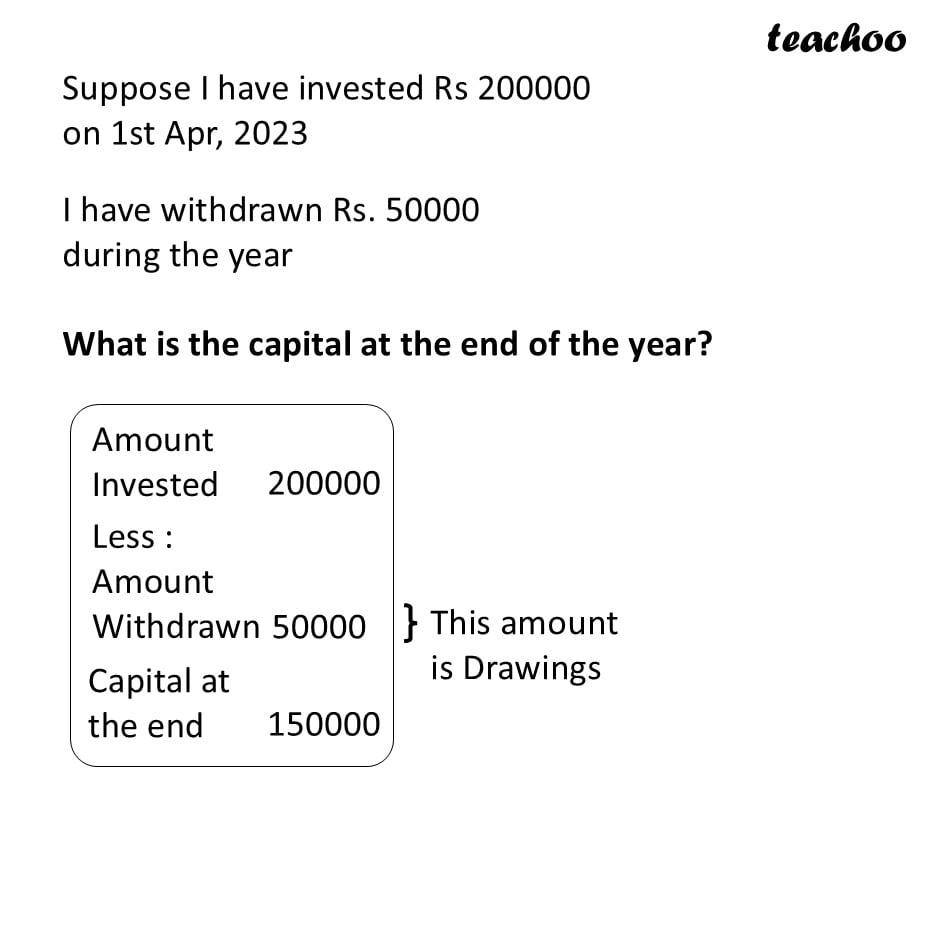
Capital is the amount invested in an enterprise by the proprietor.
Question (xiii)
Bank Overdraft is
(a) short-term liability.
(b) long-term liability.
(c) contingent liability.
(d) None of these.
Answer:- (a) Short-term liability
Question (xiv)
Which of the following term increases capital?
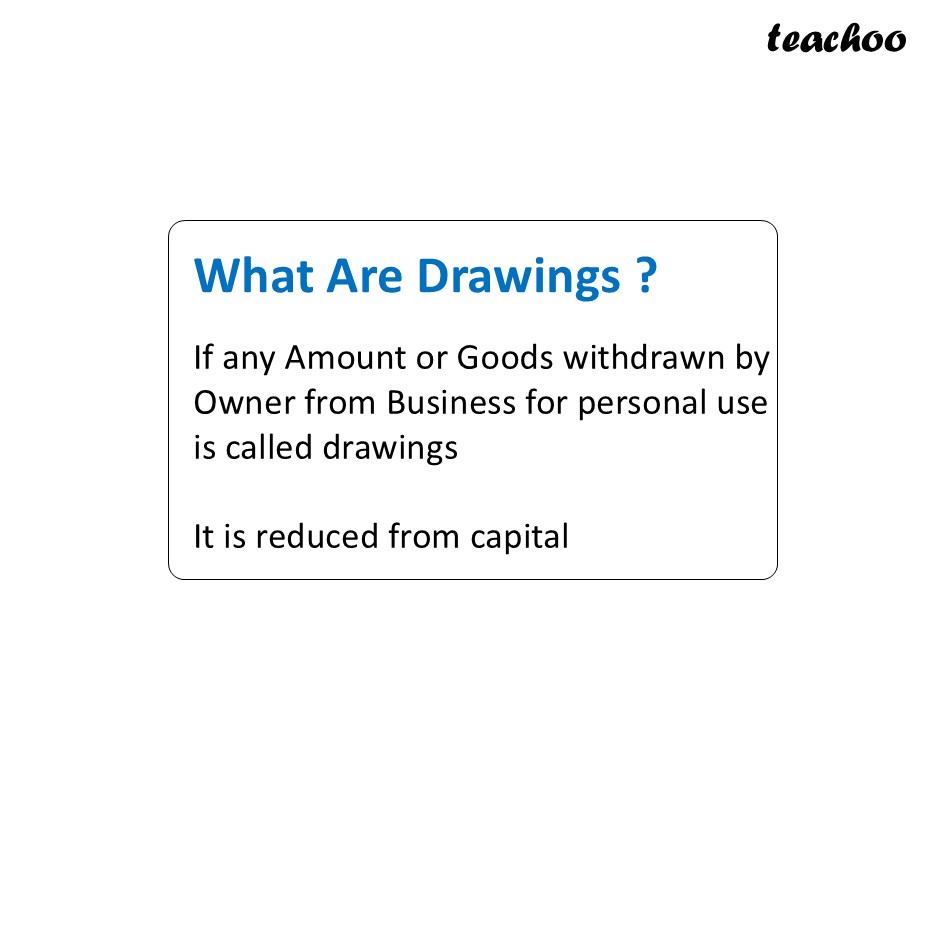
(a) Drawings
(b) Expenses
(c) Loss
(d) Profit
Answer:- (d) Profit
Question (xvi)
Which of the following is not a long-term liability?
(a) Creditors
(b) Term-loan
(c) Debentures
(d) Capital
Answer:- (a) Creditors
Question (xix)
Which of the following is a liability?
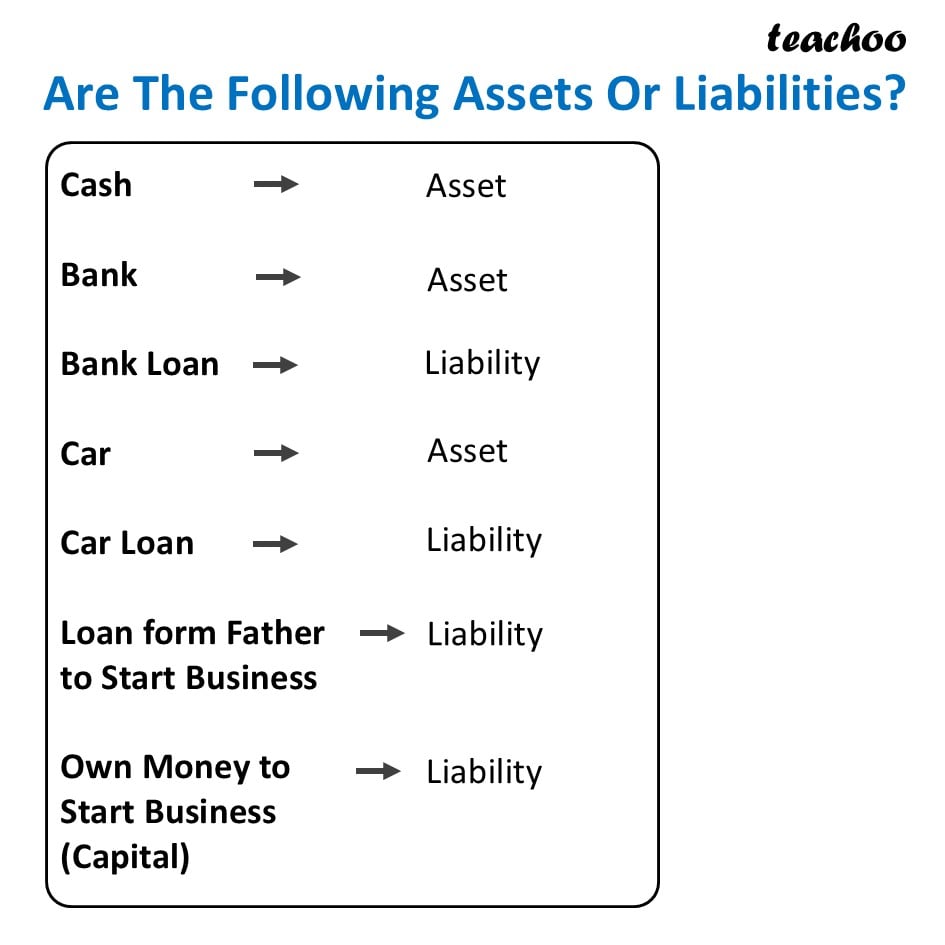
(a) Furniture
(b) Rent Payable
(c) Interest Received
(d) Stock
Answer :- (b) Rent Payable
Question (xxiii)
The nature of capital is
(a) an asset.
(b) a liability.
(c) an income.
(d) an expense.
Answer:- (b) a liability
Question 3
Assertion (A): Capital is the amount invested by the proprietor.
Reason (R): Capital being that of the proprietor, is an internal liability.
On the basis of the following two statements, identify the correct option out of the following:-
(a) Both Assertion (A) and Reason (R) are correct but Reason (R) is not the correct explanation of the Assertion (A)
(b) Both Assertion (A) and Reason (R) are correct and Reason (R) is the correct explanation of the Assertion (A)
(c) Both Assertion (A) and Reason (R) are not correct
(d) Assertion (A) is correct but Reason (R) is not correct
Answer :-
(a) Both Assertion (A) and Reason (R) are correct but Reason (R) is not the correct explanation of the Assertion (A)
Question 7
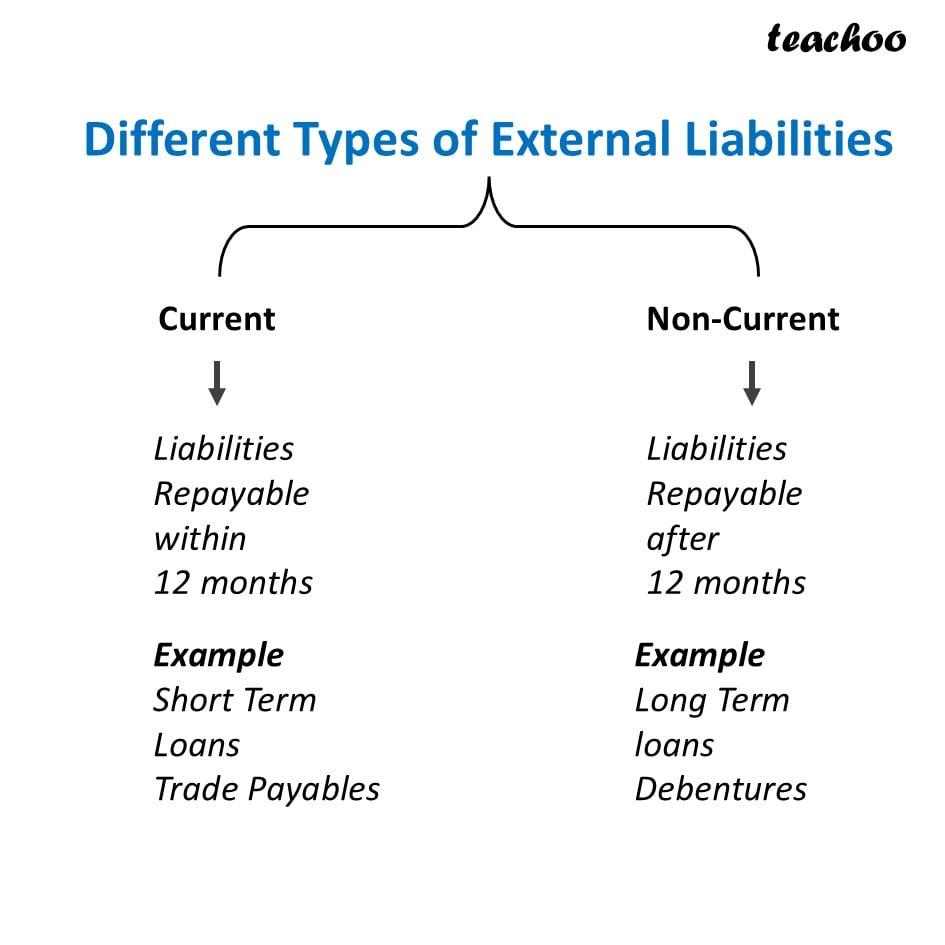
Assertion (A): Long-Term or Non-Current Liabilities are those liabilities which are payable after a period of 12 months from the end of the financial year.
Reason (R): Current Liabilities are those liabilities which are payable after the period of 12 months from the end of the financial year.
On the basis of the following two statements, identify the correct option out of the following:-
(a) Both Assertion (A) and Reason (R) are correct but Reason (R) is not the correct explanation of the Assertion (A)
(b) Both Assertion (A) and Reason (R) are correct and Reason (R) is the correct explanation of the Assertion (A)
(c) Both Assertion (A) and Reason (R) are not correct
(d) Assertion (A) is correct but Reason (R) is not correct
Answer :-
(d) Assertion (A) is correct but Reason (R) is not correct
Question 8
Assertion (A): Contingent Liabilities are those liabilities which become liability on happening of an event.
Reason (R): Contingent liability if it becomes a liability is payable by the entity.
On the basis of the following two statements, identify the correct option out of the following:-
(a) Both Assertion (A) and Reason (R) are correct but Reason (R) is not the correct explanation of the Assertion (A)
(b) Both Assertion (A) and Reason (R) are correct and Reason (R) is the correct explanation of the Assertion (A)
(c) Both Assertion (A) and Reason (R) are not correct
(d) Assertion (A) is correct but Reason (R) is not correct
Answer :-
(b) Both Assertion (A) and Reason (R) are correct and Reason (R) is the correct explanation of the Assertion (A)
Question 11
Which liability is termed as Internal Liability and why?
Answer :-
Capital is termed as an Internal Liability because it is payable towards the proprietor of the firm
